Acupoint Catgut Embedding Therapy: Navigating Sustained Bio-Mechanical Stimulation, Long-Loop Neurofascial Remodeling, and Precision Acupressure Protocols
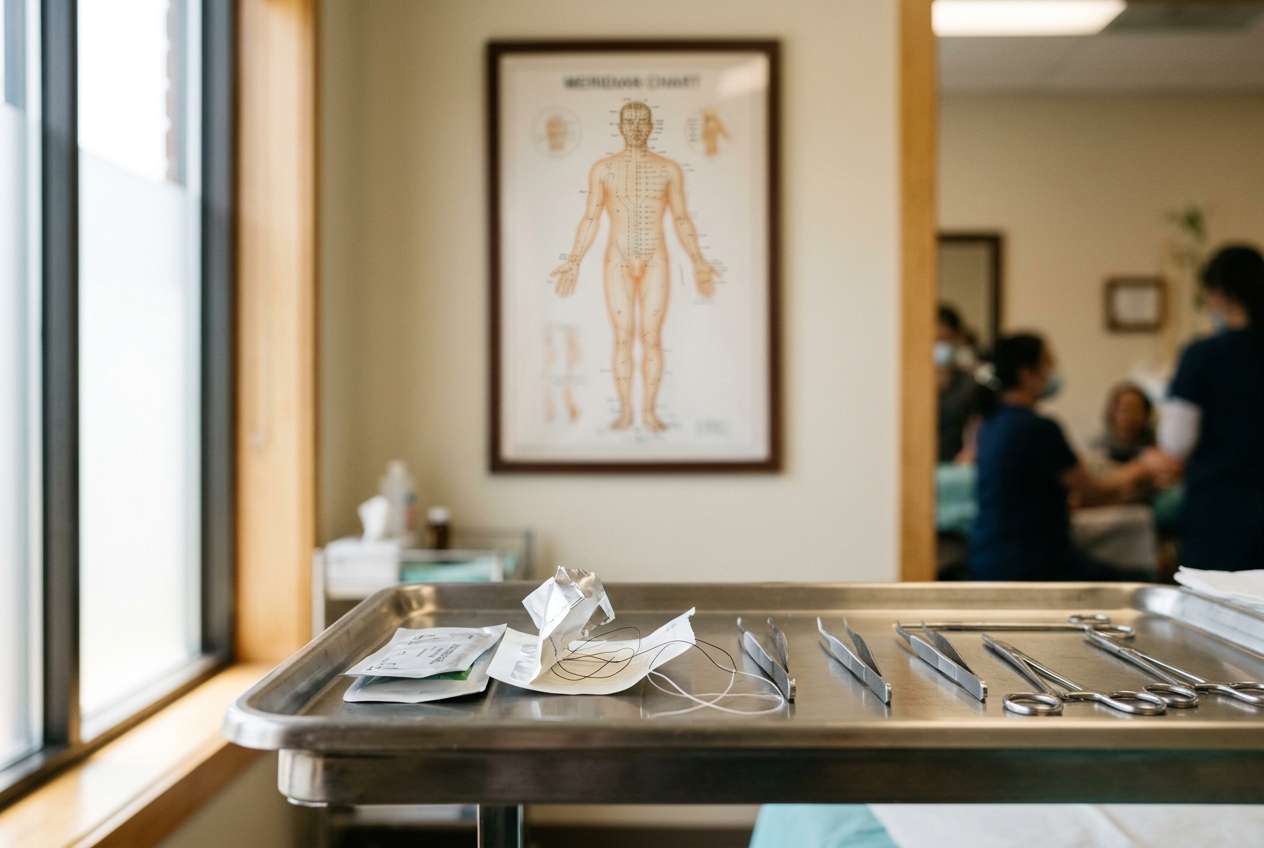
If you navigate modern adult life with a persistent sense of metabolic stagnation—an intractable mid-afternoon brain fog, post-prandial abdominal distension that resists dietary modification, visceral fatigue, or a stubborn inability to regulate adiposity despite caloric restriction—you are encountering a breakdown in neuro-metabolic signalling. In conventional clinical pathways, these sub-syndromic presentations are frequently atomised into isolated functional gastrointestinal disorders, borderline insulin resistance, or non-specific dysautonomia. Traditional Chinese Medicine (TCM), by contrast, conceptualises this constellation as a systemic collapse of the Spleen and Stomach meridian axes: a failure of the body’s primary fascial and energetic corridors to transport, transform, and metabolise fluid and nutritive essence.
Standard acupuncture offers profound therapeutic potency, yet its kinetic stimulus is inherently episodic: a 20- to 30-minute retention of filiform needles induces an acute neurochemical cascade that peaks and progressively wanes over subsequent days. For entrenched, recalcitrant pathologies—such as metabolic syndrome, polycystic ovary syndrome (PCOS), central obesity, and chronic neuro-visceral dysmotility—episodic interventions often require burdensome clinical frequency to achieve sustained physiological resets.
Here emerges the clinical elegance of Acupoint Catgut Embedding Therapy (穴位埋线疗法, ACET). By implanting microscopic, bioabsorbable surgical sutures into exact fascial and muscular depths of designated acupoints, ACET converts a fleeting therapeutic signal into a continuous, 10-to-14-day bio-mechanical and immunological dialogue. It provides a durable bridge between the somatic nervous system, the fascial interstitium, and the autonomic regulation of internal organs. Understanding this medical craft unlocks not only the advanced frontiers of integrative biomaterials, but also illuminates practical, non-invasive acupressure strategies that replicate aspects of this sustained mechanotransductive loop at home.
+----------------------------------------------------------------------------------------------------+
|                               THE CONTINUUM OF MERIDIAN STIMULATION                                |
|                                                                                                    |
|  Traditional Filiform Needling               Acupoint Catgut Embedding Therapy (ACET)             |
|  -----------------------------               ----------------------------------------             |
|  • Acute stimulus (20–30 mins)               • Sustained bio-stimulus (10–14 days)                |
|  • Rapid deqi elicitation                    • Prolonged interstitial mechanotransduction         |
|  • Transient neurotransmitter discharge      • Continual macrophage & Piezo1 receptor activation  |
|  • Requires frequent clinical sessions       • Long-acting autonomic & metabolic remodeling       |
+----------------------------------------------------------------------------------------------------+
2. Theoretical Evolution & Principles: From Retained Needles to Polymer Biomaterials
The lineage of acupoint embedding therapy represents a direct technological extrapolation of classical acupuncture doctrine. The Huangdi Neijing (Inner Canon of the Yellow Emperor, c. 1st century BCE) articulated the foundational principle of jiu liu zhen (久留针)—the prolonged retention of needles in conditions of deep-seated cold, chronic deficiency, or intractable bi (obstruction) syndromes, recognizing that chronic structural pathology demands enduring stimulus.
In the mid-20th century, Chinese clinicians sought a mechanism to establish a permanent or semi-permanent "internal needle." Early iterations in the 1960s utilized manual incisions to implant biological chromic catgut (derived from bovine or ovine submucosal intestinal tissue) into acupuncture points. While therapeutically potent, these ancestral techniques were limited by crude delivery mechanisms, variable tissue antigenicity, and inconsistent resorption profiles.
            +-------------------------------------------------------------+
            |       EVOLUTION OF SUSTAINED ACUPOINT IMPLANTATION          |
            +-------------------------------------------------------------+
                                           |
                                           v
     +-------------------------------------------------------------------+
     | CLASSICAL FOUNDATION: "Jiu Liu Zhen" (Prolonged Needle Retention) |
     | Classical needle retention for chronic deficiency and stagnation.  |
     +-------------------------------------------------------------------+
                                           |
                                           v
     +-------------------------------------------------------------------+
     | MID-20TH CENTURY: Biological Chromic Catgut Suture Embedding       |
     | Ovine/bovine submucosa inserted via surgical trocars. High        |
     | antigenicity, rapid variable enzymatic lysis.                     |
     +-------------------------------------------------------------------+
                                           |
                                           v
     +-------------------------------------------------------------------+
     | CONTEMPORARY ERA: Micro-Invasive Absorbable Polymers (PDO/PGA)    |
     | High-tensile, sterile, uniform synthetic sutures delivered via    |
     | 29G–31G fine-gauge guide needles with controlled hydrolysis.      |
     +-------------------------------------------------------------------+
The contemporary era has transformed this modality through synthetic biomaterials and micro-invasive delivery systems. Modern practice relies heavily on synthetic absorbable polymers, primarily Polydioxanone (PDO), polyglycolic acid (PGA), and poly(L-lactic acid) (PLLA), deployed via ultra-fine guide needles (29G to 31G) under strict aseptic parameters. Unlike biological catgut, which undergoes unpredictable enzymatic lysis accompanied by localized cellular proteolysis, synthetic PDO degrades via uniform hydrolytic cleavage of its ester bonds.
This predictable chemical breakdown yields non-toxic monomeric metabolites (glycolic acid and 2-hydroxyethoxyacetic acid), ultimately excreted as carbon dioxide and water, while sustaining an uninterrupted, low-grade physical shear stress within the collagenous fascial matrix for 14 to 21 days.
3. Biophysical & Neurofascial Mechanisms: The 14-Day Micro-Reactivity Cascade
The therapeutic efficacy of catgut embedding does not arise from pharmacological release, but from the prolonged orchestration of mechanical, neuro-electrical, and immunological reactions occurring within the acupoint microenvironment. This cascade unfolds across four interconnected physiological phases:
+---------------------------------------------------------------------------------------------------+
|                        THE FOUR-PHASE BIOPHYSICAL CASCADE OF ACET                                 |
+---------------------------------------------------------------------------------------------------+
|  PHASE 1: ACUTE MECHANICAL SHEAR & DEQI INDUCTION (Days 0–1)                                      |
|  Needle entry and suture placement produce micro-trauma, collagen fiber winding, and rapid        |
|  activation of Piezo1/2 and TRPV4 mechanosensitive ion channels.                                  |
+---------------------------------------------------------------------------------------------------+
|  PHASE 2: CONTROLLED ASEPTIC MICRO-INFLAMMATION (Days 2–7)                                        |
|  Sterile foreign-body micro-reaction prompts M1-to-M2 macrophage transition, local interstitial   |
|  fluid perfusion, and cytokine-mediated vascular/fascial remodeling.                              |
+---------------------------------------------------------------------------------------------------+
|  PHASE 3: SUSTAINED NEURO-AFFERENT TRANSMISSION (Days 3–14)                                       |
|  Continuous mechanical tugging stimulates unmyelinated C-fibers and thinly myelinated A-delta     |
|  fibers, projecting to spinal dorsal horns and brainstem autonomic regulatory nuclei.             |
+---------------------------------------------------------------------------------------------------+
|  PHASE 4: SYSTEMIC NEUROENDOCRINE & METABOLIC REMODELING (Days 7–21+)                             |
|  Downregulation of NPY, modulation of the HPA/adipokines axis, upregulation of POMC, and          |
|  long-term restoration of vagal tone and metabolic homeostastis.                                  |
+---------------------------------------------------------------------------------------------------+
Phase 1: Mechanical Shear, Collagen Cleaving, and Mechanotransduction
Upon insertion, the suture thread sits directly within the intermuscular connective tissue planes. Needle rotation and suture placement induce the classical "needle grasp"—the physical winding of interstitial collagen and elastin fibrils around the foreign matrix. This generates continuous tensile force.
As explored in authoritative research on mechanotransduction in fascial interstitium, this physical deformation directly activates mechanosensitive ion channels—specifically Piezo1, Piezo2, and TRPV4—expressed abundantly on local fibroblasts, telocytes, and vascular endothelial cells. The mechanical strain opens these channels, generating an inward flux of calcium ions ($Ca^{2+}$), triggering cytoskeletal remodeling, ATP secretion, and sustained local extracellular signal-regulated kinase (ERK) phosphorylation.
Phase 2: Controlled Aseptic Micro-Inflammation and Fluid Dynamics
The embedded suture functions as a controlled, sterile, biocompatible nidus. Within 24 to 48 hours, the immune system initiates an aseptic, localized foreign-body micro-reaction. Neutrophils and circulating monocytes migrate to the site, rapidly transitioning into polarized macrophages (M1 pro-inflammatory phenotypes that subsequently shift into M2 regenerative and reparative phenotypes).
This localized immunological presence sustains micro-vascular permeability and enhances interstitial fluid shear stress. Far from being pathological, this controlled, sub-clinical micro-inflammation acts as a dynamic biological amplifier, preserving local tissue metabolism and continuously clearing waste metabolites through the micro-lymphatic circulation.
Phase 3: Prolonged Neuro-Afferent Modulation
The sustained physical presence of the suture continuously stimulates primary sensory afferents nestled within the neurovascular bundles of the acupoint. According to research indexed in the NCBI PubMed Central archive on Neurobiological Mechanisms of Acupuncture, acupoint stimulation selectively recruits thinly myelinated $A\delta$ (Group III) and unmyelinated C (Group IV) nerve fibers.
[Embedded PDO Suture in Fascia]
               |
               v (Continuous Mechanotransduction & Piezo1 Activation)
[A-delta & C-Fiber Somatosensory Afferents]
               |
               v (Ascending Signal via Spinothalamic Tract)
[Spinal Cord Dorsal Horn (Laminae I & V)]
               |
      +--------+--------+
      |                 |
      v                 v
[Nucleus Tractus   [Hypothalamus & Arcuate Nucleus]
 Solitarii (NTS)]       |
      |                 +--> Downregulates Neuropeptide Y (NPY)
      |                 +--> Upregulates POMC & alpha-MSH
      v
[Dorsal Motor Nucleus of Vagus (DMV)]
      |
      v (Parasympathetic Efferent Axis)
[Visceral Target Organs: Enteric Plexus, Pancreatic Beta Cells, Adipocytes]
These afferent volleys project to Laminae I, II, and V of the spinal dorsal horn, activating segmental interneurons while ascending via the spinothalamic and spinoreticular tracts into central autonomic coordination hubs: 1. The Nucleus Tractus Solitarii (NTS): The principal brainstem sensory nexus for visceral afferents. 2. The Dorsal Motor Nucleus of the Vagus Nerve (DMV): Upregulating parasympathetic and cholinergic anti-inflammatory outflow. 3. The Hypothalamic Arcuate Nucleus: Directly balancing metabolic signaling.
Phase 4: Systemic Neuroendocrine and Metabolic Reconfiguration
The prolonged somatic input continuously modulates central neuroendocrine networks. In metabolic syndrome and obesity, sustained stimulation downregulates central orexigenic peptides (such as Neuropeptide Y [NPY] and Agouti-Related Peptide [AgRP]) while upregulating anorexigenic pro-opiomelanocortin (POMC) and $\alpha$-melanocyte-stimulating hormone ($\alpha$-MSH).
Concurrently, at the peripheral level, clinical evaluations—such as those published in the NCBI Study on Acupoint Catgut Embedding in Metabolic Syndrome—demonstrate that this sustained neuro-immunological loop enhances peripheral insulin sensitivity, suppresses pro-inflammatory cytokines (Tumor Necrosis Factor-alpha [TNF-$\alpha$], Interleukin-6 [IL-6]), and increases serum adiponectin, promoting lipolysis and hepatic lipid clearance.
4. The Meridian Path — A Journey Through the Metabolic Axis
To comprehend how catgut embedding and parallel acupressure modify systemic physiology, one must trace the primary topographical highways governing nutrient transformation, fluid transport, and autonomic tone.
  (Head/Face)
      |
      | STOMACH MERIDIAN (Yangming)
      v Descends through chest, rectus abdominis, quadriceps, shin to 2nd toe
  [ST36: Zusanli] (Lateral Shin)
      ^
      | SPLEEN MERIDIAN (Taiyin)
      | Ascends from big toe, up medial ankle, inner calf, abdomen to chest
  [SP6: Sanyinjiao] (Medial Ankle)
      ^
      |
  -----------------------------------------------------------------------
  CENTRAL REGULATORY AXES (Torso & Posterior Spine)

  [CV12: Zhongwan]  --> Anterior Midline (Ren Mai), over epigastric celiac axis
  [BL20: Pishu]     --> Posterior Paraspinal (Taiyang), 11th thoracic ganglion chain
The Stomach Meridian of Foot-Yangming (足阳明胃经)
The Stomach channel is the primary Yang corridor of digestion, abundant in both Qi and Blood. Starting below the orbit of the eye, it descends along the jawline, travels down the anterior neck, and runs through the mamillary line into the abdomen, traversing the rectus abdominis parallel to the midline.
From the inguinal crease, it travels down the anterior-lateral aspect of the thigh, crosses the patella, and courses down the fleshy muscular ridge just outside your shinbone (the tibialis anterior muscle). It passes the front of the ankle and terminates at the lateral tip of the second toe. This is the physiological track of gastrointestinal propulsion, acid-base equilibrium, and mental clarity.
The Spleen Meridian of Foot-Taiyin (足太阴脾经)
The functional Yin counterpart to the Stomach, the Spleen meridian governs fluid distribution, tissue firmness, and blood containment. Originating at the medial corner of the big toe nail, it runs along the inside border of the foot, passes directly anterior and superior to the inner ankle bone, and ascends the inner border of the lower leg along the posterior edge of the tibia.
It continues past the medial aspect of the knee and inner thigh, enters the lower abdominal cavity, and terminates on the lateral ribcage. Mechanistically, this pathway corresponds to the major neurovascular bundle of the posterior tibial nerve and ascending lymphatic channels returning fluid from the lower extremities to the core.
The Conception Vessel (Ren Mai, 任脉) & Bladder Channel (Foot-Taiyang, 足太阳膀胱经)
The Conception Vessel runs along the anterior midline of the human body, from the perineum to the lower lip, anchoring the fascial linea alba and overlying the deep autonomic plexuses of the abdomen. On the posterior body, the Bladder Meridian descends in two parallel paraspinal columns along the erector spinae muscles. These dorsal tracks align with the sympathetic chain ganglia and house the somatic Back-Shu (Bèi-shù) points, which provide direct neural access to internal viscera via segmental spinal reflex arcs.
5. Key Points: Somatic Landmarks, Depth Stratification, and Clinical Evidence
Whether engaging in invasive catgut embedding or sustained manual ischemic compression, clinical efficacy depends upon precise depth stratification, anatomical navigation, and point-specific neurovascular architecture.
+----------------------------------------------------------------------------------------------------------------------+
|                                 ACUPOINT ANATOMICAL AND CLINICAL PROFILES                                            |
+----------------------------------------------------------------------------------------------------------------------+
| Point | Somatic Landmark           | Deep Anatomical Structures         | Sensation (Deqi) | Primary Clinical Target |
+-------+----------------------------+------------------------------------+------------------+-------------------------+
| ST36  | 4 fingers below kneecap,   | Tibialis anterior muscle; deep     | Heavy ache, dull | Functional dyspepsia,   |
|       | 1 finger-width lateral to  | peroneal & tibial nerves; anterior | distension, down | metabolic syndrome,     |
|       | anterior tibial crest.     | tibial artery/vein.                | the foot.        | systemic exhaustion.    |
+-------+----------------------------+------------------------------------+------------------+-------------------------+
| SP6   | 4 fingers above inner      | Posterior margin of tibia; soleus/ | Piercing dull    | Dysmenorrhea, PCOS,     |
|       | ankle bone, behind the     | flexor digitorum longus; tibial    | soreness, warm   | metabolic fluid stasis, |
|       | tibial bone edge.          | nerve; posterior tibial artery.    | radiating flow.  | insomnia/anxiety.       |
+-------+----------------------------+------------------------------------+------------------+-------------------------+
| CV12  | Midpoint between navel     | Linea alba; rectus abdominis;      | Deep spreading   | Epigastric fullness,    |
|       | and bottom of breastbone   | branches of 7th–8th intercostal    | visceral         | GERD, insulin           |
|       | (xiphoid process).         | nerves; epigastric vessels.        | warmth.          | resistance, gastroparesis|
+-------+----------------------------+------------------------------------+------------------+-------------------------+
| BL20  | Paraspinal, 2 finger-      | Trapezius/latissimus dorsi;        | Deep localized   | Chronic fatigue,        |
|       | widths lateral to T11      | erector spinae; 11th thoracic      | pressure, spinal | malabsorption,          |
|       | spinous process.           | nerve dorsal ramus; intercostals.  | relaxation.      | sarcopenia, bloating.   |
+-------+----------------------------+------------------------------------+------------------+-------------------------+
1. Zusanli (ST36, 足三里) — "Leg Three Miles"
        Anterior Knee (Patella)
                 |
                 v
        [Tibial Tuberosity]
                 |
  (1 finger-width lateral) ---> [ * ST36 (Zusanli) * ]  <-- (Tibialis Anterior Muscle)
                 |
                 v
        Anterior Tibial Crest (Shinbone)
- Somatic Landmark: Place the palm of your hand directly over your kneecap; your ring finger rests naturally in a small muscular depression roughly four finger-widths below the lower outer edge of the knee, one finger-breadth lateral to the sharp ridge of your shinbone.
- Tissue Sensation (Deqi): A heavy, deep, expanding ache that often radiates down the lateral shin into the dorsum of the foot.
- Depth Stratification for Catgut Embedding: Inserted perpendicularly to a depth of 1.0 to 1.5 cun (approx. 25–35 mm). The suture must reside within the muscular belly of the tibialis anterior, adjacent to the deep peroneal nerve and anterior tibial vascular bundle.
- Clinical Evidence: Highly researched for gastrointestinal motility and metabolic homeostasis. As documented in the World Health Organization Guidelines on Acupuncture, ST36 stimulation activates the vagal-adrenal anti-inflammatory axis, stimulates gastric emptying via central autonomic pathways, downregulates blood glucose, and enhances physical stamina.
2. Sanyinjiao (SP6, 三阴交) — "Three Yin Intersection"
        Medial Aspect of Lower Leg (Inner Calf)
                         |
                         v
                  Tibia Bone Shaft
                         |
  (4 finger-widths up)   |
  (Posterior border) ----+---> [ * SP6 (Sanyinjiao) * ] <-- (Tibial Nerve Trunk)
                         |
                         v
              [Medial Malleolus] (Inner Ankle Bone)
- Somatic Landmark: Place four fingers flat across the inside of your lower leg, starting from the high point of your inner ankle bone (medial malleolus). SP6 lies just behind the posterior border of the shinbone at the level of the upper finger edge.
- Tissue Sensation (Deqi): A sharp, exquisite, highly sensitive dull ache that travels upwards along the inner calf or into the pelvic floor.
- Depth Stratification for Catgut Embedding: Inserted perpendicularly to a depth of 1.0 to 1.2 cun (approx. 20–30 mm), traversing the subcutaneous fascia, the lower soleus, and the flexor digitorum longus muscle belly, interfacing with the sensory branches of the tibial nerve.
- Clinical Evidence: The intersection of the Spleen, Liver, and Kidney channels. Modern clinical trials demonstrate its efficacy in balancing gonadotropins (LH/FSH ratio) in PCOS, alleviating primary dysmenorrhea, decreasing systemic vascular resistance, and calming sympathetic hyper-arousal.
3. Zhongwan (CV12, 中脘) — "Middle Epigastrium"
- Somatic Landmark: On the front midline of your abdomen, exactly halfway between the bottom tip of your breastbone (xiphoid process) and the center of your navel.
- Tissue Sensation (Deqi): A diffuse, spreading warmth accompanied by mild intra-abdominal rumbling and immediate release of epigastric tension.
- Depth Stratification for Catgut Embedding: Inserted strictly perpendicularly or slightly obliquely to a depth of 0.8 to 1.2 cun (approx. 15–25 mm). The suture is deposited within the dense collagenous linea alba and the posterior sheath of the rectus abdominis muscle, superior to the parietal peritoneum.
- Clinical Evidence: Front-Mu (Mù) point of the Stomach and confluence point for the Fu (hollow) organs. Modulates the celiac plexus, promotes gastric mucosal microcirculation, regulates gastric acid secretion via gastrin modulation, and relieves gastroesophageal reflux.
4. Pishu (BL20, 脾俞) — "Spleen Transporter"
- Somatic Landmark: Located on the back, two finger-widths lateral to the lower border of the spinous process of the 11th thoracic vertebra (T11), roughly level with the lower border of the rib cage.
- Tissue Sensation (Deqi): A broad, grounding, deep muscular soreness that releases upper lumbar and thoracic tension.
- Depth Stratification for Catgut Embedding: Inserted obliquely toward the vertebral column at an angle of 15°–30° to a depth of 0.5 to 0.8 cun (approx. 12–20 mm). Strict caution: Never needle vertically to prevent pleural puncture.
- Clinical Evidence: Back-Shu point of the Spleen. Directly influences the sympathetic splanchnic innervation supplying the pancreas, stomach, and proximal duodenum, improving digestive enzymatic output and addressing metabolic lethargy.
6. Precision Non-Invasive Acupressure Parallel Protocols
For patients unable to access clinical biomaterial embedding, home-based sustained rhythmic ischemic compression replicates aspects of the mechanical signal. While acupressure does not produce the 14-day immunological response of an embedded suture, applying deliberate, prolonged static pressure induces cyclic fascial deformation, activates local Piezo1 mechanoreceptors, and initiates somatosensory autonomic reflexes.
+----------------------------------------------------------------------------------------------------+
|                         ISCHEMIC COMPRESSION VS. CATGUT EMBEDDING MECHANICS                        |
+----------------------------------------------------------------------------------------------------+
| Feature                 | Acupoint Catgut Embedding (ACET)  | Sustained Ischemic Acupressure       |
+-------------------------+-----------------------------------+--------------------------------------+
| Invasive Nature         | Micro-invasive (implanted PDO)    | Completely non-invasive (manual)     |
| Duration of Stimulus    | Continuous for 10–14 days         | 2–3 minutes per point (repeat daily) |
| Tissue Mechanism        | Foreign-body micro-reaction +     | Interstitial fluid displacement +    |
|                         | hydrolytic shear stress           | post-ischemic hyperaemia             |
| Receptor Activation     | Continual Piezo1 / C-fiber discharge| Pulsatile Piezo1 / A-delta firing   |
| Primary Utility         | Chronic, recalcitrant pathologies | Daily self-regulation & maintenance  |
+-------------------------+-----------------------------------+--------------------------------------+
The Post-Prandial Metabolic Reset Protocol
A complete evening restorative sequence for metabolic inertia, post-meal fullness, and evening anxiety.
+---------------------------------------------------------------------------------------------------+
|                            THE 10-MINUTE EVENING METABOLIC RESET SEQUENCE                         |
+---------------------------------------------------------------------------------------------------+
|                                                                                                   |
|  [STEP 1: CV12 (Zhongwan)] ---> Relax the Epigastric Matrix                                       |
|  • Position: Supine with knees bent                                                               |
|  • Technique: 3 overlapping fingertips apply slow inward pressure on exhalation (2 minutes)       |
|                                                                                                   |
|                                   |                                                               |
|                                   v                                                               |
|                                                                                                   |
|  [STEP 2: ST36 (Zusanli)]  ---> Kindle the Yangming Fire                                          |
|  • Position: Seated comfortably                                                                   |
|  • Technique: Firm thumb pressure, circular kneading with forward-inward vector (2 mins / leg)   |
|                                                                                                   |
|                                   |                                                               |
|                                   v                                                               |
|                                                                                                   |
|  [STEP 3: SP6 (Sanyinjiao)] ---> Drain Metabolic Fluid & Restore Yin                             |
|  • Position: Seated cross-legged                                                                  |
|  • Technique: Sustained static ischemic hold against tibial bone border (2 mins / leg)             |
|                                                                                                   |
|                                   |                                                               |
|                                   v                                                               |
|                                                                                                   |
|  [INTEGRATION]             ---> 60 seconds diaphragmatic breathing, resting hands over lower navel |
+---------------------------------------------------------------------------------------------------+
Step 1: Relax the Epigastric Matrix (CV12 - Zhongwan)
- Position: Lie flat on your back with knees bent and soles of the feet flat on the floor to release tension in the abdominal wall.
- Technique: Place the pads of your three middle fingers flat across CV12 (midway between breastbone and navel). Inhale deeply through the nose; on the exhale, allow your fingers to sink downward toward the spine to a depth of roughly 1.5 inches.
- Duration & Vector: Maintain a firm, constant, non-pulsatile pressure for 2 minutes. Focus on softening the abdominal wall beneath your fingers. You should feel a gentle, spreading warmth.
Step 2: Kindle the Yangming Fire (ST36 - Zusanli)
- Position: Shift to a comfortable seated position with legs uncrossed.
- Technique: Place your thumb over ST36 on the outer shin. Apply steady downward pressure angled slightly inward toward the shinbone.
- Dynamics: Execute slow, microscopic circular kneading motions (1 mm amplitude) without sliding across the skin.
- Duration: Maintain for 2 minutes per leg. The sensation should be a prominent, satisfying, heavy ache.
Step 3: Drain Fluid Stagnation & Regulate Yin (SP6 - Sanyinjiao)
- Position: Remain seated, placing your right ankle across your left knee.
- Technique: Support the outside of your ankle with your fingers, and place your right thumb pad directly behind the inner shinbone on SP6.
- Dynamics: Press firmly into the posterior border of the bone at a 45-degree angle. Maintain steady, static compression without rubbing. Breathe smoothly.
- Duration: Hold for 2 minutes per leg. Sensation should be sharp, clear, and releasing.
7. Safety, Depth Stratification, and Clinical Rigor
Acupoint catgut embedding represents an advanced, minor surgical procedure that demands thorough clinical training, rigorous anatomical knowledge, and strict adherence to biosafety protocols. When performed incorrectly or by untrained individuals, serious adverse events can occur.
+---------------------------------------------------------------------------------------------------+
|                             CLINICAL SAFETY AND CONTRAINDICATION MATRIX                           |
+---------------------------------------------------------------------------------------------------+
| CATEGORY          | CLINICAL PARAMETERS AND CONTRAINDICATIONS                                     |
+-------------------+-------------------------------------------------------------------------------+
| ABSOLUTE          | • Pregnancy (Strict ban on SP6, LI4, and lower abdominal/lumbosacral points)   |
| CONTRAINDICATIONS | • Active systemic bacteremia, local cutaneous infections, or open wounds      |
|                   | • Severe bleeding diathesis, hemophilia, or unmanaged anticoagulation therapy |
|                   | • Keloid scar diathesis or severe hyper-reactive autoimmune states            |
+-------------------+-------------------------------------------------------------------------------+
| DEPTH SAFETY      | • CV12 / Abdominal wall: Stay within linea alba / rectus sheath (15–25mm max) |
| RESTRICTIONS      | • BL20 / Thoracic paraspinal: 15°–30° oblique angle only (12–20mm) to prevent  |
|                   |   pneumothorax. Vertical insertion is strictly prohibited.                    |
+-------------------+-------------------------------------------------------------------------------+
| ASEPTIC MANDATES  | • Single-use disposable pre-loaded surgical guide needles (29G–31G)           |
|                   | • Double skin disinfection with chlorhexidine or povidone-iodine              |
|                   | • Post-procedure dry puncture site protection for 24 hours                     |
+-------------------+-------------------------------------------------------------------------------+
Depth Stratification and Tissue Safe Zones
- Abdominal Caution (CV12): In emaciated or elderly patients, the abdominal wall may measure less than 15 mm in thickness. Excessive penetration through the transversalis fascia and parietal peritoneum risks visceral perforation. Clinicians must palpate abdominal wall thickness and utilize needle-stopping guides.
- Thoracic Hazard (BL20): The lung pleura lies immediately deep to the intercostal spaces. Needle insertion along the inner Bladder line must never exceed a 30-degree medial oblique angle, directing the vector toward the transverse processes of the vertebrae.
- Vascular Caution (SP6): Care must be taken to avoid puncturing the posterior tibial artery and veins, which course closely behind the medial border of the tibia.
Suture Selection: PDO vs. Collagen Chromic Catgut
Modern clinical standards strongly favor synthetic polydioxanone (PDO) over traditional biological chromic catgut.
+---------------------------------------------------------------------------------------------------+
|                                 BIOMATERIAL COMPARATIVE ANALYSIS                                  |
+---------------------------------------------------------------------------------------------------+
| Parameter               | Synthetic Polydioxanone (PDO)     | Biological Chromic Catgut           |
+-------------------------+-----------------------------------+-------------------------------------+
| Origin                  | Synthetic polyester polymer       | Bovine/ovine submucosal intestine   |
| Degradation Mechanism   | Predictable ester hydrolysis      | Unpredictable enzymatic proteolysis |
| Local Tissue Reaction   | Mild, sterile, controlled aseptic | Variable, potential hypersensitivity|
| Risk of Redness/Nodule  | Extremely low (<0.5%)             | Moderate (3–7%)                     |
| Resorption Half-Life    | 14 to 21 days (controlled)        | 7 to 10 days (variable)             |
+-------------------------+-----------------------------------+-------------------------------------+
Synthetic PDO generates a consistent, sterile micro-inflammatory response, virtually eliminating the aseptic fat liquefaction, granulomas, and cutaneous indurations historically linked with animal-derived sutures.
When to Seek a Professional Practitioner
While self-acupressure is completely safe when performed within standard limits, catgut embedding therapy must strictly remain within the domain of licensed, insured healthcare professionals trained in medical acupuncture and minor surgical interventions.
If you suffer from severe autonomic instability, chronic uncontrolled metabolic pathology, sudden unexplained weight shifts, or acute abdominal pain, professional diagnostic imaging and clinical workups must always precede integrative interventions.
8. Today's Takeaway
You do not need to undergo clinical suture implantation today to begin altering your metabolic tone. You can engage the neurofascial matrix immediately through a simple, targeted two-minute intervention.
+----------------------------------------------------------------------------------------------------+
|                                    YOUR 2-MINUTE PRACTICE TODAY                                    |
|                                                                                                    |
|  Target Point: Zusanli (ST36) - Four finger-widths below kneecap, one finger-width outside shin.   |
|  Common Issue: Post-meal fatigue, digestive sluggishness, or mid-afternoon brain fog.              |
|                                                                                                    |
|  THE 2-MINUTE ISCHEMIC PROTOCOL:                                                                   |
|  1. Locate the fleshy depression on the outside of your right shin.                                |
|  2. Press firmly with your thumb until you feel a distinct, heavy, dull ache (a 5/10 sensation).  |
|  3. Hold static pressure for 60 seconds while taking 5 slow, deep belly breaths.                   |
|  4. Repeat on the left shin for 60 seconds.                                                        |
|                                                                                                    |
|  Physiological Result: Activates Piezo1 mechanoreceptors, engages the vagus nerve, and promotes     |
|  upper gastrointestinal motility within minutes.                                                   |
+----------------------------------------------------------------------------------------------------+
Before you leave this page, locate ST36 (Zusanli) on your right leg: four finger-widths below the bottom edge of your kneecap, in the soft muscular valley just outside the sharp crest of your shinbone. Press firmly into that muscle with your thumb until you feel a clear, dull, heavy ache.
Maintain that firm, unwavering pressure for 60 seconds while drawing three long, slow diaphragmatic breaths into your lower belly. Switch to your left leg and repeat for 60 seconds.
By applying this sustained mechanical pressure, you are manually activating the same mechanotransductive pathways, Piezo channels, and vagal reflex arcs that define the modern science of acupoint embedding—reclaiming control over your internal metabolic rhythm, one point at a time.
Authoritative Scientific References & Further Reading
- World Health Organization Guidelines on Basic Training and Safety in Acupuncture — International standards for anatomical depth safety and clinical protocols.
- NCBI PubMed Central: Neurobiological Mechanisms of Acupuncture — Rigorous review of somatic afferent nerve recruitment, neurotransmitter signaling, and central autonomic processing.
- NCBI Study on Acupoint Catgut Embedding in Metabolic Syndrome — Clinical evidence detailing lipid modulation, insulin desensitization, and anti-inflammatory cytokine shifts.
- Mechanotransduction in Fascial Interstitium (Wikipedia) — Biophysical principles of physical shear stress, collagen fiber deformation, and Piezo receptor activation.
- Polydioxanone Biomaterials (Wikipedia) — Chemical structure, hydrolytic degradation mechanisms, and biocompatibility profile of modern surgical sutures.
- Acupuncture Somatosensory Neural Mapping (NCBI PubMed) — Detailed mapping of peripheral afferent pathways (A-delta and C-fibers) to spinal cord and cortical targets.