Astringent Formulas (Gu Se Ji) Prescription Dynamics: Governing Essence Consolidation, Perspiration Arrest, Enteric Containment, and Visceral Sinking in Traditional Chinese Medicine
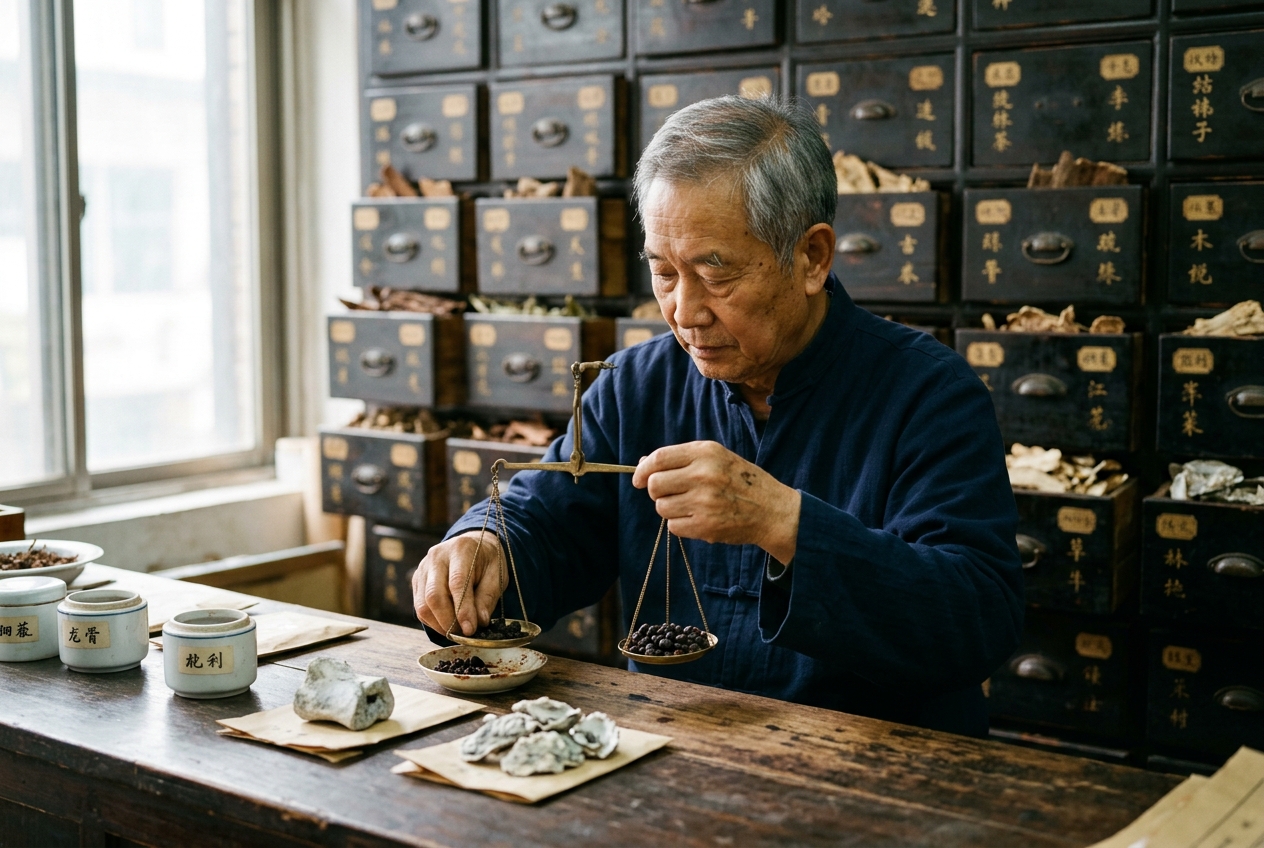
You awaken at three in the morning to find your sheets damp and clinging to your chest, your heart fluttering faintly in the dark while a profound, marrow-deep chill settles into your bones. Or perhaps you recognise a different, equally insidious pattern: the sudden, urgent rumble in your lower abdomen that jolts you awake precisely at five o'clock each dawn, forcing you to rush to the bathroom with loose, unformed stool before the sun has even crested the horizon. In other instances, it presents simply as a pervasive, hollow exhaustion—a feeling that no matter how much water you drink, how cleanly you eat, or how quietly you rest, your body is unable to hold onto its baseline physical stamina. Vitality seems to slip through an invisible crack, leaving you depleted, lightheaded upon standing, and constantly on the edge of burnout.
In contemporary clinical parlance, these diverse manifestations are often partitioned into discrete functional disorders: vasomotor instability, autonomic dysregulation, irritable bowel syndrome, or pelvic floor laxity. Within the conceptual framework of Traditional Chinese Medicine (TCM), however, these seemingly disparate symptoms share a single, unified pathological mechanism: a breakdown in the body’s innate architecture of containment (Gù).
When the physiological boundaries of the viscera lose their structural integrity, vital substances—whether Defensive Qi (Wèi Qì), Blood (Xuè), Bodily Fluids (Jīn Yè), or Essence (Jīng)—begin to leak uncontrollably into the exterior or lower orifices. To rectify this dangerous depletion, classical Chinese herbalism does not merely stimulate or sedate; it deploys an ancient and sophisticated therapeutic class known as Astringent Formulas (Gù Sè Jì). These herbal matrices operate like an internal seal, stabilizing mucosal barriers, tightening neuromuscular sphincters, and anchoring dissipated energy before the body’s fundamental reserves collapse.
2. What This Organ System Does: The Bio-Energetics of Containment and Astringent Prescription Dynamics
To understand how containment operates in the human body, one must recognize that health in East Asian medicine is an active dynamic between dynamic transformation (Huà) and secure retention (Gù). The body must absorb, circulate, and metabolize nutrients, but it must equally possess the tensile strength to hold those transformed treasures within their proper anatomical and energetic reservoirs.
This containment network is maintained by three primary visceral axes:
- The Lungs (Fèi) and Heart (Xīn) [Upper Burner]: The Lung disperses Defensive Qi (Wèi Qì) across the skin's interstitial matrix, regulating the opening and closing of sweat pores (Còu Lǐ). Because sweat is considered the "fluid of the Heart," failure of the Lung to seal the exterior or the Heart to govern its spirit (Shén) results in spontaneous daytime diaphoresis or nocturnal night sweats.
- The Spleen (Pí) [Middle Burner]: The Spleen is the central engine of digestion and the primary commander of physical containment. It is tasked with "holding the blood within the vessels" (Pí Tǒng Xuè) and ascending clear fluids. When Spleen Qi collapses, structural prolapse, chronic diarrhea, and uninhibited uterine spotting occur.
- The Kidneys (Shèn) [Lower Burner]: Known as the "Root of Life," the Kidneys govern the two lower orifices (urethra/reproductive tract and anus). The Kidney’s Yang warmth provides the contractile tension for sphincter closure, while Kidney Yin anchors reproductive Essence (Jīng). When Kidney Qi is unsecured, enuresis, urinary incontinence, spermatorrhea, and intractable dawn diarrhea inevitably follow.
The Pharmacodynamics and Architecture of Astringent Prescriptions (Gù Sè Jì)
Astringent prescriptions are explicitly engineered to arrest pathological discharge. They utilize medicinal substances that are predominantly Sour (Suān), Astringent (Sè), and Heavy-Sedating (Zhèn Shè). According to the five-phase pharmacodynamic model, sour substances enter the Liver and generate fluid while gathering scattered Qi inward; astringent substances physically constrict tissues and bind fluids; heavy mineral substances descend into the Lower Burner to physically anchor floating Yang and calm agitated spirit.
However, classical formulation adheres strictly to the Ruler-Minister-Assistant-Envoy (Jūn-Chén-Zuǒ-Shǐ) structural hierarchy. Astringent herbs are almost never administered in isolation; because leakage is fundamentally a symptom of underlying deficiency, astringents (Biao, the branch) must be balanced with nourishing tonics (Ben, the root) to rebuild the depleted organ systems.
1. Formulas for Arresting Perspiration (Liǎn Hàn Jì)
- Yu Ping Feng San (Jade Windscreen Powder): Formulated for deficiency of Defensive Wei Qi.
- Jūn (Ruler): Huáng Qí (Astragalus membranaceus) — tonifies Lung and Spleen Qi, bolstering the defensive perimeter.
- Chén (Minister): Bái Zhú (Atractylodes macrocephala) — strengthens Spleen Qi to enhance the production of Wei Qi.
- Zuǒ/Shǐ (Assistant/Envoy): Fáng Fēng (Saposhnikovia divaricata) — gently circulates the exterior surface, preventing the tonics from causing stagnation and expelling residual wind. Modern research confirms its role in stabilizing epithelial barriers and immune surveillance (Astragalus in Barrier Homeostasis).
- Mu Li San (Oyster Shell Powder): Formulated for severe spontaneous sweating and nocturnal diaphoresis due to Heart-Qi deficiency and interior deficient heat.
- Jūn: Duan Mǔ Lì (Calcined Oyster Shell) — heavy, salty, and astringent; anchors floating Yang and mechanically secures perspiration.
- Chén: Huáng Qí (Astragalus) — reinforces exterior Wei Qi.
- Zuǒ: Mǎ Huáng Gēn (Ephedra Root) — specifically targets and constricts cutaneous sweat pores.
- Shǐ: Fú Xiǎo Mài (Floating Wheat) — enters the Heart channel to nourish Heart Yin, clear deficient heat, and arrest night sweats.
2. Formulas for Astringing the Intestines and Halting Diarrhea (Sè Cháng Zhǐ Xiè Jì)
- Zhen Ren Yang Zang Tang (True Man's Spleen-Nourishing Decoction): For chronic, unremitting diarrhea or dysenteric disorders leading to prolapse of the rectum due to Middle Burner Cold Deficiency.
- Key Herbs: Yīng Sù Qiào (Papaveris Pericarpium) and Hē Zǐ (Chebulae Fructus) serve as potent astringent rulers; combined with Ròu Dòu Kòu (Nutmeg) to warm the Spleen, alongside Rén Shēn, Bái Zhú, Dāng Guī, and Ròu Guì (Cinnamon Bark) to warm the interior and replenish depleted Qi and Blood.
- Si Shen Wan (Four Miracle Pill): The canonical prescription for "Fifth-Watch" or Dawn Diarrhea (Wǔ Gēng Xiè) caused by combined Spleen and Kidney Yang deficiency.
- Jūn: Bǔ Gǔ Zhī (Psoralea fruit) — tonifies Kidney Yang and warms the Fire at the Gate of Vitality (Mìng Mén).
- Chén: Ròu Dòu Kòu (Nutmeg) — warms the Spleen and binds the intestines.
- Zuǒ: Wú Zhū Yú (Evodia fruit) — dispels interior cold from the liver-stomach axis; Wǔ Wèi Zǐ (Schisandra fruit) — astringes lower burner fluids and consolidates Kidney Qi.
- Shǐ: Shēng Jiāng (Fresh Ginger) and Dà Zǎo (Jujube) — harmonize the Stomach and Spleen.
3. Formulas for Securing Essence and Stopping Enuresis (Sè Jīng Suō Niào Jì)
- Jin Suo Gu Jing Wan (Golden Lock Pill for Securing Essence): Designed for Kidney deficiency resulting in loss of spermatic and renal essence (spermatorrhea, premature ejaculation, nocturnal emissions).
- Key Constituents: Shā Yuàn Zǐ (Astragali Complanati Semen) as the tonifying ruler; Qián Shí (Euryale Semen) and Lián Zǐ (Lotus Seed) to strengthen the Spleen and consolidate essence; Lián Xū (Lotus Stamen), Duàn Lóng Gǔ (Calcined Fossil Bone), and Duàn Mǔ Lì (Calcined Oyster Shell) to powerfully astringe and anchor the pelvic gate.
- Sang Piao Xiao San (Mantis Egg-Case Powder): Prescribed when Heart and Kidney Qi fail to communicate, causing frequent urination, bedwetting, gray-turbid urine, and cognitive disorientation.
- Formula Synergy: Sāng Piāo Xiāo (Mantis Egg-case) warms the Kidneys and astringes urine; Lóng Gǔ anchors floating Yang; Yuǎn Zhì (Polygala) and Shí Chāng Pú (Acorus) open the sensory orifices and bridge communication between the Heart and Kidney; Rén Shēn, Fú Shén, and Dāng Guī nourish Blood and Qi.
4. Formulas for Stabilizing Uterine Bleeding and Leukorrhea (Gù Chōng Zhǐ Dài Jì)
- Gu Chong Tang (Stabilizing the Menses Decoction): For profuse, unremitting uterine bleeding (Bèng Lòu) due to Spleen-Kidney deficiency and instability of the Penetrating (Chōng) and Conception (Rèn) vessels.
- Formula Synergy: Bái Zhú and Huáng Qí tonify Spleen Qi to control blood; Shān Zhū Yú (Cornus) and Bái Sháo nourish the Liver and preserve Yin; Duàn Lóng Gǔ, Duàn Mǔ Lì, Hǎi Piāo Xiāo (Cuttlefish Bone), and Wǔ Bèi Zǐ (Galla Chinensis) deliver immediate multi-angled physical astringency; Qiàn Cǎo (Madder Root) stops bleeding without inducing blood stasis.
- Wan Dai Tang (End Discharge Decoction): For profuse, thin, white-yellowish vaginal discharge (Dài Xià) stemming from Spleen deficiency combined with dampness overflowing into the Girdling Vessel (Dài Mài).
- Formula Architecture: Uses heavy doses of Bái Zhú and Shān Yào (Dioscorea) to build Spleen Qi and dry dampness; Cāng Zhú and Ché Qián Zǐ to transform and drain dampness via the urinary pathway; Bái Sháo to soften the Liver; and tiny amounts of Chái Hú and Jīng Jiè Suì to elevate sunken Yang.
Modern Physiological Correlations
Contemporary biomedical science provides a compelling translation of astringent mechanisms: * Epithelial Tight Junctions & Mucosal Barrier Integrity: Formulas like Zhen Ren Yang Zang Tang directly upregulate the expression of zonula occludens-1 (ZO-1), claudins, and occludins in the intestinal epithelium, arresting paracellular water leakage and halting inflammatory diarrhea (Intestinal Barrier Function and Tight Junctions). * Autonomic Vasomotor & Eccrine Regulation: Diaphoretic astringents (Mu Li San) re-equilibrate the sympathetic-cholinergic innervation of dermal eccrine glands, dampening excessive peripheral vasodilation and spontaneous sweat secretion. * Neuroendocrine Sphincter Regulation: Urological astringents (Jin Suo Gu Jing Wan) modulate alpha-1 adrenergic and muscarinic receptor expression along the bladder neck, internal urethral sphincter, and pelvic floor musculature, improving mechanical closure pressure and restoring tone (Neuroendocrine Regulation of Sphincter Tone).
3. How You Can Feel It — Signs of Balance and Imbalance
When your body's architecture of containment is structurally sound, life feels effortless and cohesive. Fluids stay where they belong, energy remains stable throughout physical and intellectual tasks, digestion is silent and predictable, and emotional equilibrium is maintained under stress. When this internal seal falters, however, the body begins to telegraph clear signs of visceral leakage.
Tongue and Pulse Differentials
A skilled practitioner determines the precise nature of visceral leakage by reading the tongue and radial pulse: * Yang / Qi Deficiency Leakage (e.g., Spleen-Kidney Yang Collapse): * Tongue: Pale, swollen, enlarged body with scalloped tooth-marks along the lateral margins; wet, watery, white slippery coating. * Pulse: Deep (Chén), thin (Xì), and weak/soft (Ruò), particularly absent or faint in the proximal third positions (Chǐ position, representing the Kidneys). * Yin Deficiency / Deficient Heat Leakage (e.g., Consumptive Night Sweating / Essence Depletion): * Tongue: Red or crimson body, narrow or cracked, with little to no coating (peeled/geographic mirror tongue). * Pulse: Superficial, rapid (Shù), thread-thin (Xì), and floating-empty (Kōng).
4. Qigong & Movement Practice: The Crane Stance and Lower Dan Tian Sealing Technique (Fēng Gù Fǎ)
This restorative somato-energetic practice is designed to physically tone the pelvic diaphragm, stabilize the lumbosacral plexus, and energetically seal the Lower Dantian (Xià Dān Tián)—the foundational crucible where Kidney Essence and Yuan Qi are consolidated.
Step-by-Step Exercise Instructions
-
Starting Position & Setup: * Stand with feet parallel, hip-width apart, knees slightly soft (unlocked). Relax your shoulders and let your tailbone drop naturally toward the earth, gently flattening the lumbar arch. * Rest your tongue lightly against the hard palate of your mouth (completing the micro-cosmic circuit between the Ren and Du vessels). * Rest both hands over your lower abdomen, two inches below the navel (the Guanyuan area), left hand over right for women, right hand over left for men.
-
Phase 1 — The Inhalation and Gathering: * Slowly inhale through the nose for a count of four seconds. * As you inhale, imagine drawing cool, luminous air upward from the bubbling spring of your feet (Yongquan, KI-1) through your legs into your pelvis. * Allow your hands to separate and rise laterally up to chest height with the palms facing downward, mimicking the gentle opening wings of a crane.
-
Phase 2 — The Exhalation, Descending, and Lower Lock (Huiyin Lock): * Exhale smoothly through your nose for a count of six seconds. * Press both palms slowly down through the midline of your torso toward your lower abdomen, visualizing your breath compressing and packing energy firmly into the center of your pelvis. * Crucial Engagement: At the midpoint of the exhalation, gently and subtly draw upward on your pelvic floor and anal sphincter (the Huìyīn point, CV-1), exactly as if you were stopping the flow of urine mid-stream. Maintain this gentle 20–30% contraction without tensing your gluteal muscles or holding your breath.
-
Phase 3 — The Consolidation Pause: * Hold the exhalation and the gentle perineal lock for two seconds in absolute stillness, feeling heat and dense stability accumulate in the sacrum and lower back (Mìng Mén). * Release the perineal contraction completely as you begin the next inhalation.
-
Duration & Repetitions: * Perform this cycle 12 full repetitions (approximately 8–10 minutes), ideally performed upon waking in the morning or just prior to retiring in the evening.
-
Sensations to Look For: * You should experience a distinct sensation of spreading warmth across the lumbosacral junction, a feeling of centered physical heaviness in the lower pelvis, and an immediate calming of rapid breathing or mental restlessness. This signals that upward-floating, scattered Yang is successfully descending into its Kidney reservoir.
5. Acupressure Points You Can Try Today
Targeted stimulation of classical containment acupoints activates somatic and autonomic pathways that tonify visceral walls and tighten relaxed sphincters. Stimulate each point using firm, steady circular pressure with your thumb or knuckle for 2 to 3 minutes per point.
Point 1: Guānyuán (CV-4 — "Gate of Origin")
- Location: Located along the midline of the lower abdomen, precisely three finger-widths (2 cun) directly below the center of the umbilicus (navel).
- How to Press: Place two overlapping thumbs on the point. Apply gentle, progressive inward and slightly downward pressure at a 45-degree angle. Maintain deep, rhythmic abdominal breathing. Do not use sharp or jarring force.
- Clinical Indications: The supreme point for tonifying Primary Qi (Yuán Qì), solidifying the Lower Burner, treating nocturnal enuresis, frequent pale urination, uterine prolapse, chronic leucorrhea, and exhaustion.
Point 2: Zúsānlǐ (ST-36 — "Leg Three Miles")
- Location: Sit with knees bent at 90 degrees. Place four fingers horizontally directly below your kneecap (patella). ST-36 is located one finger-width lateral to the sharp anterior crest of the tibia (shin bone), nestled into the tibialis anterior muscle belly.
- How to Press: Use the tip of your thumb to apply firm, deep circular kneading until a distinct, dull ache or radiating sensation (Dé Qì) spreads down the shin into the second toe.
- Clinical Indications: The master point of the gastrointestinal system. It powerfully boosts Spleen Qi, tightens intestinal epithelial junctions, halts chronic watery diarrhea, and restores systemic physical endurance.
Point 3: Tàixī (KI-3 — "Great Stream")
- Location: Located on the inner ankle, directly in the hollow depression between the prominent tip of the medial malleolus (inner ankle bone) and the medial edge of the Achilles tendon.
- How to Press: Pinch the Achilles area using your thumb on KI-3 and index finger on the outer ankle (BL-60). Press inward toward the bone with steady, circular pressure for 2 minutes on both legs.
- Clinical Indications: The Yuan-Source point of the Kidney channel. It nourishes Kidney Yin, anchors deficient heat (relieving nocturnal night sweats), secures the spermatic gate, and strengthens weak lumbar muscles.
6. Food & Lifestyle — Small Changes for Today
Astringency in dietary therapy utilizes natural whole foods with mild sour, binding, and nourishing properties to support the body’s retention systems without over-drying the mucous membranes.
Practical Culinary Integration
- Congee for Intestinal Firmness: Simmer 1/2 cup of white or short-grain rice with 10 dried lotus seeds (Lián Zǐ), 1 chopped fresh Chinese mountain yam (Shān Yào), and a small handful of goji berries in 6 cups of water or bone broth for 90 minutes. Eat warm for breakfast to create an impenetrable, soothing mucosal barrier in the stomach and intestines.
- The Warm Footbath Ritual: Every evening before bed, soak your feet in comfortably hot water (104°F / 40°C) containing a tablespoon of coarse sea salt and three slices of fresh ginger for 15 minutes. This simple practice draws displaced, floating Yang down from the head into the Yongquan (KI-1) points, calming night sweats and halting nocturnal restlessness.
- Protect the Belt Vessel: Never expose your lumbar spine, lower abdomen, or bare feet to cold drafts or damp concrete. The Dài Mài (Girdling Vessel) and Kidney channels are extraordinarily sensitive to environmental cold, which immediately impairs sphincter contractile strength.
7. Today's Takeaway
If you do only one thing today to rebuild your body’s architecture of containment, perform the Five-Minute Lumbar Friction and Perineal Seal: vigorously rub the palms of your hands together until they are glowing hot, immediately place them flat against your lower back over your kidneys (the Mìng Mén region), and rub up and down briskly 50 times until a deep, soothing warmth penetrates into your lower back; then, sit quietly with your hands over your lower abdomen, close your eyes, take five slow, deep nasal breaths, and gently engage your pelvic floor upward on each exhalation. In less than five minutes, without a single pill or apparatus, you will have anchored your floating vital energy, reconnected the circuit between your Heart and Kidneys, and laid the first stone in restoring your body’s natural power of containment.
Authoritative References & Clinical Resources
- World Health Organization Traditional Medicine Strategy & Guidelines
- NCBI PubMed: Bioactive Lignans and Therapeutic Mechanisms of Schisandra chinensis
- NCBI PubMed: Molecular Regulation of Intestinal Tight Junction Barrier Function
- NCBI PubMed: Neuroendocrine Autonomic Regulation of Sphincter Physiology
- NCBI PubMed: Immunomodulatory and Epithelial Protective Actions of Astragalus membranaceus
- Wikipedia: Traditional Chinese Medicine & Visceral Physiology