Weak Measurement: Resolving Quantum Trajectories and Amplifying Anomalous Observables Via Pre- and Post-Selection
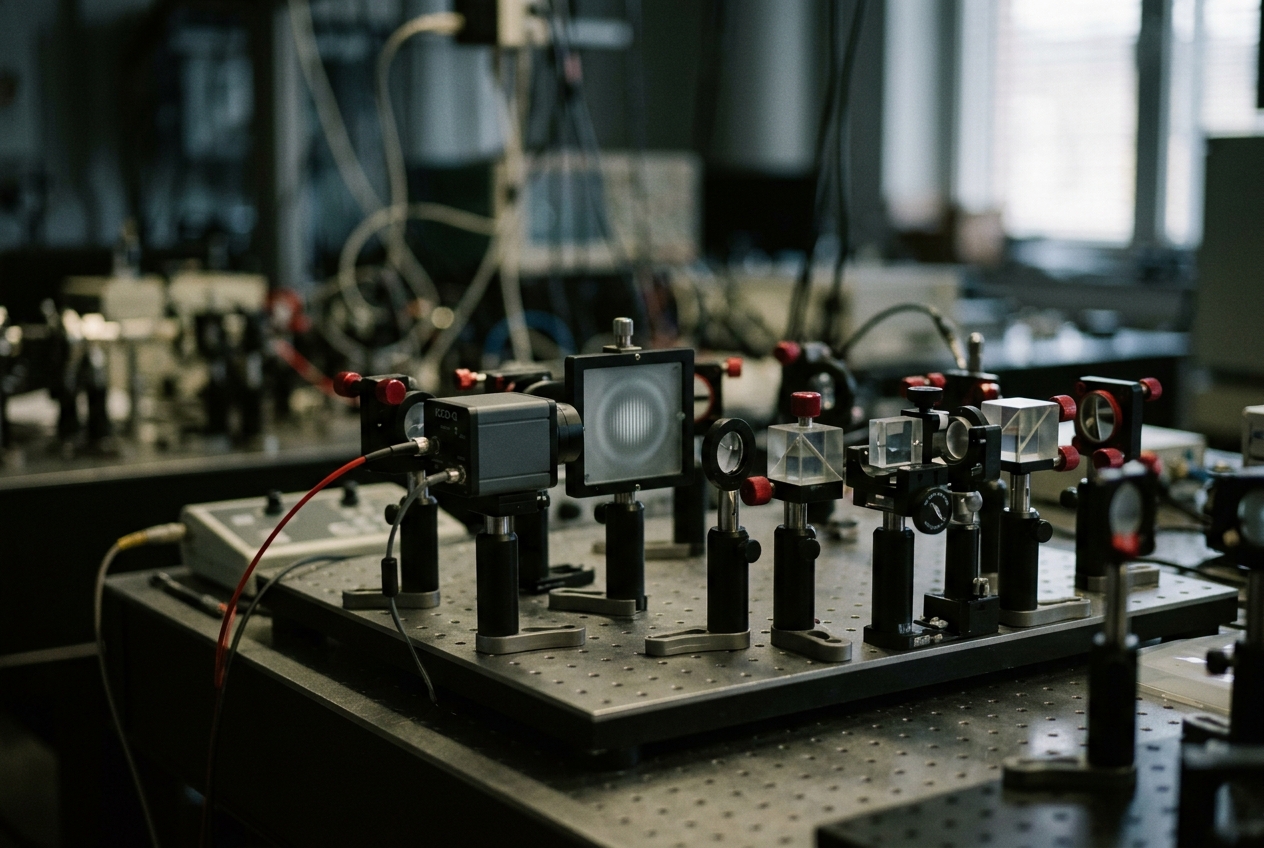
For nearly a century, orthodox quantum mechanics insisted on an unyielding, destructive dogma: to observe a quantum system is to annihilate its possibilities. In the standard canon formulated by John von Neumann and Niels Bohr, looking at an electron or a photon is an act of violent disruption. The delicate tapestry of quantum superpositions—wherein a particle seems to occupy multiple trajectories, energies, or polarizations simultaneously—is instantly crushed into a single, mundane reality. This instantaneous rupture, traditionally termed "wavefunction collapse," suggested that nature imposed an absolute barrier against peeking behind the quantum curtain. Physicists were taught that one could only ever know where a particle landed, never how it danced along the way.
Yet modern precision science demands measurements far beyond the destructive limits of the classical observer. Consider the challenge of measuring the minuscule gravitational warp of a passing gravitational wave, detecting optical beam deflections smaller than the diameter of a single atomic nucleus, or diagnosing structural defects in semiconductor chips without frying their atomic circuits. If every measurement operates like a sledgehammer, our ability to inspect nature’s finest machinery remains inherently limited.
Enter the revolutionary paradigm of weak measurement and the Aharonov-Albert-Vaidman (AAV) framework. First proposed in 1988 by Yakir Aharonov, David Albert, and Lev Vaidman in Physical Review Letters, this technique demonstrates that by coupling an instrument to a quantum particle with gossamer gentleness, one can extract vital information without collapsing the underlying state. When combined with a clever filtering process called post-selection, weak measurements can amplify imperceptible physical signals by orders of magnitude. What was once dismissed as a philosophical curiosity has emerged as an indispensable cornerstone of cutting-edge metrology, quantum computing, and fundamental physics.
The Idea in Plain English
To understand weak measurement, one must first dismantle the myth that measurement in physics is always an all-or-nothing affair.
Imagine entering a pitch-black ballroom where thousands of dancers glide across the floor. Under the classical rules of textbook quantum observation—a strong or "projective" measurement—the physicist turns on an ultra-powerful strobe light. The blinding flash freezes every dancer instantly into a definite spot, but the shock ruins their choreography; the dancers scatter in chaos, and their continuous motion is lost forever. You obtain certainty about where they were at that single microsecond, but you have destroyed the dance.
Now imagine an alternative approach. Instead of a blinding flash, you allow only a tiny sliver of moonlight into the room. As a single dancer glides past, you catch only the faintest shadow—a blurry, uncertain impression that tells you almost nothing definitive about that specific dancer. Your pointer dial wobbles by an amount far smaller than the dial's intrinsic jitter. The dancer, entirely unaware of being watched, continues uninterrupted. You have learned very little from that single interaction, but crucially, the dancer's trajectory remains intact.
Standard (Strong) Measurement:
[Quantum Superposition] ---> [Blinding Strobe / Detector] ---> [Collapse into Single State] (Coherence Destroyed)

Weak Measurement + Post-Selection:
[Pre-Selected State |ψ_i⟩] ---> [Gentle Probe (Uncertainty Intact)] ---> [Post-Selection Filter |ψ_f⟩] ---> [Amplified Weak Value A_w]
The true genius of the AAV framework lies in what happens next: pre-selection and post-selection. Suppose you set up two checkpoints. You only admit dancers who start at the grand entrance (pre-selection), and you place a velvet rope at the far balcony, keeping only those dancers who exit through that specific door (post-selection).
If you examine the dial of your moonlight sensor only for the subset of dancers who made it from that specific entrance to that specific exit, something extraordinary occurs. The tiny, uncertain nudges from all the individual dancers do not simply add up—they construct a coherent, collective signal. Under certain conditions, the indicator needle on your meter shifts to an extreme, anomalous position that would be impossible under normal observation.
This statistical marvel is known as weak-value amplification. It allows researchers to turn microscopic physical phenomena—such as an optical phase shift so small it would normally be drowned out in background noise—into macroscopic, readily readable deflections.
How It Actually Works: The Mechanics of the Whisper
To see why weak measurement avoids destroying quantum superpositions, we must examine the mathematical anatomy of the measurement interaction. In foundational quantum theory, as explored in MIT OpenCourseWare's Quantum Physics curriculum, any measurement requires coupling the quantum system to a physical pointer—such as a luminous spot on a camera sensor or the magnetic needle of a galvanometer.
1. The Interaction Hamiltonian and Wavepacket Spread
The interaction between the system's observable physical quantity $\hat{A}$ (such as spin, position, or polarization) and the measuring device’s pointer is governed by a time-dependent interaction energy. We describe this coupling mathematically by the interaction Hamiltonian:
$$H_{\text{int}}(t) = g(t) (\hat{A} \otimes \hat{p})$$
In this formulation, $g(t)$ represents the coupling strength over time, normalized such that its total time integral equals an overall interaction parameter $g_0$. The operator $\hat{p}$ is the momentum operator of the detector pointer, which serves as the generator of spatial translations for the pointer's position coordinate $\hat{x}$.
Before the interaction takes place, the pointer is prepared in a smooth spatial distribution, typically a Gaussian wavepacket with an intrinsic spatial uncertainty (spread) $\sigma_x$.
- In a strong von Neumann measurement, the interaction strength $g_0$ is engineered to be much larger than the pointer’s uncertainty $\sigma_x$. The interaction forcibly splits the pointer's wavepacket into distinct, non-overlapping spatial peaks corresponding to each separate eigenvalue of $\hat{A}$. The pointer and the quantum system become deeply entangled, and distinguishing the pointer position irrevocably collapses the quantum state into an eigenstate.
- In a weak measurement, by contrast, the experimenter deliberately dials the coupling strength down so that $g_0$ is significantly smaller than the pointer's native quantum spread $\sigma_x$. Because the shift imparted by the interaction is deeply buried within the wavepacket's baseline uncertainty, the different possible eigenstates of $\hat{A}$ remain completely overlapping. The system and pointer become only weakly correlated, leaving the quantum phase relationships—the coherence—essentially undamaged.
2. Deriving the Aharonov-Albert-Vaidman Weak Value
Now, let us introduce the two-state boundary condition. First, the quantum system is prepared in a known initial state $|\psi_i\rangle$ (pre-selection). Next, it undergoes the gentle interaction described by $H_{\text{int}}(t)$. Finally, the experimenter performs a conventional, strong projective measurement on the system and retains only those runs where the system is successfully detected in a chosen final state $|\psi_f\rangle$ (post-selection).
By computing the conditioned state of the pointer after the post-selection filter succeeds, and applying a first-order Taylor expansion under the condition of weak coupling, the effective quantity that acts upon the detector is no longer an ordinary expectation value. Instead, it is the complex weak value $A_w$:
$$A_w = \frac{\langle \psi_f | \hat{A} | \psi_i \rangle}{\langle \psi_f | \psi_i \rangle}$$
This elegant equation is the core mathematical result of the Wikipedia-documented AAV framework. It differs fundamentally from standard quantum expectation values in two profound ways:
- It is a complex number: $A_w$ has both a real component $\text{Re}(A_w)$ and an imaginary component $\text{Im}(A_w)$.
- It is non-contextual and unbounded: Unlike standard quantum eigenvalues, which are strictly bounded by the spectrum of the operator $\hat{A}$ (for instance, a spin-1/2 measurement can only yield $+1/2$ or $-1/2$), the weak value $A_w$ can take on virtually any value, including numbers hundreds or thousands of times larger than the operator’s maximum eigenvalue.
3. Physical Anatomy of the Pointer Shift
When we inspect the physical pointer after successful post-selection, what do its coordinates reveal? The mean displacement of the pointer's spatial position $\langle \hat{x} \rangle$ and momentum $\langle \hat{p} \rangle$ register distinct signatures of the complex weak value:
$$\langle \hat{x} \rangle_f = \langle \hat{x} \rangle_i + g_0 \text{Re}(A_w)$$
The physical consequences of this result are profound:
- The Real Part $\text{Re}(A_w)$: Governs the physical translation of the pointer on your sensor. If the pre-selected state $|\psi_i\rangle$ and post-selected state $|\psi_f\rangle$ are prepared such that their inner product $\langle \psi_f | \psi_i \rangle$ is a tiny number $\epsilon$ (meaning the states are nearly orthogonal), the denominator approaches zero. Consequently, $A_w$ explodes in magnitude. A minute physical interaction $g_0$ that would ordinarily shift a laser beam by a subatomic fraction of a nanometer is magnified by $\text{Re}(A_w)$, causing a macroscopic, millimeter-scale displacement on a detector.
- The Imaginary Part $\text{Im}(A_w)$: Dictates a shift in the pointer’s momentum distribution $\langle \hat{p} \rangle$. In an optical experiment, this corresponds to a tilt in the wavevector or a shift in the beam’s central frequency. This imaginary component represents the inevitable measurement backaction—the subtle, unavoidable momentum kick imparted to the probe by the quantum interaction itself.
4. The Signal-to-Noise Ratio (SNR) and the Shot-Noise Debate
A skeptical reader might ask: If weak-value amplification magnifies the signal by making the denominator near-zero, haven't we created free energy or violated quantum information limits?
The answer lies in the probability of successful post-selection, given by $P_f = |\langle \psi_f | \psi_i \rangle|^2 \approx \epsilon^2$. As the amplification factor $A_w \propto 1/\epsilon$ grows, the fraction of particles that successfully pass through the post-selection filter plummets by $\epsilon^2$.
In an idealized laboratory limited purely by fundamental quantum shot noise (the statistical Poissonian arrival of individual photons), the reduction in particle count exactly balances the linear signal boost. The fundamental quantum Fisher information across the entire ensemble cannot exceed standard quantum limits.
However, real-world laboratories do not operate in a textbook vacuum. Real experiments are plagued by technical noise: detector saturation thresholds, thermal baseline drift, mechanical vibrations, 1/f flicker noise, and optical beam jitter. In technical noise-dominated regimes, weak-value amplification provides an extraordinary advantage:
- Evading Detector Saturation: You can fire a high-power laser containing trillions of photons into your setup without frying your sensitive photodiodes, because the post-selection filter discards 99.9% of the unshifted light.
- Signal Concentration: The tiny 0.1% of photons that reach the detector carry nearly 100% of the relevant physical parameter information, amplified well above the electronic noise floor of the camera.
- Common-Mode Rejection: Environmental vibrations affect both paths of an interferometer equally and cancel out, while the anomalous weak value selectively magnifies the differential signal of interest.
Real-World Applications Today
Far from being an abstract exercise in quantum philosophy, weak measurement has fueled a technological revolution across precision metrology, quantum computing, and optical diagnostics over the past several years (2024–2026).
1. Ultra-Sensitive Optical Beam Deflection and Nanoscale Metrology
- Key Institutions: University of Rochester, National Institute of Standards and Technology (NIST), Caltech.
- The Challenge: In atomic force microscopy, lithography, and gravitational wave instrumentation, researchers must measure mirror tilts on the order of picoradians and spatial deflections smaller than the diameter of a single atom.
- The Quantum Advantage: By passing a laser beam through a Sagnac interferometer with a split-polarization state, physicists use weak values to amplify tiny spatial deflections by factors of several hundred. In landmark experiments highlighted in Nature, researchers demonstrated the detection of beam shifts as small as a few femtometers (the scale of an atomic nucleus) without requiring cryogenic cooling or extreme laser powers that would melt the sample.
2. Tracking Continuous Quantum Trajectories in Superconducting Circuits
- Key Institutions: Yale Quantum Institute, CNRS (Laboratoire de Physique de l'ENS), IBM Quantum.
- The Challenge: Quantum computers built from superconducting transmons are notoriously fragile. To correct quantum errors in real time, hardware developers need to know if a qubit is beginning to drift away from its designated state without triggering an immediate, destructive collapse.
- The Quantum Advantage: By continuously routing extremely weak microwave probe tones through readout resonators coupled to the qubit, engineers perform continuous weak measurements. This allows them to map out the unbroken, smooth "quantum trajectory" of a qubit as it moves across the Bloch sphere. By monitoring these subtle continuous weak values, control systems apply instantaneous feedback pulses that steer the qubit back to safety before any uncorrectable phase error occurs.
3. Sagnac Interferometric Gyroscopes and Precision Phase Sensing
- Key Institutions: Stanford University, MIT Precision Quantum Measurement Group.
- The Challenge: Autonomous navigation systems for deep-sea exploration, aerospace, and defense must track position without GPS signals by measuring rotational velocities with extreme fidelity.
- The Quantum Advantage: Weak-value-amplified Sagnac interferometers use post-selected optical paths to amplify the relativistic Sagnac phase shift induced by rotation. By magnifying the differential optical phase while rejecting common-mode laser amplitude fluctuations, these devices achieve record-breaking sensitivity in compact, chip-integrated photonic packages.
4. Non-Destructive Bio-Nanophotonics and Molecular Diagnostics
- Key Institutions: Max Planck Institute for the Science of Light, Harvard Quantum Initiative.
- The Challenge: Imaging delicate single molecules, live viral envelopes, or complex protein dynamics requires high optical sensitivity. However, increasing laser intensity causes photobleaching and photothermal destruction of the living specimen.
- The Quantum Advantage: Weak measurement metrology enables researchers to extract ultra-fine chiral and phase signatures of biomolecules using minimal photon budgets. Because the vast majority of non-interacting photons are filtered out during pre- and post-selection, the biological sample is subjected to negligible optical power while the detector receives an amplified phase signal, enabling non-destructive live-cell diagnostic imaging at the single-molecule scale.
What This Means for You
It is tempting to view quantum measurement theory as an esoteric playground reserved for ivory-tower theoreticians. Yet the principles governing weak values have immediate, tangible consequences for the technologies shaping our daily lives:
- Unlocking Error-Corrected Quantum Supercomputers: If quantum computing is ever to revolutionize drug discovery or crack industrial optimization challenges, quantum processors must continuously detect and correct bit-flip and phase-flip errors. Weak measurement provides the gentle, non-destructive monitoring framework required to run real-time quantum error correction protocols without halting computations.
- Defect-Free Next-Generation Microchips: As silicon transistors shrink toward single-digit nanometer nodes, traditional optical inspection tools damage or fail to resolve minute manufacturing flaws. Weak-value-amplified optical metrology allows chipmakers to spot structural and optical anomalies at sub-angstrom scales, directly boosting chip reliability and lowering the cost of consumer electronics.
- Resilient Autonomous Transport: Vehicles operating in GPS-denied environments—such as underwater submersibles, underground rail networks, and long-range aircraft—rely on inertial navigation units. Quantum-enhanced gyroscopes utilizing weak-value phase detection deliver unprecedented navigational stability, ensuring pinpoint accuracy without external satellite signals.
- Early-Stage Disease Detection: By measuring minute optical phase delays caused by single viral particles binding to diagnostic biosensors, weak measurement platforms enable clinical diagnostics with sensitivity orders of magnitude higher than conventional rapid tests, catching infections and cellular mutations long before symptoms manifest.
Today's Takeaway
The central revelation of the Aharonov-Albert-Vaidman framework is that measurement in quantum mechanics is not an inescapable sledgehammer, but a finely tunable dial. By dialing down the interaction energy between a probe and a quantum particle, and judiciously filtering the results through pre- and post-selection, physicists can transcend textbook eigenvalue limits and amplify the gentlest whispers of nature into unmistakable signals. Weak measurement replaces the violent, discontinuous collapse of the classical quantum worldview with a continuous, elegant bridge—proving that we can illuminate the deepest, most delicate secrets of the quantum world without breaking its spell.