Quantum Secret Sharing: Distributing Multipartite Keys and Reconstructing Quantum States Through Threshold Entanglement
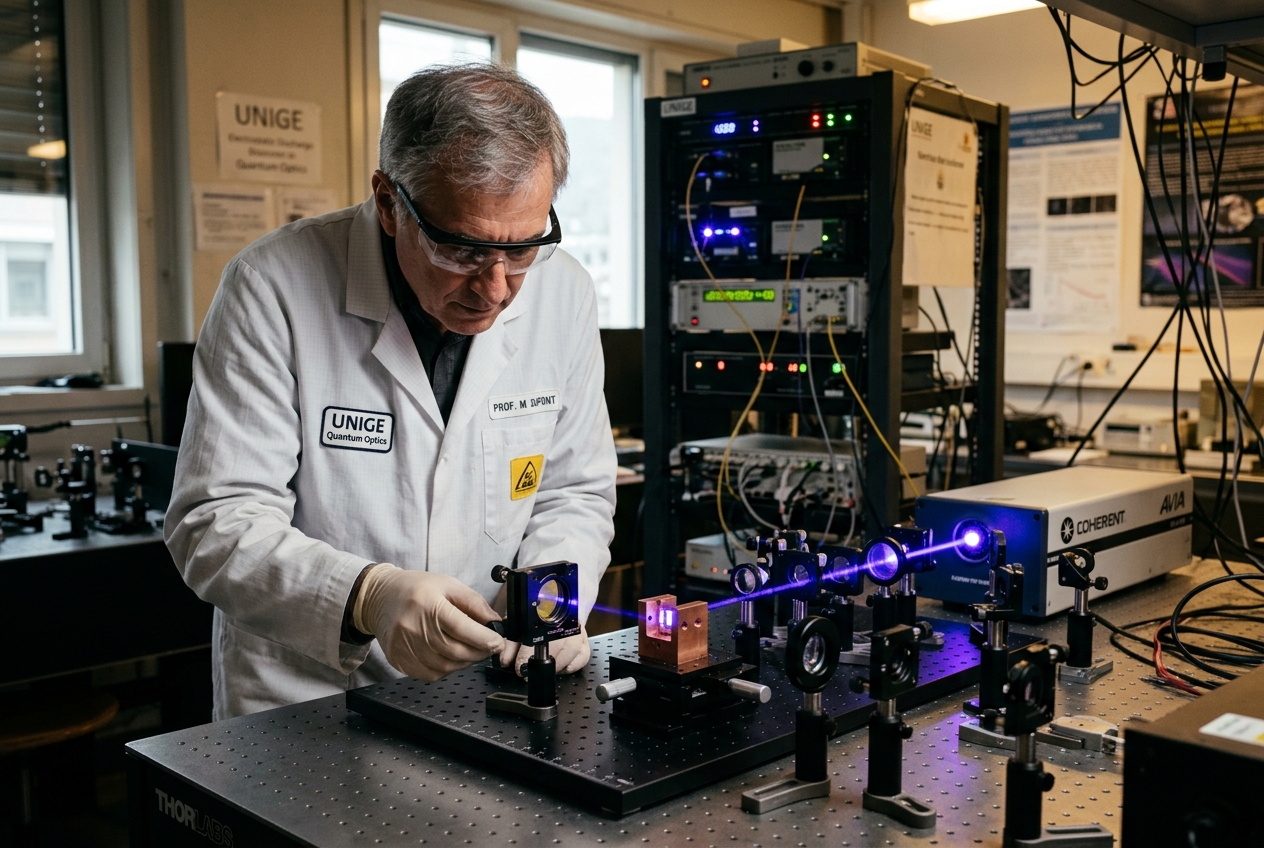
Consider the catastrophic vulnerability at the heart of our most sensitive institutions: absolute trust concentrated in single hands. Whether authorizing the launch of a strategic deterrent, executing a sovereign central bank’s multi-billion-dollar settlement, or signing the master cryptographic root certificate that secures global internet traffic, unilateral authority is an existential hazard. If a single individual holds the master key, a single betrayal, coercion event, or hardware compromise collapses the entire security perimeter. Conversely, if that authority is naively duplicated across several deputies, every additional copy creates a new attack surface for industrial espionage or state-sponsored intrusion.
For nearly half a century, the digital world addressed this dilemma using classical mathematics, dividing digital keys into fragmented mathematical puzzles that require a quorum to solve. Yet, as the advent of fault-tolerant quantum computing looms over modern cryptography, every classical secret sharing scheme anchored in computational hardness faces obsolescence. Worse still, classical digital fragments can be copied, intercepted, and archived silently without leaving any physical footprint.
Quantum Secret Sharing (QSS) solves this fundamental vulnerability by moving the locus of trust from unproven mathematical complexity to the immutable laws of quantum mechanics. By encoding secret information across multipartite entangled states of light, quantum secret sharing guarantees that no individual participant—and no unauthorized cabal—can extract a single bit of information on their own. The moment an unauthorized party attempts to spy on or alter a quantum share, the physical laws governing quantum measurement instantly corrupt the state, sounding an immediate, tamper-evident cryptographic alarm before any secret can be compromised.
2. The Idea in Plain English
To understand quantum secret sharing, imagine a bank vault protected not by a single brass key or a memorized numerical passcode, but by an ensemble of three specialized, synchronized optical tokens distributed among three trustees: Alice (the dealer), Bob, and Charlie.
In a classical world, these tokens would be akin to physical slips of paper, each containing a fragment of the combination. If Bob were dishonest, he could place his slip into a digital scanner, produce an exact clone, hand the duplicate to an adversary, and retain the original without anyone noticing. Classical information, by its very nature, can be duplicated without altering the original source.
+-------------------------------------------------------------------------+
|                  THE PARADIGM OF DISTRIBUTED QUANTUM TRUST              |
|                                                                         |
|   Classical Key Sharing: Fragments can be cloned, intercepted, and      |
|   analyzed offline without disturbing the source data.                  |
|                                                                         |
|   Quantum Secret Sharing: Information is woven into entangled particles.|
|   Individual shares contain absolute mathematical randomness. The       |
|   secret manifests ONLY upon cooperative multi-party measurement.       |
+-------------------------------------------------------------------------+
In the quantum regime, however, the dealer does not distribute inert pieces of paper. Instead, the dealer generates a triplet of photons linked through quantum entanglement—a physical connection where the individual particles lose their independent identities and exist as a unified, non-separable system.
When Bob and Charlie receive their individual photons, each particle behaves like a coin spinning suspended in mid-air. If Bob examines his photon in isolation, the outcome of his measurement is entirely random—a sequence of pure, unpatterned white noise containing zero information about Alice’s secret. Charlie’s photon yields an identical, meaningless randomness. However, because the photons share a Greenberger-Horne-Zeilinger entanglement, Bob's measurement outcome and Charlie's measurement outcome are strictly correlated with Alice's original state. Only when Bob and Charlie physically meet, combine their measurement records, and correlate their findings can they decode the dealer's message.
Crucially, quantum mechanics imposes two strict physical safeguards on this process: * The No-Cloning Barrier: Under the No-Cloning Theorem, it is physically impossible to create an identical copy of an arbitrary, unknown quantum state. An attacker cannot intercept a quantum key fragment and replicate it for clandestine study. * Measurement Disturbance: In quantum physics, the act of observing a system alters its physical state. If an eavesdropper or a rogue insider intercepts an entangled particle in transit, their measurement collapses the fragile quantum correlation, introducing immediate, quantifiable errors that expose the intrusion.
3. How It Actually Works — The Mechanics
The theoretical and mathematical foundations of secret sharing bridge classical polynomial algebra, multipartite quantum optics, and quantum error correction.
               +--------------------------------------+
               |      Alice (Dealer / Secret S)       |
               +--------------------------------------+
                                  |
                Generates 3-Qubit Entangled GHZ State
                                  |
                 +----------------+----------------+
                 |                                 |
                 v                                 v
      +---------------------+           +---------------------+
      |     Bob (Node 1)    |           |   Charlie (Node 2)  |
      +---------------------+           +---------------------+
                 |                                 |
      Measures in X or Y Basis          Measures in X or Y Basis
                 |                                 |
                 +----------------+----------------+
                                  |
                       Public Basis Reconciliation
                      & Joint Classical Computation
                                  |
                                  v
                  +--------------------------------+
                  |   Reconstructed Secret Key S   |
                  +--------------------------------+
Classical Foundations: Shamir’s Threshold Scheme
Before exploring the quantum framework, we examine the classical benchmark established by Adi Shamir in 1979. In a classical $(k, n)$ threshold scheme, a dealer divides a secret $S$ among $n$ participants such that any group of $k$ or more participants can reconstruct the secret, whereas any coalition of $k - 1$ or fewer participants learns nothing.
Shamir’s scheme operates over a finite field $\mathbb{F}_p$ (where $p$ is a prime number strictly greater than $n$ and $S$). The dealer constructs a random polynomial of degree $k - 1$:
$$f(x) = S + \sum_{j=1}^{k-1} a_j x^j \pmod p$$
Here, the secret $S$ is encoded as the constant term $f(0) = S$, while the coefficients $a_1, \dots, a_{k-1}$ are chosen uniformly at random from $\mathbb{F}_p$. The dealer distributes the evaluations $s_i = (x_i, f(x_i))$ to each participant $i \in {1, \dots, n}$. By Lagrange polynomial interpolation, any subset of $k$ distinct points uniquely reconstructs $f(x)$ and determines $S$:
$$f(0) = \sum_{i=1}^{k} s_i \prod_{j \neq i} \frac{-x_j}{x_i - x_j} \pmod p$$
While mathematically elegant, classical threshold schemes remain fundamentally vulnerable to quantum-enabled side-channel extraction, non-repudiation vulnerabilities, and undetected interception of communication channels.
The Hillery-Bužek-Berthiaume (HBB99) Protocol
In 1999, Mark Hillery, Vladimír Bužek, and André Berthiaume formulated the foundational protocol for sharing classical secrets via entangled quantum states. Known as the HBB99 protocol, the architecture relies on a three-qubit Greenberger–Horne–Zeilinger (GHZ) state:
$$|\text{GHZ}\rangle = \frac{1}{\sqrt{2}}\left(|000\rangle + |111\rangle\right)$$
In this protocol, Alice acts as the dealer, while Bob and Charlie are the authorized participants. The three qubits are distributed across spatially separated nodes: Alice retains qubit 1, Bob receives qubit 2, and Charlie receives qubit 3.
To transmit a classical secret bit, each participant randomly and independently measures their respective qubit in either the Pauli-$X$ eigenbasis ${|+\rangle, |-\rangle}$ or the Pauli-$Y$ eigenbasis ${|+i\rangle, |-i\rangle}$. These single-qubit states are defined as:
$$|+\rangle = \frac{|0\rangle + |1\rangle}{\sqrt{2}}, \quad |-\rangle = \frac{|0\rangle - |1\rangle}{\sqrt{2}}$$
$$|+i\rangle = \frac{|0\rangle + i|1\rangle}{\sqrt{2}}, \quad |-i\rangle = \frac{|0\rangle - i|1\rangle}{\sqrt{2}}$$
When the tripartite GHZ state is rewritten in terms of the Pauli-$X$ and Pauli-$Y$ eigenstates, distinct phase correlations emerge across the joint system. Specifically, we evaluate the joint Pauli operator eigenbases. The product of the local spin measurements produces four specific basis combinations whose joint eigenstates exhibit deterministic parity: 1. Measuring in the $(X, X, X)$ basis yields an overall parity of $+1$. 2. Measuring in the $(X, Y, Y)$ basis yields an overall parity of $-1$. 3. Measuring in the $(Y, X, Y)$ basis yields an overall parity of $-1$. 4. Measuring in the $(Y, Y, X)$ basis yields an overall parity of $-1$.
Any other basis combination (such as $(X, X, Y)$ or $(Y, Y, Y)$) yields completely uncorrelated results.
After completing their optical measurements, Alice, Bob, and Charlie publicly announce their chosen measurement bases (e.g., $X$ or $Y$) over an authenticated classical channel, keeping their specific measurement outcomes ($+1$ or $-1$) strictly confidential. Whenever their collective basis choices match one of the four deterministic configurations, Alice's measurement result $m_A \in {+1, -1}$ is precisely dictated by the product of Bob’s result $m_B$ and Charlie’s result $m_C$:
$$\text{For } (X,X,X): \quad m_A \cdot m_B \cdot m_C = +1 \implies m_A = m_B \cdot m_C$$
$$\text{For } (X,Y,Y), (Y,X,Y), (Y,Y,X): \quad m_A \cdot m_B \cdot m_C = -1 \implies m_A = -(m_B \cdot m_C)$$
Because Bob’s reduced density matrix is the maximally mixed state $\rho_B = \text{Tr}_{AC}(|\text{GHZ}\rangle\langle\text{GHZ}|) = \frac{1}{2}I$, his measurement outcome is perfectly random and statistically independent of Alice’s bit. Charlie's reduced state is likewise $\rho_C = \frac{1}{2}I$. Consequently, neither Bob nor Charlie can deduce Alice's bit independently. Only when Bob and Charlie collaborate and multiply their respective outcomes can they reconstruct Alice’s value, establishing a secure classical key.
To prevent eavesdropping or cheating by a dishonest player, the participants sacrifice a randomly selected subset of their correlated rounds. Bob and Charlie announce both their bases and their raw measurement results over the public channel. If an eavesdropper (Eve) intercepted a photon, or if Charlie attempted to measure his photon in a basis designed to extract Alice's key unilaterally, the tripartite quantum state would collapse prematurely. This introduces an immediate, detectable quantum bit error rate (QBER) exceeding the theoretical threshold of $0\%$, alerting Alice to abort the transmission.
The Cleve-Gottesman-Lo (CGL99) Protocol & Quantum Error Correction
While the HBB99 scheme shares a classical secret using entangled qubits, Richard Cleve, Daniel Gottesman, and Hoi-Kwong Lo extended the paradigm in 1999 to share an arbitrary, unknown quantum state $|\psi\rangle = \alpha|0\rangle + \beta|1\rangle$.
+-------------------------------------------------------------------------+
|                CGL99 PROTOCOL: THE QUANTUM ERROR CODE DUALITY           |
|                                                                         |
|  An ((k, n)) Threshold Quantum Secret Sharing Scheme                    |
|                             ISOMORPHIC TO                               |
|  An [[n, 1, 2k - n]] Stabilizer Quantum Error-Correcting Code           |
+-------------------------------------------------------------------------+
The CGL99 breakthrough proved a profound mathematical equivalence: an $((k, n))$ threshold quantum secret sharing scheme is isomorphic to an $[[n, 1, 2k - n]]$ quantum error-correcting code (QECC).
In standard quantum error correction terminology, an $[[n, K, d]]$ stabilizer code encodes $K$ logical qubits into an entangled subspace of $n$ physical qubits with a code distance $d$. In the CGL99 construction: * The dealer encodes $1$ logical qubit ($K = 1$, the secret state $|\psi\rangle$) across $n$ physical shares distributed to $n$ participants. * If any $k$ authorized participants assemble their shares, they possess $k$ physical qubits. The remaining $n - k$ shares held by non-participating or adversarial parties can be treated mathematically as erasure errors (qubits at known locations whose states are completely lost). * A quantum error-correcting code can correct up to $e$ erasure errors if and only if its code distance satisfies $d > e$. Setting $e = n - k$, the code distance must satisfy $d = 2(n - k) + 1$ in general, which directly establishes the relationship $d = 2k - n$.
This equivalence imposes a fundamental physical boundary on quantum secret sharing, governed directly by the No-Cloning Theorem:
$$k > \frac{n}{2} \iff d = 2k - n \ge 1$$
To understand why pure-state quantum secret sharing demands a strict majority threshold ($k > n/2$), consider the contradiction that arises if $n \ge 2k$. Suppose a dealer could construct a pure-state $((2, 4))$ scheme where $n = 4$ and $k = 2$. Four participants ${P_1, P_2, P_3, P_4}$ receive their respective shares. Under the $(2, 4)$ rule, the disjoint subset ${P_1, P_2}$ can reconstruct the exact unknown state $|\psi\rangle$. Simultaneously, the independent, non-overlapping subset ${P_3, P_4}$ could also reconstruct the exact state $|\psi\rangle$.
This would yield two identical copies of an arbitrary, unknown quantum state from a single input without interacting with each other, directly violating the no-cloning theorem. Thus, no pure-state quantum secret sharing scheme can exist unless the reconstruction threshold satisfies the strict majority requirement $k > n/2$.
Practical Vulnerabilities, Cheating Players, and Mitigation
Deploying quantum secret sharing across practical optical networks introduces physical noise, component imperfections, and targeted attack vectors: 1. Dishonest Internal Participants: Unlike external eavesdroppers, an internal dishonest participant (e.g., Charlie) holds valid quantum shares. In an unverified protocol, Charlie can perform a collective unitary operation coupling his share with an ancilla qubit (an auxiliary probe), perturbing the joint state to gain unilateral information while broadcasting forged classical measurement outcomes to frame Bob. To counter this, modern QSS employs entangled verifiable protocols that utilize multi-qubit decoy states and continuous random state sampling to verify the fidelity of all participants before reconstruction. 2. Channel Noise and Entanglement Purification: Environmental thermal fluctuations, chromatic dispersion, and birefringence in standard silica optical fiber cause phase-flip and bit-flip decoherence, degrading the raw GHZ state into a mixed state. To maintain cryptographic fidelity across metropolitan distances, nodes run quantum entanglement purification protocols (such as the Deutsch and BBPSSW protocols). By performing local bilateral operations and CNOT gates on multiple noisy pairs followed by selective post-measurement filtering, nodes distill a smaller set of high-fidelity, maximally entangled GHZ states from a large reservoir of noisy states. 3. Physical Channel Implementation: Modern testbeds implement QSS using polarization-encoded or time-bin-encoded photon triplets generated via spontaneous parametric down-conversion (SPDC) in non-linear periodically poled potassium titanyl phosphate (PPKTP) crystals, routed through arrayed waveguide gratings over standard fiber-optic communication infrastructures.
4. Real-World Applications Today
Between 2024 and 2026, quantum secret sharing has advanced from theoretical physics laboratories into operational testbeds and quantum communication networks. The following major research initiatives illustrate this transition:
+------------------------------------------------------------------------------------+
|                      ACTIVE QUANTUM SECRET SHARING INITIATIVES                     |
+------------------------------------+-----------------------------------------------+
| Domain / Institution               | Core Objective & Quantum Advantage            |
+------------------------------------+-----------------------------------------------+
| Blind Quantum Cloud Computing      | Secure multi-tenant quantum processing via    |
| (IBM Quantum & MIT Lincoln Lab)    | distributed stabilizer code error correction. |
+------------------------------------+-----------------------------------------------+
| Defense Key Management             | Quantum threshold root-key generation via     |
| (EuroQCI Consortium & Toshiba)     | hardware-authenticated multi-node GHZ fibers. |
+------------------------------------+-----------------------------------------------+
| Quantum Decentralized Finance      | Multi-party threshold transaction signing     |
| (Qunnect & NYU Quantum Center)     | immune to quantum algorithmic cryptanalysis.  |
+------------------------------------+-----------------------------------------------+
| Distributed Quantum Sensing        | Sub-shot-noise baseline interferometry and    |
| (Max Planck Institute of Quantum)  | synchronized optical atomic clock networks.   |
+------------------------------------+-----------------------------------------------+
1. Blind Distributed Quantum Cloud Computing
- Institutions: IBM Quantum Learning in partnership with the MIT OpenCourseWare Quantum Information Science consortium and MIT Lincoln Laboratory.
- Objective: Enabling clients to delegate complex, proprietary quantum algorithms across distributed, untrusted quantum cloud servers without revealing the underlying data or the executed circuits.
- Quantum Advantage: By encoding algorithmic subroutines into $((k, n))$ quantum error-correcting codes via CGL99 protocols, computation is executed homomorphically across distributed quantum processing units (QPUs). No individual cloud node possesses enough physical shares to reconstruct the client's proprietary state, guaranteeing information-theoretic privacy during distributed processing.
2. Strategic Defense and Critical Infrastructure Key Management
- Institutions: The European Quantum Communication Infrastructure (EuroQCI) initiative, in collaboration with Toshiba Europe’s Quantum Technology Division.
- Objective: Replacing single-custodian classical root certificates with quantum threshold signing architectures across inter-governmental data centers.
- Quantum Advantage: EuroQCI utilizes multi-node fiber rings to distribute polarization-entangled GHZ photon triplets among defense ministries. Authorization commands for critical infrastructure control require a verified $(k, n)$ quorum of allied nodes. Any physical tap, fiber-bend attack, or rogue insider generates observable quantum decoherence, terminating the transaction instantly.
3. Decentralized Financial Settlement and Multi-Party Custody
- Institutions: Qunnect Inc., operating across the New York Quantum Metropolitan Testbed, in coordination with the New York University (NYU) Center for Quantum Information Physics.
- Objective: Securing multi-party digital transaction authorizations and institutional cryptocurrency custody against both classical side-channel attacks and future quantum decryption.
- Quantum Advantage: Classical multi-party computation (MPC) wallets rely on elliptic curve threshold signatures, which are vulnerable to Shor’s algorithm on fault-tolerant quantum computers. By deploying continuous-variable quantum secret sharing across commercial metropolitan dark fiber, financial institutions distribute transaction authorization keys with information-theoretic security, ensuring resilience against future quantum-assisted attacks.
4. Distributed Quantum Metrology and Clock Synchronization
- Institutions: The Max Planck Institute of Quantum Optics (MPQ) in collaboration with national metrology institutes.
- Objective: Interlinking geographically separated optical lattice atomic clocks to create an ultra-precise, GPS-independent global time standard and distributed quantum sensor network.
- Quantum Advantage: Leveraging multipartite entangled states distributed via quantum secret sharing, sensor nodes surpass the standard quantum limit (shot-noise limit), achieving measurement precision at the fundamental Heisenberg limit ($\Delta \theta \sim 1/N$). This enables real-world monitoring of microscopic gravitational shifts, seismic plate strain, and localized relativistic time dilation.
5. What This Means for You
It is easy to perceive quantum secret sharing as an esoteric abstraction confined to physics laboratories and national security facilities. In reality, this technology forms the bedrock of the next-generation security architecture that will protect your everyday digital identity, privacy, and personal assets.
Every time you authenticate a financial transaction on your smartphone, authorize medical records sharing between clinical providers, or utilize government digital identity portals, your security relies on central certificate authorities and multi-signature security protocols. Today, these systems are vulnerable to systemic single-point failures: a compromised server, an unfaithful employee, or a stolen private key can expose your personal identity, biometric signatures, and financial assets.
+-------------------------------------------------------------------------+
|                  HOW QUANTUM SECRET SHARING PROTECTS YOU                |
|                                                                         |
|  * Eliminates Centralized Master Keys: Digital authority is physically  |
|    distributed across multi-node networks.                              |
|  * Eliminates Undetected Theft: Physical laws ensure that any attempt   |
|    to steal or intercept data fragments triggers an instant alarm.      |
|  * Future-Proof Security: Protection does not expire when faster, more  |
|    powerful quantum computers are developed.                            |
+-------------------------------------------------------------------------+
As quantum secret sharing integrates into commercial telecommunications networks, it replaces centralized digital master keys with distributed, quantum-entangled key fragments. If an adversary attempts to steal your sovereign digital identity or intercept your financial transactions, they cannot silently duplicate your security credentials in the background. The fundamental laws of quantum optics protect your data: any attempt to intercept or manipulate the quantum shares collapses the physical state, sounding an immediate alarm and neutralizing the attack.
For further academic study on the foundational mechanics of quantum information, see the peer-reviewed literature on Nature's quantum physics portal and the comprehensive documentation on Quantum Secret Sharing at Wikipedia.
6. Today's Takeaway
Quantum Secret Sharing transforms trust from a fragile human assumption into an absolute physical law: by encoding secrets across entangled Greenberger-Horne-Zeilinger states and quantum error-correcting codes, information cannot be read by any single entity, duplicated by an adversary, or reconstructed without an authorized quorum, turning the fundamental act of measurement into the ultimate cryptographic shield.