Minimum-Weight Perfect Matching: Decoding Topological Surface Codes and Resolving Syndrome Error Chains
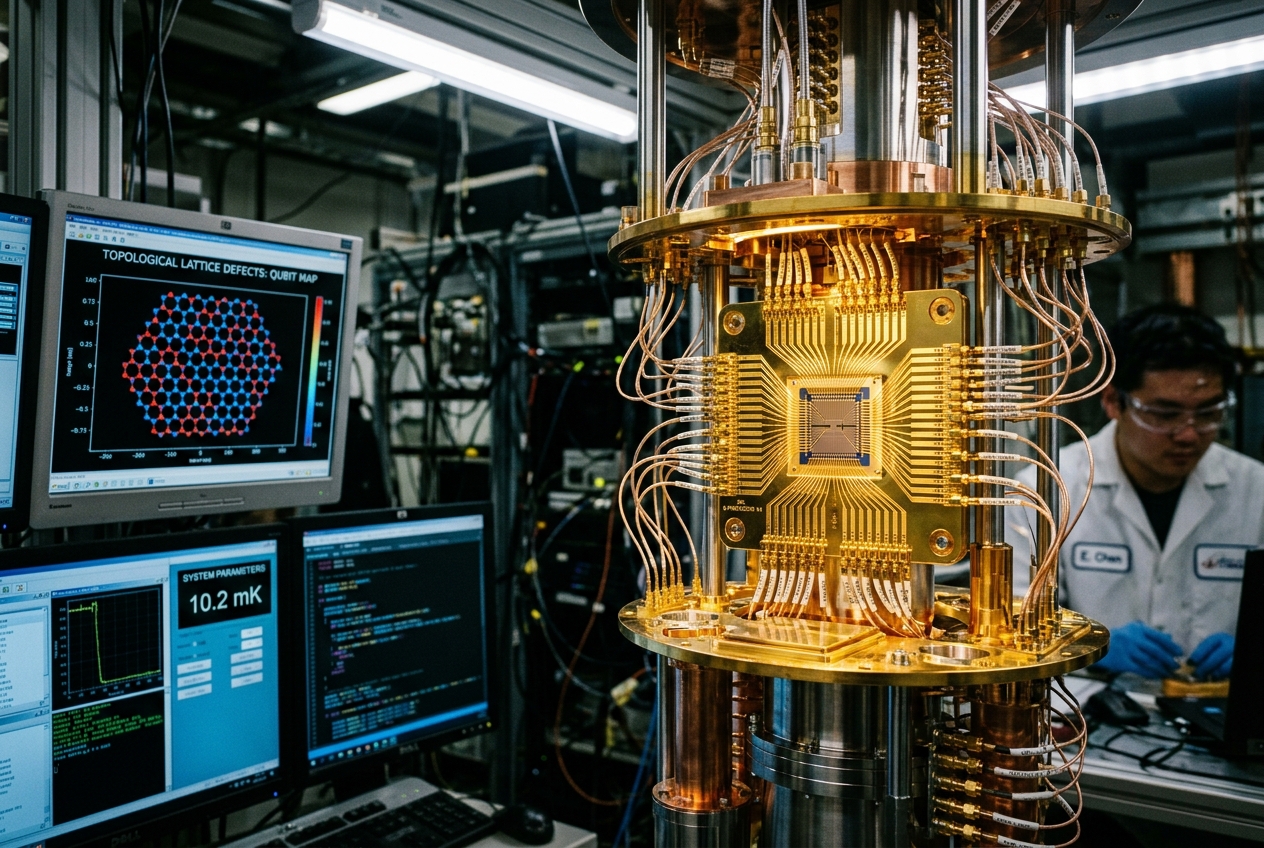
Every transaction that secures modern civilization—from the encrypted transmission of your bank password and medical records to the diplomatic cables sent between sovereign states—relies on mathematical locks that would take the fastest classical supercomputer on Earth tens of thousands of years to pick. A fully operational, fault-tolerant quantum computer could unpick those same locks in a matter of hours. Yet between our current technological reality and that world-altering capability lies an invisible, unforgiving barrier: the catastrophic fragility of quantum information.
Quantum bits, or qubits, do not merely compute; they exist in an excruciatingly delicate state of quantum superposition and entanglement. The faintest whisper of ambient heat, a stray magnetic field from a nearby wire, or the subtle vibrational tremor of a cooling refrigerator can knock a qubit out of its intended state, causing a cascade of computational errors. In modern hardware, physical qubits fail roughly once in every thousand operations. To run algorithms capable of cracking cryptographic primitives or designing life-saving pharmaceutical compounds, error rates must drop to less than one in a trillion.
We cannot simply build infinitely better physical hardware; the laws of thermodynamics prevent it. Instead, the survival of quantum computing depends on a mathematical miracle: the ability to detect and repair errors without ever directly observing the underlying quantum data. At the center of this battle sits one of the most elegant graph algorithms in computer science history—Minimum-Weight Perfect Matching (MWPM), powered by Jack Edmonds’ famous Blossom algorithm. This is the story of how an optimization technique designed in the 1960s has become the intellectual linchpin of the twenty-first century’s quantum revolution.
The Idea in Plain English: Silent Alarms and Broken Threads
To understand why quantum error correction is so extraordinarily difficult, one must first confront the central paradox of quantum physics: the No-Cloning Theorem and the destructive nature of measurement. In a classical computer, if an engineer worries that a bit (a 0 or a 1) might flip due to electrical noise, they can simply make three copies of the bit: 000. If one bit flips to a 1 to produce 010, a majority-voting circuit looks at the trio, recognizes that two zeros outweigh one one, and restores the system to 000.
In quantum mechanics, this common-sense approach is physically impossible. You cannot clone an unknown quantum state, nor can you directly measure a qubit to see what it is doing without instantly collapsing its delicate quantum superposition into a mundane classical state. Looking directly at the computational data destroys the very computation you are trying to protect.
To circumvent this fundamental barrier, physicists developed Topological Surface Codes—an ingenious architecture first conceptualized by Alexei Kitaev in his pioneering Toric Code model. Instead of storing a quantum secret inside a single physical qubit, information is smeared non-locally across an entire two-dimensional grid of physical qubits arranged like the squares of a checkerboard.
Imagine a vast woven fabric. The computational state is the overall global pattern of the weave. Throughout this fabric, auxiliary "sentinel" qubits (known as syndrome stabilizers) continuously query their immediate neighbors. These sentinels do not ask: "What state are you holding?" Instead, they ask a parity question: "Are you and your neighbor pointing in the same relative direction, or has something flipped between you?"
When a physical error occurs—such as a stray thermal photon inducing a bit-flip ($X$) or a phase-flip ($Z$) on a physical data qubit—it acts like snapping a single thread in the fabric. The data qubit itself remains unmeasured, but the two stabilizer sentinels situated at either end of the broken thread immediately light up, signaling an odd parity. In the language of condensed matter physics, the ends of this error chain manifest as a pair of localized point-like defect excitations, known as anyons.
The central decoding challenge is this: the quantum computer’s control system observes a sea of flashing alarms (the defect vertices) across the chip. It does not know which physical qubits broke to trigger those alarms. Because multiple different microscopic error pathways can produce the exact same collection of alarms, the system must deduce the most mathematically probable configuration of physical faults that occurred, and it must do so in microseconds before the next cycle of noise overwhelms the chip.
How It Actually Works: The Mechanics of Blossom and Space-Time Graphs
The process of translating a pattern of flashing stabilizer alarms into a precise physical repair instruction is known as syndrome decoding. Mathematically, this problem is mapped onto an abstract mathematical graph, $G = (V, E)$, known as the syndrome decoding graph.
In this formulation, the set of vertices $V$ corresponds strictly to the active defect locations where stabilizer measurements detected a parity change. The edges $E$ represent potential physical error chains connecting any pair of defect vertices.
Because errors are independent physical events with a given probability $p_e$, an error chain spanning a long distance across the chip is exponentially less likely to occur than a short error chain. To transform this probabilistic problem into a geometric optimization task, each edge between two defect vertices $v_i$ and $v_j$ is assigned a real-valued weight $w_e$ proportional to its logarithmic likelihood:
$$w_e = \ln \left( \frac{1 - p_e}{p_e} \right)$$
Equation 1: The logarithmic likelihood weight assigned to an edge in the syndrome graph. This formula maps independent physical error probabilities into an additive distance metric, ensuring that finding the minimum total weight corresponds precisely to identifying the most probable physical error configuration.
When error probabilities are uniform across the physical lattice, the weight $w_e$ simplifies directly to the Manhattan distance—the shortest grid path across the checkerboard lattice separating the two defect locations.
Edmonds’ Blossom Algorithm: Pairing in Polynomial Time
Once the syndrome graph $G = (V, E)$ is constructed, the decoder must solve a classical combinatorial optimization problem: find a subset of edges such that every defect vertex is connected to exactly one other vertex (a perfect matching) while minimizing the total sum of the edge weights. This is the Minimum-Weight Perfect Matching (MWPM) problem.
A naive brute-force search across all possible pairings would require checking an exponentially exploding number of combinations, instantly paralyzing any classical control processor. The breakthrough that makes real-time topological error correction computationally tractable is Edmonds' Blossom Algorithm, developed by mathematician Jack Edmonds in 1965.
In standard bipartite graphs (graphs that can be partitioned into two distinct sets where edges only cross between sets), finding a maximum or minimum matching can be solved straightforwardly via augmenting paths. However, general syndrome decoding graphs contain odd-length cycles of edges. When a standard augmenting path search encounters an odd cycle, it risks getting trapped in an infinite parity loop.
Edmonds solved this by introducing the concept of a Blossom: 1. When an augmenting path search discovers an odd-length cycle of alternating matched and unmatched edges, the algorithm formally identifies this cycle as a blossom $B$. 2. The entire cycle is contracted into a single virtual "super-vertex." 3. The search for augmenting paths continues across this reduced graph. 4. Once an augmenting path is established in the contracted graph, the blossom is unrolled (expanded) back into its constituent vertices, yielding a valid augmenting path in the original graph without parity inconsistencies.
By systematically growing alternating search trees and contracting blossoms, Edmonds' algorithm identifies the global minimum-weight perfect matching in polynomial time, operating with a worst-case computational complexity of $\mathcal{O}(|V|^3)$, where $|V|$ is the number of observed syndrome defects.
The Third Dimension: 3D Space-Time Decoding Graphs
In an ideal theoretical world, stabilizer measurements would be infallible. In real physical hardware, however, the sentinel qubits that measure parity are just as noisy as the data qubits they are assigned to protect. A faulty control pulse or a readout error can cause a stabilizer to report a false alarm, or fail to report a genuine error.
To overcome measurement noise, quantum processors execute repeated rounds of syndrome extraction over consecutive discrete time steps $t_1, t_2, \dots, t_T$. The decoding graph must therefore be extended into a three-dimensional space-time graph, where the $x$- and $y$-axes represent spatial coordinates across the physical qubit grid, and the $z$-axis represents sequential temporal measurement cycles.
In this 3D decoding graph: - A horizontal edge connecting two vertices at the same time slice represents a physical data qubit error occurring in space. - A vertical edge connecting the same stabilizer location across two consecutive time slices represents a measurement error (a faulty readout).
The effective space-time distance between two defect occurrences at coordinates $(x_1, y_1, t_1)$ and $(x_2, y_2, t_2)$ incorporates both spatial separation and temporal duration:
$$d_{\text{spacetime}} = |x_1 - x_2| + |y_1 - y_2| + \kappa |t_1 - t_2|$$
Equation 2: The phenomenological space-time Manhattan distance metric. Here, $\kappa$ is a dimensionless scaling factor that weights the relative probability of physical measurement faults against spatial data-qubit errors.
By executing Blossom matching across this 3D space-time graph, MWPM simultaneously disentangles genuine physical qubit flips from phantom measurement errors across continuous operational cycles.
The Phenomenological Threshold and Scaling
The ultimate metric of any error-correcting architecture is its fault-tolerance threshold ($p_{\text{th}}$). If the physical error rate of the hardware $p$ is strictly below this threshold value ($p < p_{\text{th}}$), increasing the code distance $d$ (adding more physical qubits to the checkerboard) causes the logical error rate of the encoded quantum state to decay exponentially toward zero:
$$P_{\text{logical}} \propto C \left( \frac{p}{p_{\text{th}}} \right)^{\frac{d + 1}{2}}$$
Equation 3: The sub-threshold scaling law for topological surface codes. When physical noise $p$ is less than the critical threshold $p_{\text{th}}$, expanding the code distance $d$ yields an exponential suppression of the logical error probability $P_{\text{logical}}$, where $C$ is a hardware-dependent constant.
Under MWPM decoding, the 2D surface code exhibits an asymptotic phenomenological threshold of approximately $10.3\%$ under idealized noise models, and a realistic circuit-level threshold near $1.0\%$ when accounting for full gate, preparation, and measurement noise.
Modern Algorithmic Trade-Offs: MWPM vs. UF vs. Tensor Networks
While MWPM remains the historical baseline for quantum error correction, modern quantum engineering balances an acute trade-off between decoding accuracy, latency, and computational overhead.
| Decoder Architecture | Computational Complexity | Typical Threshold (Circuit-Level) | Primary Advantage | Primary Bottleneck |
|---|---|---|---|---|
| Minimum-Weight Perfect Matching (MWPM) | $\mathcal{O}( | V | ^3)$ or $\mathcal{O}( | V |
| Union-Find (UF) Decoder | $\mathcal{O}(N \alpha(N)) \approx \mathcal{O}(N)$ | $\sim 0.85\% - 0.95\%$ | Near-linear execution speed; easily implementable on dedicated FPGAs | Slightly lower threshold; pairs clusters greedily rather than globally |
| Tensor Network / Maximum Likelihood (MLD) | Exponential (Exact), Polynomial (Approximate) | $\sim 1.1\% - 1.2\%$ | Sums over entire homology classes of errors; maximizes true mathematical likelihood | Prohibitive computational latency for real-time stream decoding |
- Union-Find (UF) Decoders: Developed by Delfosse and Nickerson, the Union-Find decoder replaces full augmenting path searches with an algorithmic cluster-growth mechanism. Clusters of defect vertices grow uniformly until overlapping clusters have an even number of defects, at which point they are merged using the classical Disjoint-Set Union-Find data structure. Operating in near-linear time $\mathcal{O}(N \alpha(N))$ (where $\alpha$ is the extremely slow-growing inverse Ackermann function), UF provides microsecond execution speeds suitable for FPGA-based hardware controllers, sacrificing only a fraction of threshold performance compared to MWPM.
- Tensor Network Decoders: Unlike MWPM, which seeks only the single most probable microscopic error chain, Tensor Network decoders sum the probabilities of all equivalent microscopic error paths within the same topological homology class. While this delivers superior error-suppression thresholds, exact contraction of 3D tensor networks is mathematically $#P$-hard, restricting its real-time use to approximate contraction heuristics.
Real-World Applications Today: The 2024–2026 Fault-Tolerance Vanguard
The transition from theoretical paper designs to physical fault-tolerant demonstration has accelerated dramatically over the 2024–2026 cycle. Leading industrial and academic institutions are deploying optimized variants of MWPM to achieve practical quantum advantage:
1. Google Quantum AI: The Willow Processor and Below-Threshold Scaling
In published breakthroughs across Nature, Google Quantum AI demonstrated that scaling planar surface codes from code distance $d=3$ to $d=5$ and $d=7$ on their state-of-the-art superconducting processors systematically suppresses logical error rates. Google utilizes highly parallelized, sparse graph implementations of Edmonds' Blossom algorithm embedded inside custom classical control pipelines, proving that topological quantum memory can preserve quantum information longer than any of its constituent physical parts.
2. Riverlane: Dedicated Real-Time Silicon with Deltaflow.2
UK-based quantum engineering firm Riverlane has tackled the "decoding backlog problem"—the critical risk that classical decoding computers will lag behind the microsecond operational cycles of physical quantum chips, causing an unmanageable accumulation of unprocessed errors. Through their Deltaflow.2 processor architecture, Riverlane builds application-specific integrated circuits (ASICs) and FPGA arrays specifically designed to execute streaming variants of MWPM and Union-Find algorithms at sub-microsecond latencies.
3. IBM Quantum: Heron Architectures and Heavy-Hex Matching
IBM Quantum has optimized MWPM decoding for its heavy-hexagonal lattice layouts on the Heron and Flamingo processor families. Working through open-source toolkits in Qiskit, IBM researchers utilize specialized sparse-matching decoders that map syndrome defects across non-Euclidean connectivity graphs, pioneering low-overhead Quantum Low-Density Parity-Check (qLDPC) codes that dramatically reduce the physical-to-logical qubit overhead ratio.
4. Quantinuum & Harvard University: Neutral Atom Fault-Tolerant Ensembles
Collaborations between Harvard University, QuEra Computing, and Quantinuum have leveraged shuttling neutral atom arrays and trapped-ion systems to demonstrate fault-tolerant logical entangling gates. Using transversal gates combined with real-time MWPM graph decoders, these teams have executed complex, fault-tolerant algorithmic circuits across dozens of logical qubits with error rates substantially lower than baseline physical gate fidelities.
What This Means for You: The Personal Stake in Error Correction
It is easy to view graph algorithms and topological error thresholds as abstract physics, isolated in ultra-cold dilution refrigerators buried inside industrial research laboratories. In reality, the success of Minimum-Weight Perfect Matching directly governs the timeline of technologies that will fundamentally reshape everyday life:
- Pharmaceutical Discovery and Cancer Therapeutics: Designing a drug today requires years of laboratory trial-and-error because classical supercomputers cannot simulate the exact quantum mechanical electron interactions of complex biological enzymes. A fault-tolerant quantum computer running error-corrected chemistry algorithms could design targeted molecular inhibitors in days, revolutionizing oncology and personalized medicine.
- Global Energy and Climate Infrastructure: Over 1% of the world’s entire annual energy output is consumed by a single industrial process: the Haber-Bosch chemical reaction used to synthesize agricultural fertilizers. Nature performs this same nitrogen-fixing chemical reaction effortlessly at room temperature inside bacteria using an enzyme called nitrogenase. Classical computers cannot decipher the catalytic active site of nitrogenase; fault-tolerant quantum computers can, unlocking carbon-neutral chemical manufacturing.
- Personal Privacy and Post-Quantum Banking: The moment a fault-tolerant quantum computer reaches sufficient scale, existing RSA-2048 and Elliptic Curve cryptography will be rendered obsolete. Understanding the pace of quantum error correction allows global financial networks, medical databases, and telecommunications providers to migrate proactively to quantum-resistant encryption protocols before private consumer records can be intercepted and decrypted.
The viability of these world-changing applications does not depend on a sudden, mysterious breakthrough in quantum physics. It depends on whether our classical graph decoders can match millions of defect vertices in microseconds without falling behind.
Today's Takeaway
Further Academic Reading & Authoritative References
- For foundational course material on stabilizer formalisms, explore MIT OpenCourseWare Quantum Physics.
- Read detailed technical implementations in the official IBM Qiskit Documentation.
- Access foundational peer-reviewed literature on topological codes in Nature.
- Review theoretical milestones and pre-prints on the arXiv Quantum Physics Repository.
- Consult comprehensive encyclopedic summaries via Wikipedia's Guide on Quantum Error Correction.