Continuous-Variable Quantum Key Distribution: Securing High-Rate Optical Networks Via Gaussian-Modulated Coherent States
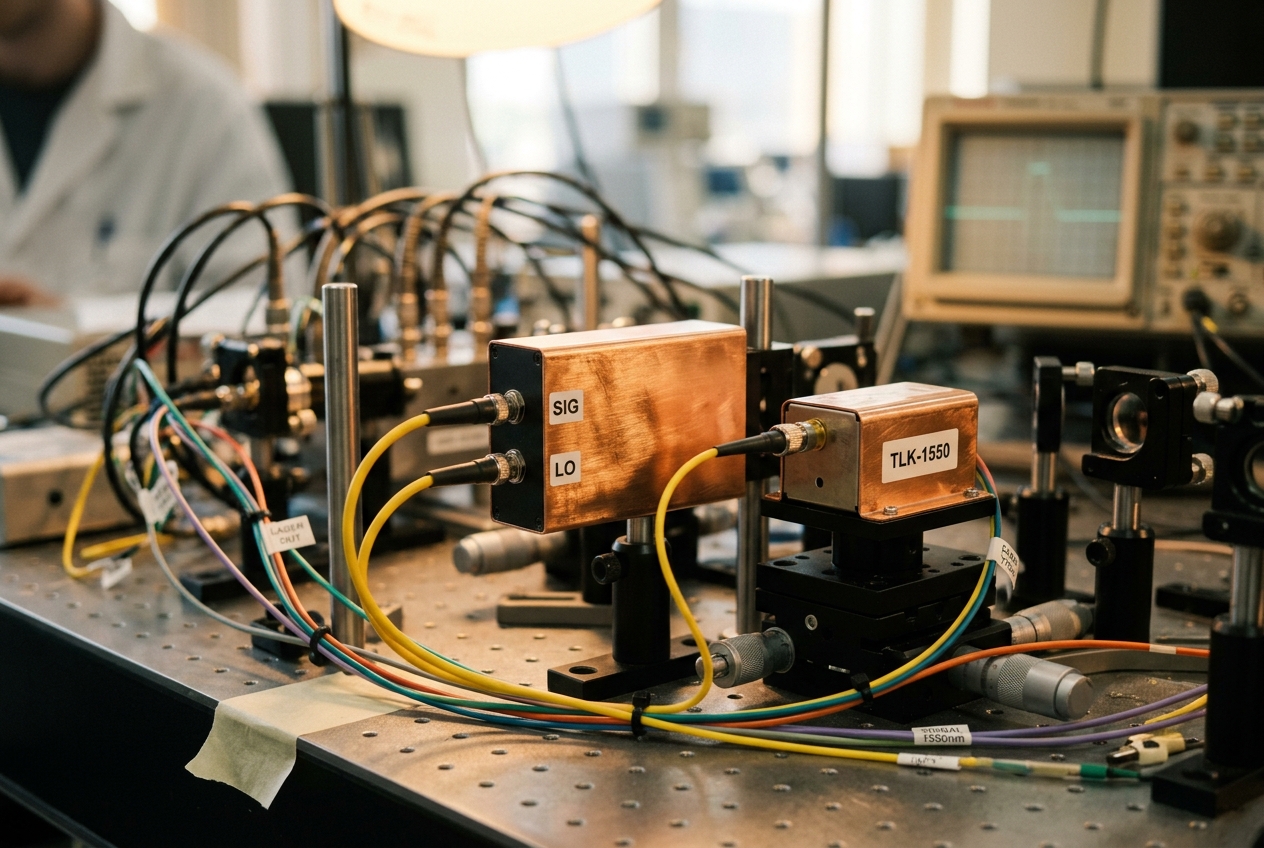
By leveraging continuous wave quadratures rather than fragile single photons, continuous-variable quantum key distribution turns standard telecommunications fiber into an uncrackable quantum channel.
1. Opening Hook — Why You Should Care
Every minute of every day, trillions of dollars move across international banking networks, national power grids balance their electrical loads, and sensitive medical dossiers travel between clinical servers. Virtually all of this traffic is shielded by public-key cryptographic algorithms—such as RSA and Elliptic Curve Cryptography—whose security rests on the computational intractability of mathematical problems like prime factorization and discrete logarithms. To a classical supercomputer, breaking a 2048-bit RSA key would require billions of years of brute-force computation.
To a sufficiently advanced quantum computer executing Shor’s algorithm, that same barrier collapses into a matter of minutes.
This looming cryptographic cliff has already created an urgent operational crisis known as "Harvest Now, Decrypt Later" (HNDL). Hostile nation-states and well-financed intelligence syndicates are intercepting and archiving petabytes of encrypted optical fiber traffic today, waiting for the day a fault-tolerant quantum processor comes online to strip away its armor.
The standard quantum antidote has long been Quantum Key Distribution (QKD), a technique that uses quantum mechanics to create shared, mathematically unbreakable cryptographic keys between two parties. Yet for three decades, mainstream adoption stalled because conventional "discrete-variable" QKD systems required sending individual photons through specialized dark fibers, relying on bulky, cryogenic single-photon detectors that cost tens of thousands of dollars per node.
Enter Continuous-Variable Quantum Key Distribution (CV-QKD). Rather than counting individual photons, CV-QKD encodes secret information into the smooth, continuous wave properties of light—the exact same electromagnetic oscillations that power ordinary commercial internet transceivers. By replacing exotic single-photon counters with room-temperature, balanced homodyne detectors and co-propagating quantum keys directly alongside terabit-per-second classical data streams, CV-QKD transforms the defense of modern telecommunications from an exotic laboratory experiment into an industrial reality.
2. The Idea in Plain English
To understand the difference between conventional discrete-variable systems and continuous-variable systems, consider an analogy involving sound.
Imagine two people, Alice and Bob, trying to establish a private secret code in a crowded room.
-
The Discrete-Variable Approach (Single Photons): Alice attempts to communicate by firing microscopic, individual pebbles across the room toward Bob. Bob holds a tiny, hyper-sensitive mechanical catcher that registers every single pebble impact. If an eavesdropper, Eve, reaches out with a net to intercept or measure a pebble, she inevitably absorbs it or knocks it off course. Bob notices the missing or deflected pebbles immediately. This is the mechanism behind protocols like BB84. While mathematically pristine, firing and catching one pebble at a time through turbulent air requires extraordinary precision, ultra-low noise, and cryogenic cooling.
-
The Continuous-Variable Approach (Field Quadratures): Instead of throwing individual pebbles, Alice plays a continuous, pure musical tone on a flute. Rather than transmitting discrete particles, she subtly modulates the continuous wave itself—nudging its volume (amplitude) slightly up or down, or advancing and delaying its timing (phase) by infinitesimal fractions of a second. Bob listens to this sound wave using a standard microphone paired with a reference tone to measure these delicate modulations.
DISCRETE-VARIABLE QKD (DV-QKD)
Photon Stream:   •       •       •       •    (Discrete single quanta)
Detection:       [Cryogenic Single-Photon Avalanche Diodes]

CONTINUOUS-VARIABLE QKD (CV-QKD)
Light Wave:      ~~~~/\/\/\~~~~/\/\/\~~~~     (Continuous wave modulations)
Detection:       [Room-Temperature Balanced Homodyne / Heterodyne Detectors]
In the language of quantum optics, the amplitude and phase of an optical field are known as field quadratures, conventionally labeled $X$ (the in-phase, position-like quadrature) and $P$ (the out-of-phase, momentum-like quadrature).
Because light is governed by the laws of quantum mechanics, Alice’s light wave is not a deterministic classical wave; it is constrained by Werner Heisenberg’s famous uncertainty principle. In plain English, the uncertainty principle dictates that no observer can simultaneously measure both the amplitude and the phase of a light wave with absolute certainty. The vacuum itself seethes with fundamental quantum fluctuations, often referred to as "shot noise."
When Alice modulates her continuous light wave with random Gaussian values, any eavesdropper attempting to tap the optical fiber faces an insurmountable physical dilemma: Eve cannot siphon off a portion of the wave to measure its quadratures without adding random quantum noise back into the transmission. That added disturbance acts as an unmistakable signature. By measuring the variance and correlation of their wave signals, Alice and Bob can precisely calculate the maximum amount of information Eve could have intercepted. If the eavesdropper took too much, the key is discarded; if the disturbance is below a strictly calculated threshold, Alice and Bob distill an immaculate, shared secret key.
3. How It Actually Works — The Mechanics
Continuous-Variable Quantum Key Distribution was elevated to a rigorous physical science through the seminal protocol formulated by Frédéric Grosshans and Philippe Grangier in 2002, commonly known as GG02 (first published in Nature).
Step 1: State Preparation and Gaussian Modulation
Alice begins with a standard continuous-wave telecom laser emitting at the standard telecommunication C-band ($1550\text{ nm}$). She carves the laser output into optical pulses and prepares coherent states $|\alpha\rangle$, which represent the closest quantum mechanical approximation to a pure classical sinusoidal wave.
Using high-bandwidth electro-optic amplitude and phase modulators, Alice modulates the quadratures $X$ and $P$ of each pulse according to independent, zero-mean Gaussian distributions with a chosen modulation variance $V_A$ (expressed in shot-noise units). The prepared quantum state has a total quadrature variance of:
$$V = V_A + 1$$
Here, the "$1$" represents the irreducible quantum shot noise of the vacuum state. Alice records her private modulation values $(x_A, p_A)$ for every single pulse in her local memory.
Step 2: Quantum Channel Transmission and Phase Referencing
Alice launches these weakly modulated coherent states across an optical fiber of length $L$ characterized by a transmission efficiency $T = 10^{-\alpha L/10}$ (where $\alpha \approx 0.2\text{ dB/km}$ for standard single-mode silica fiber) and an excess noise parameter $\xi$.
To decode these quadrature modulations at the receiver, Bob requires a high-intensity, phase-locked reference beam known as the Local Oscillator (LO). In early CV-QKD architectures, Alice multiplexed a strong Transmitted Local Oscillator (TLO) alongside the weak quantum signal across the same fiber. However, because a transmitted LO is vulnerable to physical eavesdropping attacks—such as LO pulse-manipulation or intensity-tampering—modern state-of-the-art CV-QKD implementations employ a Local Local Oscillator (LLO) scheme. In an LLO configuration, Bob operates an independent laser diode at his own terminal, periodically synchronizing its optical phase with Alice's transmitter using interleaved classical pilot tones and digital signal processing (DSP) phase-recovery algorithms.
Step 3: Balanced Homodyne and Heterodyne Detection
At the receiver station, Bob measures the incoming field quadratures using coherent optical detection:
- Balanced Homodyne Detection: Bob mixes the incoming quantum signal with his Local Oscillator on a symmetric $50:50$ optical beam splitter. The two output arms terminate on a pair of matched, high-quantum-efficiency PIN photodiodes whose photocurrents are subtracted. By tuning the relative optical phase of the Local Oscillator to $0$ or $\pi/2$, Bob selectively measures either the $X$ quadrature or the $P$ quadrature of the incoming pulse with high sensitivity.
- Balanced Heterodyne Detection: Alternatively, Bob can route the signal through an unbalanced $90^\circ$ optical hybrid beam splitter, splitting the incoming light into two paths to measure both $X$ and $P$ quadratures simultaneously. The fundamental quantum penalty for measuring both non-commuting observables at once is the injection of an additional unit of vacuum noise (the classical $3\text{ dB}$ heterodyne noise penalty).
Step 4: The Mathematical Security Framework
The security of CV-QKD against the most general collective and coherent eavesdropping attacks is rooted in the extremality of Gaussian states, a foundational theorem established in quantum information theory (see foundational coursework on MIT OpenCourseWare Quantum Optical Communication and quantum information frameworks on IBM Quantum Learning).
In phase space, the quantum state shared between Alice and Bob after channel transmission is entirely characterized by a $4 \times 4$ covariance matrix $\mathbf{\Gamma}_{AB}$:
$$\mathbf{\Gamma}_{AB} = \begin{pmatrix} a\mathbb{I}_2 & c\sigma_z \ c\sigma_z & b\mathbb{I}_2 \end{pmatrix}$$
where $\mathbb{I}_2 = \begin{pmatrix} 1 & 0 \ 0 & 1 \end{pmatrix}$, $\sigma_z = \begin{pmatrix} 1 & 0 \ 0 & -1 \end{pmatrix}$, and the diagonal sub-matrices parameterize the variance of Alice's preparation ($a$), Bob's measured variance ($b$), and the channel correlation coefficient ($c$).
Under collective Gaussian attacks, Eve prepares an ancilla quantum state and interacts it coherently with each transmitted pulse, storing her quantum ancilla in a long-lived quantum memory until the end of the classical error correction phase. The asymptotic secret key rate $K$ extractable per pulse is governed by the Devetak-Winter formula:
The Devetak-Winter Secret Key Capacity
$$K = \beta \cdot I(A;B) - \chi(B;E)$$
Where: * $I(A;B)$ is the classical Shannon mutual information between Alice and Bob's raw data sets. * $\beta \in [0, 1]$ is the reconciliation efficiency, which measures how closely the post-processing error-correction scheme approaches the theoretical Shannon limit. * $\chi(B;E) \equiv S(\rho_E) - \int dp_B \, P(p_B) S(\rho_{E|p_B})$ is the Holevo bound, which sets a strict upper ceiling on the quantum information accessible to the eavesdropper Eve regarding Bob's measurement outcomes, where $S(\cdot)$ represents the von Neumann entropy.
Step 5: Overcoming the 3 dB Limit via Reverse Reconciliation
In conventional direct reconciliation, Alice sends error correction information to help Bob correct his data to match hers. However, when channel loss exceeds $3\text{ dB}$ (a $50\%$ loss of optical power, equivalent to just $15\text{ km}$ of standard fiber), the channel attenuation ensures that Eve receives more optical energy than Bob. Under direct reconciliation, $\chi(A;E) > I(A;B)$, and the secret key rate drops identically to zero.
Grosshans and Grangier resolved this fundamental bottleneck by inventing Reverse Reconciliation.
In reverse reconciliation, Bob's measurement outcome serves as the reference key, and Alice uses classical error correction side-information to adjust her raw values to match Bob's measurement. Because Bob is situated after the lossy channel, Eve's quantum uncertainty regarding Bob's measurement state is substantially higher than her uncertainty regarding Alice's transmitter. Even if the optical channel suffers $20\text{ dB}$ of attenuation ($99\%$ photon loss over $100\text{ km}$), Bob and Alice can distill an immaculate secret key, provided their error correction codes operate with exceptional efficiency ($\beta > 95\%$).
To execute reverse reconciliation at low signal-to-noise ratios (SNR), modern CV-QKD utilizes specialized Multi-Edge Low-Density Parity-Check (MET-LDPC) codes combined with multidimensional spherical reconciliation schemes (such as 8-dimensional Gosset lattice quantizers). These advanced error-correction algorithms approach reconciliation efficiencies of $\beta \approx 0.96$ to $0.98$ at SNRs as low as $-15\text{ dB}$, enabling secret key generation across long metropolitan spans.
For deeper mathematical treatments of these security boundaries, refer to the arXiv Quantum Physics Archive (quant-ph) and the comprehensive survey in the Reviews of Modern Physics CV-QKD Overview.
4. Real-World Applications Today
Continuous-Variable QKD is transitioning rapidly from physics laboratories to high-density commercial telecommunication infrastructures. Between 2024 and 2026, several strategic sectors are spearheading its deployment:
1. Metropolitan Fiber Networks and Dense WDM Co-Propagation
- Key Innovators: Orange Laboratories, Nokia Bell Labs, ADVA Optical Networking.
- The Mission: Transmitting quantum cryptographic keys across active metropolitan fiber cables carrying live, terabit-scale commercial data traffic.
- The Quantum Advantage: In single-photon DV-QKD, high-power classical channels create Spontaneous Raman Scattering (SRS)—a wideband background glow of stray photons that completely blinds sensitive single-photon detectors. CV-QKD bypasses this challenge because Bob’s coherent homodyne detector acts as an ultra-narrow spatial, temporal, and spectral optical filter. Bob’s receiver only detects optical modes that match the exact wavelength, spatial mode, and phase of his Local Oscillator laser. Consequently, CV-QKD can co-propagate on standard ITU-grid DWDM channels alongside multiple $100\text{ Gbps}$ and $400\text{ Gbps}$ data wavelengths over 20–50 km metropolitan rings without requiring dedicated "dark fiber."
2. Photonic Integrated Circuits (PICs) and Miniaturization
- Key Innovators: CNRS, Télécom Paris, Fraunhofer Heinrich Hertz Institute (HHI).
- The Mission: Shrinking entire optical breadboards—including lasers, Mach-Zehnder modulators, variable optical attenuators, and balanced homodyne receivers—down to a single silicon or Indium Phosphide (InP) microchip.
- The Quantum Advantage: Because CV-QKD uses standard balanced photodiodes rather than complex superconducting single-photon detectors (which require bulky, power-hungry liquid-helium cryostats operating at 0.8 Kelvin), an entire CV-QKD transceiver can be packaged into a standard CFP2 or QSFP-DD form-factor optical pluggable module. This allows quantum encryption transponders to slot directly into the standard line cards of enterprise network routers.
3. Sovereign Intranets and Inter-Bank Financial Clearing
- Key Innovators: European Quantum Communication Infrastructure (EuroQCI) initiative, major European central banking networks.
- The Mission: Shielding high-frequency clearinghouse transactions and sovereign diplomatic communications against immediate and future interception.
- The Quantum Advantage: CV-QKD delivers exceptionally high secret key rates (megabits per second over metropolitan distances of 10–30 km), allowing financial backbones to rotate their symmetric AES-256 encryption keys hundreds of times per second. This eliminates the vulnerability of static session keys and ensures instantaneous cryptographic forward secrecy.
4. Data Center Interconnects (DCI) for Distributed AI and Cloud Storage
- Key Innovators: Hyperscale cloud providers and optical transport vendors.
- The Mission: Securing inter-data-center replication links that mirror confidential enterprise data, distributed database transactions, and large AI model checkpoints across metropolitan regions.
- The Quantum Advantage: Point-to-point DCI spans typically operate over 10 to 40 km of high-quality metro fiber. CV-QKD integrates natively with standard coherent optical transceivers already used inside modern data centers, delivering continuous, low-latency, hardware-level quantum key distribution without disrupting existing high-speed routing pipelines.
5. What This Means for You
It is easy to view quantum physics as an esoteric domain reserved for academic whiteboards and billion-dollar national laboratories. But the quiet maturation of Continuous-Variable Quantum Key Distribution brings quantum physics straight into your everyday digital life.
Consider your most private data: your permanent medical genome, your electronic health records, your biometric identity scans, and the title deeds to your home. When you upload or transmit this information, it is encrypted and sent across regional fiber-optic cables. If an adversary harvests those encrypted packets today, any mathematical breakthrough or future quantum supercomputer could expose your family's most sensitive information fifteen years from now.
Post-quantum mathematical algorithms (PQC) offer an essential layer of computational defense, but they remain mathematical conjectures—vulnerable to unexpected algorithmic breakthroughs or unforeseen hardware capabilities.
CV-QKD provides information-theoretic security: a guarantee of privacy guaranteed not by the assumed difficulty of a math puzzle, but by the fundamental conservation laws of physics. Because CV-QKD operates on standard telecommunications infrastructure at room temperature, it provides an accessible, cost-effective path to making every fiber-optic cable crossing our cities quantum-safe. The next time you tap your phone to transfer money or check your medical charts, the unseen light waves carrying your data through the street may well be protected by the gentle, uncrackable quantum jitter of continuous optical fields.