Zi Fa Dong Gong Spontaneous Movement Qigong: Neuro-Fascial Unwinding, Somatosensory Tremor Release, and Autonomic Meridian Regulation in Classical Daoyin
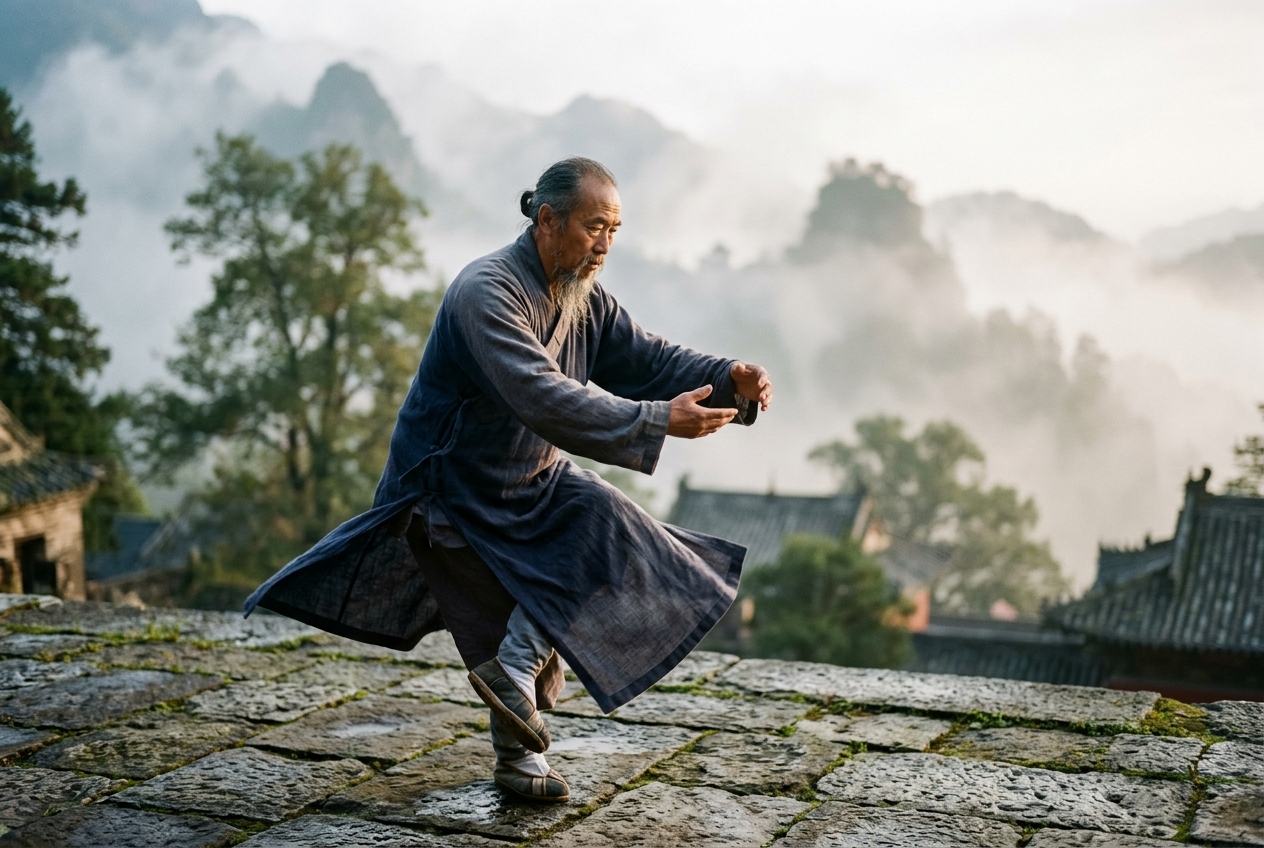
To the outside observer unfamiliar with internal martial arts and neuromuscular physiology, an individual practicing Zi Fa Dong Gong might appear to be performing an improvisational, slow-motion dance, trembling rhythmically, or spontaneously adopting classical therapeutic postures. In Chinese medical philosophy, this phenomenon is understood as the endogenous awakening and mobilization of Qi (vital bio-electric energy and metabolic propulsion) surging through the twelve primary acupuncture meridians (Jingmai) and the eight extraordinary vessels (Qijing Bamai). When internal energetic resistance is encountered, the mobilized Qi physically moves the physical frame to unblock the channel—a dynamic principle captured in the classical medical adage: "Where Qi goes, blood follows; where Qi flows freely, there is no pain" (气行则血行, 通则不痛).
Crucially, modern clinical Daoyin distinguishes genuine Zi Fa Dong Gong from induced mass hysteria, dissociative trance states, or psychogenic non-epileptic seizures. Authentic spontaneous movement is characterized by preserved dual-awareness: the practitioner remains fully lucid, anchored, and capable of terminating or modifying the kinetic expression at any moment through conscious intention (Yi). It represents an organic somatic intelligence rather than a loss of psychological sovereignty, operating through the same neuro-fascial substrates documented by modern institutions such as the National Center for Biotechnology Information (NCBI) and recognized in integrative clinical frameworks supported by the World Health Organization Traditional Medicine initiatives.
The Step-by-Step Clinical Practice Curriculum
To safely cultivate and navigate spontaneous movement without inducing disorientation or energetic scatter, clinicians and advanced practitioners must adhere to a structured, four-phase kinetic methodology.
+-------------------------------------------------------------------------------+
|                       PHASE SUMMARY FOR ZI FA DONG GONG                        |
+-------------------------------------------------------------------------------+
| Phase 1: Wuji Grounding & Dantian Thermogenesis (Postural Centering)          |
| Phase 2: Somatomotor Decoupling (*Song*) (Releasing Voluntary Muscle Hold)    |
| Phase 3: Kinematic Expansion & Meridian Navigation (Spontaneous Wave Motion)  |
| Phase 4: Shou Gong & Energetic Consolidation (Sealing Cavities & Centering)   |
+-------------------------------------------------------------------------------+
Phase 1: Wuji Grounding and Lower Dantian Thermogenesis
- The Postural Matrix: Stand on flat ground with your bare feet or thin-soled shoes parallel, separated precisely to shoulder width. Distribute 60 percent of your weight onto the heels and 40 percent onto the balls of the feet, intentionally activating the Yongquan point (Kidney-1, "Bubbling Spring") at the junction of the anterior and middle thirds of the sole.
- Axial Suspension: Tuck the sacrum down and slightly forward to gently flatten the lumbar lordosis, allowing the coccyx to hang like a suspended plumb line. Simultaneously, gently tuck the chin and draw the crown of the head upward as if suspended from the heavens by an invisible thread, opening the Baihui point (Governing Vessel-20) at the apex of the skull.
- Internal Thermogenesis: Rest both palms lightly over your lower abdomen—the Lower Dantian (located approximately two to three inches below the navel and two inches inward toward the center of gravity). Transition your respiration into diaphragmatic abdominal breathing: inhale through the nose for a four-second count, allowing the lower belly, lateral flanks, and lumbar region to expand radially like an inflating sphere; exhale smoothly for six seconds, feeling the navel gently draw back toward the spine. Maintain this rhythmic respiration for five to seven minutes until an unmistakable sensation of localized warmth, fullness, or magnetic pulsation gathers beneath your palms.
Phase 2: Somatomotor Decoupling (Song)
- Lowering the Levers: Release the hands from the abdomen and allow the arms to suspend naturally along your flanks. Ensure a micro-space remains inside both armpits (equivalent to holding a fragile quail egg under each arm) to prevent compression of the axillary lymph nodes and the Heart/Pericardium meridians.
- Progressive Fascial Softening: Close your eyes entirely. Direct your mind (Yi) to systematically relax the superficial skeletal muscles, beginning at the forehead, moving across the temporomandibular joint, down through the trapezius, across the intercostal spaces, into the diaphragm, through the iliopsoas, down the quadriceps, and through the gastrocnemius muscles into the earth. This is the physiological state of Song—not a passive collapse into flaccidity, but an active, spring-loaded suspension of unnecessary tone.
- Surrendering Intent: Cease all mental attempts to direct your posture. Instead of doing the standing, adopt the internal posture of a neutral witness simply observing the somatic sensations of pulse, gravity, and micro-instability.
Phase 3: Kinematic Expansion and Meridian Tracking
- Allowing the Neurogenic Trigger: Within three to ten minutes of sustained Song, subtle, involuntary physiological tremors, rhythmic postural sway, or pulsing vibrations will emerge—frequently originating in the lumbar spine, sacrum, or calf musculature. Do not suppress this movement, nor consciously amplify it. Give the body internal permission to yield to the oscillation.
- Waveform Amplification: As the nervous system realizes it is uninhibited by the cerebral cortex, the micro-tremors will naturally broaden into larger kinetic waveforms: spiral rotations of the pelvis, spontaneous thoracic extensions, serpentine spinal unwinding, or sweeping involuntary gestures of the upper extremities.
- Somatic Meridian Tracking: Maintain mindful interoception. Observe how a spontaneous spinal flexion decompresses the Du Mai (Governing Vessel) along the dorsal midline, or how an involuntary lateral shoulder rotation stretches and shears the myofascial pathways of the Gallbladder and Triple Burner meridians. Allow these movements to run their natural kinematic trajectory until the underlying tension or energetic turbulence is neutralized.
Phase 4: Shou Gong (Mandatory Closing and Consolidation)
- Damping the Kinetic Arc: When preparing to conclude (or after 15–20 minutes of movement), do not abruptly freeze your physical frame. Instead, mentally introduce the command for stillness. Place your intention firmly back into the Lower Dantian. Visualize the physical waveforms gradually decreasing in amplitude, like ripples settling on the surface of a disturbed mountain lake, until the physical body returns to stationary Wuji.
- Palmar Gathering and Cavity Sealing: Rub the palms of your hands vigorously together until intense frictional heat is generated. Form your hands into loose cups and sweep them in three broad concentric circles from the crown of your head down the front of the chest, gathering all dispersed peripheral Qi and concentrating it into the lower abdomen.
- Centering and Storing: Place both palms over the Lower Dantian (men placing the left palm over the abdomen with the right palm layered on top; women placing the right palm first with the left on top). Gently contract the Huiyin point (Conception Vessel-1, perineum) upward by 10 percent, matching this with a gentle pressing of the tip of the tongue against the hard palate behind the upper incisors (linking the Ren and Du vessels). Inhale three deep, grounding breaths into the belly, visualizing the gathered warmth condensing into a brilliant, dense pearl of vital energy nestled deep in the pelvic core. Step the left foot inward to touch the right, bow slightly, and open the eyes.
+------------------------------------------------------------------------------------------------------+
|                                   CLINICAL TROUBLESHOOTING GUIDE                                     |
+------------------------------------+------------------------------------+----------------------------+
| OBSERVATION / COMMON MISTAKE       | UNDERLYING PATHOPHYSIOLOGY         | PRECISE CLINICAL REMEDY    |
+------------------------------------+------------------------------------+----------------------------+
| Practitioner forcibly exaggerates  | Ego-driven theatricality; cortical | Pause the movement; return |
| or feigns large movements.         | over-ride of subcortical signals.  | to stationary Wuji stance. |
+------------------------------------+------------------------------------+----------------------------+
| Practitioner feels dizziness,      | Floating Yang; failure of downward | Vigorously slap the Kidney |
| disorientation, or cranial heat.   | energetic anchoring (Ni Qi).       | 1 (Yongquan) point; ground.|
+------------------------------------+------------------------------------+----------------------------+
| Practitioner experiences panic or  | Flooding of unresolved affective   | Open eyes; place hands on  |
| emotional hyper-arousal.           | trauma without adequate grounding. | Dantian; exhale with sigh. |
+------------------------------------+------------------------------------+----------------------------+
| Involuntary jerking persists after | Incomplete Shou Gong closure;      | Perform firm downward dry- |
| the session has finished.          | open bio-circuitry.                | brushing along outer legs. |
+------------------------------------+------------------------------------+----------------------------+
Sensory Milestones and Somatosensory Feedback
During authentic Zi Fa Dong Gong, practitioners encounter distinct somatosensory milestones that signal progression through neuro-fascial unwinding:
- Thermogenesis (Warmth): Initiated by local microvascular vasodilation and sympathetic withdrawal, accompanied by enhanced mitochondrial respiration in the pelvic and abdominal viscera.
- Micro-Paresthesia (Tingling / "Qi Sensation"): Characterized by low-amplitude vibrational sensations traversing cutaneous nerve distributions, reflecting peripheral nerve un-entrapment and energetic transmission across meridian paths.
- Gravitational Anchoring (Heaviness): A subjective sense of the lower limbs becoming dense and magnetic, demonstrating effective neuromuscular grounding and postural stability.
- Cathartic Somatic Decompression: Spontaneous yawns, deep diaphragmatic sighs, audible fascial "clicks" or releases, lacrimation without cognitive sadness, and localized goosebumps (piloerection), all indicating parasympathetic rebound and discharge of stored autonomic shock.
The Western Physiological and Neurobiological Foundations
To integrate Zi Fa Dong Gong into contemporary clinical modalities such as physical therapy, chronic pain rehabilitation, and somatic psychotherapy, its phenomena must be demystified through the lens of modern functional neuroscience, biomechanics, and connective tissue research, concepts explored broadly across the literature cataloged by the National Qigong Association and empirical investigations indexed in PubMed.
+-------------------------------------------------------------------------------+
|                       KEY BIOLOGICAL MECHANISMS AT PLAY                       |
+-------------------------------------------------------------------------------+
| 1. Subcortical Central Pattern Generators (CPGs) & Reflex Circuitry           |
| 2. Prefrontal Motor Cortex De-Inhibition via Alpha-Theta Entrainment          |
| 3. Autonomic Tremor Discharge & Sympathetic Quenching (TRE Dynamics)          |
| 4. Viscoelastic Fascial Unwinding & Mechanical Transduction                   |
| 5. Vagal Tone Optimization & Heart Rate Variability (HRV) Expansion           |
+-------------------------------------------------------------------------------+
1. Central Pattern Generator (CPG) Activation and Cortical Down-Regulation
Under normal waking conditions, our physical movements are governed by the primary motor cortex and supplementary motor areas, filtered through the basal ganglia, and consciously mediated by the prefrontal cortex. This descending corticospinal control actively suppresses primitive, endogenous motor loops. In Zi Fa Dong Gong, the profound meditative state—characterized by electroencephalographic (EEG) alpha-theta wave coherence (4–8 Hz)—induces transient hypofrontality.
When voluntary cortical suppression is quieted through conscious Song, the subcortical network—specifically spinal and brainstem-based central pattern generators (CPGs)—is disinhibited. These CPG neural circuits, which coordinate phylogenetically ancient kinetic patterns such as swimming, undulating, reciprocal walking, and protective posturing, begin firing autonomously. This allows the somatic system to execute complex corrective movements without cognitive micro-management.
2. Autonomic Tremor Discharge and Trauma Reorganization
Modern trauma research (notably the work of somatic clinicians and trauma specialists studying neurogenic tremors) confirms that mammalian organisms possess an innate, involuntary shaking mechanism designed to discharge hyper-aroused sympathetic energy following survival stress. When a human experiences emotional trauma, mechanical shock, or continuous postural strain, the autonomic nervous system traps this neuromuscular defensive charge within deep structural muscle groups—predominantly the psoas major, quadratus lumborum, and pelvic diaphragm.
Zi Fa Dong Gong systematically unlocks this biological tremor mechanism. The micro-tremors initiated in Phase 2 are identical to therapeutic neurogenic tremors, facilitating the rapid down-regulation of the hypothalamic-pituitary-adrenal (HPA) axis, resetting muscle spindle resting lengths, and shifting autonomic tone from sympathetic fight-or-flight freeze to restorative ventral vagal parasympathetic dominance.
3. Myofascial Unwinding and Viscoelastic Remodeling
From a biomechanical and anatomical perspective, the physical body is encapsulated in a continuous, multi-layered tensegrity network of connective tissue known as fascia. Chronic inflammation, physical trauma, and repetitive stress patterns cause this extracellular matrix to become dehydrated, densified, and cross-linked with collagenous adhesions.
Because spontaneous movements follow paths of least mechanical resistance, they exert multidirectional, non-linear shear strain across fascial envelopes. This process stimulates fibroblasts, promotes hyaluronan rehydration, triggers piezo-electric signaling along collagen fibers, and performs spontaneous adhesiolysis—unsticking glide planes between adjacent muscular compartments and visceral organs that standard linear exercise regimens fail to reach.
Classical Lineage, Historical Context, and Internal Alchemy
The practice of spontaneous kinetic cultivation represents one of the oldest streams of Daoist self-cultivation (Neidan) and therapeutic Daoyin, possessing an unbroken lineage extending back millennia in Chinese medicine.
The earliest historical antecedents can be traced to the legendary Eastern Han physician Hua Tuo (c. 140–208 CE), the pioneer of the Wuqinxi (Five Animal Play). While modern renditions of the Five Animal Play are frequently taught as rigid, choreographed calisthenics, historical Daoist texts indicate that Hua Tuo originally instructed patients to tune into the internal animal archetypes (Tiger, Deer, Bear, Monkey, Crane) to trigger spontaneous, uninhibited movements tailored to purge stagnant pathogenic factors (Xie Qi) from corresponding organ systems (Zang-Fu). Hua Tuo famously declared: "The body requires movement, but not to excess. When the physical form moves spontaneously, the grain-energy is digested, the blood vessels circulate smoothly, and diseases cannot take root."
During the Jin Dynasty, the master alchemist Ge Hong (283–343 CE) documented spontaneous kinetic releases in the Baopuzi (抱朴子), noting that when the practitioner’s Shen (spirit/mind) merges with Wuji (the primordial void), the internal currents of Qi inevitably cause the limbs to dance and the spine to oscillate like a swimming dragon.
Throughout the Tang and Song dynasties, spontaneous movement was integrated into the esoteric Daoist Shangqing and Lingbao traditions under names such as Ziran Dong (Natural Movement) and Tian Huan (Heavenly Circular Movement). It was viewed as an essential preliminary cleansing phase: before the practitioner could safely circulate refined alchemical substances through the Microcosmic Orbit (Xiao Zhou Tian), spontaneous movements were deployed to clear coarse obstructions, undo fascial tangles, and eradicate energetic stagnations.
Preventing Qi Deviation (Zou Huo Ru Mo)
A critical element of classical literature is the stringent warning regarding energetic deviation, colloquially termed Zou Huo Ru Mo (走火入魔, "catching fire and entering demonic states," recognized in modern psychiatric taxonomies as Qigong psychotic reaction or energetic dysregulation). Classical masters recognized that if a practitioner engaged in spontaneous movement with an unstable, superstitious, or hyper-aroused mind, or failed to perform the mandatory closing seals (Shou Gong), the circulating bio-electric energy could ascend chaotically into the cranium, causing severe palpitations, insomnia, perceptual distortions, and emotional volatility.
For this reason, authentic lineages emphasized rigorous structural anchoring, absolute sobriety of consciousness, and meticulous preservation of the Lower Dantian as the foundational sink for all mobilized power.
Clinical Applications in Modern Daoyin and Somatic Medicine
Within integrative rehabilitation settings and clinical Daoyin practice, Zi Fa Dong Gong serves as an effective non-pharmacological intervention for complex, treatment-resistant conditions.
+------------------------------------------------------------------------------------------------------+
|                                   CLINICAL DAOYIN PROTOCOL MATRIX                                    |
+--------------------------+------------------------------------------+--------------------------------+
| CLINICAL CONDITION       | PHYSIOLOGICAL / ENERGETIC TARGET         | CLINICAL UTILITY & MECHANISM   |
+--------------------------+------------------------------------------+--------------------------------+
| Chronic Myofascial Pain  | Myofascial shear planes, thoracolumbar   | Non-linear fascial hydration;  |
| & Postural Compensation  | fascia, spinal rotators.                 | adhesiolysis; trigger release. |
+--------------------------+------------------------------------------+--------------------------------+
| Psycho-Emotional Qi      | Liver Meridian (*Gan Qi Yu Jie*), vagus  | Neuro-endocrine discharge; HPA |
| Stagnation & PTSD        | nerve, diaphragm, somatic armoring.      | axis resetting; catharsis.     |
+--------------------------+------------------------------------------+--------------------------------+
| Post-Surgical Adhesions  | Connective tissue glide planes, deep     | Micro-tensile remodeling;      |
| & Visceral Immobility    | pelvic fascia, abdominal peritoneum.     | restoration of organ motility. |
+--------------------------+------------------------------------------+--------------------------------+
================================================================================
                    KEY CLINICAL INDICATIONS IN PRACTICE
================================================================================

1. CHRONIC MYOFASCIAL PAIN SYNDROMES
   - Fibromyalgia, recurrent cervical-lumbar strain, postural compensation loops.
   - Mechanism: Spontaneous rotational dynamics apply multi-planar shear forces
     that liberate locked facet joints, restore tone to inhibited intrinsic
     stabilizers, and rehydrate dense collagenous tissues.

2. PSYCHO-EMOTIONAL QI STAGNATION & TRAUMA RESOLUTION
   - Clinical correlates: Generalized anxiety, somatized depression, repressed
     anger (*Gan Qi Yu Jie*), and autonomic hyper-arousal.
   - Mechanism: Circumvents cognitive defenses and intellectualized coping loops,
     enabling direct somatic expression and subcortical discharge of autonomic
     shock patterns stored in the visceral and muscular fascial sheets.

3. VISCERAL MOBILITY & PELVIC STAGNATION
   - Clinical correlates: Irritable Bowel Syndrome (IBS), pelvic floor hyper-
     tonicity, chronic pelvic pain syndrome, digestive paresis.
   - Mechanism: Rhythmic, spontaneous undulating kinetic waves produce profound
     intra-abdominal pressure differentials, performing an organic internal
     massage on the digestive organs and pelvic viscera.
================================================================================
Today’s Practice Commitment: The 10-Minute Morning Reset
To experience the foundational dynamics of Zi Fa Dong Gong without overwhelming your nervous system, commit to this precise, ten-minute experiential protocol tomorrow morning before consuming caffeine or engaging with digital devices:
- Minutes 0:00 – 3:00 (Grounding & Thermogenesis): Stand in the Wuji posture. Place both hands over your lower belly. Breathe deeply into the lower abdomen, establishing structural connection through the soles of your feet (Yongquan) and axial suspension through the crown (Baihui).
- Minutes 3:00 – 7:00 (Somatic Decoupling & Micro-Oscillation): Lower your arms to your sides. Release all muscular tension through Song. Close your eyes and silently invite your nervous system to move freely. If micro-tremors, swaying, or gentle unwinding emerge, observe them without interference. Maintain the attitude of an objective witness.
- Minutes 7:00 – 10:00 (Shou Gong Consolidation): Slowly bring your physical frame back to stillness. Rub your palms together until warm, sweep your hands down the centerline from head to belly three times, and place both palms over your Lower Dantian. Take three deep, grounding breaths, sealing your energy into your core. Step your feet together, open your eyes, and notice the heightened sensory clarity, grounded composure, and unrestricted mobility accompanying your start to the day.
For further exploration of canonical somatic practices and clinical Daoyin systems, consult scholarly resources through Wikipedia's Overview of Qigong alongside research hosted across accredited complementary medicine journals worldwide.