Xing Shen Zhuang Body and Mind Qigong: Segmental Articular Mobilization, Deep Fascial Sheath Elongation, and Intracorporeal Qi Integration in Medical Daoyin
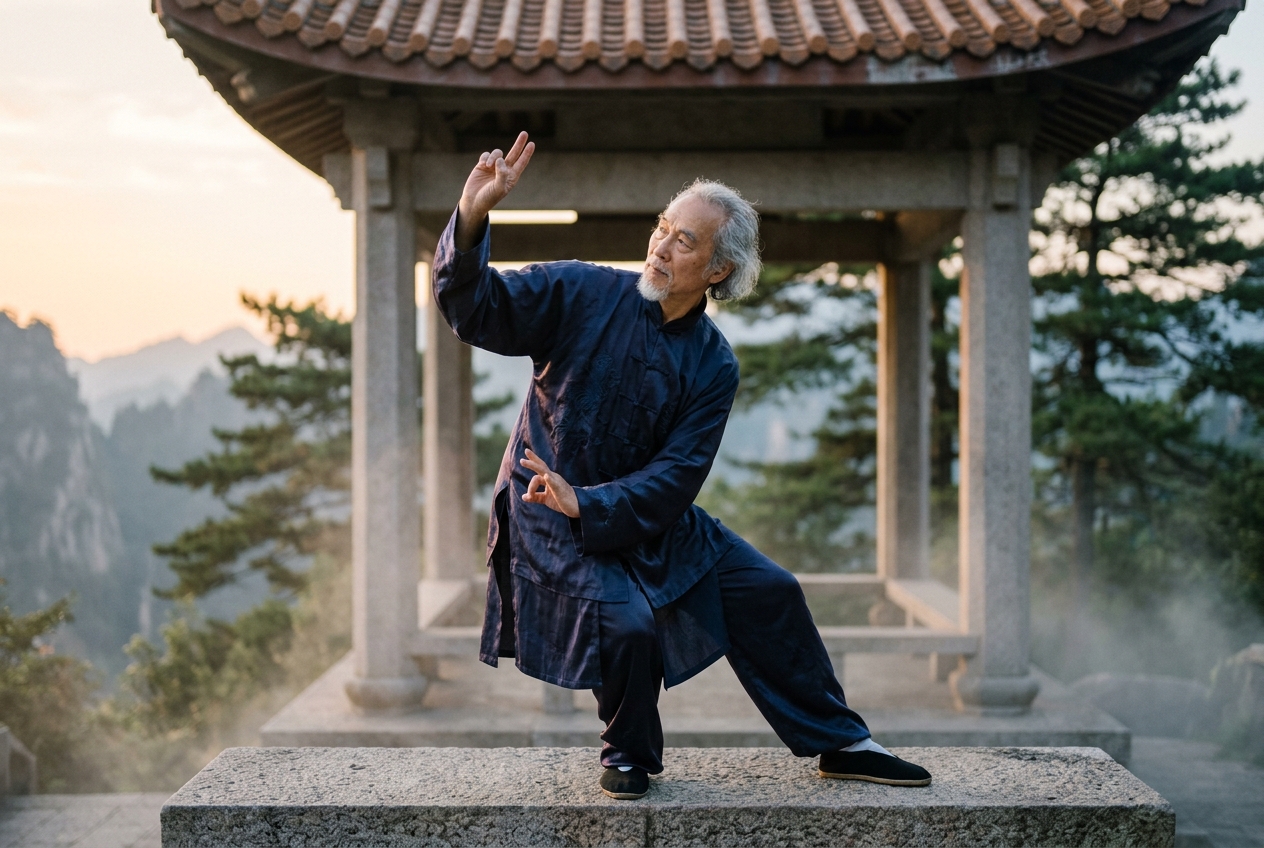
To understand its necessity, one must contrast it with elementary practices such as Peng Qi Guan Ding Fa ("Lift Qi Up, Pour Qi Down"). First-level protocols function primarily within the external biofield; they guide the practitioner’s awareness outward into the environment to gather atmospheric and natural vitality (Hunyuan Qi), drawing it into the superficial subcutaneous layers and primary energy reservoirs (Dantian). However, if external Qi is accumulated without cultivating the physical conduits of the body, energy pools superficially, unable to penetrate chronically restricted joints, fibrotic tendons, or scarred myofascia.
Xing Shen Zhuang resolves this somatic bottleneck by turning the focus sharply inward. The practice demands an absolute, uncompromising unification of Xing (the physical somatome, encompassing osseous alignments, joint capsules, tendon sheaths, and collagenous matrices) and Shen (the sovereign cognitive intention and interoceptive awareness). In this master-level practice, consciousness does not drift in passive visualization; rather, Shen is welded to the sensory-motor cortex, tracking micro-articular translations, monitoring fascial tension vectors, and directing intracorporeal pressure waves into the deepest recesses of the human frame.
Biomechanical, Fascial & Neurophysiological Mechanics
The physical genius of Xing Shen Zhuang lies in its exhaustive, head-to-toe micro-articular sequence. Modern sedentary lifestyles trap the human organism in habitual, gross-motor planes of motion, leading to progressive sensorimotor amnesia and articular stiffness. Xing Shen Zhuang reverses this degenerative trajectory by isolating and articulating every single synovial joint along the axial and appendicular skeleton:
- Cranio-Cervical Mobilization (He Shou & Long Tou): The sequence initiates with the Crane Neck (He Shou) and Dragon Head (Long Tou) movements, which mobilize the atlanto-occipital (C0–C1) and atlanto-axial (C1–C2) articulations through sinusoidal sagittal waves and coronal figure-eight spirals. This dynamic decompresses the suboccipital triangle, alleviates dural tension, and stimulates the vertebral basilar circulation.
- Scapulothoracic & Glenohumeral Unfolding (Zhan Chi): The practitioner engages in deep scapular retraction, depression, protraction, and elevation, coupled with internal and external humeral spirals. This movement systematically stretches the pectoralis minor, activates the serratus anterior and rhomboids, and mobilizes the acromioclavicular and sternoclavicular joints.
- Intercostal & Thoracolumbar Undulation: The ribcage is mobilized segment by segment through lateral rib shifts and rotational expansions, restoring respiratory excursion to the costovertebral and costotransverse joints while mobilizing the thoracic spine across all three physiological planes.
- Lumbopelvic & Kua Circumduction: The sequence targets the lumbar-sacral junction (L5–S1) and the hip joints (Kua), utilizing pelvic tilts, retroversion, and circumduction to decompress the lumbar intervertebral discs and release the deep hip rotators (such as the piriformis and obturator complexes).
- Distal Extremity Spiral Loading: The kinetic chain terminates in micro-torsional rotations of the femorotibial joint, talocrural joint, subtalar joint, and transverse tarsal joints, activating the plantar fascia and intrinsic foot musculature.
From the perspective of modern connective tissue research as cataloged by PubMed, these continuous, tensile movements operate directly upon the myofascial tensegrity network. According to the anatomical models established by Thomas Myers, human locomotion and structural integrity rely on continuous fascial tracks—such as the Superficial Back Line, the Deep Front Line, and the Spiral Line. Xing Shen Zhuang imposes slow, end-range isometric loads along these exact pathways.
When these collagenous sheets are stretched under low-velocity, unified somatic tension, a profound cellular phenomenon occurs: mechanotransduction. The mechanical strain on the extracellular matrix is converted into biochemical signals via cell-surface integrins and focal adhesion kinases. Fibroblasts within the fascia respond to this tensile signaling by reorganizing chaotic collagen fibrils into parallel, load-bearing arrays, synthesizing hyaluronic acid for inter-fascial gliding, and modulating matrix metalloproteinases to clear fibrotic adhesions.
Furthermore, collagen is a semi-crystalline structural protein exhibiting undeniable piezoelectric properties. As the tendon sheaths and joint capsules undergo rhythmic shearing and compression during Xing Shen Zhuang, mechanical deformation generates microscopic electric potentials across the collagen triple helices. These endogenous currents stimulate cellular repair, accelerate periosteal remodeling, and maintain the hydration of articular cartilage.
Simultaneously, this micro-articular discipline profoundly recalibrates the central and autonomic nervous systems through neuro-proprioceptive sensory mapping. Joint capsules and deep fascial layers contain the body's highest density of mechanoreceptors, specifically Type I Ruffini endings (signaling joint position and pressure), Type II Pacinian corpuscles (detecting acceleration and micro-vibration), and Type III Golgi-like receptors. By slowly navigating the micro-ranges of the small synovial joints, the practitioner sends a high-frequency barrage of afferent proprioceptive data to the primary somatosensory cortex (S1).
This cortical stimulation sharpens the brain's internal topographic map of the physical body, resolving chronic sensory-motor amnesia. As confirmed in neuro-autonomic research indexed by the National Center for Biotechnology Information, sustained, conscious proprioceptive activation down-regulates sympathetic hyper-arousal, suppressing elevated cortisol and systemic pro-inflammatory cytokines, while driving the autonomic nervous system into a restorative, parasympathetic state mediated by the vagal nerve complex.
Energetic & Meridian Transduction
In classical Chinese medical physiology, physical joints are designated as Guan—anatomical "gates" or functional checkpoints along the pathways of the twelve primary meridians (Jingmai) and their collateral networks (Luomai). Because of their complex geometry and high mechanical stress, joints represent the primary anatomical sites where pathological factors (Cold, Damp, Wind) lodge and where endogenous Qi and blood tend to stagnate.
When a practitioner suffers from chronic joint compression—such as forward head carriage jamming the atlanto-occipital space, or anterior pelvic tilt compressing the lumbosacral junction—the energetic conduits passing through these zones are physically throttled. For example: - Compression at the cervicothoracic junction (Dazhui, GV14) impedes the flow of all six Yang meridians traversing between the torso and the cranium. - Restriction across the anterior hip capsule (Kua) constricts the femoral neurovascular bundle and blocks the Liver, Spleen, and Kidney Yin channels ascending from the lower extremities.
Xing Shen Zhuang operates as an active, self-administered system of internal acupuncture. By systematically opening the joint spaces via traction, circumduction, and counter-rotational spirals, the practitioner removes these periarticular blockages, allowing stagnant Qi to discharge and fresh vitality to surge through the meridian channels.
Beyond superficial channel clearing, the advanced practice cultivates intracorporeal Qi integration—the deliberate propulsion of bio-energy into the interior structures of the organism. By combining diaphragmatic breath with focused somatic intention (Yi), the practitioner generates an internal hydraulic pressure wave. This pressure drives blood and refined Qi past the superficial investing fascia, through the periosteum, and directly into the trabecular architecture of the bone marrow spaces (Sui), nourishing osteocytes, revitalizing hematopoietic tissues, and bathing the deep visceral suspensions in restorative energetic flow.
Step-by-Step Movement Directives & Kinematic Breakdown
The following three core exercises represent the biomechanical and energetic foundation of the Xing Shen Zhuang system. Practice them sequentially with meticulous attention to alignment and internal awareness.
+==============================================================================+
|                      CORE BIOMECHANICAL ALIGNMENT LAWS                       |
+==============================================================================+
| 1. Baihui (Vertex) suspended from above; chin retracted toward nuchal line.  |
| 2. Chest hollowed (Han Xiong), upper back broadened (Ba Bei) without slouch. |
| 3. Mingmen (L2/L3) relaxed posteriorly; sacrum dropped to eliminate lordosis.|
| 4. Yongquan (K1) grounded; weight distributed over tripod of the foot.      |
| 5. Continuous abdominal respiration: diaphragm descends on inhalation.       |
+==============================================================================+
Movement 1: Crane Neck (He Shou) and Dragon Horns (Long Tou)
1. Kinematic Execution
- Assume the basic standing posture with feet together, knees unlocked, pelvis neutral, and hands resting gently on the hips with thumbs over the posterior rib margin and fingers wrapping forward over the iliac crests.
- He Shou (Crane Neck — Sagittal Plane): - Retraction & Elevation: Draw the chin straight backward into the throat, flattening the cervical lordosis. Elevate the base of the skull (Yuzhen / Jade Pillow) upward along the vertical axis, creating tensile axial traction through the entire cervical spine. - Protraction & Descent: Tilt the head slightly back without pinching the occiput, lift the chin upward, project it forward in a wide arch, and then glide it downward toward the sternal notch, tracing a smooth, continuous circle in the sagittal plane. - Reversion: Pull the chin inward along the chest back to the starting neutral position. Execute 9 complete revolutions, then reverse the direction for 9 cycles (leading downward along the sternum, scooping forward, upward, and drawing back into the skull).
- Long Tou (Dragon Horns — Coronal/Transverse Plane): - Imagine two energetic horns extending upward from the parietal ridges (Baihui margins). - Initiate a side-gliding translation of the cranium toward the left shoulder, ensuring the face remains oriented strictly forward without axial rotation. - Lift the left "horn" upward toward the ceiling, tilting the crown of the head to the right while elongating the left lateral neck structures. - Sweep the movement smoothly across the midline into an infinity loop (figure-eight), alternating seamlessly to the right side for 9 continuous repetitions.
2. Breath Synchronization & Somatic Intent (Yi)
- Inhalation: As the chin retracts and the vertex ascends, draw breath inward through the nose, anchoring awareness down the spine into the lower abdomen (Dantian).
- Exhalation: As the chin articulates forward and sweeps along the chest, exhale softly, projecting intention through the cervical vertebrae and releasing heat through the fingertips and toes.
- Yi Vector: Visualize the cervical spine as an articulated string of jade beads, each separating by a millimeter of light and space during traction.
3. Common Faults & Postural Corrections
- Fault: Craning the neck backward and hyperextending the atlanto-occipital joint, causing cervical nerve impingement.
- Correction: Keep the crown (Baihui) magnetically suspended; never collapse the back of the neck. The backward movement is an upward-curving arc, not a hinge.
- Fault: Shrugging the shoulders toward the ears during lateral gliding.
- Correction: Anchor the scapulae downward against the thoracic wall by engaging the lower fibers of the trapezius and latissimus dorsi.
Movement 2: Scapular Retraction, Depression & Arm Expansion (Zhan Chi)
1. Kinematic Execution
- From the standing stance, slowly raise both arms laterally until they form a straight, horizontal line with the shoulders (180-degree abduction). The palms face downward, fingers relaxed and extended.
- Flex both wrists upward so the palms push outward toward the left and right walls, with fingers pointing toward the ceiling. The center of the palms (Laogong, PC8) must be hollowed and pressurized outward.
- Scapular Articulation Sequence: - Retraction & Squeeze: Without bending the elbows, draw both scapulae toward the spine, compressing the interscapular musculature and squeezing the thoracic vertebrae together. - Depression: Glide the retracted scapulae straight downward along the posterior ribs toward the kidneys. - Protraction & Release: Broaden the shoulder blades outward across the back, thrusting through the heel of the hands and middle fingers (Zhongchong, PC9), stretching the arms to their maximum lateral dimension. - Elevation: Allow the scapulae to rise slightly as they begin the next cyclic wave.
- Complete 18 continuous, fluid revolutions without stopping or dropping the arms.
2. Breath Synchronization & Somatic Intent (Yi)
- Inhalation: Squeeze the scapulae together and down; inhale into the sternum and upper ribs, drawing Qi from the extremities into the central chest gate (Tanzhong, CV17).
- Exhalation: Broaden the back and push outward through the palms; exhale deeply into the lower belly, feeling a thermal wave expand down the medial arms through the lung and pericardium channels.
- Yi Vector: Feel the arms originating not from the shoulder sockets, but rooted directly into the spine between the scapulae (Dazhui and Shendao).
3. Common Faults & Postural Corrections
- Fault: Bending the elbows to simulate arm movement rather than driving the motion purely through the scapulothoracic joint.
- Correction: Lock the elbows in straight, long-axis extension; isolate the kinetic engine exclusively to the shoulder blades.
- Fault: Flaring the lower anterior ribs and arching the lower back to compensate for poor thoracic mobility.
- Correction: Draw the lower ribs slightly downward and tuck the tailbone under, maintaining a flat, supported lumbar spine (Mingmen open).
Movement 3: Standing Spinal Snake Undulation (She Xing)
1. Kinematic Execution
- Step the feet out slightly wider than shoulder-width, toes parallel. Soften the knees and sink the hips 2–3 inches into a high horse stance (Ma Bu).
- Place the hands on the hips or allow the arms to maintain a rounded, embracing posture in front of the abdomen.
- Segmental Wave Propagation: - Initiation (Sacrum/Pelvis): Tuck the coccyx forward and upward, tilting the pelvis posteriorly. This movement expands and flattens the lumbar lordosis, opening the physical and energetic "Gate of Life" (Mingmen, GV4). - Lumbar Wave: Continue the anterior roll through the lumbar vertebrae (L5 through L1), creating a convex curve through the lower back. - Thoracic Articulation: As the wave reaches the mid-back, soften the sternum inward (Han Xiong), allowing the thoracic spine (T12 through T1) to round slightly as the ribcage expands laterally. - Cervical & Cranial Completion: Pass the wave upward through the cervical column, ending with a subtle lengthening of the neck and upward release through the vertex (Baihui). - Sinking Return: Smoothly release the tailbone backward and downward to its neutral starting position, and immediately re-initiate the undulating sequence in a continuous, hypnotic loop. Execute 18 slow, rhythmic waves.
2. Breath Synchronization & Somatic Intent (Yi)
- Inhalation: Begin the pelvic tuck and lumbar wave on the inhale, drawing gravitational grounding energy (Yin Qi) upward from the bubbling spring points (Yongquan, K1) on the soles of the feet through the legs into the sacrum.
- Exhalation: As the wave ascends through the upper back and neck, exhale slowly, relaxing the chest, releasing internal visceral tension, and allowing used energy to flush down the legs into the earth.
- Yi Vector: Visualize the entire spine transformed into an elastic, supple river of fluid or a moving snake, dissolving all calcified rigidity between adjacent vertebrae.
3. Common Faults & Postural Corrections
- Fault: Moving the torso as a single, rigid block by simply hinging at the hips, bypassing the individual spinal segments.
- Correction: Slow the movement down to a fraction of its speed. Focus consciously on articulating one single vertebra at a time, moving strictly within a comfortable range of motion.
- Fault: Allowing the knees to collapse inward (valgus stress) during the pelvic tuck.
- Correction: Actively track the knees outward over the second toes by maintaining external femoral rotation at the hip joints (Kua).
Somatic Markers: What to Look For
As you practice these movements, several distinct physiological and energetic sensations will emerge. Recognizing these markers provides objective feedback on your technical precision:
+==============================================================================+
|                      DIAGNOSTIC SOMATIC PHENOMENOLOGY                        |
+==============================================================================+
| 1. Thermal Erythema & Warmth: Localized heat along the spine and extremities |
|    indicating peripheral microvascular vasodilation (parasympathetic shift).  |
| 2. Paresthesia & Micro-Tingling: Light vibration in the palms and fingertips |
|    reflecting piezoelectric fascial signaling and cutaneous nerve revival.   |
| 3. Myofascial Weight & Heaviness: Sinking, rooted density in the lower limbs |
|    arising from neuromuscular tension release and postural skeletal stacking.|
| 4. Intracapsular Decompression: Sensation of space, coolness, and lightness  |
|    within joint cavities following the clearance of periarticular stasis.    |
+==============================================================================+
Clinical Applications & Modern Musculoskeletal Therapeutics
The therapeutic applications of Xing Shen Zhuang are vast, making it a powerful modality in physical medicine, orthopedics, and neuromuscular rehabilitation. Standard clinical protocols often fail to produce long-term results because they treat regional symptoms in isolation. In contrast, Xing Shen Zhuang addresses the whole fascial network and the root causes of musculoskeletal degeneration, as recognized in the World Health Organization Traditional Medicine guidelines.
- Cervical Spondylosis & Tech-Neck Syndrome: Chronic anterior head translation places immense shear stress upon the lower cervical segments (C5–C7). The He Shou protocol systematically relieves this compression by engaging the longus colli and deep neck flexors, stretching the tight suboccipital musculature, and restoring normal cervical lordosis.
- Adhesive Capsulitis (Frozen Shoulder) & Rotator Cuff Tendinopathy: By isolating movement to the scapulothoracic interface during Zhan Chi, practitioners bypass acute glenohumeral pain triggers, gently breaking down periarticular adhesions and remodeling the joint capsule without inflammatory trauma.
- Lumbar Disc Herniation & Degenerative Disc Disease: Modern spinal biomechanics demonstrates that static axial loading accelerates intervertebral disc degeneration. The undulating waves of She Xing create rhythmic, alternating compression and decompression cycles across the lumbar discs, promoting fluid imbibition, rehydrating the nucleus pulposus, and relieving sciatic nerve root compression.
- Ankylosing Spondylitis & Systemic Rigidity: For inflammatory rheumatologic conditions characterized by progressive spinal fusion, the gentle, non-impact micro-articular movements of Xing Shen Zhuang prevent osteophyte bridging, preserve costovertebral rib compliance, and maintain thoracic mobility.
Daily Clinical Practice Prescription
To establish long-term functional mobility, autonomic balance, and healthy energetic circulation, integrate this concise, highly focused routine into your daily regimen:
+==============================================================================+
|                 STRUCTURED 15-MINUTE DAILY DAOYIN PROTOCOL                   |
+==============================================================================+
| Phase 1: Grounding & Centering (2 Minutes)                                   |
|   • Stance: Parallel feet, knees unlocked, Baihui suspended, Mingmen open.   |
|   • Respiration: Slow abdominal breathing (4-second inhale, 6-second exhale).|
|                                                                              |
| Phase 2: Cranial & Cervical Articulation (4 Minutes)                         |
|   • He Shou (Crane Neck): 9 forward cycles, 9 reverse cycles.                 |
|   • Long Tou (Dragon Head): 9 lateral figure-eight loops.                    |
|                                                                              |
| Phase 3: Scapulothoracic Expansion (4 Minutes)                              |
|   • Zhan Chi (Arm Unfolding): 18 continuous scapular retraction-depression   |
|     rotations with flexed wrists and hollowed Laogong palms.                 |
|                                                                              |
| Phase 4: Spinal Snake Undulation (4 Minutes)                                 |
|   • She Xing: 18 continuous craniosacral waves through the spinal column.    |
|                                                                              |
| Phase 5: Consolidation (*Qi Harvesting*) (1 Minute)                          |
|   • Stand motionless. Place both palms over the navel (Lower Dantian).       |
|   • Take three slow breaths, absorbing the cultivated heat and vitality.     |
+==============================================================================+
Lineage Context & Historical Synthesis
The systematic methodology of Xing Shen Zhuang represents the culmination of a millennium-long evolution in Chinese somatic sciences. While its modern, anatomical articulation was perfected within the Zhineng medical lineage by Dr. Pang Ming—a physician certified in both Western biomedicine and Traditional Chinese Medicine—its fundamental movements draw directly from the ancient Daoist Xian tradition and Buddhist martial practices.
During the Tang and Song dynasties, hermetic practitioners living in the Wudang and Mount Emei regions recognized that prolonged meditative stillness (Jing) inevitably resulted in musculoskeletal stasis, fascial shortening, and energetic stagnation. To counteract these physical declines, masters developed dynamic, animal-inspired kinetic sequences designed to open the eighteen major joint complexes of the human anatomy.
Dr. Pang Ming synthesized these classical internal practices with modern understandings of neuroanatomy, biomechanics, and tissue histology. By stripping away superstitious secrecy and organizing the movements into an accessible, step-by-step curriculum, he created a standardized, reproducible system of medical Daoyin that has been studied extensively by modern research bodies like the National Qigong Association and broad encyclopedic surveys on Qigong history.
Understanding this heritage reminds the modern practitioner that Xing Shen Zhuang is not a random collection of calisthenic exercises; it is a time-tested, clinically verified technology of somatic transformation, designed to bring the physical vessel (Xing) into complete alignment with the living consciousness (Shen).
Today's Practice Commitment
Tomorrow morning, before reaching for your phone or pouring your first cup of coffee, dedicate exactly six minutes to this practice. Stand in your living room or beside your bed, align your posture, and execute nine slow repetitions of the Crane Neck (He Shou), followed by nine cycles of Scapular Expansion (Zhan Chi).
Pay close attention to the immediate changes in your body: the surge of warmth along the back of your neck, the tingling release through your fingers, the sudden ease of your breathing, and the calm, grounded mental clarity that stays with you over the following hours. That physical sensation is not an abstract concept; it is your connective tissue hydrating, your nervous system regulating, and your internal energy flowing freely through an open, unified structure.