Downward-Draining Herbs (Xie Xia Yao) Pharmacodynamics: Governing Purgative Actions, Moistening Laxatives, Hydragogue Water-Expulsion, and Intestinal Stagnation Clearance in Traditional Chinese Medicine
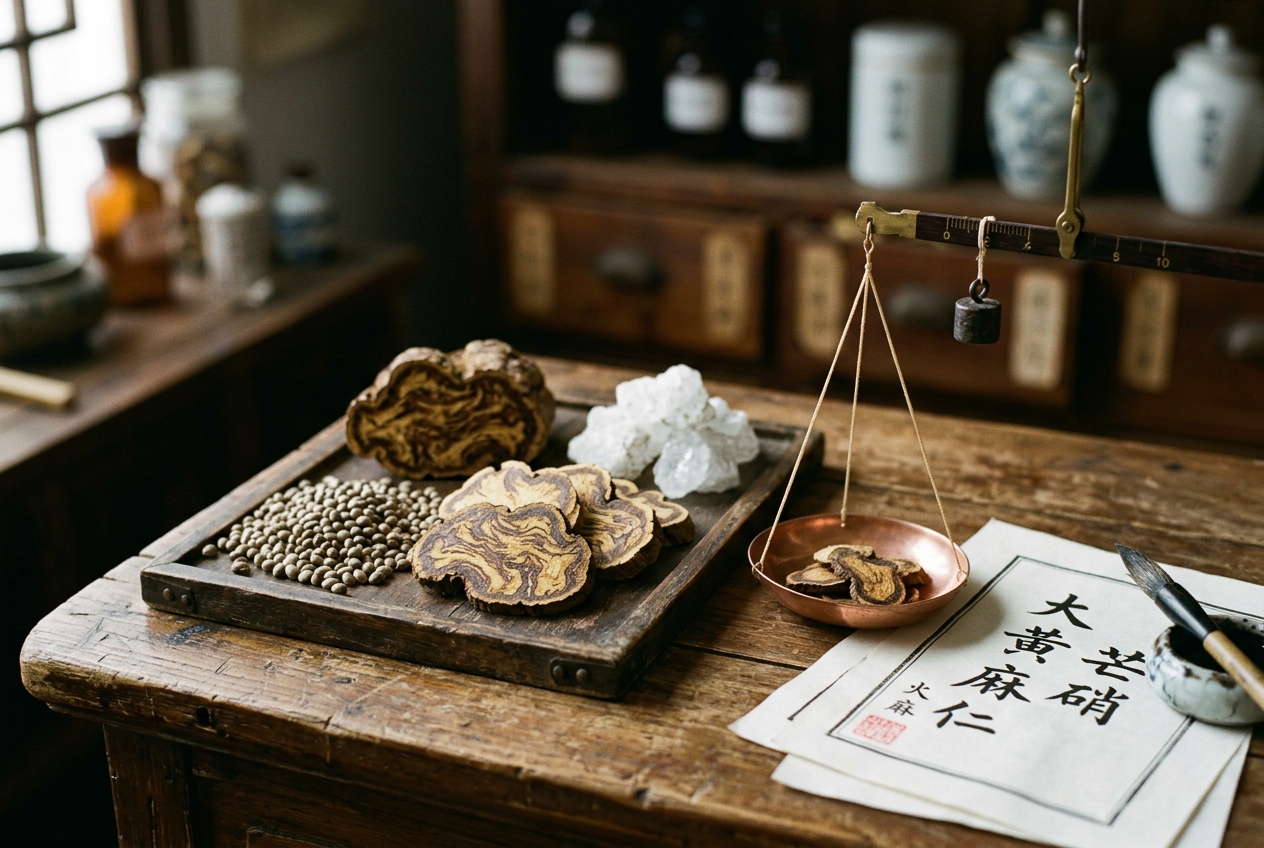
You wake up with a heavy, unyielding fullness anchored deep in your lower abdomen. Your tongue feels dry, your breath carries a subtle heat, and a sluggish, congested pressure radiates upward into your chest, clouding your mental clarity and inducing a distinct restlessness. In Western medicine, this is acute or chronic stercoral stagnation—delayed colonic transit paired with mucosal dehydration. In the physiological framework of Traditional Chinese Medicine (TCM), it represents an interruption of the physiological descending vector (Jiang) of the digestive tract, manifesting as a Yangming organ excess syndrome (Yángmíng Fǔ Shí Zhèng). When the body's internal plumbing stalls, metabolic heat and dried waste cannot drain downward, causing noxious toxins and pathogenic heat to back up into the systemic circulation.
To restore visceral equilibrium, Chinese herbology relies on one of its most potent, clinically decisive, and biochemically nuanced therapeutic classes: Downward-Draining Herbs (Xiè Xià Yào, 泻下药). Far beyond simple over-the-counter laxatives, these botanicals and mineral agents act as dynamic regulators of intestinal hydrodynamics, neuromuscular peristalsis, and systemic fluid partition. As documented by the World Health Organization Traditional Medicine benchmarks, understanding these classical botanical formulas through modern molecular biology bridges centuries of empirical observation with contemporary gastrointestinal pharmacodynamics.
1. Visceral Vectors and the Intestinal Transit Engine
In classical Chinese visceral theory (Zàng-Fǔ), the stomach (Wèi) and large intestine (Dàcháng) are classified as Yang organs (Fǔ), whose fundamental physiological mandate is transit, transformation, and downward conduction. The ancient medical canon Huangdi Neijing (Yellow Emperor's Inner Classic) notes that the "six Fu organs thrive on free flow and downward descent; stagnation constitutes disease." The large intestine receives digested chime from the small intestine, absorbs remaining fluid, and conducts waste toward the rectum.
+-------------------------------------------------------------------------+
|                  THE PHYSIOLOGICAL VISCERAL DESCENT                     |
|                                                                         |
|   Stomach / Intestinal Chyme  ==>  Peristalsis & Fluid Absorption       |
|                                         ||                              |
|                                         \/                              |
|                             Downward Movement (Jiàng)                   |
|                                         ||                              |
|                                         \/                              |
|                   Evacuation of Turbid Matter (Xiè Xià)                 |
+-------------------------------------------------------------------------+
When this descending vector fails—whether due to pathogenic heat congealing bodily fluids, internal cold paralyzing gastrointestinal motility, systemic Yin deficiency, or mechanical fluid accumulation—downward-draining agents are deployed. The therapeutic intent of Xiè Xià Yào is quadruple: 1. Purging Stool Accumulation (Tōng Fǔ Xià Fén): Unblocking impacted, desiccated fecal matter. 2. Draining Pathogenic Heat (Xiè Rè Qīng Huǒ): Venting systemic, visceral fire through the bowel. 3. Guiding Turbid Pathogens Downward (Dǎo Zhì Jiàng Nì): Redirecting upward-surging toxic pathogens and rebellious Qi. 4. Expelling Water and Phlegm (Zhuó Shuǐ Zhú Yǐn): Mobilizing and expelling intractable systemic edema, pleural effusions, and peritoneal ascites.
2. Foundational Taxonomy & Molecular Mechanisms
Classical pharmacology divides Downward-Draining Herbs into three distinct categories based on their thermal nature, biochemical mechanisms, and therapeutic intensity.
                              DOWNWARD-DRAINING HERBS
                                   (Xiè Xià Yào)
                                         |
     +-----------------------------------+-----------------------------------+
     |                                   |                                   |
[1. PURGATIVES]               [2. MOISTENING LAXATIVES]          [3. HARSH HYDRAGOGUES]
 (Hán Xià / Wēn Xià)               (Rùn Xià Yào)                 (Jùn Xià Zhú Shuǐ Yào)
   * Da Huang (Cold)                 * Huo Ma Ren                      * Gan Sui
   * Mang Xiao (Cold)                * Yu Li Ren                       * Da Ji
   * Ba Dou (Warm)                                                     * Yuan Hua
A. Purgatives (Hán Xià & Wēn Xià)
Purgatives are potent agents prescribed for severe accumulation syndromes. They are further divided into Cold Purgatives (Hán Xià) for heat accumulation and Warm Purgatives (Wēn Xià) for cold accumulation.
Cold Purgatives (Hán Xià Yào)
Cold purgatives treat Yangming Organ Excess Syndrome (Yángmíng Fǔ Shí Zhèng), which is characterized by the Four Cardinal Signs: * Pǐ (痞 - Focal Distension): Subjective feeling of oppressive fullness in the epigastrium and abdomen. * Zào (燥 - Dryness): Desiccation of intestinal fluids, parched mouth, cracked tongue coating, and dry feces. * Shí (实 - Excess Repletion): Objective abdominal distension, severe pain aggravating upon palpation, delirium, and a surging, forceful pulse. * Máng (芒 - Hardness): Palpable, stone-hard fecal impactions in the lower colon.
- Radix et Rhizoma Rhei (Dà Huáng, 大黄): The undisputed monarch of downward draining. Rich in anthraquinone derivatives, including sennosides A, B, C, and D, alongside free anthraquinones such as rhein and emodin. Unconjugated anthraquinones are absorbed in the upper gastrointestinal tract, whereas glycosidic anthraquinones (sennosides) travel unabsorbed to the large intestine. There, colonic microflora hydrolyze them into rhein anthrone, which directly irritates the myenteric (Auerbach’s) plexus. This induces coordinated peristaltic contractions, inhibits $\text{Na}^+/\text{K}^+$-ATPase activity in the mucosal epithelium, stimulates cystic fibrosis transmembrane conductance regulator (CFTR) chloride channels, and elevates lumen fluid accumulation. Modern research indexed on PubMed on Rheum officinale pharmacodynamics verifies that Da Huang also exerts anti-inflammatory, hepatoprotective, and broad-spectrum antimicrobial actions.
- Natrii Sulfas (Máng Xiāo, 芒硝): Chemically composed of sodium sulfate decahydrate ($\text{Na}_2\text{SO}_4 \cdot 10\text{H}_2\text{O}$). As documented in studies on Mirabilite hyperosmotic pharmacology, Mang Xiao is not readily absorbed through the intestinal epithelium. It generates a powerful hypertonic osmotic gradient within the intestinal lumen, drawing vast volumes of plasma water into the bowel. This rapidly hydrates, softens, and dissolves rock-hard stercoral masses while clearing blazing heat.
Warm Purgatives (Wēn Xià Yào)
- Fructus Crotonis (Bā Dòu, 巴豆): An extremely violent, acrid, and scorching botanical containing croton resin and toxic phorbol diesters. It is reserved exclusively for cold accumulation (Hán Jī) and severe intestinal blockage where metabolic function is completely frozen. The phorbol esters trigger profound mucosal inflammation and violent, rapid intestinal hypermotility.
B. Moistening Laxatives (Rùn Xià Yào)
Moistening laxatives are lipid-rich seeds and kernels designed for gentle, non-irritating evacuation. They do not stimulate forceful peristalsis via enteric nerve irritation; instead, they lubricate the mucosal wall and soften desiccated stools. These herbs are essential in cases of Yin deficiency, blood exhaustion, postpartum constipation, and geriatric dry-stool patterns (Yīn Xū Cháng Zào).
- Semen Cannabis (Huǒ Má Rén, 火麻仁): Derived from Cannabis sativa seeds (devoid of psychoactive cannabinoids). Rich in polyunsaturated fatty acids, particularly linoleic and alpha-linolenic acids. As detailed on PubMed on Cannabis seed therapy for chronic constipation, these lipids lubricate the colonic lumen, retard water reabsorption, and promote physiological transit without depleting bodily fluids or inducing abdominal cramping.
- Semen Pruni (Yù Lǐ Rén, 郁李仁): The kernel of Prunus bungeana, containing amygdalin and high lipid concentrations. In addition to lubricating the large intestine, it possesses a secondary downward-draining vector targeting the urinary bladder, promoting both defecation and mild diuresis.
C. Harsh Hydragogues / Water-Expelling Herbs (Jùn Xià Zhú Shuǐ Yào)
These represent the emergency cathartic heavy artillery of the Chinese pharmacopeia. Harsh hydragogues induce massive, watery diarrhea and copious diuresis to drain pathological fluid accumulations (Shuǐ Yǐn), such as exudative pleurisy, hepatic ascites, and severe anasarca.
- Radix Kansui (Gān Suì, 甘遂): Contains toxic diterpenoids of the ingenane and jatrophane types. As outlined in PubMed research on Euphorbia kansui toxicological profiles, these diterpenes provoke rapid intestinal fluid efflux and intense peristaltic spasms. It specifically targets deep-seated, intractable water accumulations in the chest, hypochondrium, and peritoneal cavity.
- Radix Knoxiae / Radix Euphorbiae Pekinensis (Dà Jǐ, 大戟) & Flos Genkwa (Yuán Huā, 芫花): Potent diterpene-rich botanicals that purge pathogenic water downward through the stool and urine.
- Semen Euphorbiae Lathyridis (Qiān Jīn Zǐ, 千金子): A warm, acrid, toxic seed that breaks through blood stasis, unblocks stubborn cold phlegm accumulations, and expels ascites.
3. Classical Formula Architecture & Synergistic Integration
In classical TCM formula design (Fāng Jì Xué), downward-draining herbs are rarely administered in isolation. They are calibrated within balanced architectural matrices that combine purgation with Qi-regulating, fluid-preserving, or toxicity-buffering agents.
==========================================================================
                     CLASSICAL FORMULA ARCHITECTURE
==========================================================================

1. DÀ CHÉNG QÌ TANG (Major Order the Qi Decoction)
   [Da Huang] + [Mang Xiao] + [Zhi Shi] + [Hou Po]
   -> Purges Heat, Softens Masses, Resolves Abdominal Distension & Bloating.

2. MÁ ZǏ RÉN WÁN (Hemp Seed Pill)
   [Huo Ma Ren] + [Xing Ren] + [Bai Shao] + [Zhi Shi] + [Hou Po] + [Da Huang]
   -> Lubricates Dryness, Nourishes Yin, Gently Descends Stagnant Bowel Qi.

3. SHÍ ZǍO TANG (Ten Jujube Decoction)
   [Gan Sui] + [Da Ji] + [Yuan Hua] + (Decocted with 10 Da Zao dates)
   -> Mobilizes Thoracic/Abdominal Fluid while Protecting Gastric Mucosa.
==========================================================================
1. Dà Chéng Qì Tāng (Major Order the Qi Decoction, 大承气汤)
Source: Shanghan Lun (Treatise on Cold Damage Diseases, circa 200 CE)
Formulated for acute, severe Yangming heat accumulation (Yángmíng Fǔ Shí Zhèng): * Radix et Rhizoma Rhei (Dà Huáng, 12g) [Monarch/Zhǔ Yào]: Purges pathogenic heat and stimulates colonic peristalsis. * Natrii Sulfas (Máng Xiāo, 9g) [Minister/Chén Yào]: Softens hard masses via hyperosmotic fluid retention. * Fructus Aurantii Immaturus (Zhǐ Shí, 12g) [Assistant/Zǒ Yào]: Breaks up stagnant Qi and relieves focal distension (Pǐ). * Cortex Magnoliae Officinalis (Hòu Pò, 15g) [Assistant/Zǒ Yào]: Dissipates intestinal fullness and directs rebellious Qi downward (Jiàng Nì).
Decoction Sequence Matters: Hòu Pò and Zhǐ Shí are boiled first to extract their heavy essential oils and bitter Qi-descending constituents. Dà Huáng is added late (Hòu Xià) in the final 5–10 minutes of boiling; prolonged cooking thermally degrades fragile sennosides into less purgative free anthraquinones, reducing laxative potency. Finally, Máng Xiāo is never boiled; it is dissolved directly into the strained, hot decoction (Chōng Fú) to preserve its osmotic integrity.
2. Má Zǐ Rén Wán (Hemp Seed Pill, 麻子仁丸)
Source: Shanghan Lun
Indicated for "Spleen Restriction" (Pí Yuē, 脾约)—a condition where stomach heat overpowers a deficient spleen, drying up intestinal fluids and leading to hard, dry, pebble-like stools despite normal appetite. * Semen Cannabis (Huǒ Má Rén): Serves as the primary emollient, lubricating intestinal dryness. * Radix Paeoniae Alba (Bái Sháo): Nourishes Blood and Yin, softening the liver and relieving abdominal cramping. * Semen Armeniacae Amarum (Xìng Rén): Directs Lung Qi downward, coupling the Lung-Large Intestine organ axis to assist bowel evacuation. * Zhi Shi, Hou Po, and Da Huang: Incorporated in reduced, modified dosages to gently mobilize Qi and purge mild residual stagnation without causing explosive diarrhea.
3. Shí Zǎo Tāng (Ten Jujube Decoction, 十枣汤)
Source: Shanghan Lun
Designed to treat pleurisy, exudative pleural effusion (Xuán Yǐn), and severe ascites. * The Toxic Triad: Equal proportions of Gān Suì, Dà Jǐ, and Yuán Huā are pulverized into an ultra-fine powder. * The Mucosal Buffer (Fructus Jujubae - Dà Zǎo, 10 pieces): The three harsh herbs are never boiled directly into tea. Instead, ten plump Chinese red dates (Dà Zǎo) are boiled into a thick, sweet, mucilaginous broth. The herbal powder is swallowed with this jujube decoction. The concentrated sugars, flavonoids, and polysaccharides of Dà Zǎo protect the stomach and spleen mucosal lining, preventing the toxic diterpenes from inducing acute hemorrhagic gastritis or cardiovascular collapse.
4. Clinical Safety, Toxicology, and Processing (Pào Zhì)
Because downward-draining herbs exert dramatic physiological effects, their clinical application requires strict adherence to safety margins, contraindications, and pharmaceutical processing.
+-------------------------------------------------------------------------+
|                  CRITICAL CONTRAINDICATION PROTOCOLS                    |
+-------------------------------------------------------------------------+
| [X] PREGNANCY: High risk of pelvic hyperemia & uterine contractions.    |
| [X] MENSTRUATION: Risk of inducing hypermenorrhea or menorrhagia.       |
| [X] QI & BLOOD EXHAUSTION: Severe fatigue, collapse, shock.            |
| [X] POST-FEBRILE YIN DEFICIENCY: True dry stools without excess heat.   |
+-------------------------------------------------------------------------+
Absolute Contraindications
- Pregnancy: Purgatives and harsh hydragogues stimulate pelvic and uterine blood flow (pelvic hyperemia) and can trigger reflex uterine contractions, risking spontaneous abortion.
- Menstruation: May induce excessive blood loss and systemic pelvic congestion.
- Severe Qi and Blood Exhaustion: The violent downward vector of purgatives can cause sudden vascular collapse and depletion of vital Qi (Tuō Zhèng).
- Post-Febrile Fluid Exhaustion: Constipation occurring after prolonged fever is often caused by depleted Yin, not pathogenic heat accumulation. Administering harsh purgatives in this state worsens tissue dehydration and damages the kidneys.
Pharmaceutical Processing (Pào Zhì, 炮制)
In Chinese pharmacognosy, raw botanical materials undergo specialized alchemy to alter their bioavailability, modify thermal properties, and direct their therapeutic vectors.
- Raw Rhubarb (Shēng Dà Huáng, 生大黄): Possesses maximum concentration of intact sennoside glycosides. It has the fastest purgative velocity and is used for acute Yangming fire and obstinate impaction.
- Wine-Steamed / Wine-Fried Rhubarb (Jiǔ Dà Huáng, 酒大黄): Soaked and stir-fried with rice wine. Thermal processing hydrolyzes a substantial portion of the sennosides into free anthraquinones, attenuating purgative velocity. The ascending, circulating nature of wine redirects the herb toward the upper body, transforming it into a blood-invigorating, fire-draining agent that clears head and facial inflammation.
- Charred Rhubarb (Dà Huáng Tàn, 大黄炭): Strongly heated until black on the exterior. This process destroys the majority of anthraquinone glycosides while concentrating astringent tannins, turning the herb into a dynamic hemostatic agent that stops intestinal and uterine hemorrhages caused by blood heat.
5. Integrating Mind-Body Practice: Qigong & Acupressure for Visceral Transit
While pharmacological interventions provide rapid crisis resolution for acute impaction, restoring the long-term downward vector of the large intestine requires regulating the autonomic nervous system. Chronic stercoral stagnation is closely linked to sympathetic overdrive, which inhibits the enteric nervous system and halts physiological peristalsis.
Qigong Practice: "Descending the Turbid Breath" (Jiàng Zhuó Qì Gōng)
This non-invasive movement harmonizes the Lung-Large Intestine functional axis, facilitating bowel motility by using diaphragmatic pressure and focused intent (Yì).
==========================================================================
           STEP-BY-STEP QIGONG: "DESCENDING THE TURBID BREATH"
==========================================================================
1. SETUP:
   Stand with feet shoulder-width apart, knees slightly softened. Place
   tongue against the roof of the mouth. Rest hands over the lower abdomen
   (Dantian), thumbs interlocked at the navel.

2. ASCENT & EXPANSION (Inhalation - 4 Seconds):
   Inhale deeply through the nose into the lower abdomen. Slowly float both
   palms upward along the midline to the level of the solar plexus,
   turning the palms downward.

3. DESCENT & CONDUCTION (Exhalation - 6 Seconds):
   Exhale smoothly through the mouth with a soft "Hū" sound. Press the
   palms slowly downward toward the pubic bone, visualizing warm, golden
   light guiding all internal stagnation, fullness, and turbid heat down
   through the legs and out through the soles of the feet (Yongquan, KI-1).

4. REPETITION & DURATION:
   Execute 18 to 24 continuous cycles. Look for borborygmi (audible stomach
   gurgling), spontaneous salivation, and a release of abdominal tension.
==========================================================================
Key Acupressure Points for Intestinal Stagnation
Apply firm, perpendicular pressure to these points for 1 to 3 minutes each, using circular thumb motions until a distinct distending ache (Dé Qì) is achieved.
       [ST-25 / Tiānshū]                      [SJ-6 / Zhīgōu]
  (2 cun lateral to umbilicus)            (3 cun proximal to dorsal wrist)
              |                                          |
              v                                          v
+-----------------------------+            +-----------------------------+
| Mobilizes colonic Qi, stops |            | Clears Sanjiao heat, moves  |
| pain, balances peristalsis. |            | stagnant Qi, unblocks stool.|
+-----------------------------+            +-----------------------------+
- Tiānshū (ST-25, 天枢 - "Celestial Pivot"): * Location: Located 2 cun (approximately three finger-widths) lateral to the center of the umbilicus. * Therapeutics: The Front-Mu point of the Large Intestine. Regulates intestinal Qi flow, resolves focal distension, and coordinates both acute constipation and dysenteric diarrhea.
- Zhīgōu (SJ-6, 支沟 - "Branch Ditch"): * Location: Located on the dorsal forearm, 3 cun proximal to the dorsal wrist crease, between the radius and ulna. * Therapeutics: The premier distal point for unblocking bowel Qi and draining pathogenic fire trapped in the Triple Burner (Sānjiāo).
- Shàngjùxū (ST-37, 上巨虚 - "Upper Great Hollow"): * Location: Located 6 cun inferior to the patella, one finger-breadth lateral to the anterior crest of the tibia. * Therapeutics: The Lower He-Sea point of the Large Intestine. Directly influences colonic motility, clearing heat and draining stagnation throughout the lower abdomen.
6. Dietary Therapy & Lifestyle Principles
Long-term management of digestive motility relies on supporting mucosal integrity and balanced intestinal hydration:
- Incorporate Natural Mucilages and Healthy Lipids: Raw black sesame seeds (Hēi Zhī Ma), walnuts (Hú Táo Rén), cold-pressed flaxseed oil, and soaked chia seeds provide lubricating plant oils that mirror the pharmacological action of Huǒ Má Rén.
- Hydrate with Warm, Salt-Balanced Broths: Lukewarm water with a pinch of unrefined sea salt in the early morning promotes gastrocolic reflex activation through mild hyperosmotic stimulation, mimicking a gentle physiological dose of Máng Xiāo.
- Limit Desiccating and Stagnating Foods: Minimize deep-fried, heavily spiced, and astringent foods (such as excessive black teas or unripe tannins), which consume body fluids and generate dry heat in the large intestine.
7. Clinical Takeaway
The downward-draining herbs (Xiè Xià Yào) of Traditional Chinese Medicine provide an elegant pharmacological framework that pairs targeted biochemical mechanisms—such as the neuro-enteric irritation of anthraquinones and the hyperosmotic fluid retention of sodium sulfate—with holistic formulas that protect mucosal and systemic balance.
For daily maintenance, you can support your body's natural descending vector without intense herbal interventions: spend five minutes each morning performing diaphragmatic breathing while applying gentle, clockwise circular massage over the Tiānshū (ST-25) acupressure points. This simple practice relieves autonomic tension, activates the enteric nervous system, and encourages smooth, healthy visceral transit.
For broader perspectives on traditional botanical medicine, consult resources on Traditional Chinese Medicine at Wikipedia and the WHO Traditional Medicine Strategy.