Tongue Meridian Microsystem: Navigating Lingual Somatotopic Topography, Zang-Fu Visceral Projections, and Precision Acupressure Protocols
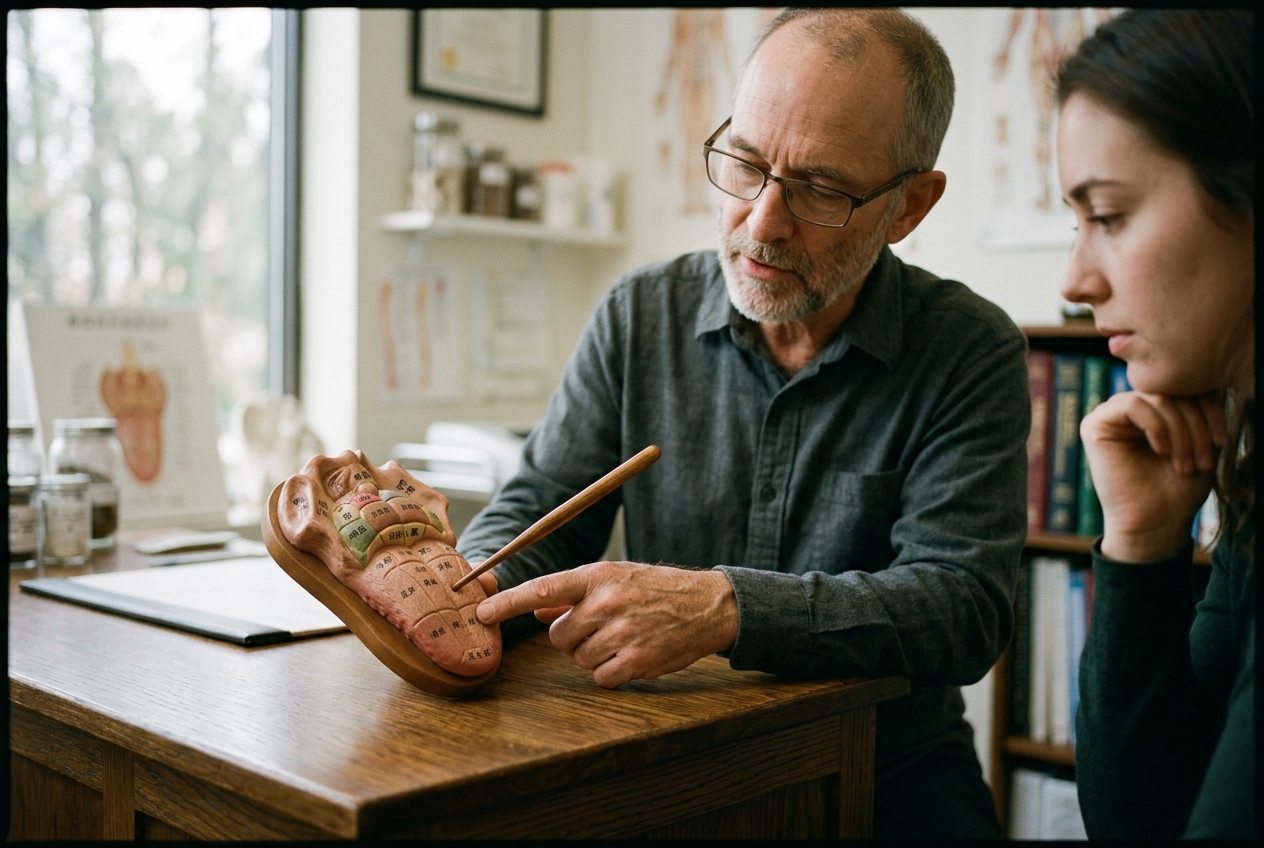
In traditional medical epistemology, the tongue is not merely an instrument of mastication and speech; it is the master diagnostic hologram of the entire organism. The classic medical treatise Ling Shu (The Miraculous Pivot) states that the tongue is the "sprout of the Heart" and the external mirror of the internal Zang-Fu organs. Long before high-resolution imaging existed, Eastern clinicians recognized that changes in the tongue’s texture, vascularity, moisture, and muscle tone mapped with astonishing fidelity to systemic physiological states. Today, contemporary neurology and autonomic physiology corroborate this ancient insight. The tongue represents a unique convergence zone where five separate cranial nerves interface with the brainstem, the parasympathetic nervous system, and systemic micro-circulation.
By learning to interpret this lingual territory and applying targeted, non-invasive acupressure to key submental and oral loci, you can access a potent neurological switchboard capable of down-regulating sympathetic stress, stimulating restorative salivary flow, sharpening speech clarity, and restoring cognitive vitality.
The Meridian Path — A Journey Through the Lingual Landscape and Its Neurological Pathways
To understand the tongue as a therapeutic gateway, one must first explore its geography. In classical Chinese medicine, nearly all major meridian pathways either penetrate, circle, or anchor into the root of the tongue. The organ functions as an anatomical microcosm—a fractal somatotopic map where every systemic zone is represented within a few square centimeters of mucosal tissue.
                      [ TONGUE APEX / TIP ]
                   Heart & Lung (Upper Jiao)
                             |
       +---------------------+---------------------+
       |                                           |
[ LEFT MARGIN ]                             [ RIGHT MARGIN ]
Liver & Gallbladder                         Liver & Gallbladder
       |                                           |
       +---------------------+---------------------+
                             |
                     [ CENTRAL BODY ]
                 Spleen & Stomach (Middle Jiao)
                             |
                      [ LINGUAL ROOT ]
           Kidney, Bladder & Intestines (Lower Jiao)
The Classical Somatotopic Map: Zang-Fu Projections
In the classical diagnostic paradigm codified in the Ling Shu and later refined in Zhang Zhongjing’s Shanghan Lun (Treatise on Cold Damage Diseases), the lingual surface is divided into distinct functional territories corresponding to the San Jiao (Triple Burner):
- The Tip (Apex): Represents the Upper Jiao, reflecting the status of the Heart (Shen, circulatory dynamics, mental-emotional equilibrium) and the Lungs (respiratory vitality, defensive Wei Qi). Erythema or petechiae here signal psychological hyper-arousal, insomnia, or upper respiratory inflammation.
- The Center (Lingual Body): Maps the Middle Jiao, specifically the Spleen and Stomach. The central dorsum and its coating provide real-time data on digestive metabolic transformations, enzyme output, and nutrient assimilation.
- The Bilateral Margins (Lateral Borders): Mirror the Liver and Gallbladder. Swelling, scalloping, or dark venous stasis along these lateral borders correlate with hepatic congestion, emotional constraint, and dysregulated neuroendocrine balance.
- The Root (Posterior Third): Governs the Lower Jiao, reflecting the Kidney essence (Jing), the Urinary Bladder, and the Large and Small Intestines. Deep furrows, thick peeled coatings, or venous engorgement at the base indicate lower gastrointestinal dysbiosis, adrenal exhaustion, or pelvic fluid stagnation.
Readers interested in the classical diagnostic taxonomy can explore the clinical overview provided by Traditional Chinese medicine tongue diagnosis.
The Modern Neuroanatomical Architecture
This classical somatotopy finds a remarkable biological substrate in the complex neural wiring of the lingual mucosa and musculature. As documented in biomedical research on Cranial Nerves Functional Anatomy, the tongue is innervated by five distinct cranial nerves working in exquisite synchronization:
- Trigeminal Nerve (CN V3 - Mandibular Division): Via the lingual nerve, it delivers dense general somatic afferent innervation (touch, pain, temperature, proprioception) to the anterior two-thirds of the tongue. This nerve provides the sensory foundation that connects oral tactile input to the primary sensory cortex. Detailed parameters are indexed in the NCBI Trigeminal Nerve Review.
- Facial Nerve (CN VII - Chorda Tympani): Traverses the middle ear cavity to hitchhike along the lingual nerve, supplying special visceral afferent (gustatory/taste) fibers to the anterior two-thirds of the tongue and secretomotor fibers to the submandibular and sublingual salivary glands.
- Glossopharyngeal Nerve (CN IX): Subserves both general sensation and taste for the posterior third (the lingual root). CN IX synapses directly into the nucleus tractus solitarius (NTS) in the medulla, acting as a direct relay for autonomic tone, blood pressure regulation via carotid baroreceptors, and the swallowing reflex. Its secretomotor branch governs the parotid gland, as detailed in research on autonomic regulation and salivary secretion.
- Vagus Nerve (CN X): Through the internal branch of the superior laryngeal nerve, the vagus sends sensory and taste projections to the base of the tongue, the epiglottic valleculae, and the pharyngo-esophageal junction. Stimulation in this region evokes immediate parasympathetic, cardiorespiratory down-regulation.
- Hypoglossal Nerve (CN XII): Supplies pure somatic motor innervation to all intrinsic and extrinsic lingual muscles (except the palatoglossus), modulating the precise mechanical posture and tension of the tongue. Learn more about its structural pathways via the Hypoglossal Nerve Anatomy Guide.
Below the lingual body lies a rich vascular bed: the deep lingual veins, the sublingual arteries, and the submental lymphatic drainage basin. When chronic sympathetic arousal tightens the suprahyoid and infrahyoid muscles, this microvascular bed becomes congested, resulting in sublingual venous engorgement, reduced salivary enzyme secretion, vocal strain, and cognitive clouding.
Key Points and Reflex Loci You Can Stimulate Right Now
To access this neural and energetic hub without clinical instrumentation, we utilize a combination of external submental acupressure and non-invasive, intra-oral reflex postures. These points are recognized in the WHO Standard Acupuncture Point Locations and classical extra-point registries.
1. CV23 (Lianquan — Ridge Spring)
- Everyday Anatomical Landmark: Sit upright and slide your index finger or thumb up the exact midline of the front of your neck. You will feel the prominent notch of your Adam’s apple (thyroid cartilage). Continue sliding upward over the firm, horseshoe-shaped hyoid bone. Immediately above the upper rim of the hyoid bone, in the soft muscular hollow between your chin and throat, lies Lianquan.
- Sensory Feedback: When precisely located, firm upward-and-backward pressure produces a distinct, dull, spreading ache, a mild reflex salivation, and a subtle sensation of muscular expansion across the floor of the mouth.
- Application Technique: Using the tip of your right thumb, apply firm, upward-angled pressure toward the root of the tongue at a 45-degree trajectory. Maintain steady, rhythmic, non-painful pressure for 90 to 120 seconds while keeping your jaw relaxed and breathing slowly through your nose.
- Clinical Benefits: Decompresses the submental mylohyoid and geniohyoid muscle sling, enhances blood supply via the lingual artery, stimulates the motor branches of the hypoglossal nerve (CN XII), soothes chronic hoarseness, and alleviates tension-induced swallowing difficulties.
2. Jinjin (EX-HN12 / Golden Liquid) and Yuye (EX-HN13 / Jade Fluid)
- Everyday Anatomical Landmark: These twin extra-meridian points reside on the underside of your tongue. Curl the tip of your tongue upward and backward against the roof of your mouth, exposing the sublingual floor. Looking in a mirror, observe the vertical band of tissue running down the middle (the lingual frenulum). Jinjin is situated directly over the prominent blue-purple vein on the left side of the frenulum; Yuye is located symmetrically over the vein on the right side.
- Sensory Feedback: When stimulated non-invasively via targeted lingual compression, you will experience an immediate, cooling parasympathetic flush and a rapid surge of thin, enzyme-rich saliva beneath the tongue.
- Non-Invasive Application Technique: While clinical acupuncture applies micro-pricking to clear blood stasis, non-invasive acupressure utilizes the Palatal-Lingual Sweep. Press the tip of the tongue firmly against the incisive papilla (the small ridge just behind the upper front teeth), flatten the entire lingual body against the hard palate, and then draw the tongue firmly backward along the roof of the mouth toward the soft palate. Hold the retroflexed tongue against the palate for 10 seconds, then release. Repeat for 10 complete cycles.
- Clinical Benefits: Clears systemic inflammatory heat, relieves stubborn dry mouth (xerostomia), stimulates the submandibular and sublingual glands via the chorda tympani (CN VII), and promotes venous decongestion throughout the cephalic circulation.
3. Haiquan (EX-HN11 — Sea Spring)
- Everyday Anatomical Landmark: Located on the exact dorsal midline of the tongue, in the natural center of the lingual frenulum on the sublingual surface, or directly at the midpoint of the dorsal crease.
- Sensory Feedback: Produces a distinctive spreading warmth down the anterior neck and an instantaneous softening of the pharyngeal constrictor muscles.
- Non-Invasive Application Technique: Perform the Lingual Kecharī Compression. Roll the tongue tip backward along the roof of the hard palate as far toward the soft palate as comfortable without gagging. Gently close the lips, create a mild intra-oral vacuum by swallowing, and apply upward suction of the tongue body against the palatal vault for 60 to 90 seconds while engaging smooth diaphragmatic breathing.
- Clinical Benefits: Calms the central nervous system by engaging the glossopharyngeal-vagal parasympathetic axis (CN IX & CN X), alleviates unquenchable thirst, improves articulation, and enhances mental clarity during acute cognitive fatigue.
A Point Combination for One Common Issue: The Evening Vagal Reset and Vocal Decompression Protocol
After a day dominated by high-stress analytical tasks, continuous verbal communication, and intense screen exposure, the nervous system often remains trapped in sympathetic hyper-drive. This state manifests as a tense submental floor, restricted breathing, dry mucous membranes, and an overactive, racing mind. The following structured, six-minute evening routine restores autonomic equilibrium by engaging the lingual-cranial reflex arc.
Protocol Steps
Phase 1: Submental Depressurization at CV23 (Duration: 2 Minutes)
- Position: Sit comfortably in a supportive chair with your spine elongated, shoulders relaxed, and feet flat on the floor. Tilt your head slightly downward (approximately 10 degrees) to soften the anterior throat muscles.
- Action: Rest both elbows on a desk or table in front of you. Place the tips of both thumbs together directly into the submental hollow above the hyoid bone at CV23 (Lianquan). Allow the weight of your head to rest gently onto your thumbs, creating firm, effortless upward-and-posterior pressure.
- Breathing: Inhale deeply through your nose for 4 counts, allowing your lower abdomen to expand; exhale smoothly through relaxed lips for 6 counts. Maintain steady pressure, feeling the deep submental fascia yield and soften.
Phase 2: Dynamic Palatal-Lingual Suction (Duration: 2 Minutes)
- Position: Maintain an upright seated posture with the jaw unclenched and teeth slightly parted.
- Action: Press the entire flat surface of your tongue against the roof of your mouth, sealing the edges against your upper dental arch (stimulating Jinjin, Yuye, and Haiquan). Create a gentle intra-oral suction so the tongue adheres to the palate. While maintaining this upward suction, swallow slowly without breaking the seal. You will feel a distinct draw at the base of the throat and an immediate release of saliva.
- Repetitions: Hold the suction for 15 seconds, release for 5 seconds, and repeat for 6 consecutive cycles. Allow the generated saliva (classically called the "Jade Dew") to accumulate in the mouth, then swallow it in three small gulps, mentally directing the sensation downward into the lower abdomen.
Phase 3: Submental-Mandibular Lymphatic Gliding (Duration: 2 Minutes)
- Position: Elevate your chin slightly.
- Action: Form loose fists with both hands. Place the flat dorsal surfaces of your index and middle finger proximal phalanges directly under the point of your chin. With moderate, smooth pressure, glide your fingers along the inferior border of the jawbone (mandible), sweeping from the chin laterally outward toward the angle of the jaw, ending just beneath the earlobes.
- Repetitions: Perform 20 slow, sweeping strokes. This mechanically drains the submandibular micro-collaterals, reduces fluid stasis, and calms the nearby cervical sympathetic ganglia.
Clinical Observation: Within three minutes of completing this sequence, heart rate variability (HRV) typically demonstrates an upward shift in parasympathetic high-frequency power, accompanied by moist oral mucosa, softened cervical muscle tone, and deeper spontaneous respiratory cycles.
Safety & Sense: Clinical Boundaries, Precautions, and Contraindications
While non-invasive lingual and submental acupressure is safe and restorative, the intricate anatomy of the head and neck demands precise adherence to physiological boundaries.
1. Lateral Neck Avoidance (The Carotid Triangle)
When applying pressure to CV23 (Lianquan), maintain your contact strictly on the anterior midline, within the soft tissue directly above the hyoid bone. Never migrate your fingers laterally into the anterior cervical triangle where the common carotid artery bifurcates. Sustained or aggressive compression on the lateral neck can mechanically stimulate the carotid sinus baroreceptors, triggering an abrupt drop in systemic arterial blood pressure, acute bradycardia, or vasovagal syncope.
2. Calibrating Manual Force
Acupressure should never produce sharp, electric, or throbbing pain. The sensory goal is a De Qi sensation—a dull, spreading ache accompanied by a feeling of muscular release. Excessive force on the submental floor can bruise the fragile lingual lymphatic vessels or cause temporary discomfort in the hyoid suspensory ligaments. If you experience throat irritation or an urge to cough, decrease your pressure by half and adjust your angle more anteriorly.
3. Oral Hygiene and Non-Invasive Boundaries
All intra-oral techniques described in this guide are strictly non-invasive, relying on the client's own lingual musculature and palatal contact. Historical acupuncture texts frequently discuss micro-bleeding (Luoluo vessel pricking) of Jinjin and Yuye to treat acute stroke-induced aphasia or high fever. This is an advanced clinical procedure that must only be performed by a licensed, board-certified acupuncturist using sterile, single-use surgical lancets. Self-administration of invasive intra-oral punctures carries severe risks of deep sublingual hematoma, airway compromise, and microbial infection.
4. Red Flag Symptoms Requiring Immediate Medical Attention
The tongue can be an early indicator of critical systemic disease. Self-acupressure must never delay formal medical evaluation if you encounter any of the following clinical presentations: * Sudden-Onset Lingual Deviation or Dysarthria: If the tongue deviates to one side when protruded, or if slurred speech appears abruptly alongside facial droop or arm weakness, this is a medical emergency indicating an acute cerebrovascular event (stroke) affecting the upper or lower motor neurons of the hypoglossal nerve (CN XII). Seek emergency medical care immediately. * Non-Healing Ulcers or Indurated Lesions: Any persistent, painless, ulcerated, or white-and-red plaque-like lesion (leukoplakia/erythroplakia) on the lateral borders or underside of the tongue that fails to resolve within 14 days requires urgent biopsy by an oral surgeon or ENT specialist to rule out oral squamous cell carcinoma. * Severe Macroglossia with Airway Impairment: Rapid swelling of the lingual body indicates an acute anaphylactic reaction or angioedema requiring immediate emergency intervention.
Today's Takeaway: The 2-Minute "Golden Dewdrop" Lingual Reset
You do not need an hour of free time or specialized tools to restore equilibrium to your nervous system. Before moving on to your next task, perform this two-minute restorative reset right now at your desk:
- Step 1: The Submental Hook (60 Seconds): Place the flat pad of your right thumb into the soft hollow directly above your Adam’s apple and hyoid bone (CV23 Lianquan). Gently drop your chin, letting the weight of your head rest against your thumb. Apply steady upward-and-backward pressure while taking three slow, deep breaths through your nose.
- Step 2: The Palatal Lock (60 Seconds): While holding light submental contact, press your entire tongue flat against the roof of your mouth, right behind your front teeth. Create a gentle intra-oral suction, close your lips, and breathe in for 4 seconds and out for 6 seconds.
Notice how rapidly saliva pools beneath your tongue, your jaw releases its chronic tension, and your mind settles into a state of clear, focused calm. By understanding the tongue as both an anatomical mirror and an accessible neurological control panel, you hold a simple, powerful tool for lifelong somatic balance.