Thirteen Ghost Points (Shi San Gui Xue) Meridian Dynamics: Governing Severe Neuropsychiatric Disorders, Psycho-Emotional Trauma, and Shen Regulation in Traditional Chinese Medicine
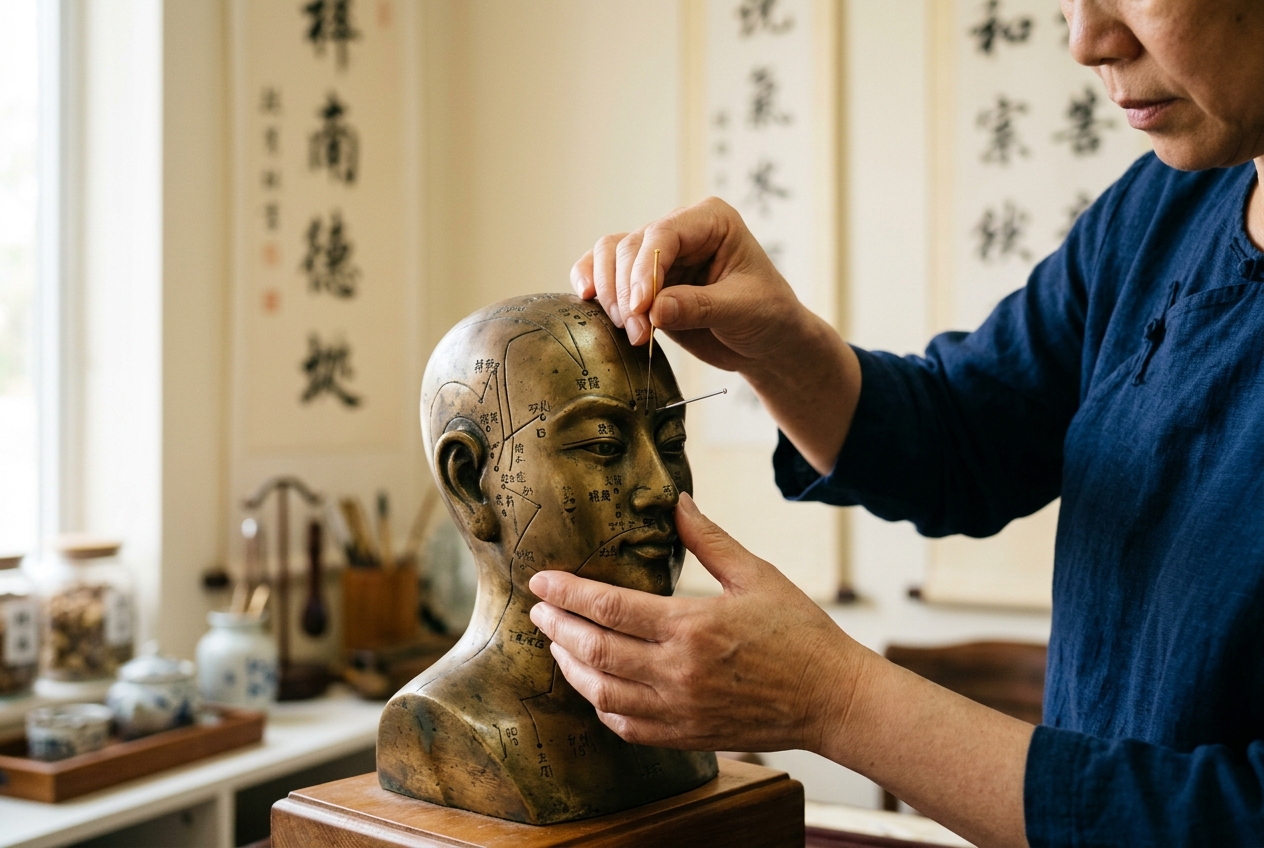
To resolve these severe psychiatric emergencies, seventh-century polymath and "King of Medicine" Sun Simiao codified an extraordinary protocol: the Thirteen Ghost Points (Shi San Gui Xue, 十三鬼穴). Far from superstitious exorcism, this thirteen-stage acupuncture hierarchy represents one of history's earliest systematic neuropsychiatric interventions. It operates through precise neuro-reflexive nodes along the central nervous axis to clear sensory orifices (Kai Qiao), transform consciousness-obstructing phlegm (Hua Tan), and anchor shattered psycho-spiritual awareness (An Shen).
1. Opening Scene — The Anatomy of Psychic Shattering
Consider an acute panic attack or a post-traumatic dissociative freeze. A person suddenly freezes in place, their jaw clenches rigidly, their eyes glaze into a vacant stare, and their tongue feels thick, rendering coherent speech impossible. The heart races against the ribs, yet the extremities turn icy cold. From an evolutionary neurobiology perspective, this represents a sudden catastrophic shift across Stephen Porges’ polyvagal spectrum: the ventral vagal complex collapses, executive control in the prefrontal cortex goes offline, and the dorsal vagal freeze or extreme sympathetic alarm system hijack the organism.
Within classical East Asian medicine, this presentation is neither mystical nor arbitrary; it is the manifestation of the Shen (the organizing intelligence housed in the Heart) losing its physical anchorage in the Blood and being besieged by pathogenic Phlegm-Heat (Tan Re). When the orifices of perception (Qiao) become obstructed by emotional turbidity, the individual’s subjective experience fractures. Sun Simiao recognized that talking therapies alone cannot penetrate this biological fortress of shock. The clinician must access the deep neurological conduits of the body—the channel divergence nodes, the trigeminal-cranial reflex arcs, and the fascial crossroads of the midline—to manually reset the nervous system.
2. Historical Lineage: Sun Simiao and the Demystification of 'Gui'
The systematic categorization of the Thirteen Ghost Points was formally established during the Tang Dynasty by Sun Simiao (孫思邈, 581–682 CE) in his monumental medical treatise, the Bei Ji Qian Jin Yao Fang (備急千金要方, Essential Formulas Worth a Thousand Pieces of Gold for Emergencies). Drawing on lineage texts from the Huangdi Neijing and pre-Tang ancestral medicine, Sun Simiao synthesized clinical practices into a replicable psychiatric intervention protocol.
The Metaphorical Deconstruction of 'Gui'
In ancient Chinese cosmology, Gui originally referred to disembodied spirits, hungry ghosts, or external possessing entities. However, as medicine matured from shamanic Zhu You (祝由) healing into naturalistic systemic medicine, elite physicians reconceptualized Gui as an internalised pathology: 1. Pathogenic Emotional Turbidity: Latent, unexpressed, or overwhelming affective states (grief, terror, rage) that stagnate within the viscera, generating toxic Phlegm (Tan) that mists the subtle portals of the Heart and Brain. 2. Dissociative and Psychotic Trances: States characterized by loss of self-agency, depersonalisation, auditory/visual hallucinations, and manic shouting. 3. Intergenerational and Somatised Trauma: Somatic fixations where past terror continues to animate the neuro-fascial tone of the patient, rendering them "haunted" by their autonomic memory.
In Tang Dynasty clinical nosology, these states were classified under the rubrics of: * Dian (癲, Depressive Psychosis / Catatonia): Characterized by withdrawal, mutism, fixed melancholic ideation, incoherent babbling, and psychomotor retardation. * Kuang (狂, Manic Psychosis): Characterized by violent outbursts, uncontrollable laughter or rage, insomnia, superhuman physical strength, tearing off clothing, and climbing to high places. * Xian Zheng (癇症, Epilepsy / Seizure Disorders): Characterized by sudden collapse, loss of consciousness, tonic-clonic convulsions, upward-rolling eyes, and foamy oral discharge.
Sun Simiao’s 13-point protocol provided an escalating therapeutic algorithm designed to sequentially unbind the psyche, clear sensory stagnation, and re-establish sovereign executive consciousness.
3. Neurobiological Mechanisms: From Channel Dynamics to Neural Substrates
The classical mechanisms attributed to the Ghost Points—Sensory Orifice Clearing (Kai Qiao), Phlegm Transformation (Hua Tan), and Spirit Pacification (An Shen)—correlate precisely with modern neuro-physiological mechanisms identified in neuro-imaging and neuromodulation research catalogued by institutions like the National Center for Biotechnology Information (NCBI).
===========================================================================================
CLASSICAL TCM PHENOMENON          NEUROBIOLOGICAL EQUIVALENT
===========================================================================================
Kai Qiao (開竅)                   Trigeminal-Reticular Arousal, Cortical Awakening,
"Opening Sensory Orifices"        Activation of Frontoparietal Attentional Networks.
-------------------------------------------------------------------------------------------
Hua Tan (化痰)                    Reduction of Neuro-Inflammatory Cytokines (IL-6, TNF-α),
"Transforming Phlegm"             Clearance of Central Nervous System Metabolic Stagnation.
-------------------------------------------------------------------------------------------
An Shen (安神)                    Vagal Nerve Modulation, Downregulation of Amygdalar
"Pacifying the Spirit"            Hyperactivity, Elevation of Central GABAergic Tone.
===========================================================================================
1. Trigeminal and Cranial Nerve Neuromodulation
Multiple Ghost Points (GV26, ST6, CV24, GV16) are located at anatomical hubs dense with sensory branches of the Trigeminal Nerve (CN V) and Facial Nerve (CN VII), or proximate to the Spinal Accessory (CN XI) and Vagus (CN X) pathways. High-intensity stimulation of these points sends potent afferent signals into the spinal trigeminal nucleus and the Nucleus Tractus Solitarius (NTS). This triggers an immediate shift in autonomic outflow, interrupting dissociative freezes and driving parasympathetic reactivation via the dorsal motor nucleus of the vagus.
2. Limbic and Default Mode Network (DMN) Stabilization
Functional MRI studies on acupuncture points located along the Pericardium (PC7, PC8) and Du Mai (GV23, GV16) demonstrate marked suppression of amygdaloid hyperactivity and functional normalization of the Default Mode Network (DMN). Hyperconnectivity within the DMN is a hallmark of severe depressive rumination and post-traumatic intrusive memory, while DMN desynchronization accompanies dissociative disorders. Needling these critical loci restores equilibrium between the salient network, central executive network, and DMN.
3. Autonomic Downregulation and Neuroendocrine Axis Reset
Points on the extremities (LU11, SP1, BL62, LI11) recruit large-diameter A-beta and A-delta somatic sensory afferents. This somatic input modulates the spinothalamic tracts, driving hypothalamic release of beta-endorphins and downregulating the hyperactive Hypothalamic-Pituitary-Adrenal (HPA) axis, attenuating the flood of circulating cortisol and catecholamines that perpetuate panic, mania, and autonomic collapse.
4. Comprehensive Breakdown of the Thirteen Ghost Points
Below is the definitive anatomical, classical, and neuro-clinical breakdown of all thirteen points in their classical therapeutic sequence, conforming to the clinical guidelines recognized in the WHO Traditional Medicine Strategy and academic literature on acupuncture therapeutics.
Point 1: Gui Gong (Ghost Palace) — GV26 (Renzhong / Shuigou)
- Location: At the junction of the upper third and lower two-thirds of the philtrum midline, below the nasal septum.
- Classical Symbolism: The threshold or gateway of the Palace; the fundamental entry point to resurrect consciousness and re-establish the connection between the Du Mai (Sea of Yang) and Ren Mai (Sea of Yin).
- Needle Depth & Angulation: Punctured obliquely upward toward the nasal septum, 0.3–0.5 cun (8–12 mm).
- Manipulation: Reducing method (Xie Fa); high-frequency pecking manipulation or vigorous bidirectional rotation until the patient’s eyes water or consciousness shifts.
- Safety Contraindications: Avoid transfixing through the mucous membrane into the oral cavity; caution in patients with unstable cervical spines during sudden reflex jerk responses.
- Neuro-Clinical Action: Stimulates the infraorbital branch of the maxillary nerve (Trigeminal, CN V2). Triggers the trigeminal-cardiac reflex and excites the ascending reticular activating system (ARAS), restoring consciousness in syncope, catatonic stupor, and acute shock.
Point 2: Gui Xin (Ghost Faith) — LU11 (Shaoshang)
- Location: On the radial side of the thumb, approximately 0.1 cun proximal to the corner of the nail bed.
- Classical Symbolism: Restoring primordial faith, self-sovereignty, and boundary integrity; clearing lung-metal stagnation that manifests as overwhelming grief and psychic despair.
- Needle Depth & Angulation: Perpendicular or oblique-proximal insertion 0.1–0.2 cun (2–4 mm), or pricked with a three-edged needle to bleed.
- Manipulation: Sedative prick-to-bleed method (Ci Luo Xie Xue), expressing 3–5 drops of dark blood.
- Safety Contraindications: Strict antiseptic technique required; contraindicated for direct deep needle retention due to high density of local nociceptive receptors.
- Neuro-Clinical Action: Dense with palmar digital nerves and terminal microvasculature. Induces potent somatic nociceptive afference that instantly arrests respiratory hysteria, clears acute Phlegm-Heat obstructing the upper respiratory portals, and reduces cerebral hyper-excitation.
Point 3: Gui Lei (Ghost Rampart) — SP1 (Yinbai)
- Location: On the medial aspect of the great toe, 0.1 cun posterior to the corner of the nail bed.
- Classical Symbolism: Rebuilding the earthen defensive rampart of the Spleen/Intellect (Yi); anchoring wandering, fragmented thoughts and arresting psycho-emotional haemorrhage.
- Needle Depth & Angulation: Oblique insertion 0.1–0.2 cun directed proximally, or prick to bleed; moxibustion (direct or with moxa pole) is traditionally indicated for deficient collapse.
- Manipulation: Even method (Ping Bu Ping Xie) or gentle dispersion; direct moxibustion (3–5 small moxa cones) if addressing deficient dissociation with cold extremities.
- Safety Contraindications: Extreme care in peripheral vascular disease and diabetic neuropathies.
- Neuro-Clinical Action: Engages the medial plantar nerve; stimulates somatosensory pathways terminating in the paracentral lobule of the cerebral cortex, rapidly grounding bodily awareness and tonifying blood-holding capacity to resolve sudden dissociative disorientation.
Point 4: Gui Xin (Ghost Heart) — PC7 (Daling)
- Location: At the midpoint of the wrist crease, between the tendons of flexor carpi radialis and palmaris longus.
- Classical Symbolism: The central clearinghouse of the Pericardium (Xin Bao), the Heart’s Imperial Protector; expels emotional toxins, heart-break, betrayal trauma, and unquenchable internal fire.
- Needle Depth & Angulation: Perpendicular insertion 0.3–0.5 cun (8–15 mm) directly into the carpal tunnel, or oblique proximally along the channel.
- Manipulation: Reducing method (Xie Fa) with smooth dispersion; avoid aggressive twisting to prevent mechanical irritation of the median nerve.
- Safety Contraindications: If an electric sensation radiates into the fingers, withdraw slightly to avoid median nerve injury.
- Neuro-Clinical Action: Directly overlies the median nerve trunk. Evokes significant limbic attenuation via the spinothalamic-amygdalar axis, slows resting heart rate, resolves emotional palpitations, and dampens autonomic panic surges.
Point 5: Gui Lu (Ghost Path) — BL62 (Shenmai)
- Location: In the depression directly below the inferior border of the lateral malleolus, in the groove between the peroneal tendons.
- Classical Symbolism: Opening point of the Yang Qiao Mai (Yang Motility Vessel); regulates the pathways between day and night, waking and dreaming, dispelling the ghost-like illusions of insomnia and epilepsy.
- Needle Depth & Angulation: Perpendicular or slightly oblique insertion directed downward, 0.3–0.5 cun (8–13 mm).
- Manipulation: Reducing method for manic agitation, daytime seizures, and severe hyperarousal; tonifying method for hypersomnia and catatonia.
- Safety Contraindications: Avoid the small saphenous vein and sural nerve branches.
- Neuro-Clinical Action: Modulates the reticulospinal tract and suprachiasmatic nucleus (circadian regulation) via afferent pathways of the sural nerve; anchors aberrant motor excitation in seizures and alleviates manic restlessness.
Point 6: Gui Zhen (Ghost Pillow) — GV16 (Fengfu)
- Location: On the posterior midline of the neck, directly below the external occipital protuberance, in the depression between the trapezius muscles.
- Classical Symbolism: The cushion where the skull rests; the portal where external pathogenic Wind (Feng) and psychic pathogens invade the Brain (Sea of Marrow), causing delirium, vertigo, and manic laughter.
- Needle Depth & Angulation: Strictly perpendicular or slightly downward toward the mandible, 0.5–0.8 cun (12–20 mm).
- Manipulation: Gentle, uniform needle rotation without lifting/thrusting.
- Safety Contraindications: CRITICAL DANGER ZONE. NEVER needle upward or exceed 1.0 cun; deep upward penetration risks puncturing the cisterna cerebellomedullaris or the medulla oblongata, with fatal consequences.
- Neuro-Clinical Action: Intersects the greater occipital nerve and branches of the suboccipital nerve near the foramen magnum. Modulates intracranial CSF dynamics, calms cerebellar-vestibular distress, and arrests central vertigo and emotional dysregulation.
Point 7: Gui Chuang (Ghost Bed) — ST6 (Jiache)
- Location: One finger-width anterior and superior to the lower angle of the mandible, at the prominence of the masseter muscle when teeth are clenched.
- Classical Symbolism: The resting place of the jaw; unlocks the rigidity of repressed rage, clenched terror, locked-jaw syndromes (tetany), and inability to articulate emotional truth.
- Needle Depth & Angulation: Perpendicular insertion 0.3–0.5 cun, or oblique/subcutaneous transfixion toward ST4 (Dicang) 1.0–1.5 cun.
- Manipulation: Reducing method with vigorous lifting and thrusting to discharge muscular hypertonicity.
- Safety Contraindications: Avoid transfixing the facial artery and anterior facial vein located anterior to the masseter border.
- Neuro-Clinical Action: Stimulates the masseteric nerve (motor branch of Mandibular Nerve, CN V3) and facial nerve motor fibers. Directly releases the trigeminal motor nucleus, terminating the chronic somatic freeze clench of the jaw and dampening central sympathetic tone.
Point 8: Gui Shi (Ghost Market) — CV24 (Chengjiang)
- Location: In the depression in the center of the mentolabial groove, below the lower lip.
- Classical Symbolism: The marketplace where words and nourishment are traded; clears manic loquacity, mutism, facial paralysis, and the inability to ingest food due to emotional grief.
- Needle Depth & Angulation: Oblique-superior insertion 0.3–0.5 cun (8–12 mm), nestled against the periosteum of the mandible.
- Manipulation: Sedating or harmonizing rotation; prick to bleed for sudden stroke-induced aphonia.
- Safety Contraindications: High risk of bruising if the inferior labial artery/vein branches are punctured.
- Neuro-Clinical Action: Targets the mental nerve (terminal branch of CN V3) and buccal branches of CN VII. Restores motor coordination to the orbicularis oris, regulates salivary secretion via autonomic fibers, and addresses both catatonic mutism and rapid manic speech.
Point 9: Gui Ku (Ghost Cave) — PC8 (Laogong)
- Location: On the palm of the hand, between the second and third metacarpal bones, proximal to the metacarpophalangeal joint (where the tip of the middle finger rests when a fist is made).
- Classical Symbolism: The deep, subterranean cave of the Pericardium; the primary emergency fire point to drain blazing Heart-Fire that drives individuals to delirium, manic cursing, and shameless behavior.
- Needle Depth & Angulation: Perpendicular insertion 0.3–0.5 cun (8–13 mm) toward the dorsal surface of the hand.
- Manipulation: Strong reducing method (Xie Fa); vigorous rotation to purge toxic heat.
- Safety Contraindications: Highly sensitive; caution against excessive needle manipulation causing prolonged local palmar spasm.
- Neuro-Clinical Action: Directly stimulates terminal sensory branches of the median and ulnar nerves and the palmar arterial arches. Demonstrates immediate efficacy in inducing parasympathetic deceleration, relieving acute emotional tachycardia, and stabilizing prefrontal executive networks.
Point 10: Gui Tang (Ghost Hall) — GV23 (Shangxing)
- Location: On the head, 1.0 cun directly posterior to the anterior hairline, on the midsagittal line.
- Classical Symbolism: The luminous upper hall of the celestial palace; clears the clouded intellect, dispels obsessive delusions, and anchors the buoyant Yang energy that has escaped upward into manic agitation.
- Needle Depth & Angulation: Subcutaneous/transverse insertion 0.5–0.8 cun (12–20 mm) directed posteriorly or anteriorly.
- Manipulation: Reducing rotation or gentle bloodletting with a lancet for explosive headache with psychiatric mania.
- Safety Contraindications: In infants, strictly contraindicated until the anterior fontanelle is completely ossified.
- Neuro-Clinical Action: Overlies the frontal branch of the supraorbital nerve (CN V1) and frontal emissary veins. Modulates prefrontal cortical blood flow, dispelling psychic fogginess, visual hallucinations, and persistent cognitive dissociation.
Point 11: Gui Zang (Ghost Storehouse) — CV1 (Huiyin)
- Location: At the perineum, midway between the anus and the scrotum in males, or midway between the anus and the posterior labial commissure in females.
- Classical Symbolism: The absolute subterranean root of the Yin matrix; the meeting point of the Ren, Du, and Chong Mai. Restores the soul from the deepest abysses of comatose collapse, catastrophic pelvic trauma, and sexual dissociation.
- Needle Depth & Angulation: Perpendicular insertion 0.5–1.0 cun (12–25 mm). (In modern clinical practice, frequently substituted by non-invasive electro-stimulation, acupressure, or energetically linked alternatives like KI1/GV1 due to intimacy and trauma-informed considerations).
- Manipulation: Harmonizing method without aggressive manipulation.
- Safety Contraindications: Contraindicated during pregnancy; strict ethical boundaries, explicit informed consent, and sterile technique mandatory. Avoid penetration into the rectum or urethra.
- Neuro-Clinical Action: Directly accesses the pudendal nerve plexus and perineal branches of the S2–S4 spinal roots. Provides foundational access to the pelvic parasympathetic splanchnic nerves, grounding the central nervous axis and resolving deep autonomic dissociation.
Point 12: Gui Tui (Ghost Leg) — LI11 (Quchi)
- Location: At the lateral end of the transverse cubital crease, midway between LU5 (Chize) and the lateral epicondyle of the humerus, with the elbow flexed at 90 degrees.
- Classical Symbolism: The leg/limb that drives forward movement; powerfully sweeps away systemic systemic Heat, clears Phlegm-Fire from the Yangming tract, and resolves hysterical paralysis or flaccidity of the limbs.
- Needle Depth & Angulation: Perpendicular insertion 1.0–1.5 cun (25–38 mm) toward the medial aspect of the elbow joint.
- Manipulation: Strong reducing technique; large-amplitude twisting with deep insertion to disperse Heat and clear stagnation.
- Safety Contraindications: Avoid puncturing the radial recurrent artery; caution in severe pregnancy states (strong descending action).
- Neuro-Clinical Action: Intersects the radial nerve trunk and branches of the lateral antebrachial cutaneous nerve. Clinically proven to reduce systemic pro-inflammatory cytokines (TNF-alpha, IL-1beta) and dampen sympathetic vasomotor hyperactivity, cooling systemic agitation and manic fervor.
Point 13: Gui Feng (Ghost Seal) — M-HN-37 (Haiquan)
- Location: In the oral cavity, at the center of the frenulum of the tongue, in the sublingual fold between the two sublingual veins (Jinjin and Yuye).
- Classical Symbolism: The Imperial Seal that locks down the intervention; seals the spirit within the physical vessel, permanently banishing aberrant pathogenic turbidity, resolving severe aphasia, tongue stiffness, and profound psychic severance.
- Needle Depth & Angulation: Prick with a three-edged or sterile 30-gauge needle to bleed (0.1–0.2 cun), or retain a fine needle perpendicularly 0.1–0.3 cun without retention.
- Manipulation: Prick-to-bleed method; express 2–3 drops of blood.
- Safety Contraindications: DO NOT NEEDLE DEEPLY. Deep punctures risk lacerating the deep lingual artery, resulting in severe sublingual hematoma and potential airway compromise.
- Neuro-Clinical Action: Directly recruits the lingual nerve (branch of CN V3) and hypoglossal nerve (CN XII). Triggers instant vagal parasympathetic salivation, relaxes intrinsic tongue musculature, resolves hysteroid aphasia, and re-engages social communication neuro-circuits.
========================================================================================================================
                                 MASTER SYNOPTIC TABLE OF THE THIRTEEN GHOST POINTS
========================================================================================================================
SEQ  POINT NAME           CHANNEL  ANATOMICAL LOCATION            NEEDLE DEPTH & ANGLE    NEUROBIOLOGICAL TARGET
========================================================================================================================
1    Gui Gong (Palace)    GV26     Upper 1/3 of philtrum          0.3–0.5 cun Upward      Maxillary Nerve (CN V2) / ARAS
2    Gui Xin (Faith)      LU11     Radial corner thumb nail       0.1–0.2 cun or Bleed    Palmar Digital Nerves
3    Gui Lei (Rampart)    SP1      Medial corner great toe nail   0.1–0.2 cun / Moxa      Medial Plantar Nerve
4    Gui Xin (Heart)      PC7      Midpoint wrist crease          0.3–0.5 cun Perpendic.  Median Nerve / Limbic System
5    Gui Lu (Path)        BL62     Depression below ext. mall.    0.3–0.5 cun Perpendic.  Sural Nerve / Reticulospinal Tract
6    Gui Zhen (Pillow)    GV16     Below ext. occipital protub.   0.5–0.8 cun Perpendic.* Greater Occipital N. (*NO UPWARD)
7    Gui Chuang (Bed)     ST6      Prominence of masseter m.      0.3–0.5 cun Perpendic.  Masseteric Nerve (CN V3)
8    Gui Shi (Market)     CV24     Center mentolabial groove      0.3–0.5 cun Oblique Up  Mental Nerve (CN V3) / CN VII
9    Gui Ku (Cave)        PC8      Palm, between 2nd/3rd metacarp 0.3–0.5 cun Perpendic.  Median Nerve Palmar Branch
10   Gui Tang (Hall)      GV23     1.0 cun behind ant. hairline   0.5–0.8 cun Transverse  Supraorbital Nerve (CN V1)
11   Gui Zang (Store)     CV1      Midpoint of perineum           0.5–1.0 cun Perpendic.  Pudendal Nerve / S2–S4 Parasymp.
12   Gui Tui (Leg)        LI11     Lateral end of cubital crease  1.0–1.5 cun Perpendic.  Radial Nerve / Systemic Cytokines
13   Gui Feng (Seal)      Haiquan  Center of sublingual frenulum  0.1–0.2 cun or Bleed*   Lingual (CN V3) & Hypoglossal (CN XII)
========================================================================================================================
5. Somatosensory Regulation: Qigong & Embodied Movement Practice
For patients recovering from severe emotional shock, chronic dissociation, or dysregulated Shen, gentle qigong offers a direct method to systematically flush the central vessels (Du and Ren Mai) and restore somatic containment. The following practice, "Anchoring the Floating Cloud to the Ocean Floor" (Chen Shen Gui Yuan), is designed to discharge toxic upper-body heat and re-anchor consciousness into the lower Dantian.
Step-by-Step Clinical Practice Protocol
- Starting Position and Setup: Stand with feet parallel, shoulder-width apart, knees unlocked with a slight 5-degree bend. Drop the tailbone downward so the lumbar spine flattens gently. Rest the tip of the tongue against the hard palate directly behind the upper incisors (completing the circuit between the Du and Ren vessels). Rest hands comfortably over the lower abdomen (Dantian).
- Inhalation Phase (Ascent along Du Mai): Inhale slowly and silently through the nose for a count of four. Simultaneously, sweep both hands outward and upward in a broad lateral arc, palms facing upward, until they meet overhead above the crown (Baihui, GV20). As you draw the hands upward, gently contract the perineal floor (Huiyin, CV1), visualizing golden-white vital Qi ascending from the base of the spine up through the vertebrae to the Ghost Pillow (Fengfu, GV16) and into the brain.
- Transition and Crown Alignment: Pause the breath for two seconds with arms raised overhead, elbows soft. Turn the palms inward to face downward toward the top of the skull (Shangxing, GV23). Feel the crown open, releasing any stagnant, vaporous heat out into the sky.
- Exhalation Phase (Descent along Ren Mai): Exhale smoothly through the mouth with a soft, audible "Huuu" sound for a count of six. Slowly lower the hands down along the front midline of the body, fingertips pointing toward each other, palms pressing downward. Trace past the face (Renzhong / Chengjiang), through the chest and Pericardium (Daling resonance), past the navel, and back down to the pubic bone. Simultaneously relax the perineum, visualizing all turbulent thoughts and panic sinking into the deep, cooling earth beneath your feet.
- Duration and Repetitions: Perform 9 full breath cycles daily, extending to 18 cycles during periods of acute stress or emotional dysregulation (approximately 5 to 10 minutes total).
- Somatic Shifts to Observe: Within 3–4 cycles, expect an involuntary sigh, spontaneous swallowing (activation of sublingual salivary pathways), a warming sensation in the palms (Laogong), and a distinct sense of downward ballast, signaling the shift from sympathetic freeze to ventral vagal restoration.
6. Acupressure Protocols and Somatic First Aid
For daily clinical maintenance and immediate somatic intervention during panic, brain fog, or dissociative states, these three easily accessible Ghost Points provide immediate, non-invasive relief without needles.
+---------------------------------------------------------------------------------------------------------+
|                                    EMERGENCY SOMATIC FIRST-AID TRIAD                                    |
|                                                                                                         |
|   1. GV26 (Renzhong)               2. PC7 (Daling)                  3. PC8 (Laogong)                    |
|   [ Direct Philtrum Notch ]        [ Center Wrist Crease ]          [ Center Palm Hollow ]              |
|   - Acute Dissociation             - Heart Palpitations             - Restlessness & Delirium           |
|   - Fainting / Stupor              - Panic Hyperarousal             - Internalised Agitation            |
+---------------------------------------------------------------------------------------------------------+
1. Gui Gong / Renzhong (GV26) — The Emergency Reboot
- Landmark Localization: Place the tip of your thumb directly into the vertical groove running between your nose and your upper lip. Find the spot exactly one-third of the distance down from your nose.
- Application Technique: Press the edge of your thumbnail or thumb tip firmly inward and upward toward the center of your skull at a 45-degree angle. Apply sustained, deep pressure with tiny, oscillating circular pulses for 60 to 90 seconds. The pressure should be sharp and intense enough to produce slight lacrimation (watering of the eyes).
- Clinical Utility: The premier first-aid point for acute dissociative numbness, brain fog, lightheadedness, and impending emotional fainting. It stimulates the maxillary branch of the trigeminal nerve to immediately bring executive awareness back online.
2. Gui Xin / Daling (PC7) — The Panic De-escalator
- Landmark Localization: Look at the inside of your wrist with your palm facing you. Bend your wrist slightly to identify the deepest, most prominent crease. Locate the exact center of this crease, nestled between the two thick, palpable cords (the tendons of flexor carpi radialis and palmaris longus).
- Application Technique: Using the tip of your opposite thumb, apply firm, perpendicular pressure straight into the hollow. Maintain constant, deep pressure while taking slow, diaphragmatic breaths for 2 to 3 minutes per side.
- Clinical Utility: Rapidly calms emotional tachycardia, dissolves the sensation of a "lump in the throat" (Mei He Qi), quells situational panic, and soothes the visceral distress associated with betrayal or acute emotional grief.
3. Gui Ku / Laogong (PC8) — The Internal Fire Extinguisher
- Landmark Localization: Make a loose, natural fist with your hand. Note the precise point on your palm where the tip of your middle finger touches between your palm bones.
- Application Technique: Apply the pad of your opposite thumb into this hollow. Press deeply with firm, circular, counter-clockwise friction for 1 to 2 minutes. Repeat on the opposite hand.
- Clinical Utility: Drains blazing internal heat and anxious restlessness. Ideal for combating middle-of-the-night panic awakenings, racing intrusive thoughts, hot flushes provoked by stress, and ungrounded emotional anger.
7. Food, Lifestyle, and Circadian Harmonization
Re-stabilizing a nervous system battered by trauma, dissociation, or severe emotional shock requires careful physiological nourishment. According to East Asian dietetics, when the mind is misted by Phlegm and the spirit is agitated by Heat, dietary and environmental inputs must be intentionally cooling, descending, and grounding.
Foods to Prioritize
- Phlegm-Clearing and Heat-Draining Foods: Steamed daikon radish, celery, cucumber, bamboo shoots, mung bean soup, and clear seaweed broths (such as kelp or wakame). These bitter and cooling foods support digestion, promote diuresis, and clear metabolic turbidity from the channels.
- Blood-Nourishing and Shen-Anchoring Foods: Slowly simmered brown rice or pearl barley congee cooked with goji berries (Gou Qi Zi) and red Chinese dates (Da Zao), bone broths rich in collagen and glycine, steamed black sesame seeds, and dark leafy greens (spinach, chard). These provide the necessary biochemical precursors for neurotransmitter synthesis and tonify Heart-Blood, giving the Shen a stable somatic anchor.
- Therapeutic Infusions: Chrysanthemum tea (Ju Hua) blended with a pinch of licorice root (Gan Cao) to clear upward-flaring liver fire and pacify cranial tension.
Substances and Behaviors to Eliminate
- Hot-Acrid and Phlegm-Generating Foods: Highly spiced greasy foods, deep-fried items, refined sugars, and excessive dairy products (which generate internal Dampness and transform into pathogenic Phlegm).
- Neurological Agitators: High-dose caffeine, energy drinks, and alcohol. While alcohol temporarily depresses the nervous system, its rebound effect drives acute Phlegm-Fire straight into the Pericardium, worsening post-traumatic reactivity and nightmare disorders.
- Circadian Disruption: Exposure to high-intensity blue light after 9:00 PM. Screen luminescence directly excites the Yang Qiao Mai (connected to Ghost Point BL62), preventing the healthy nocturnal descent of Yang into Yin and perpetuating hypervigilant insomnia.
Today's Takeaway: The Five-Minute Vagal Reset
If you or someone under your care feels gripped right now by overwhelming emotional distress, cognitive fragmentation, or dissociative detachment, set aside all complex theory and perform this immediate somatic reset:
Sit comfortably with your spine tall, press the edge of your right thumb firmly into the notch below your nose at GV26 (Renzhong) for 30 seconds until a deep clarity returns to your eyes; then transition your thumb down to the center of your left wrist crease at PC7 (Daling), holding firm, continuous pressure while breathing in for 4 seconds through your nose and exhaling for 6 seconds through your mouth for five full breaths. This simple sequence manually activates the trigeminal-vagal circuit, downsizes limbic alarm, and firmly plants your consciousness back into the safety of your living body.
References and Authoritative Resources
- World Health Organization: WHO Traditional Medicine Strategy and Clinical Standards
- National Center for Biotechnology Information: Neurobiological Mechanisms of Acupuncture in Neuropsychiatry
- National Library of Medicine (PubMed): Vagus Nerve Stimulation and Trigeminal Reflex Modulation in Mood Disorders
- NCBI Bookshelf: Acupuncture Point Locations and Safety Profiles
- Historical Biographies: Sun Simiao and Tang Dynasty Medical Lineages (Wikipedia)
- Classical Foundations: Traditional Chinese Medicine Theory and Diagnostics (Wikipedia)