Second Metacarpal Meridian Microsystem: Navigating ECIWO Bio-Holographic Topography, Radial Periosteal Reflexes, and Precision Acupressure Protocols
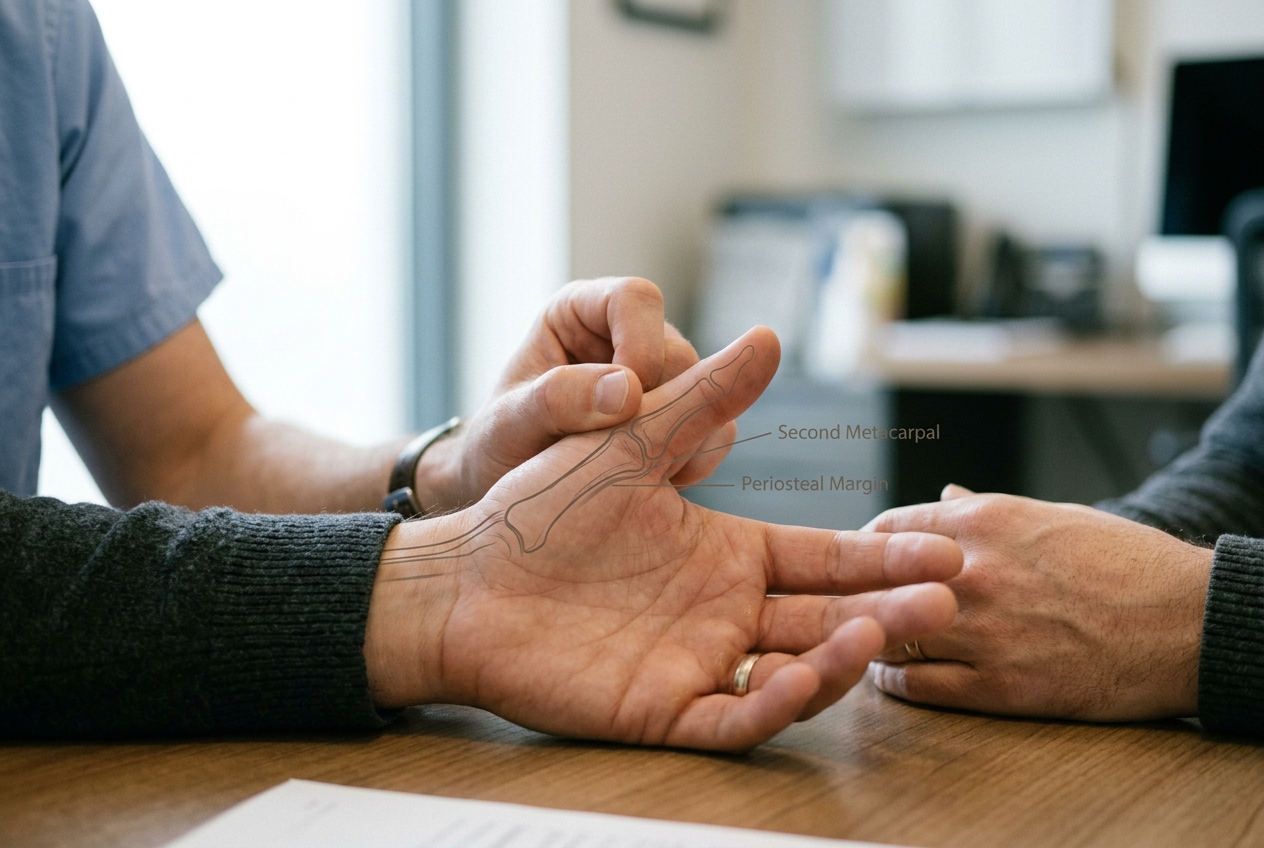
If you find yourself nursing a throbbing temporal headache during an afternoon boardroom meeting, wrestling with postprandial epigastric fullness after a hurried lunch, or experiencing a stiff, aching lower back after hours seated before a screen, your instinctive reaction is likely one of helplessness until you can reach a medicine cabinet. Modern pharmacological interventions offer systemic relief, yet they often arrive alongside metabolic overhead and delayed onset. Traditional Chinese Medicine (TCM) and contemporary neuro-fascial science offer a radically direct, elegant alternative that lies entirely within the perimeter of your own palm. Along the slender radial margin of your index finger’s metacarpal bone resides a complete, self-contained holographic projection of the entire human anatomy—a bioelectric switchboard capable of rapid diagnostic feedback and immediate therapeutic modulation.
+==================================================================================+
|                        CLINICAL PROFILE & THERAPEUTIC MATRIX                     |
+======================+===========================================================+
| System Name          | Second Metacarpal Holographic Microsystem (ECIWO)         |
| Primary Meridian     | Hand Yangming Large Intestine (手阳明大肠经)              |
| Structural Substrate | Radial Periosteum of 2nd Metacarpal Bone & Deep Fascia    |
| Primary Mechanisms   | Piezoelectric Matrix Signaling, Spinal Segmental Reflexes |
| Clinical Efficacy    | Cephalea, Gastralgia, Lumbago, Autonomic Dysregulation    |
+======================+===========================================================+
1. Opening — A Problem This Solves Today
Every day, millions of individuals navigate a cascade of low-grade, functional somatic disruptions: the dull pressure behind the orbits after prolonged visual fixation, sudden acid regurgitation following acute psychological stress, or the sudden spasm of the paraspinal musculature when rising from a chair. Typically, these complaints are treated as isolated, disparate phenomena belonging to separate medical silos. However, neurophysiology and classical bio-holography reveal that peripheral micro-regions of the body maintain continuous, bi-directional informational loops with visceral organs and deep musculoskeletal chains.
The Second Metacarpal Microsystem represents one of the most accessible and clinically validated therapeutic conduits in non-invasive medicine. Discovered and formalized in the late 20th century, this somatic map allows anyone—from the hospital clinician to the desk-bound professional—to instantly interrogate the functional status of remote internal organs through gentle palpation and apply immediate mechanical counter-stimulation to relieve pain and visceral spasm. By understanding how this single bone mirrors the macrocosm of the human frame, you gain a portable, lifelong diagnostic and therapeutic apparatus embedded directly in the hand.
2. The Meridian Path — A Journey Through the Body
The ECIWO Holographic Paradigm and Long-Bone Biology
The theoretical architecture of the second metacarpal microsystem is rooted in the pioneering research of Professor Zhang Yingqing at Shandong University, who formulated the ECIWO theory—an acronym for Embryo Containing the Information of the Whole Organism (全息胚学说). Zhang posited that every specialized structural unit of a multicellular organism, particularly long tubular bones developed from embryonic limb buds, retains latent totipotent developmental memory. Consequently, each long bone acts as an independent, structurally miniature embryo that maps the entire somatic axis from cranial apex to caudal extremity.
According to this bio-holographic paradigm, the second metacarpal bone—which bridges the index knuckle to the wrist—does not merely serve a mechanical role in grasping. Instead, it constitutes a linear somatotopic continuum. When the hand rests in a relaxed, semi-clenched posture with the thumb facing upward, the distal head of the bone correlates to the upper pole of the body (the cranium), while the proximal base correlates to the lower pole (the sacrum and feet).
          DISTAL (Metacarpophalangeal Joint / Knuckle)
                             |
                   [ 01. Head / Cranium ]
                   [ 02. Neck / Throat ]
                   [ 03. Upper Limb / Lung ]
                   [ 04. Heart ]
                   [ 05. Liver ]
      =============[ 06. Stomach / Epigastrium ]============= (Equatorial Center)
                   [ 07. Duodenum / Pancreas ]
                   [ 08. Kidney ]
                   [ 09. Waist / Umbilicus / Lumbar ]
                   [ 10. Lower Abdomen ]
                   [ 11. Thigh / Knee ]
                   [ 12. Foot / Ankle ]
                             |
          PROXIMAL (Carpometacarpal Base / Wrist Margin)
This arrangement mirrors the classical neurological mapping observed in the cerebral cortex, known in modern neurology as Somatotopy and the Cortical Homunculus. The second metacarpal acts as an externalized, peripheral representation of this somatic arrangement.
Topographical Mapping of the 12 Somatotopic Loci
Traversing the bone from its distal head (near the knuckle) toward its proximal base (near the wrist crease), twelve distinct, mathematically equidistant functional loci are distributed along the radial periosteal border:
+========================================================================================+
|             THE TWELVE SOMATOTOPIC LOCI OF THE SECOND METACARPAL BONE                  |
+=====+======================+=========================+================================+
| No. | Somatotopic Locus    | Metacarpal Position     | Visceral / Somatic Correlation |
+=====+======================+=========================+================================+
| 01  | Head (头部)          | Distal Head Margin      | Brain, Eyes, Sinuses, Teeth    |
| 02  | Neck / Throat (颈咽) | Sub-capital Neck        | Pharynx, Larynx, Thyroid, C-Spine|
| 03  | Upper Limb/Lung (上肢)| Distal 1/4 Shaft       | Bronchi, Lungs, Shoulder, Arm  |
| 04  | Heart (心)           | Disto-medial Boundary   | Myocardium, Pericardium, Chest |
| 05  | Liver (肝)           | Pre-equatorial Shaft    | Liver, Gallbladder, Hypochondria|
| 06  | Stomach (胃)         | Exact Shaft Midpoint    | Gastric Body, Epigastrium      |
| 07  | Duodenum (十二指肠)  | Post-equatorial Shaft   | Duodenum, Pancreas, Pylorus    |
| 08  | Kidney (肾)          | Proximo-medial Shaft    | Kidneys, Adrenals, Flank       |
| 09  | Waist / Lumbar (腰)  | Proximal 3/4 Shaft      | Lumbar Spine, Umbilicus, Psoas |
| 10  | Lower Abdomen (下腹) | Sub-basal Margin        | Bladder, Uterus, Intestines    |
| 11  | Thigh / Knee (股膝)  | Pre-articular Margin    | Pelvis, Quadriceps, Knee Joint |
| 12  | Foot (足)            | Proximal Base Junction  | Ankle, Calcaneus, Plantar Arch |
+=====+======================+=========================+================================+
Neurofascial and Bioelectric Signalling Substrates
The physiological mechanism governing this microsystem involves complex neurological and biophysical pathways:
- Periosteal Mechanoreceptor and Nociceptor Density: The periosteum of the second metacarpal is richly innervated by sensory branches of the radial and median nerves, containing dense populations of Pacinian corpuscles, Ruffini endings, and unmyelinated Type III and IV sensory afferents. High-threshold mechanical stimulation triggers immediate signaling through dorsal root ganglia to the dorsal horn of the spinal cord.
- Piezoelectric Fascial Transduction: Bone and its surrounding collagenous periosteal sheath function as anisotropic crystalline lattices exhibiting marked electrical properties, as explored in scientific literature on Bone Piezoelectricity and Streaming Potentials. Mechanical displacement of the metacarpal periosteum generates localized electrical potentials and stress-generated streaming potentials that propagate rapidly along continuous fascial planes, an effect extensively analyzed in The Fascial System and Bioelectric Signaling in Acupoint Networks.
- Spinal Segmental Reflex Modulation: Afferent impulses generated at the metacarpal margin converge at common spinal interneuronal pools, where they gate visceral and somatic pain via diffuse noxious inhibitory control (DNIC) and autonomic reflex arcs, documented in research on the Neurobiological Mechanisms of Acupuncture and Somatotopic Mapping.
3. Key Points You Can Press Right Now & Diagnostic Palpation
        PALPATION TECHNIQUE: 90-DEGREE PERPENDICULAR PERIOSTEAL EXPLORATION

          Reader's Thumb Tip
                |
                v   (Apply steady, perpendicular pressure against bone edge)
        ==================== [ Radial Ridge of 2nd Metacarpal ]
               / \
     (Nodule Search: Roll thumb tip longitudinally 1mm back and forth)
The Diagnostic Palpation Protocol
Before applying therapeutic pressure, the clinician or self-practitioner executes a structured diagnostic sweep:
- Patient Posture: Rest the forearm on a stable surface with the hand half-closed, as if lightly grasping an imaginary cylinder. The radial (thumb-side) margin of the index metacarpal bone must face directly upward.
- Contact Vector: Place the pulp of the contralateral thumb—or the blunt, rounded tip of an acupressure probe—at a strict 90-degree perpendicular angle against the lateral bone edge (tucking directly under the bone ledge rather than pressing the flat dorsal skin).
- Linear Scanning: Glide slowly from the distal knuckle toward the wrist, exerting a uniform, moderate force (approximately 2.0 to 3.5 kg/cm²).
- Diagnostic Markers: - Hyperalgesic Spikes: A sudden, sharp, disproportionate tenderness distinct from the surrounding tissue pressure. - Micro-Nodular Texture: Minute, grain-like fascial consolidations (xiao jie jie), feeling like microscopic lentils or taut cords embedded along the bone margin. - Tissue Temperature and Resistance Variations: Localized drops in bioelectric resistance, manifesting tactilely as tacky skin resistance or localized sunkenness.
The discovery of a hyperalgesic nodule at a specific locus indicates functional disharmony or somatic pain within the corresponding anatomical zone.
Three Essential Clinical Nodes
+========================================================================================+
|                       CORE THERAPEUTIC ACUPRESSURE TARGETS                             |
+=========================+=============================+================================+
| Point Identifier        | Somatotopic Locus           | Primary Indications            |
+=========================+=============================+================================+
| Locus 01 (Cranial Node) | Distal Metacarpal Head      | Migraine, Sinusitis, Insomnia  |
| Locus 06 (Gastric Node) | Exact Mid-Shaft Center      | GERD, Functional Dyspepsia     |
| Locus 09 (Lumbar Node)  | Proximal 3/4 Shaft Junction | Acute Lumbago, Sciatic Spasm   |
+=========================+=============================+================================+
A. Locus 01: The Cranial / Cephalic Point (Head Node)
- Anatomical Position: Located in the small depression immediately proximal to the prominent metacarpophalangeal knuckle of the index finger, right on the radial-palmar bone boundary.
- Somatic Sensation (Deqi): Upon precise compression, you will experience a sharp, clear, radiating sensation traveling toward the web space or ascending into the forearm, accompanied by a distinct dull ache.
- Biomechanical Technique: Apply sustained, perpendicular isometric pressure with your thumb tip. Once engaged, execute minute, circular micro-kneading (amplitude < 1 mm) for 90 to 120 seconds.
- Clinical Applications: Tension-type cephalea, supraorbital pain, temporal migraines, allergic rhinitis, and acute ocular fatigue caused by visual display terminals.
B. Locus 06: The Gastric / Epigastric Point (Stomach Node)
- Anatomical Position: Located at the precise arithmetic midpoint between the distal knuckle joint line and the proximal carpometacarpal wrist joint junction.
- Somatic Sensation (Deqi): A deep, spreading soreness that frequently induces an immediate reflex sensation in the epigastrium, often accompanied by audible gastrointestinal borborygmi (stomach gurgling) or sudden salivary release.
- Biomechanical Technique: Engage the periosteum with firm, steady inward pressure. Maintain a static hold for 3 breath cycles, release by 20% on inhalation, and re-engage on exhalation. Continue for 2 minutes.
- Clinical Applications: Gastroesophageal reflux disease (GERD), nervous stomach spasms, epigastric bloating following meals, nausea, and stress-induced diaphragmatic tension.
C. Locus 09: The Lumbar / Umbilical Point (Waist Node)
- Anatomical Position: Situated three-quarters of the distance down the shaft toward the wrist, roughly one fingerbreadth distal to the bony prominence at the base of the metacarpal.
- Somatic Sensation (Deqi): A penetrating, heavy sensation that feels remarkably dense, often producing an involuntary urge to straighten the lumbar spine.
- Biomechanical Technique: Angle the pressure slightly proximally (toward the wrist) at an 80-degree slant against the bone ridge. Apply high-density, rhythmic pumping pressure (1 Hz frequency) for 2 to 3 minutes.
- Clinical Applications: Acute muscular lumbago, sacroiliac joint stiffness, postural muscle fatigue from prolonged sitting, and flank tightness.
4. Synergistic Channel Integration: A Complete Protocol for Common Modern Complaints
The second metacarpal microsystem does not operate in isolation from classical acupuncture topography. In traditional Chinese medicine, this bone forms the physical substrate for the Hand Yangming Large Intestine Meridian, running parallel to the primary channel trajectory. The famed master point LI4 (Hegu, 合谷), documented in the World Health Organization: Standard Acupuncture Point Locations, lies adjacent within the first interosseous muscle belly, as described in medical texts on Acupressure Topography and Therapeutics.
When you combine second metacarpal periosteal stimulation with adjacent classic channel points, you achieve a potent local-distal synergy, amplifying neuro-modulatory signaling via the mechanisms detailed in Peripheral and Spinal Mechanisms of Acupuncture Analgesia.
                 COMPREHENSIVE MULTI-POINT DESK-RESTORATION PROTOCOL

  Phase 1: Clear Upper Qi     Phase 2: Regulate Digestion     Phase 3: Release Spine
  [Locus 01 Head + LI4 Hegu]    [Locus 06 Stomach Point]      [Locus 09 Waist Point]
             |                             |                            |
      60s Sustained                 90s Micro-Pumping            90s Angled Hold
             v                             v                            v
  (Ocular/Cranial Relief)       (Gastric Decompression)       (Lumbar Vasodilatation)
The "Desk-Worker's Reset" Protocol: Neck Rigidity, Eyestrain, and Epigastric Tension
This protocol addresses the triad of occupational sitting: suboccipital tension headaches, screen-induced visual fatigue, and stress-induced digestive slowing.
+========================================================================================+
|                       STEP-BY-STEP DESK-RECOVERY SEQUENCE                              |
+======+=======================+==================+===========+==========================+
| Step | Target Locus          | Lateral Side     | Duration  | Mechanical Style         |
+======+=======================+==================+===========+==========================+
| 01   | Locus 01 (Head Node)  | Bilateral (L > R)| 60s each  | Static Isometric Hold    |
| 02   | Classic LI4 (Hegu)    | Bilateral        | 60s each  | Deep Pinching Dispersion |
| 03   | Locus 06 (Stomach)    | Left Hand Dominant| 90s      | Pulsatile Micro-Kneading |
| 04   | Locus 09 (Waist Node) | Ipsilateral Pain | 90s       | Sustained 80° Periosteal |
+======+=======================+==================+===========+==========================+
Detailed Execution Steps:
- Preparatory Posture: Sit upright with feet flat on the floor. Take three slow, diaphragmatic breaths, exhaling fully to down-regulate sympathetic tone.
- Phase 1: Cranial and Ocular Clearance (Minutes 0:00 – 2:00): - Grasp your left index knuckle with your right thumb. Locate Locus 01 on the bone margin. - Sink your thumb tip perpendicularly until you reach the bone surface. Hold steady, unyielding pressure for 60 seconds while keeping your eyes closed. - Shift your thumb 1.5 cm into the muscular webbing to compress LI4 (Hegu) between your thumb and index finger for an additional 60 seconds. Repeat on the right hand.
- Phase 2: Epigastric Release (Minutes 2:00 – 3:30): - Identify the exact midpoint of the left second metacarpal (Locus 06). - Apply rhythmic, gentle pumping pressure (pressing in on exhalation, slightly reducing pressure on inhalation). Maintain for 90 seconds. You may notice an easing of diaphragmatic tension and the onset of deeper, easier breathing.
- Phase 3: Lumbar Decompression (Minutes 3:30 – 5:00): - Locate Locus 09 on the side corresponding to your back stiffness (or bilateral if generalized). - Apply deep, angled pressure toward the bone base. While holding this point, gently perform small pelvic tilts or seated lumbar rotations. Maintain for 90 seconds.
5. Safety, Sense, and Clinical Prudence
While the Second Metacarpal Microsystem is a non-invasive, drug-free modality, clinical safety standards must guide every application.
+========================================================================================+
|                         CLINICAL CAUTIONS & CONTRAINDICATIONS                          |
+=======================+================================================================+
| Condition Category    | Specific Guidance & Safety Parameters                          |
+=======================+================================================================+
| Pregnancy             | STRICTLY AVOID heavy stimulation of the proximal base and LI4  |
|                       | (Hegu) region due to oxytocic, uterine-contractile reflexes.   |
+-----------------------+----------------------------------------------------------------+
| Osteoporosis & Trauma | Avoid high-pressure focal compression in patients with severe  |
|                       | osteopenia, unhealed metacarpal fractures, or severe arthritis.|
+-----------------------+----------------------------------------------------------------+
| Dermatological Issues | Never compress areas of active cellulitis, open abrasions,     |
|                       | burns, or localized vascular malformations.                    |
+-----------------------+----------------------------------------------------------------+
| Sensation Calibration | Pain must register as therapeutic Deqi (dull, heavy, aching),  |
|                       | NEVER as sharp, lancinating neural electric-shock trauma.     |
+=======================+================================================================+
Understanding Sensation versus Tissue Injury
A proper therapeutic intervention creates the characteristic Deqi (得气) sensation—a compound sensation of soreness, distension, heaviness, and mild tingling. It should register on a subjective discomfort scale between 4 and 6 out of 10. If the sensation feels like a sharp, superficial cut or an electric shock, your pressure vector is likely slipping over a superficial cutaneous nerve branch. Immediately reposition your thumb tip directly against the bony margin.
When to Seek Immediate Medical Evaluation
Self-directed acupressure is intended for functional disorders, stress relief, and non-emergency pain management. It is not a substitute for emergency or specialized medical intervention. Seek immediate formal medical evaluation if you experience: - Unexplained, crushing substernal chest pressure radiating to the jaw or arm. - Sudden, thunderclap headaches of high intensity. - Acute, rigid abdominal peritonitis or gastrointestinal hemorrhage. - Progressive neurological deficits, motor loss, or acute cauda equina symptoms (loss of bowel/bladder control).
6. Today's Takeaway: The Two-Minute Reset
+==================================================================================+
|                       YOUR TWO-MINUTE METACARPAL RESET                           |
|                                                                                  |
|   1. Form a soft fist with your non-dominant hand, thumb facing the ceiling.     |
|   2. Place your opposite thumb tip at the EXACT MIDPOINT of your index finger's  |
|      long hand bone (Locus 06 - Stomach Point).                                  |
|   3. Tuck the thumb tip directly against the bone's outer edge at 90 degrees.    |
|   4. Press firmly until a distinct, deep, dull ache emerges (Deqi).              |
|   5. Hold this steady pressure for 120 seconds while taking 4 deep breaths.      |
|                                                                                  |
|   RESULT: Rapid down-regulation of autonomic stress, easing of epigastric        |
|   tension, and revitalization of midday focus.                                   |
+==================================================================================+
The human hand is far more than a simple mechanical tool for typing, grasping, and manipulating our physical world. It is an exquisitely calibrated biological dashboard. By mastering the simple geography of the second metacarpal bone, you gain a practical, lifelong skill for assessing and supporting your own health—grounded in both ancient observational wisdom and modern neurophysiology. Whenever tension, fatigue, or discomfort arises during your day, the solution is readily accessible right at your fingertips.