Same-Name Meridian Point Combination: Navigating Hand-Foot Homonymous Channel Synergy, Liu Jing Axis Resonance, and Paired Acupressure Protocols
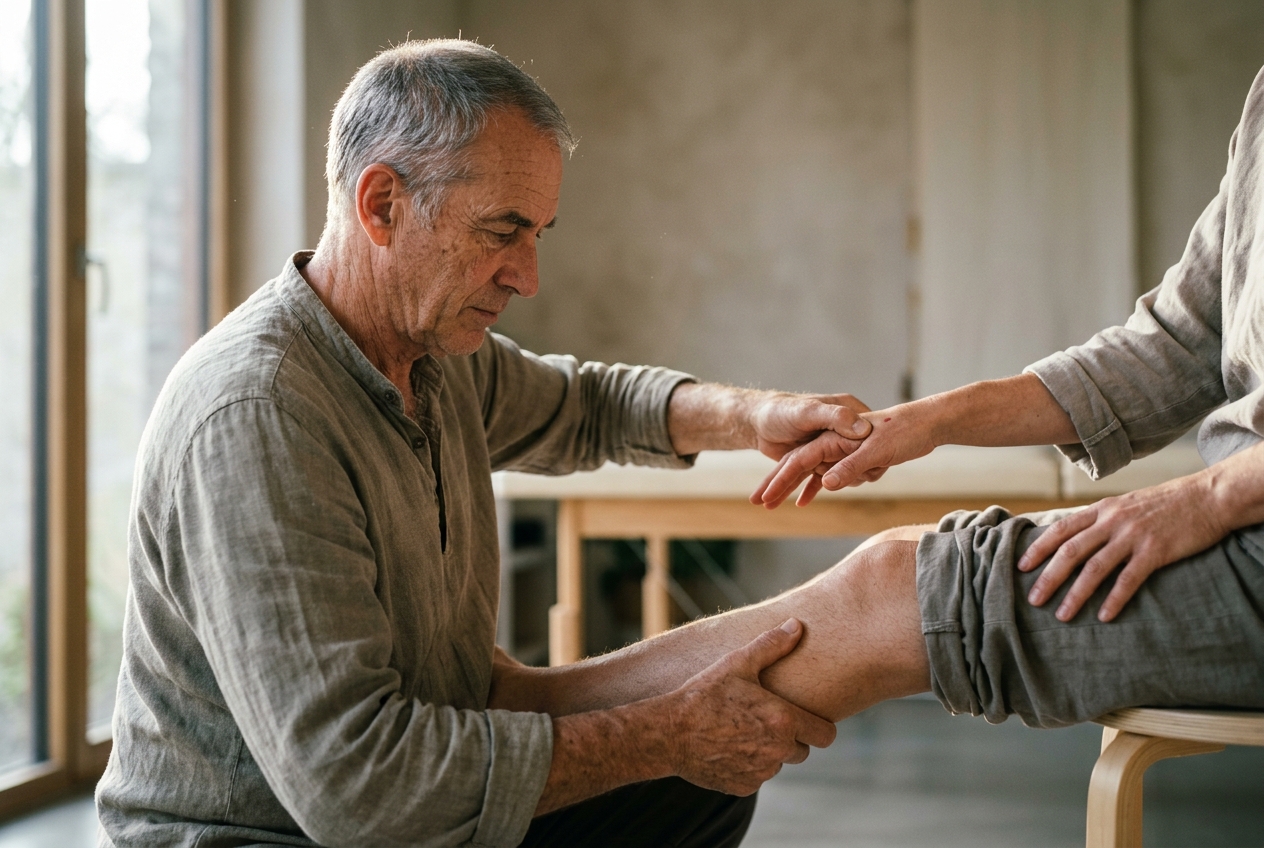
Traditional Chinese Medicine (TCM) provides an extraordinarily sophisticated architectural framework for addressing these dual-pole imbalances: Same-Name Meridian Point Combination (Tong Ming Jing Pei Xue Fa, 同名经配穴法). By coupling acupressure loci on the upper and lower extremities that share an identical Six Conformation (Liu Jing) classification, one does not merely treat a localized symptom; one activates an integrated bioelectric, neurofascial, and autonomic circuit. This guide bridges classical canonical doctrine with contemporary neurophysiology to demonstrate how pairing hand and foot channels re-establishes somatic homeostasis.
1. The Meridian Path: A Journey Through the Connected Body
To understand how stimulating a point between the thumb and index finger can regulate peristalsis in the lower abdomen, one must first dismantle the modern habit of viewing the body as a collection of compartmentalized parts. The classical meridians (Jingluo) are continuous tracks that traverse muscular planes, neurovascular bundles, and sheets of continuous fascia, mapping functional relationships across distant somatic regions.
Consider the journey of the Yangming (Bright Yang) circuit. Beginning at the tip of the index finger, this pathway ascends the outer forearm, crests the peak of the shoulder, and climbs the neck to encircle the mouth and anchor beside the nostrils. Here, without interruption, the energetic and fascial continuum transitions into the Foot Yangming pathway. It descends from beneath the eye, travels across the jawbone, courses downward over the collarbone, runs vertically along the chest and abdomen over the rectus abdominis, sweeps down the front of the thigh and the outer crest of the shinbone, and terminates at the tip of the second toe.
When you trace this pathway using familiar somatic landmarks, the artificial division between upper and lower anatomy dissolves: - The Upper Pathway: Follows the firm muscular ridge of the forearm (the brachioradialis) that tenses when typing or gripping, passes over the bony apex of the shoulder, and follows the muscular column along the side of the neck to the angle of the jaw. - The Trunk Transition: Crosses the clavicular depression, bridges the ribcage, and descends through the abdominal wall directly over the primary digestive organs. - The Lower Pathway: Continues along the prominent muscular belly on the front of the shin—the precise muscle group that aches after a long day of walking—before terminating at the dorsal aspect of the foot.
By viewing these tracts as continuous infrastructural channels rather than isolated segments, the logic of same-name pairing becomes clear: a disturbance at one pole inevitably alters tension, vascular tone, and neuromuscular signaling at the opposite pole.
2. Theoretical and Neurofascial Foundations
The practice of pairing homonymous hand and foot channels (Tong Ming Jing) possesses a rich lineage traceable to the foundational texts of classical Chinese medicine, including the Huangdi Neijing (Yellow Emperor’s Inner Canon) and the clinical paradigms formulated by Zhang Zhongjing in the Shanghan Lun (Treatise on Cold Damage Diseases).
Classical Conformation Mechanics
In classical cosmology and physiology, the twelve primary channels are organized into six energetic conformations (Liu Jing), each comprising one Hand (Shou) and one Foot (Zu) channel that share identical functional properties:
- Yangming (Large Intestine & Stomach): Represents abundant Qi and abundant Blood (Duo Qi Duo Xue). It regulates visceral containment, metabolic transformation, and the clearing of systemic heat from the head and gastrointestinal tract.
- Taiyin (Lung & Spleen): The foundational Yin layer governing the extraction, synthesis, and fluid distribution of post-natal vitality (Gu Qi and Zong Qi). It regulates fluid balance, mucosal defense, and respiratory-digestive coordination.
- Jueyin (Pericardium & Liver): The terminal Yin layer responsible for internal communication, vascular smooth-muscle tone, and the smooth circulation of psycho-emotional tension and somatic Qi.
- Shaoyang (Sanjiao & Gallbladder): The dynamic "pivot" (Shu) governing lateral physical structures, fascial tension, interstitial fluid clearance, and systemic stress adaptation.
- Shaoyin (Heart & Kidney): The deepest metabolic and neuropsychiatric axis, uniting the thermal and psycho-emotional Fire of the Heart with the primordial Water and endocrine reserves of the Kidneys.
- Taiyang (Small Intestine & Bladder): The outermost protective barrier (Wei Qi), governing the entire posterior biomechanical kinetic chain and early autonomic response to environmental pathogens.
+---------------------------------------------------------------------------------------------------------+
|                                    HOMONYMOUS MERIDIAN DUAL-POLE MATRIX                                 |
+-------------------+--------------------+--------------------+-------------------------------------------+
| Liu Jing Division | Hand Channel       | Foot Channel       | Primary Systemic Function & Therapeutics  |
+-------------------+--------------------+--------------------+-------------------------------------------+
| Yangming (阳明)   | Large Intestine    | Stomach            | Craniofacial regulation, digestion,       |
|                   | (Hand Yangming)    | (Foot Yangming)    | clearing pathogenic internal heat         |
+-------------------+--------------------+--------------------+-------------------------------------------+
| Taiyin (太阴)     | Lung               | Spleen             | Fluid metabolism, mucosal defense,        |
|                   | (Hand Taiyin)      | (Foot Taiyin)      | digestive-respiratory coordination        |
+-------------------+--------------------+--------------------+-------------------------------------------+
| Jueyin (厥阴)     | Pericardium        | Liver              | Autonomic modulation, psycho-emotional    |
|                   | (Hand Jueyin)      | (Foot Jueyin)      | tension, cardiovascular stability         |
+-------------------+--------------------+--------------------+-------------------------------------------+
| Shaoyang (少阳)   | Sanjiao            | Gallbladder        | Lateral body tension, interstitial fluid, |
|                   | (Hand Shaoyang)    | (Foot Shaoyang)    | lymphatic drainage, temporal migraines    |
+-------------------+--------------------+--------------------+-------------------------------------------+
| Shaoyin (少阴)    | Heart              | Kidney             | Neuro-cardiac axis, systemic vitality,    |
|                   | (Hand Shaoyin)     | (Foot Shaoyin)     | thermo-regulation, deep sleep integrity   |
+-------------------+--------------------+--------------------+-------------------------------------------+
| Taiyang (太阳)    | Small Intestine    | Bladder            | Posterior kinetic chain, scapular-spinal  |
|                   | (Hand Taiyang)     | (Foot Taiyang)     | tension, early pathogenic defense         |
+-------------------+--------------------+--------------------+-------------------------------------------+
Neurobiology, Fascial Tensegrity, and Cross-Segmental Gating
Modern biomedical research provides compelling anatomical explanations for why homonymous hand-foot point combinations demonstrate such broad therapeutic effects.
-
Connective Tissue Planes and Mechanotransduction: As demonstrated by Langevin and colleagues in research published through NCBI PMC on Connective Tissue and Meridians, acupuncture meridians co-localize with intermuscular and intramuscular connective tissue planes. Manual pressure delivers mechanical shear stress to resident fibroblasts, triggering extracellular adenosine release, cytoskeletal remodeling, and wide-reaching purinergic signaling. Stimulating both extremities along the same fascial line sends matching mechanical signals through the continuous connective tissue matrix of the body.
-
Cross-Segmental Somatosensory Integration: Stimulating an upper-extremity point (e.g., innervated by cervical nerve roots C6–T1) concurrently with a lower-extremity point (innervated by lumbar/sacral roots L4–S2) recruits distinct spinal segments while converging on common supra-spinal centers. Research on neural pathways highlighted in NCBI PubMed Central on Acupoint Specificity reveals that simultaneous multi-segmental input modulates the dorsal horn pain gates, the periaqueductal gray (PAG), and the rostral ventromedial medulla (RVM), producing deeper analgesia and broader autonomic regulation than isolated local pressure.
-
Autonomic Vagal Neuromodulation: The simultaneous application of pressure to homonymous points directly influences heart rate variability and gastrointestinal motility by modulating sympathetic tone and enhancing vagal outflow, as detailed in NCBI PMC on Vagal Neuromodulation by Acupoints. This confirms the classical assertion that same-name pairings harmonize internal organ function across upper and lower compartments.
3. Canonical Pairings and Step-by-Step Acupressure Protocols
Below are three canonical same-name meridian pairings. Each protocol provides body-referenced localizations alongside classical bone-proportional Cun dimensions, precise pressure vectors, and tactile markers for identifying the therapeutic response known as De Qi.
Pairing I: Hand-Foot Yangming (Large Intestine 4 + Stomach 36)
Primary Indications: Frontal and tension headaches, temporomandibular joint (TMJ) tightness, acute gastrointestinal distress, constipation, sluggish metabolic clearance, systemic fatigue.
1. Upper Pole: Hegu (LI4, 合谷 — "Union Valley")
- Body Landmark Localization: Rest your hand flat. Bring your thumb inward against the side of your index finger; a small mound of muscle will rise between their bases. The point lies at the highest summit of this muscular bulge. When relaxing the hand, it settles into the hollow on the index-finger side of the web space, midway along the second metacarpal bone.
- Bone-Proportional Cun Correlate: On the dorsum of the hand, radial to the midpoint of the second metacarpal bone.
- De Qi Tactile Sensation: A distinct, radiating ache that frequently travels toward the index finger or up the wrist along the forearm.
2. Lower Pole: Zusanli (ST36, 足三里 — "Leg Three Miles")
- Body Landmark Localization: Sit with your knees bent at a right angle. Place the palm of your hand over your kneecap; your fingers will rest naturally over the shin. Locate the sharp bony ridge at the front of your lower leg (the tibial crest). Move one finger-width toward the outside of your leg into the soft, springy muscular groove (the tibialis anterior muscle), approximately four finger-widths beneath the lower edge of the kneecap.
- Bone-Proportional Cun Correlate: 3 Cun inferior to the lateral infrapatellar depression (Dubi, ST35), one finger-breadth (middle finger) lateral to the anterior crest of the tibia.
- De Qi Tactile Sensation: A deep, dull, spreading distension that can send warmth or a light tingling path down the lateral shin toward the dorsum of the foot.
Step-by-Step Application Protocol:
- Body Posture: Assume a relaxed seated position with your back supported and feet planted flat on the floor.
- Pressure Vector: - On LI4, apply pressure directed diagonally toward the bone of the index finger (second metacarpal), using the tip or pad of the opposing thumb. - On ST36, apply firm, perpendicular pressure directed slightly upward toward the knee joint using the thumb pad or the reinforced middle knuckle.
- Modulation: Engage both points simultaneously (e.g., left hand on left LI4 while an assistant or resting hand compresses left ST36, or apply sequentially on the same side). Maintain continuous, firm pressure with slow circular oscillations for 2 to 3 minutes per side.
- Clinical Target: Stimulates gastrointestinal motility via vagal pathways while reducing vascular tone in the carotid and facial arteries.
Pairing II: Hand-Foot Jueyin (Pericardium 6 + Liver 3)
Primary Indications: Autonomic dysregulation, acute anxiety, nervous palpitations, insomnia, epigastric distress, irritability, premenstrual mood changes.
1. Upper Pole: Neiguan (PC6, 内关 — "Inner Gate")
- Body Landmark Localization: Lay your hand palm-up. Locate the primary flexion crease of the wrist. Lay three fingers (index, middle, ring) across the inside of your wrist, beginning at that crease. PC6 sits just past the edge of the third finger, centered squarely between the two prominent, rope-like tendons that stand out when you make a fist and curl your wrist inward (the palmaris longus and flexor carpi radialis tendons).
- Bone-Proportional Cun Correlate: 2 Cun superior to the palmar crease of the wrist, between the tendons of the palmaris longus and flexor carpi radialis.
- De Qi Tactile Sensation: A subtle, electric tingling or gentle pressure radiating down into the palm or up along the inner aspect of the arm toward the chest.
2. Lower Pole: Taichong (LV3, 太冲 — "Great Rushing")
- Body Landmark Localization: Look at the top surface of your bare foot. Find the webbing between your big toe and second toe. Slide your finger backward along the groove between the two long bones (metatarsals) toward your ankle until your finger falls into the natural depression just before the bones converge into a "V" shape.
- Bone-Proportional Cun Correlate: On the dorsum of the foot, in the hollow distal to the junction of the first and second metatarsal bones.
- De Qi Tactile Sensation: Significant tenderness, a sharp local sensitivity that transitions into a soothing, spreading release.
Step-by-Step Application Protocol:
- Body Posture: Recline comfortably in a semi-seated or supine posture, ensuring your shoulders and neck are completely relaxed.
- Pressure Vector: - On PC6, press straight down into the space between the tendons with the thumb pad, angled slightly toward the elbow. - On LV3, press downward and slightly backward toward the ankle joint.
- Modulation: Hold both points with steady, medium-firm pressure. Avoid aggressive friction. Coordinate pressure with deep, slow diaphragmatic breathing: apply gentle pressure on the inhalation and deepen pressure on the exhalation. Maintain for 2 minutes per side.
- Clinical Target: Downregulates sympathetic arousal, reduces elevated cortisol responses, and stabilizes heart rate variability.
Pairing III: Hand-Foot Taiyin (Lung 7 + Spleen 6)
Primary Indications: Post-viral fatigue, shallow respiration accompanied by abdominal bloating, fluid retention/edema, sinus congestion, digestive sluggishness, pelvic discomfort.
1. Upper Pole: Lieque (LU7, 列缺 — "Broken Sequence")
- Body Landmark Localization: Interlock your two hands by crossing the webs of your thumbs together, with the index finger of the upper hand resting along the lateral wrist bone of the lower hand. The tip of your index finger will settle into a distinct, small notch between two tendons just above the bony protrusion of the radial styloid process.
- Bone-Proportional Cun Correlate: 1.5 Cun superior to the distal transverse crease of the wrist, in the cleft between the tendons of brachioradialis and abductor pollicis longus.
- De Qi Tactile Sensation: A local spreading warmth or dull ache, often radiating into the thumb or along the radial edge of the forearm.
2. Lower Pole: Sanyinjiao (SP6, 三阴交 — "Three Yin Intersection")
- Body Landmark Localization: Place your hand on the inside of your ankle so that the edge of your pinky finger rests against the highest point of the inner ankle bone (medial malleolus). Measure four finger-widths directly upward along the inner leg. Sanyinjiao lies just behind the rear border of the large shinbone (tibia) in the soft muscular groove.
- Bone-Proportional Cun Correlate: 3 Cun directly superior to the tip of the medial malleolus, on the posterior border of the medial aspect of the tibia.
- De Qi Tactile Sensation: Pronounced tender ache with a slight sensation of heaviness or mild tingling traveling up the medial leg.
Step-by-Step Application Protocol:
- Body Posture: Seated with the target leg crossed over the opposite knee, or resting supine with knees gently bent.
- Pressure Vector: - On LU7, direct pressure proximally toward the elbow at a 45-degree angle against the bone. - On SP6, press directly against the posterior border of the tibia (pressing forward toward the bone rather than backward into the calf muscle).
- Modulation: Apply rhythmic, circular compression for 90 to 120 seconds per limb.
- Clinical Target: Enhances lymphatic drainage, coordinates mucosal barrier defense, and regulates mucosal-fluid balance throughout the respiratory and gastrointestinal tracts.
4. Evening Reset Protocol for Digital Fatigue and Cognitive Overload
Modern office workers frequently suffer from a classic presentation: excessive cognitive hyper-arousal and screen-induced neck tension coupled with complete digestive standstill and lower-extremity sluggishness. This protocol uses homonymous circuits to pull excessive energy down from the head and chest into the lower body.
Execution Steps:
- Preparation (Minute 0): Dim the lights. Disconnect from all screens. Sit comfortably on the floor or a firm mattress with your back supported. Take three deep diaphragmatic breaths (inhale for 4 seconds, exhale for 6 seconds).
- Phase 1 — Autonomic Stabilization (Minutes 1–3): Locate Left PC6 on the wrist and Left LV3 on the foot. Apply sustained, gentle-to-medium pressure for 90 seconds. Switch and repeat on the right side. Observe the lowering of the resting heart rate and the softening of tension around the eyes and temples.
- Phase 2 — Cranio-Visceral Unblocking (Minutes 4–7): Transition to LI4 and ST36. Press LI4 firmly against the second metacarpal while simultaneously compressing ST36 below the knee. Spend 2 minutes per side using rhythmic, pulsing pressure (3 seconds firm press, 1 second release). You will likely notice a release of tension in your jaw followed by abdominal gurgling (borborygmi), signaling restored gastrointestinal motility.
- Phase 3 — Systemic Fluid & Tissue Integration (Minutes 8–10): Conclude with LU7 and SP6 for 90 seconds per side. Use smooth, sustained compression to promote fluid drainage and induce deep somatic relaxation before sleep.
5. Safety, Contraindications, and Clinical Boundaries
While non-invasive acupressure carries a very high safety profile, respecting anatomical limits and physiological contraindications is essential. For clinical reference and practitioner standards, consult the World Health Organization Acupuncture Benchmarks.
Critical Pregnancy Precautions
Certain distal points possess strong descending, contractive properties that can stimulate uterine smooth muscle: - Hegu (LI4), Sanyinjiao (SP6), and Taichong (LV3) are strictly contraindicated throughout pregnancy (except under professional supervision during active labor). - Replace these with gentle, local, or non-descending points if treating pregnant individuals.
Pressure Guidelines and Tissue Protection
- Mechanical Force Boundaries: Acupressure should elicit a sensation that clinicians describe as "comfortable soreness" (De Qi). It should never cause sharp, stabbing, or bruising pain.
- Vascular and Fragile Sites: Avoid pressing directly over visible varicose veins, open wounds, active infections, acutely inflamed joints, or areas of localized deep vein thrombosis (DVT).
- Osteopenia and Capillary Fragility: Use flat, broad finger-pad pressure rather than hard knuckles when working with elderly individuals or those with connective tissue disorders.
When to Seek Medical Evaluation
Self-administered acupressure is an effective regulatory practice, not a replacement for emergency biomedical evaluation. Seek prompt medical care if you experience: - Sudden, severe ("thunderclap") headaches or headaches accompanied by neurological deficits (e.g., visual changes, facial drooping, slurred speech). - Severe, acute abdominal pain with rigidity, fever, or vomiting. - Unexplained chest pressure radiating to the jaw, neck, or left arm. - Chronic, unexplained fatigue accompanied by unintended weight loss.
6. Today's Takeaway: The Two-Minute Reset
To experience the immediate physiological effect of same-name meridian coupling, complete this two-minute exercise right now:
- The Issue: You are experiencing mid-day mental fog, tension in your brow, or a tight, uneasy stomach after sitting at your desk.
- The Point Pairing: Hand-Foot Yangming via Hegu (LI4) on the hand and Zusanli (ST36) on the leg.
- The Action: - Place your right thumb firmly into the web space of your left hand (LI4), pressing toward the index finger bone. - Rest your left hand over your left shin (ST36), using your middle knuckle to press into the muscular groove next to your shinbone. - Close your eyes. Inhale deeply through the nose for 4 counts; exhale slowly through the mouth for 6 counts. - Apply continuous, rhythmic, circular pressure for 60 seconds, feeling the dull, spreading warmth in both areas. - Switch sides and repeat on your right hand and right leg for 60 seconds.
As you release the points, notice the subtle shift: the tension in your jaw softens, your breathing deepens, and your abdominal muscles relax. You have just completed a continuous physiological circuit—restoring balance through the living architecture of the same-name meridians.