Herbal Processing (Pao Zhi) Transformational Pharmacology: Governing Thermal Modulation, Toxicity Attenuation, and Organ Tropism in Traditional Chinese Medicine
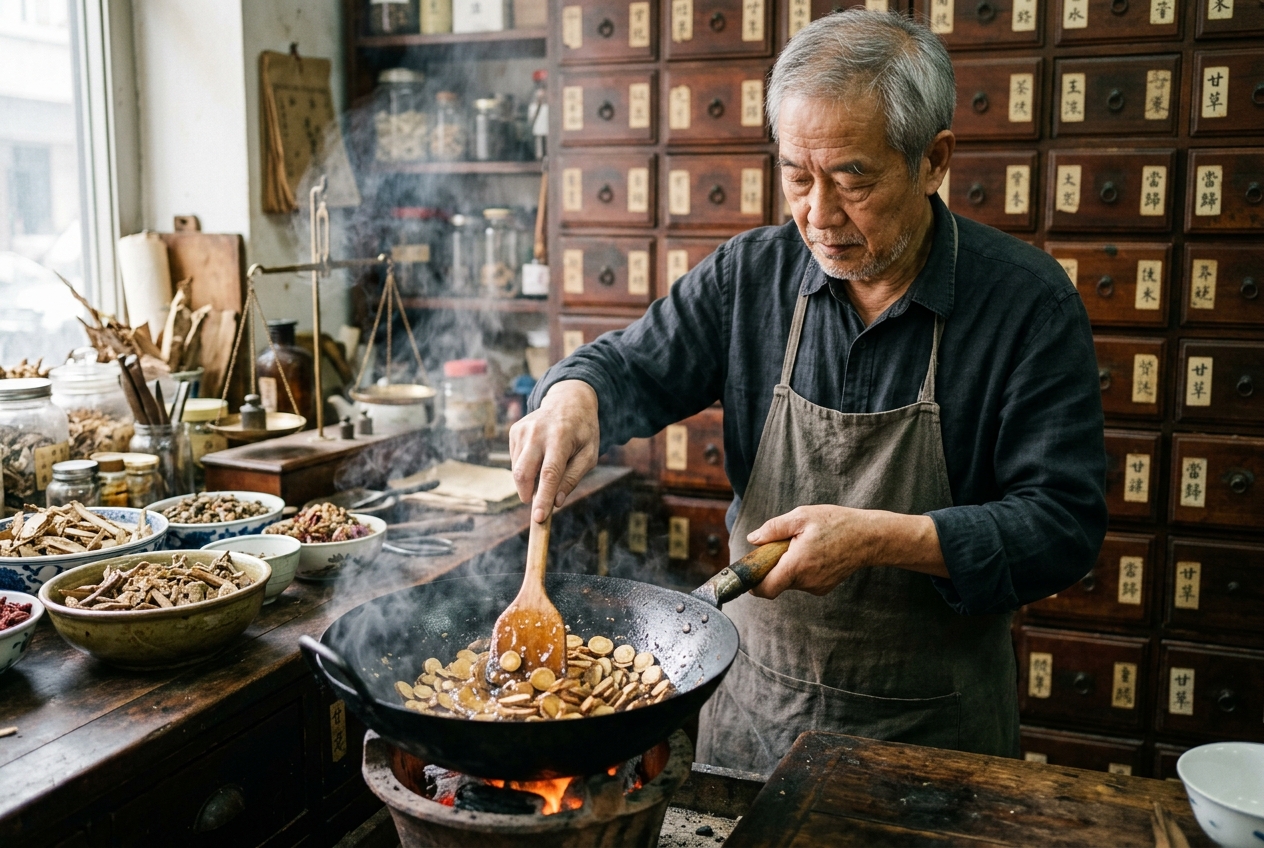
1. Opening Scene — The Sensory and Somatic Reality of Transformation
Take a single slice of freshly unearthed raw Rehmannia root (Sheng Di Huang), break its fibrous cortex, and taste it: it is cool, bitter-sweet, astringent, and distinctly heavy on the tongue. Ingested raw, it rapidly drains heat from the vascular bed, clears systemic inflammation, and prompts a cooling sensation across the chest and epigastrium. Now, take that exact same botanical specimen after it has undergone the classical nine-cycle steaming and sun-drying process (Jiu Zheng Jiu Shai) with rice wine and black soybean decoction to become Prepared Rehmannia (Shu Di Huang). The root is now jet-black, soft, rich in caramelized aromatic sugars, and intensely sweet. When digested, its physiological action is entirely inverted: it no longer cools or purges, but rather warms, deeply nourishes blood and marrow, tonifies the hormonal and renal axis, and grounds the somatic nervous system.
+---------------------------------------------------------------------------------------+
|                 THERMAL AND FUNCTIONAL INVERSION VIA PROCESSING                       |
|                                                                                       |
|   RAW REHMANNIA (Sheng Di Huang)          PREPARED REHMANNIA (Shu Di Huang)           |
|   [Thermal Nature: Cold, Bitter-Sweet]    [Thermal Nature: Warm, Richly Sweet]        |
|   Target: Cools Blood, Clears Heat        Target: Tonifies Blood, Nourishes Yin/Jing  |
|   Major Compound: Catalpol (Iridoid) ---> Major Compound: 5-HMF, Polysaccharides      |
+---------------------------------------------------------------------------------------+
This dramatic metamorphosis is not folklore; it is the living art and science of Pao Zhi (炮制)—the classical pharmaceutical discipline of herbal processing that forms the bedrock of Traditional Chinese Medicine. Pao Zhi represents one of humanity’s oldest systematic technologies for altering the pharmacokinetics, bioavailability, toxicology, and organ-specific tropism of natural medicinal substances. By subjecting raw botanicals and minerals to controlled thermal, mechanical, and adjuvant-mediated chemical reactions, ancient physicians and modern pharmacologists achieve a singular objective: engineering crude biological matter into targeted, biocompatible therapeutic agents.
2. Classical Lineage: From the Han Canon to Master Lei's Treatise
The theoretical and practical foundations of herbal processing trace back more than two millennia, evolving from empirical field preparations into an exact pharmacopoeial science recognized by the World Health Organization Traditional Medicine Strategy.
   +-------------------------------------------------------------------------+
   |                CHRONOLOGICAL EVOLUTION OF PAO ZHI SCIENCE               |
   |                                                                         |
   |   HAN DYNASTY (206 BCE - 220 CE)                                        |
   |   - Shennong Bencao Jing (Raw vs. Cured principles)                     |
   |   - Zhang Zhongjing's Shanghan Lun (Adjuvant roasting & decocting)      |
   |                                                                         |
   |   LIU SONG DYNASTY (420 - 479 CE)                                       |
   |   - Lei Xiao authorises "Lei Gong Pao Zhi Lun" (17 Primary Methods)     |
   |                                                                         |
   |   SONG TO MING DYNASTIES (960 - 1644 CE)                                |
   |   - Taiping Huimin Heji Jufang (Imperial Pharmacy Standardization)      |
   |   - Miao Xiyong authorises "Pao Zhi Da Fa" (Comprehensive Mechanics)    |
   +-------------------------------------------------------------------------+
- The Han Foundations (c. 206 BCE – 220 CE): The earliest systematic herbal compendium, the Shennong Bencao Jing (Divine Farmer's Materia Medica), established the fundamental doctrine that botanical substances possess innate thermal natures (Si Qi: Cold, Hot, Warm, Cool) and directional flavors (Wu Wei: Sour, Bitter, Sweet, Pungent, Salty) that dictate their visceral actions. In the clinical masterworks of Zhang Zhongjing (Shanghan Lun and Jingui Yaolue), precise processing directives appeared: soaking toxic roots in vinegar, frying aconite to diminish cardiotoxicity, and stir-frying herbs with wine to mobilize stagnant microcirculation.
- Master Lei’s Definitive Codification (Liu Song Dynasty, 5th Century CE): The true paradigm shift occurred with Lei Xiao’s seminal treatise, Lei Gong Pao Zhi Lun (Master Lei's Treatise on Herbal Processing). Lei Xiao systematically categorized and standardized seventeen distinct mechanical and chemical processing methods (Lei Gong Shi Qi Fa). His work established reproducible parameters for cutting, soaking, roasting, steaming, calcining, and adjuvant-fermenting, creating the world’s first formal pharmacopeia dedicated solely to transformational pharmacology.
- Imperial Codification and Ming Renaissance (Song–Ming Dynasties): During the Song Dynasty, the imperial dispensary manual Taiping Huimin Heji Jufang mandated standardized Pao Zhi protocols across state pharmacies to ensure uniform clinical potency and eradicate batch-to-batch toxicity. By the late Ming dynasty, Miao Xiyong compiled the Pao Zhi Da Fa (Great Treatise on Herbal Processing), synthesizing classical techniques with advanced metallurgical and botanical insights, establishing the exact adjuvant chemistry still employed in contemporary Good Manufacturing Practice (GMP) facilities worldwide.
3. Primary Processing Modalities & Physical Chemistries
The clinical efficacy of Pao Zhi relies upon five primary physical and adjuvant-assisted modalities, each designed to elicit specific physical, chemical, and energetic alterations.
                           +--------------------------------+
                           |  PRIMARY PAO ZHI MODALITIES    |
                           +--------------------------------+
                                           |
        +------------------+---------------+----------------+------------------+
        |                  |                                |                  |
+---------------+  +---------------+                        +---------------+  +---------------+
|  DRY FRYING   |  |   ADJUVANT    |                        |   CALCINING   |  |     WATER     |
|    (Chao)     |  | Frying (Zhi)  |                        |    (Duan)     |  |Levigation(Fei)|
+---------------+  +---------------+                        +---------------+  +---------------+
  - Chao Huang       - Honey (Mi)                             - Open (Duan)      - Micro-fine
  - Chao Jiao        - Wine (Jiu)                             - Closed (Men)       grinding
  - Chao Tan         - Vinegar (Cu)                           - Quench (Cui)     - Mineral detox
                     - Ginger (Jiang)
                     - Salt (Yan)
A. Dry Frying (Chao, 炒)
Dry frying involves heating botanical substances in a wok without liquid adjuvants, modulating thermal kinetics based on exposure time and surface temperature: - Stir-Frying to Yellow/Aromatic (Chao Huang, 炒黄): Conducted at moderate temperatures (120–150°C) until the material emits a fragrant scent. This process destroys plant heat-labile enzymes, denatures bitter glycosides, and enhances digestive bio-absorption by targeting the Spleen-Stomach network (e.g., Chao Bai Zhu, Chao Mai Ya). - Stir-Frying to Scorched (Chao Jiao, 炒焦): The substance is heated until the outer cortex turns dark brown while preserving an amber interior (160–190°C). This partial pyrolysis enhances astringency, reduces gastrointestinal irritation, and promotes digestive harmony (e.g., Jiao Shan Zha, Jiao Shen Qu). - Charring to Carbon (Chao Tan, 炒炭): Heated under controlled oxygen limitation until the external surface is completely carbonized while the core remains dark brown (200–230°C). This creates porous, activated carbon microstructures that adsorb inflammatory mediators and complex with clotting cascades to provide potent hemostatic actions (e.g., Cang Er Zi Tan, Pu Huang Tan).
B. Liquid Adjuvant Frying (Zhi, 炙)
The most sophisticated branch of Pao Zhi involves cooking raw herbs alongside specific liquid catalysts to alter their pharmacological direction and visceral affinity (Yin Jing):
+-----------------------------------------------------------------------------------------------------+
|                              LIQUID ADJUVANT PHARMACODYNAMICS                                       |
+--------------+--------------------------+---------------------------+-------------------------------+
| Adjuvant     | Organ Affinity (Zang-Fu) | Biochemical Mechanism     | Classical Clinical Prototype  |
+--------------+--------------------------+---------------------------+-------------------------------+
| Honey (Mi)   | Spleen (Pi) & Lung (Fei) | Glycation, demulcent coat | Mi Zhi Huang Qi (Astragalus)  |
| Wine (Jiu)   | Liver (Gan) & Meridians  | Polyphenol extraction     | Jiu Zhi Da Huang (Rhubarb)    |
| Vinegar (Cu) | Liver (Gan) & Gallbladder| Alkaloid protonation      | Cu Chai Hu (Bupleurum)        |
| Ginger (Jiang)| Stomach (Wei) & Lung     | Gingerol synergy, antiem. | Jiang Ban Xia (Pinellia)      |
| Salt (Yan)   | Kidney (Shen) & Bladder  | Osmotic & mineral complex | Yan Du Zhong (Eucommia)       |
+--------------+--------------------------+---------------------------+-------------------------------+
- Honey Frying (Mi Zhi, 蜜炙): Herbs are infused with purified, diluted honey (Mel) and simmered slowly. The high carbohydrate content coats mucosal linings, delays gastric emptying, enhances polysaccharide absorption, and directs tonifying actions specifically to the Spleen and Lung networks (e.g., Mi Zhi Huang Qi, Mi Zhi Gan Cao).
- Rice Wine Frying (Jiu Zhi, 酒炙): Botanical materials are macerated in yellow rice wine (containing 15–20% ethanol) before stir-frying. Ethanol acts as a lipophilic solvent, extracting hydrophobic polyphenols, flavonoids, and quinones, while its ascending energetic nature drives the medicine upward toward the head and upper torso and mobilizes peripheral blood stasis (e.g., Jiu Zhi Da Huang, Jiu Zhi Dang Gui).
- Black Rice Vinegar Frying (Cu Zhi, 醋炙): Fermented black rice vinegar (rich in acetic acid) protonates insoluble alkaloids, converting them into highly water-soluble acetate salts that cross biological barriers with heightened efficiency. Because the sour taste enters the Liver (Gan) channel, vinegar guides compounds into hepatic tissues to resolve stagnation and alleviate visceral pain (e.g., Cu Chai Hu, Cu Yan Hu Suo).
- Fresh Ginger Juice Frying (Jiang Zhi, 姜炙): Fresh ginger extract (Zingiber officinale, rich in 6-gingerol and 6-shogaol) is heated with raw herbs. Ginger juice suppresses the emetic side effects of acrid herbs, harmonizes the Stomach, descends rebellious Qi, and relieves pulmonary spasms (e.g., Jiang Ban Xia, Jiang Hou Po).
- Salt Water Frying (Yan Zhi, 盐炙): Herbs are treated with a saline solution (typically 2–3% NaCl). The salty flavor corresponds to the Water phase and Kidney (Shen) organ network in classical five-phase physiology. The osmotic gradient draws active compounds downward into the lower burner, anchoring deficient fire and nourishing renal-adrenal structures (e.g., Yan Du Zhong, Yan Zhi Huang Bai).
C. Calcining (Duan, 煅) and Quenching (Cui, 淬)
Used primarily for dense minerals, shells, and calcified structures. In Open Calcining, materials such as oyster shell (Mu Li) or gypsum (Shi Gao) are exposed to high thermal regimes (400–700°C) until incandescent, transforming insoluble calcium carbonate structures into porous, soluble calcium oxide and calcium hydroxide matrices. In Closed Calcining (Men Duan), substances like hair (Xue Yu Tan) are sealed within airtight clay crucibles and carbonized without ignition. In Quenching (Cui), red-hot minerals (e.g., Magnetite / Ci Shi) are immediately plunged into vinegar or herbal decoctions, shattering their crystalline lattices into micro-colloidal particles that yield high bio-absorption of essential trace elements.
D. Water Levigation (Shui Fei, 水飞)
A low-temperature hydro-mechanical milling process for heavy or heat-sensitive minerals (such as cinnabar or magnetite). The raw mineral is ground underwater in an agate mortar; the ultra-fine suspended particles are decanted, while heavier, coarse particles remain at the bottom for further grinding. This separates micro-scale therapeutic particles (<5 μm) from abrasive particulates and allows toxic, water-soluble impurities (such as free mercuric ions or arsenic trioxide) to be washed away in the supernatant without subjecting the mineral to thermal oxidation.
E. Boiling and Steaming (Zhu / Zheng, 煮/蒸)
Boiling in specialized liquid decoctions or repetitive steaming transforms the chemical profile of dense root matrices. The renowned Nine Steams and Nine Sun-Dryings (Jiu Zheng Jiu Shai) method induces non-enzymatic browning (Maillard reactions) and hydrolytic degradation of bulky glycosides, converting raw components into bioavailable, biologically active secondary metabolites.
4. Pharmacokinetic and Energetic Transformations: Molecular Mechanisms
Modern analytical chemistry—employing high-performance liquid chromatography coupled with mass spectrometry (HPLC-MS) as documented in peer-reviewed research across NCBI PubMed and Frontiers in Pharmacology—has validated the precise molecular mechanisms underlying classical Pao Zhi transformations.
========================================================================================
             BIOCHEMICAL PATHWAY: ACONITINE HYDROLYSIS IN FU ZI PROCESSING
========================================================================================

DIESTER DITERPENE ALKALOIDS (Highly Toxic: LD50 ~0.1 mg/kg)
    [Aconitine, Mesaconitine, Hypaconitine]
                       |
                       |  + Heat (Boiling / Steaming / Pressure)
                       |  - C-8 Benzoyl ester hydrolysis (Cleaves Acetic Acid)
                       v
    MONOESTER DITERPENE ALKALOIDS (Toxicity reduced 200-500x: LD50 ~15-20 mg/kg)
    [Benzoylaconine, Benzoylmesaconine, Benzoylhypaconine]
                       |
                       |  + Prolonged Hydrolysis / Calcination
                       |  - C-14 Ester bond cleavage (Cleaves Benzoic Acid)
                       v
    AMINE ALCOHOLS / LIPO-ALKALOIDS (Non-Toxic, Potently Cardiotonic & Anti-Inflammatory)
    [Aconine, Mesaconine, Hypaconine, 14-Lipo-aconitines]
========================================================================================
A. Thermal & Energetic Metamorphosis: Sheng Di Huang to Shu Di Huang
The raw root of Rehmannia glutinosa (Sheng Di Huang) contains high concentrations of iridoid glycosides, predominantly catalpol and aucubin, which exert clear anti-inflammatory, antipyretic, and osmotic laxative effects. When subjected to repetitive steaming with rice wine, catalpol undergoes extensive hydrolytic cleavage of its unstable hemiacetal and epoxy rings.
Simultaneously, the high concentration of stachyose and raffinose oligosaccharides hydrolyzes into simple monosaccharides (fructose and glucose), which undergo non-enzymatic Maillard caramelization to generate substantial amounts of 5-hydroxymethylfurfural (5-HMF) and complex rehmannia polysaccharides. The formation of 5-HMF provides potent anti-ischemic, antioxidant, and erythropoietic benefits, shifting the pharmacological profile from a cold, heat-clearing agent to a warm, hematinic tonic that stimulates bone marrow hematopoiesis and restores endocrine balance.
B. Toxicity Neutralization (Jian Du): Aconite and Pinellia
Pao Zhi plays an indispensable role in detoxifying inherently toxic medicinal plants, making them safe for clinical administration:
- Aconitum lateral root (Fu Zi, 附子) / Radix Aconiti (Chuan Wu, 川乌): Unprocessed aconite contains lethal diester diterpenoid alkaloids (DDA: aconitine, mesaconitine, and hypaconitine) that bind with high affinity to voltage-gated sodium channels ($Na_V1.5$) in cardiac myocytes, inducing fatal ventricular arrhythmias and neurotoxicity (human oral lethal dose is 1–2 mg). Controlled prolonged hydro-thermal boiling (Zhu) cleaves the labile acetyl ester group at the C-8 position, yielding monoester diterpenoid alkaloids (MDA: benzoylaconine, benzoylmesaconine). This single chemical cleavage reduces systemic toxicity by a factor of 200 to 500 while preserving therapeutic diterpene core structures. Subsequent heating cleaves the C-14 benzoyl ester, producing non-toxic lipo-alkaloids and amine alcohol aconines that retain powerful cardiotonic, inotropic, and analgesic properties, as demonstrated in the Journal of Ethnopharmacology.
- Pinellia rhizome (Ban Xia, 半夏): Raw Pinellia ternata is intensely toxic, inducing severe mucosal ulceration, laryngeal edema, aphonia, and violent emesis. Pharmacological investigation has established that this toxic response is driven by a dual mechanism: microscopic, needle-sharp raphides of calcium oxalate coated with a pro-inflammatory lectin-like protein complex (Pinellia agglutinin). Processing raw Ban Xia by soaking in potassium aluminum sulfate (alum, Bai Fan) and boiling with fresh ginger juice denatures and dissolves the agglutinin protein coat and rounds the abrasive edges of the calcium oxalate raphides. Concurrently, the bioactive gingerols (6-gingerol, 6-shogaol) synergize with the pinellic components to produce a potent central and peripheral antiemetic that calms the enteric nervous system and clears bronchial exudates.
+---------------------------------------------------------------------------------------+
|               STRUCTURAL AND BIOCHEMICAL DETOXIFICATION PROFILES                     |
|                                                                                       |
|   HERB        RAW TOXIN / IRRITANT            PROCESSED BIOACTIVE STATE               |
|   ---------------------------------------------------------------------------------   |
|   Fu Zi       Diester Diterpene Alkaloids     Monoester Alkaloids & Aconines          |
|               (Aconitine; LD50 ~0.1 mg/kg)    (Benzoylaconine; LD50 ~20 mg/kg)        |
|                                                                                       |
|   Ban Xia     Needle Raphides + Agglutinin    Denatured Protein + Smooth Raphides     |
|               (Mucosal Burning & Aphonia)     (Safe Central Antiemetic & Expectorant) |
|                                                                                       |
|   Chai Hu     High Volatile Saikosaponin A/D  Saikosaponin B2 Transformation          |
|               (Excessive Ascending / Emetic)  (Enhanced Hepato-Protective Anti-inflam)|
+---------------------------------------------------------------------------------------+
C. Channel Guidance via Adjuvant Affinity (Yin Jing Yao)
Processing with specific adjuvants alters cell permeability, lipophilicity, and membrane transporter affinity: - Vinegar-Processed Bupleurum (Cu Chai Hu): Processing Radix Bupleuri with vinegar modifies volatile essential oils while transforming saikosaponins A and D into saikosaponin B2. This conversion mitigates the harsh, upward-dispersing property of raw Bupleurum, channeling its anti-inflammatory effects into hepatic tissue and biliary pathways to relieve hepatobiliary congestion. - Salt-Processed Eucommia Bark (Yan Du Zhong): Unprocessed Eucommia ulmoides contains resilient gutta-percha filaments that hinder active lignan extraction. Stir-frying with salt water fractures these elastic polymeric barriers, releasing pinoresinol diglucoside and chlorogenic acid. The ionic sodium gradient acts via osmotic transport, guiding the biologically active lignans to the renal-adrenal axis to strengthen the lower lumbar spine, enhance bone density, and regulate blood pressure.
5. Somatic Resonance, Channel Activation & Qigong Integration
Just as Pao Zhi thermally and chemically prepares medicinal botanicals to resonate with targeted Zang-Fu networks, internal somatic movement aligns the body's fascial pathways to receive, assimilate, and circulate these transformed therapeutics. The following targeted practice, known as Harmonizing the Three Burners Crucible (Tiao Li San Jiao Ding), mirrors the warming, descending, and consolidating dynamics of processed herbal medicine.
========================================================================================
     QIGONG CULTIVATION: HARMONIZING THE THREE BURNERS CRUCIBLE
========================================================================================

                 (1) INHALE: Ascend Hands Along Central Axis
                     [Draw Qi from Lower Dantian (Water) to Chest (Fire)]
                                      |
                                      v
                 (2) PAUSE: Rotate Palms Outward at Heart Level
                     [Alchemical Union: Reversing Fire & Water Polarity]
                                      |
                                      v
                 (3) EXHALE: Press Earthward & Extend Horizontally
                     [Direct Settled Warmth Downward into Kidney & Liver]
========================================================================================
Step-by-Step Movement Instructions
1. Starting Stance & Setup
Stand with feet shoulder-width apart, knees softly bent (never locked), and pelvis gently tucked to flatten the lumbar curve (Mingmen point opened). Allow your shoulders to sink naturally away from the ears, resting the tip of your tongue against the upper palate just behind your front teeth to close the Ren-Du micro-circulatory circuit. Rest both hands over the Lower Dantian (two finger-widths below the navel), breathing deeply into the lower abdomen.
2. The Inhalation & Thermal Elevation Phase
- Inhale smoothly through the nose for a count of 4 seconds.
- Slowly float both hands upward along the midline of the torso, palms facing upward as if lifting a bowl of warm water from the Lower Dantian, past the Solar Plexus (Middle Burner), up to the level of the Heart (Upper Burner).
- Imagine drawing cool, grounded baseline energy upward, preparing it for alchemical transformation through the warmth of the Heart Fire.
3. The Rotational Transformation Phase
- At the peak of inhalation, hold the breath gently for 2 seconds.
- Rotate the wrists outward so the fingers point toward each other while the palms turn downward toward the earth.
- Broaden the shoulder blades and feel a gentle opening tension across the myofascial lines of the inner arms (Lung and Pericardium meridians).
4. The Exhalation & Visceral Guidance Phase
- Exhale slowly through the nose for a count of 6 seconds.
- Press both palms smoothly downward along the central axis toward the lower abdomen, visualizing warm, purified, bioavailable energy descending through the digestive organs and settling into the lower back and soles of the feet (Yongquan, KI1).
- Sink your body weight slightly deeper into your heels as your hands return to the Lower Dantian.
5. Repetitions and Somatic Feedback
- Duration: Perform 12 continuous repetitions daily (approximately 5 minutes).
- Sensations to Notice: Look for an expansive, warm tingling sensation in the palms, followed by spontaneous salivation (a physiological indicator of parasympathetic activation and digestive readiness), and an easing of abdominal tension. This somatic shift signifies that the internal channels are clear and receptive to nutrient and herbal assimilation.
6. Acupressure Synergy: Priming Visceral Channel Receptors
To optimize the uptake, distribution, and target-tissue affinity of processed medicinal preparations, stimulating corresponding acupoints activates local neurovascular reflex arcs and meridians.
           ST36 (Zusanli)                  LR3 (Taichong)                  KI3 (Taixi)
       +--------------------+          +--------------------+          +--------------------+
       |  Earth Receptor    |          |   Wood Harmonizer  |          |   Water Anchor     |
       |  4 finger-widths   |          |   Webbing between  |          |   Depression       |
       |  below patella,    |          |   1st & 2nd toes,  |          |   between medial   |
       |  1 finger-width    |          |   2 finger-widths  |          |   malleolus &      |
       |  lateral to tibia  |          |   posterior        |          |   Achilles tendon  |
       +--------------------+          +--------------------+          +--------------------+
1. Zusanli (ST36, 足三里) — "Leg Three Miles"
- Anatomical Location: Located on the anterior aspect of the lower leg, four finger-widths below the lower border of the patella, and one finger-width (middle phalanx) lateral to the anterior crest of the tibia in the tibialis anterior muscle.
- Application Technique: Apply deep, perpendicular pressure using the thumb or knuckle. Use circular, clockwise friction for 2 to 3 minutes on each leg. Maintain firm, steady pressure that elicits a dull, distending ache (De Qi sensation).
- Clinical Action: Stimulates the vagus nerve and promotes gastric motility. ST36 serves as the primary receptor point for sweet, honey-processed tonics (Mi Zhi Huang Qi, Mi Zhi Gan Cao), maximizing gastrointestinal absorption and tonifying the Spleen-Stomach network to alleviate fatigue, bloating, and weakness.
2. Taichong (LR3, 太冲) — "Great Surge"
- Anatomical Location: On the dorsum of the foot, in the hollow depression distal to the junction of the first and second metatarsal bones.
- Application Technique: Slide your index finger along the groove between your big toe and second toe until it catches in the triangular valley before the bones meet. Apply sustained, angled pressure pointing slightly upward toward the ankle for 2 minutes while taking slow, diaphragmatic breaths.
- Clinical Action: Regulates hepatic vascular resistance, modulates autonomic nervous tone, and unbinds constrained Liver Qi. LR3 synergizes with vinegar-processed botanicals (Cu Chai Hu, Cu Yan Hu Suo), soothing visceral pain, tension headaches, emotional irritability, and hepatobiliary congestion.
3. Taixi (KI3, 太溪) — "Great Stream"
- Anatomical Location: On the medial aspect of the ankle, in the soft depression midway between the prominence of the medial malleolus (inner ankle bone) and the medial border of the Achilles tendon.
- Application Technique: Pinch the ankle gently using the thumb on KI3 and the index finger on the outer ankle (BL60), applying steady, rhythmic compressive force for 2 to 3 minutes until a radiating warmth spreads across the heel and arch.
- Clinical Action: Primary source point of the Kidney channel. KI3 serves as the foundational bio-electric anchor for salt-processed Kidney-guiding remedies (Yan Du Zhong, Yan Zhi Huang Bai), nourishing foundational Yin, anchoring deficient heat, and easing chronic lower back soreness and adrenal exhaustion.
7. Culinary Alchemy: Applying Pao Zhi Principles to Everyday Life
The transformative principles of Pao Zhi extend beyond pharmacology into clinical nutrition and daily culinary preparation. By utilizing targeted heat and kitchen adjuvants, you can modify the thermal energetics, digestibility, and visceral affinity of everyday foods.
+---------------------------------------------------------------------------------------+
|                    CULINARY PAO ZHI TRANSFORMATIONS MATRIX                            |
+---------------+------------------------+----------------------------------------------+
| Modality      | Culinary Application   | Physiological & Energetic Effect             |
+---------------+------------------------+----------------------------------------------+
| Dry-Toasting  | Toasting Oats, Rice,   | Mitigates dampness, transforms cold foods    |
| (Chao)        | or Raw Walnuts in Pan  | into aromatic tonics that ease digestion.    |
+---------------+------------------------+----------------------------------------------+
| Vinegar Curing| Macerating cruciferous | Directs nutrients to the Liver channel,      |
| (Cu Zhi)      | greens in raw vinegar  | softens tough fibers, activates circulation. |
+---------------+------------------------+----------------------------------------------+
| Ginger Stewing| Simmering root veggies | Disperses cold, descends stomach Qi,         |
| (Jiang Zhi)   | with crushed ginger    | neutralizes potential digestive irritants.   |
+---------------+------------------------+----------------------------------------------+
| Salt Roasting | Baking root vegetables | Guides trace minerals down to the Kidneys,   |
| (Yan Zhi)     | with coarse sea salt   | nourishes Yin, consolidates vital fluid.     |
+---------------+------------------------+----------------------------------------------+
Strategic Food Additions and Preparations
- Dry-Toasted Grains & Seeds: If you experience postprandial bloating or sluggish digestion from cold or damp foods, dry-toast raw rolled oats, barley, or sesame seeds in a dry cast-iron skillet until lightly golden (Chao Huang). This converts heavy starches into aromatic, easily digested nutrients that support the Spleen.
- Ginger-Poached Proteins & Broths: Prepare fish, legumes, or poultry by simmering with three slices of bruised fresh ginger and a splash of rice wine. The volatile gingerol-ethanol matrix breaks down dense peptide linkages, neutralizing cold properties and preventing gastrointestinal gas.
- Black-Vinegar Glazed Vegetables: Lightly dress bitter greens (kale, dandelion, arugula) with warmed black rice vinegar. The acetic acid binds to active phytochemicals, buffering bitterness while guiding antioxidants into the hepatobiliary circulation.
What to Reduce
- Raw, Cold, and Uncooked Botanicals: Minimize the intake of ice-cold beverages, refrigerated smoothies, and un-blanched fibrous salads. Unprocessed cold inputs consume the stomach’s digestive fire, requiring excess metabolic energy to break down and promoting dampness and metabolic stagnation.
- Overly Refined, Un-Caramelized Sugars: Avoid processed, high-fructose corn syrup and refined white sugars, which generate sticky pathological dampness (Shi) and heat. When sweet tonification is required, rely on small amounts of warm, honey-glazed preparations or dark maltose.
8. Clinical Integration Strategy & Safety Parameters
In clinical practice, matching the correct processing modality to the patient's individual presentation is critical to therapeutic efficacy:
+-----------------------------------------------------------------------------------------------------+
|                              FORMULA INTEGRATION & SAFETY STRATEGY                                  |
+-------------------+----------------------------+-------------------------+--------------------------+
| Classical Formula | Standard Herb Modality     | Processing Objective    | Primary Safety Marker    |
+-------------------+----------------------------+-------------------------+--------------------------+
| Si Ni Tang        | Pao Fu Zi (Cooked Aconite) | Mitigate DDA toxicity   | Total DDA < 0.02%        |
|                   |                            | to protect myocardium   | (HPLC-MS Assay)          |
+-------------------+----------------------------+-------------------------+--------------------------+
| Xiao Yao San      | Cu Chai Hu (Vinegar Bupl.) | Guide to Liver, prevent | Saikosaponin B2 ratio;   |
|                   |                            | Yang rising/hyperactivity| Low volatile monoterpene|
+-------------------+----------------------------+-------------------------+--------------------------+
| Liu Wei Di Huang  | Shu Di Huang (Prepared     | Hydrolyze catalpol to   | 5-HMF content > 0.1%;    |
|                   | Rehmannia - 9x Steamed)    | 5-HMF, tonify Blood/Yin | Low free catalpol        |
+-------------------+----------------------------+-------------------------+--------------------------+
- Analytical Quality Verification: Modern clinical protocols must verify that toxic raw precursors (such as diester diterpenoid alkaloids in Fu Zi or abrasive lectins in Ban Xia) fall below strictly validated safety thresholds (e.g., total DDA content $< 0.010\%$ by HPLC-MS) while confirming the synthesis of key active markers (such as $> 0.10\%$ 5-HMF in Shu Di Huang), as indexed in the NCBI PMC Pharmacological Database.
- Pathology-Specific Selection: Prescribe raw Da Huang when acute, downward purging of severe intestinal heat and toxin is required. Conversely, choose wine-treated Jiu Da Huang to clear upper-body fire and facial inflammation without inducing severe diarrhea, or select charred Da Huang Tan to arrest intestinal bleeding.
9. Today's Takeaway
+---------------------------------------------------------------------------------------+
|                              FIVE-MINUTE SOMATIC RESET                                |
|                                                                                       |
|   1. Pour a cup of warm water steeped with two thin slices of fresh ginger root.      |
|   2. Sit upright, relax your shoulders, and sip the warm infusion slowly.             |
|   3. Use your thumbs to apply firm, circular pressure to ST36 (Zusanli) on both legs  |
|      for two minutes, feeling the deep, dull ache awaken your digestive fire.         |
|   4. Conclude with 6 cycles of the "Three Burners Crucible" Qigong breath.            |
|                                                                                       |
|   RESULT: Clear digestive warmth, grounded somatic calm, balanced vital energy.       |
+---------------------------------------------------------------------------------------+
The foundational lesson of Pao Zhi is that raw physiological potential can be intentionally transformed through mindful thermal and mechanical alignment. By combining warm, prepared nutrition, channel-opening movement, and targeted acupressure, you actively cultivate an internal environment primed for optimal vitality, balance, and resilience.