Shi Wu Luo Mai Fifteen Luo-Connecting Vessels: Collateral Microvascular Networks, Somato-Emotional Decompression, and Ying-Wei Qi Interfacing in Classical Daoyin
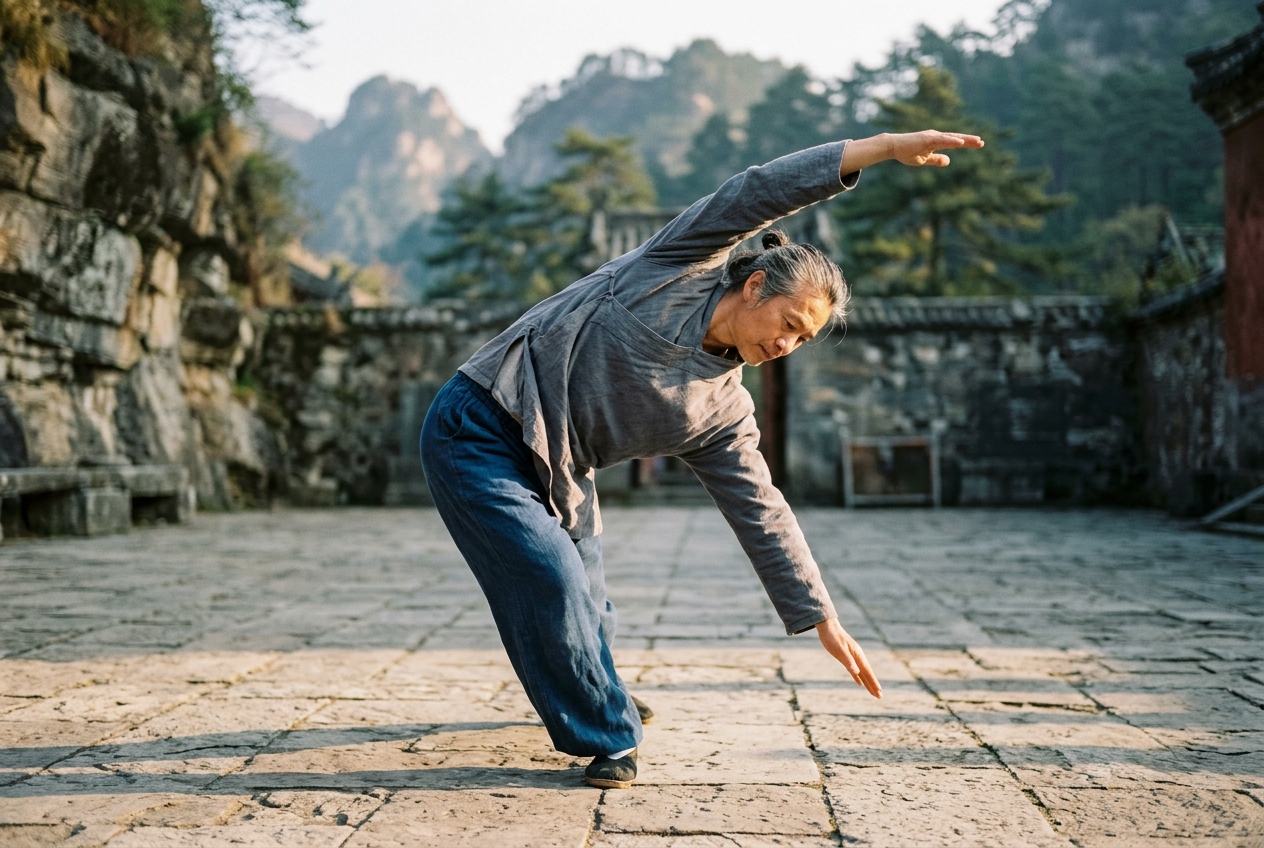
In everyday terms, if your body’s primary energy channels—the Jing Mai (經脈)—function like deep underground transit lines or major arterial highways running lengthwise from head to toe, the Luo Mai (絡脈) are the dynamic street-level grid, the lateral off-ramps, and the gossamer network of neighborhood alleyways. The word Luo (絡) literally translates as "to net," "to bind," or "a connecting web." Whenever life presents a sudden emotional shock, systemic inflammation, or structural strain that exceeds what your central nervous system and primary vital organs can process in real time, your physiology diverts that overwhelming charge away from the deep core channels and redistributes it laterally into these superficial collaterals. There, bound within localized microvascular networks and interstitial fluid matrices, the stress is safely held in containment—acting as an emotional and physiological shock absorber until you intentionally engage the movement, breathwork, and awareness necessary to release it.
The Classical Taxonomy: Textual Lineage of the Lingshu
To understand the profound somatic intelligence of this network, one must return to its primary textual source: Chapter 10 (Jingmai, 經脈) of the classical medical treatise known as the Huangdi Neijing (The Yellow Emperor's Inner Classic: Spiritual Pivot), compiled during the Han Dynasty. The Lingshu articulates a rigorous functional hierarchy that carefully differentiates the Luo collaterals from both the primary channels (Jing Mai) and the divergent conduits (Jing Bie, 經別).
==========================================================================
              TAXONOMIC COMPARISON OF CHANNEL SYSTEMS IN THE LINGSHU
==========================================================================
System        Depth Level          Primary Substance   Key Somatic Role
--------------------------------------------------------------------------
Jing Mai      Deep Intermuscular   Ying Qi (Nutritive) Longitudinal axis,
              Fascial Planes       & Arterial Blood    systemic circulation
--------------------------------------------------------------------------
Jing Bie      Deep Visceral /      Wei Qi & Jing       Diverts deep pathogens,
              Articular Recesses   (Essence)           protects Zang viscera
--------------------------------------------------------------------------
Luo Mai       Superficial Fascia,  Blood (Xue) &       Lateral buffering,
              Capillary / Dermal   Interstitial Wei    psycho-emotional storage,
              Sub-layers           Fluids              viscero-sensory linkage
==========================================================================
Where the twelve primary channels course through deep intermuscular fascial planes to sustain rhythmic metabolic flow between the internal organs (Zang-Fu) and the extremities, and the divergent channels plunge into deep joint spaces and body cavities to divert virulent pathogens away from the visceral core, the Luo vessels occupy the accessible, intermediate boundary between the interior and exterior. The Lingshu explains that the Luo vessels emanate from specific energetic hubs known as the Luo Xue (絡穴, Luo-connecting points) and bifurcate into a sophisticated dual architecture:
- The Transverse Collaterals (Heng Luo, 橫絡): These horizontal bridges cross directly from the Luo-connecting point of one primary channel to the Source (Yuan, 原) point of its internally-externally paired Yin-Yang partner. For instance, the transverse branch emerging from the Lung channel’s point Lieque (LU-7) travels across the wrist fascia to connect with the Large Intestine channel at Hegu (LI-4). This transverse biocircuitry serves as a direct homeostatic equalizer, redistributing energetic abundance or draining energetic fullness between paired organ systems.
- The Longitudinal Collaterals (Bie Luo, 別絡): These expansive vertical pathways travel along their own distinct trajectories, coursing upward into the throat, tongue, facial sensory orifices, chest, and pericardial membranes, or descending across the gastrointestinal wall. Rather than terminating in an organ core, they arborize extensively into the Sun Luo (孫絡, minute grandchildren collaterals) and Fu Luo (浮絡, superficial floating collaterals) that permeate the skin and superficial fascia.
The classical canon identifies fifteen major branches that constitute this system: twelve stemming from the primary bilateral meridians, two arising from the extraordinary midline axes—the Ren Mai (Conception Vessel) at Jiuwei (CV-15) and the Du Mai (Governing Vessel) at Changqiang (GV-1)—and the Dabao (SP-21), designated as the Great Luo of the Spleen (Pi Zhi Da Luo), which wraps like an energetic corset around the entire lateral ribcage to unify all blood collaterals. Classical commentators such as Yang Jizhou in the Ming Dynasty work Zhenjiu Dacheng (Compendium of Acupuncture and Moxibustion) further recognized a sixteenth crucial collateral: the Great Luo of the Stomach (Xuli), which pierces the diaphragm, weaves through the lungs, and emerges beneath the left breast to govern the rhythm of apical cardiac pulsation.
==========================================================================
             THE FIFTEEN CLASSICAL LUO-CONNECTING VESSELS
==========================================================================
Channel / Vessel    Luo-Connecting Point  Classical Trajectory & Symptom
--------------------------------------------------------------------------
1. Lung (Fei)       Lieque (LU-7)         Palms, thenar eminence; shortness
                                          of breath, open-mouth yawning
2. Large Intestine  Pianli (LI-6)         Teeth, ear canal, sensory jaw;
                                          toothache, cold teeth, deafness
3. Stomach (Wei)    Fenglong (ST-40)      Anterior leg, neck, throat;
                                          hoarseness, sudden throat spasm
4. Spleen (Pi)      Gongsun (SP-4)        Intestines, stomach cavity;
                                          sharp abdominal colic, cholera
5. Heart (Xin)      Tongli (HT-5)         Root of tongue, ocular orbit;
                                          aphasia, heavy tongue, anxiety
6. Small Intestine  Zhizheng (SI-7)       Elbow joint, triceps fascia;
                                          weak elbows, pebble-like warts
7. Bladder (Pang)   Feiyang (BL-58)       Nose, lumbar spine, calf;
                                          nasal congestion, acute lumbago
8. Kidney (Shen)    Dazhong (KI-4)        Posterior calcaneus, lumbar core;
                                          urinary retention, chest fullness
9. Pericardium      Neiguan (PC-6)        Myocardium, pericardial sheath;
                                          cardiac pain, mental restlessness
10. San Jiao        Waiguan (TE-5)        Posterior arm, chest, sternum;
                                          elbow contracture, chest tight
11. Gallbladder     Guangming (GB-37)     Dorsum of foot, eyes, shin;
                                          cold lower limbs, ocular fatigue
12. Liver (Gan)     Ligou (LR-5)          Medial malleolus, genitalia;
                                          pruritus, persistent priapism
13. Ren Mai         Jiuwei (CV-15)        Spreads over the solar plexus;
                                          skin itching on the abdomen
14. Du Mai          Changqiang (GV-1)     Spine, paraspinal musculo-fascia;
                                          stiff spine, heavy head tremor
15. Great Luo / Sp  Dabao (SP-21)         Lateral ribs, intercostal zone;
                                          widespread body pain, joint laxity
--------------------------------------------------------------------------
* Great Luo of St   Xuli (Sub-apical)     Diaphragm, lung apex, heart beat;
                                          rapid irregular pulse, panic
==========================================================================
Somatic and Microvascular Mechanics: The Physiology of Collateral Exchange
Modern medical understanding clarifies why classical practitioners placed such immense value on these pathways. As validated in contemporary fascial biology and microvascular research available through the National Center for Biotechnology Information, the human body does not operate as a collection of isolated anatomical levers, but as an interconnected tensegrity system enveloped within an extracellular matrix (ECM) rich in collagen, elastin, and hyaluronan.
Within this matrix, the Luo vessels correspond directly to the superficial neurovascular bundles, terminal capillary loops, and pre-lymphatic channels that navigate the superficial adipose and subfascial loose connective tissue. The Lingshu states that whereas the deep primary channels are hidden within the muscles and cannot be seen, the superficial Luo vessels are clearly visible along the surface of the skin as delicate vascular tracery, venules, and subtle dermal color shifts.
This biological substrate is the literal staging ground for the dynamic interchange between two critical physiological components: * Ying Qi (營氣, Nutritive Energy): The continuous flow of nutrient-dense, oxygenated blood and metabolic substrate coursing through the inner vascular lumen. * Wei Qi (衛氣, Defensive Energy): The rapid neuro-immune patrolling forces and lymphatic fluids pulsating outside the vascular walls through the interstitial collagenous network.
Under resting homeostatic conditions, Ying resides within the vessels while Wei circulates outside them. However, at the capillary-matrix boundary of the Luo Mai, these two fluids continuously cross-diffuse. When mechanical motion compresses and releases this interstitial sponge, shear stress triggers endothelial cells to release signaling molecules like nitric oxide, expanding local capillary perfusion, while mechanoreceptors (such as Ruffini and Pacinian corpuscles) calibrate the sympathetic tone of the surrounding vasculature.
The Psycho-Emotional Sponge: Latent Pathogens and Blood Stasis
In the clinical psychology of classical East Asian medicine, the Luo vessels operate as the body's primary somatic reservoir for unresolved psychological trauma and chronic emotional suppression. When an individual experiences an emotional experience that is too overwhelming to assimilate—whether grief, rage, terror, or betrayal—the body initiates an emergency containment strategy. To prevent the intense energetic and neurochemical disruption from directly injuring the deep Zang organs (the Heart, Liver, and Kidneys), the autonomic nervous system induces localized microvascular vasoconstriction.
This chronic constriction traps localized pools of blood and metabolic byproducts within the minute collaterals, creating the clinical condition known as Xue Yu (血瘀, Blood Stasis). Over time, these stagnant pools thicken, trapping Wei Qi and transforming into latent heat or chronic somatic tension. The individual might perceive this as a stubborn tightness in their chest, a chronic ache between the shoulder blades, or persistent irritability. In classical acupuncture, these vessels are frequently bled with a lancet to release systemic pressure—a process explicitly codified in the World Health Organization guidelines for traditional medicine.
However, in the self-cultivation science of classical Daoyin (導引, internal stretching and guiding of breath), one achieves this identical therapeutic release without needles through three combined somatic mechanisms: * Transverse Fascial Spirals: Rotational wringing of the extremities that alters interstitial fluid pressure and mechanically frees stuck fascial layers. * Diaphragmatic Pressure Waves: Deep belly breathing that alters intra-abdominal and intra-thoracic pressure, vacuuming venous blood back toward the heart. * Focused Mental Intention (Yi, 意): Directing conscious, interoceptive awareness into specific anatomical nodes, which research demonstrates alters local blood flow and downregulates central nervous system threat perception.
Step-by-Step Somatic Practice: The Fifteen Collateral Daoyin Protocol
The following complete, six-stage somatic sequence is drawn directly from traditional Daoyin cultivation methods. It requires no specialized apparatus and systematically releases stagnation across the transverse and longitudinal Luo collaterals.
==========================================================================
                SOMATIC PROTOCOL: THE 6-STAGE LUO PURGING SEQUENCE
==========================================================================
Stage   Core Name                     Targeted Luo Network       Key Mechanism
--------------------------------------------------------------------------
1       The Suspended Root            Systemic Baseline &        Neutral Pelvic &
                                      Somatic Orientation        Fascial Alignment
2       The Dragon Wrings Its Pearl   Upper Limb Luo (LU-7,      Transverse Radial
                                      LI-6, PC-6, TE-5, HT, SI)  / Ulnar Spiraling
3       Uncoiling the Bamboo Shoot    Trunk & Central Midline    Coronal Lateral
                                      Luo (SP-21 Dabao, CV-15)   Bending & Wringing
4       Sweeping the Mountain Pass    Lower Limb Luo (ST-40,     Sagittal Torsion &
                                      SP-4, GB-37, LR-5, BL, KI) Axial Loading
5       Percussive Collateral Awakening Micro-Vessel & Capillary Light Rhythmic
                                      Bifurcations (All 15 Luo)  Vibrational Tapping
6       Harmonizing the Deep Well     Stomach Great Luo (Xuli)   Diaphragmatic Wave
                                      & Central Core Autonomics  & Interoceptive Rest
==========================================================================
Stage 1: Setting the Structural Anchor (The Suspended Root)
- Foot Alignment: Stand barefoot or in flat, flexible shoes on a level surface. Position your feet parallel, precisely hip-to-shoulder-width apart, with your toes pointing straight forward.
- Joint Decompression: Unlock your knees by allowing them to soften 2–3 centimeters forward. Gently tuck your tailbone slightly downward toward the earth as if preparing to perch on a high stool, flattening the lumbar curve without rigidly clenching your gluteal muscles.
- Spinal Suspension: Imagine a silk cord attached to the crown of your head (Baihui, GV-20), gently drawing the crown upward toward the sky. This naturally tucks your chin slightly inward and lengthens the back of your cervical spine.
- Arm Positioning: Let your arms hang effortlessly at your sides, maintaining a soft, rounded space in your armpits—as if you were gently cradling an egg under each arm without cracking it.
- Breathing Cadence: Inhale through your nose into the lower abdomen over 4 slow counts; exhale smoothly through your nose over 6 counts. Maintain this grounding rhythm for 2 minutes.
Stage 2: Upper Extremity Spiral Torsion (The Dragon Wrings Its Pearl)
Targeting the Luo networks of the Lung (LU-7), Large Intestine (LI-6), Pericardium (PC-6), San Jiao (TE-5), Heart (HT-5), and Small Intestine (SI-7).
      [Inhale: External Spiral]            [Exhale: Internal Spiral]
       Palms Up / Chest Opens               Palms Down / Scapulae Wring
          /                  \                 \                  /
    (Thumbs Lead)      (Little Fingers)   (Thumbs Roll In)  (Elbows Extend)
- Inhalation and Expansion (External Rotation): On a slow 4-count nasal inhalation, raise both arms forward and upward until they reach shoulder height. As they rise, rotate your forearms and wrists outwardly so your palms turn upward toward the ceiling, leading the rotation with your thumbs peeling backward. Draw your shoulder blades gently together behind you, opening your anterior chest wall and stretching the flexor surfaces of your forearms where the Yin Luo vessels (Lieque and Neiguan) reside.
- Exhalation and Compression (Internal Rotation): On a smooth 6-count exhalation, maintain your arms at shoulder height and initiate a deep inward corkscrew rotation from the roots of your shoulders. Turn your thumbs downward and then all the way backward toward the wall behind you, so your palms face outward and the backs of your hands face each other. Push the heels of your hands outward while rounding your upper back slightly, feeling an intense, pleasant wringing stretch across your extensor tendons, elbows, and upper back (activating the Yang Luo vessels at Pianli and Waiguan).
- Rhythm: Perform 8 continuous, fluid cycles. Move slowly and deliberately, treating your arms not as rigid poles, but as spiraling ropes of fascia being washed in fresh blood.
Stage 3: Lateral Ribcage and Diaphragmatic Unfurling (Uncoiling the Bamboo Shoot)
Targeting the Great Luo of the Spleen (Dabao, SP-21) and the Ren Mai Luo (Jiuwei, CV-15).
- Hand Placement: Raise your left hand and rest its palm flat against the crown of your head, keeping your left elbow flared wide to the side. Rest the back of your right hand against your sacrum at the base of your spine.
- Inhalation and Lateral Stretch: Inhale deeply into the left side of your ribcage over 4 counts. As you breathe in, gently side-bend your torso toward the right, pushing your left ribcage out to the left like an opening accordion. Keep both feet planted with equal weight on the floor. Direct your breath into the intercostal spaces along your mid-axillary line—the direct location of Dabao (SP-21), situated midway down your ribcage below the armpit.
- Exhalation and Spiraling Return: Exhale through your nose over 6 counts as you slowly return to the vertical centerline, gently engaging your lower abdominal wall.
- Repetition: Complete 6 dynamic cycles on the left side, switch your arm positions, and complete 6 cycles on the right side.
Stage 4: Lower Extremity Torsional Squat (Sweeping the Mountain Pass)
Targeting the Luo networks of the Stomach (ST-40), Spleen (SP-4), Gallbladder (GB-37), Liver (LR-5), Bladder (BL-58), and Kidney (KI-4).
- Stance Setup: Step your feet out slightly wider than shoulder-width, turning your toes outward at approximately 45 degrees into an open horse stance. Place your palms securely on your thighs just above your knees, with your fingers pointing inward and your elbows turned out.
- Descent and Inhalation: Inhale over 4 counts into your lower belly as you sink your hips down into a comfortable, stable squat.
- Rotational Exhalation: As you exhale over 6 counts, press your right hand firmly into your right inner knee to anchor the thigh, and rotate your entire upper torso to look back over your left shoulder. This twists your abdominal core, pulls the fascial chain along your inner thigh and medial ankle (stimulating Ligou and Gongsun), while compressing the outer shin of the opposite leg (engaging Fenglong and Guangming).
- Alternation: Inhale as you untwist and return to the central lowered squat; exhale as you press your left hand into your left thigh and twist your torso to gaze over your right shoulder.
- Repetition: Complete 6 alternating twists per side (12 total movements).
Stage 5: Percussive Micro-Vessel Awakening (Patting the Collaterals)
Mechanically stimulating blood clearing and capillary vasodilation through gentle cupped-palm percussion.
- Hand Formation: Form your right hand into a loose, cupped palm, curving your fingers and thumb so that a hollow pocket of air is trapped when the palm strikes a surface. The strike should produce a hollow popping sound rather than a sharp slap.
- Upper Limb Sweep: - Extend your left arm forward with the palm facing upward. Beginning at your chest and inner shoulder, lightly and rhythmically pat down the inner surface of your arm across the elbow crease and down to your palm (Yin Luo path). - Flip your left hand over so the palm faces down. Pat from the back of the hand, up the outer forearm, over the outer elbow, across the deltoid, and onto the top of your shoulder (Yang Luo path). - Perform 3 complete continuous sweeps on the left arm, then switch hands and perform 3 complete sweeps on your right arm.
- Lateral Torso Percussion: Using both cupped palms simultaneously, rhythmically pat down the sides of your ribcage from just below your armpits down to your waistline, breathing out with a soft audible sigh to release tension trapped within the Great Luo of the Spleen (Dabao). Pat continuously for 30 seconds.
- Lower Limb Sweep: - Bend slightly at your hips. Using both cupped palms, pat down the outer sides of your thighs, past the outer knees, and down the outer shins to your ankles (Gallbladder & Stomach Luo paths). - Wrap your hands around to the inside of your ankles and pat rhythmically upward along your inner calves, inner knees, and inner thighs to your groin (Liver, Spleen & Kidney Luo paths). - Perform 3 complete ascending/descending cycles.
Stage 6: Integrating the Great Luo of the Stomach (Harmonizing the Deep Well)
Targeting Xuli and the calming of the central neurovascular axis.
- Resting Posture: Return to a natural, hip-width standing posture or sit comfortably upright on a chair with your feet flat on the floor.
- Hand Centering: Place your right palm flat over the center of your chest (the sternum), and place your left palm flat over your lower left ribcage, resting right over the anatomical apex of your heart and the energetic site of Xuli.
- Micro-Sensing and Breath Wave: Close your eyes. Inhale slowly and silently through your nose into the space beneath your lower left hand, feeling your left lower ribs gently expand outward. Pause for 2 seconds at the peak of inhalation.
- Exhalation: Exhale through soft, barely parted lips over 8 slow counts, visualizing all residual heat and scattered energy draining out of your chest, descending through your abdomen, and grounding down into the soles of your feet (Yongquan, KI-1).
- Duration: Remain in this still, quiet posture for 3 to 5 minutes, simply feeling the rhythmic beating of your heart under your left palm become steady, deep, and calm.
Common Beginner Pitfalls and Corrections
==========================================================================
                 TROUBLESHOOTING YOUR SOMATIC PRACTICE
==========================================================================
Common Error             Biomechanical Flaw        Direct Practical Fix
--------------------------------------------------------------------------
Bracing and Clenching    Over-engaging outer       Soften the gluteal muscles;
the Sacrum               muscles, tilting pelvis   let the tailbone sink
                         excessively               naturally like a plumb line.
--------------------------------------------------------------------------
Rigid "Pole" Twisting    Rotating only from the    Initiate torsion from the
                         wrists or neck            core, letting the wave travel
                                                   through the fascial sheath.
--------------------------------------------------------------------------
Chest-Only Shallow       Lifting the ribcage and   Direct breath into the
Breathing                tensing the neck muscles  lower abdominal ring and
                                                   flanks beneath the navel.
--------------------------------------------------------------------------
Slapping with a Flat     Stinging cutaneous        Cup the palm to trap an air
Palm                     nerves, causing pain      pocket, producing a deep,
                                                   hollow resonant percussion.
==========================================================================
Somatosensory Calibration: What to Feel and What It Means
As you progress through this sequence, your interoceptive awareness will encounter a distinct sequence of physical sensations:
[ Coldness / Dull Aches ]   -->   [ Prickling Pins & Needles ]   -->   [ Spreading Liquid Warmth ]
(Clearing Initial Stasis)         (Capillary Vasodilation)             (Nutritive Homeostasis)
- Spreading Warmth across Forearms and Chest: A sign of microvascular vasodilation and increased capillary perfusion as vascular resistance drops.
- Prickling or Fine "Pins and Needles" in Fingertips and Toes: Caused by transient nerve decompression and the recruitment of peripheral capillary beds as interstitial pressure equalizes.
- Involuntary Yawning, Sighing, or Stomach Gurgling (Borborygmi): Clear markers of autonomic nervous system shifts from sympathetic fight-or-flight into parasympathetic vagal dominance.
- Transient Emotional Release: Sudden feelings of deep relief, spontaneous sighs, or waves of emotion that resolve into a light, clear sense of spaciousness within the chest and abdomen.
Contemporary Biomechanics: Fascial Tensegrity, Vagal Tone, and Hemodynamics
Modern biomedical sciences provide clear physiological frameworks that explain why this classical protocol produces such reliable results. Research compiled by institutions such as the National Qigong Association and documented across numerous peer-reviewed studies on fascial network biology reveals that gentle, multi-directional somatic movement acts directly upon fundamental regulatory systems:
1. Fascial Mechanotransduction and Extracellular Fluid Shear
When you twist a limb through spiral rotational movement, you introduce a mechanical force known as torsional shear stress into the collagenous sheets of the fascia. The fibroblasts embedded within these sheets respond to this mechanical signal by synthesizing hyaluronan and releasing matrix metalloproteinases, which chemically liquefy dense, gelled ground substance (transforming it from a thick gel to a fluid sol). This frees bound water molecules and flushes accumulated metabolic byproducts out of the interstitial space and into the lymphatic capillaries for filtration.
2. Autonomic Nervous System Recalibration and Vagal Tone
The longitudinal Luo vessels that course through the chest, throat, and vocal apparatus align closely with the anatomical paths of the vagus nerve (Cranial Nerve X) and the sympathetic chain ganglia. By combining extended exhalations (which stimulate cardiac vagal motor neurons) with gentle rotational stretches of the neck, chest, and diaphragm, the somatic protocol activates the body's parasympathetic relaxation response. This reduces circulating stress hormones, increases heart rate variability (HRV), and lowers systemic inflammatory markers.
3. Diaphragmatic Pressure Dynamics and the Venous Vacuum
The diaphragmatic piston movement emphasized during the practice of the Great Luo of the Stomach (Xuli) and Spleen (Dabao) creates a dynamic pressure gradient between the thoracic and abdominal cavities. Inhalation lowers the diaphragm and increases intra-abdominal pressure, gently compressing the liver and mesenteric vascular beds. Exhalation releases this pressure, creating a natural vacuum that draws venous blood upward through the inferior vena cava toward the right atrium. This rhythmic mechanical pumping decongests visceral capillary beds and relieves stagnation throughout the entire collateral network.
Your Daily Somatic Protocol
To integrate the restorative benefits of the Fifteen Luo-Connecting Vessels into your everyday life, commit to the following 7-minute morning routine for the next seven consecutive days:
==========================================================================
                 THE 7-MINUTE MORNING COLLATERAL RESET
==========================================================================
Minute 0:00 - 1:00   Stage 1: Standing Root & Centered Abdominal Breathing
Minute 1:00 - 2:30   Stage 2: Dragon Wrings Its Pearl (Upper Limb Spirals)
Minute 2:30 - 4:00   Stage 3: Uncoiling the Bamboo Shoot (Ribcage Stretch)
Minute 4:00 - 5:30   Stage 5: Percussive Patting on Arms and Lateral Ribs
Minute 5:30 - 7:00   Stage 6: Hand over Heart/Xuli Integration & Quiet Resting
==========================================================================
Tomorrow morning, before reaching for your phone or pouring your first cup of tea or coffee, step into an open space and complete this short sequence. As you finish, pause in stillness for thirty seconds with your hands resting over your heart and lower abdomen. Notice the gentle warmth radiating through your skin, the quiet spaciousness across your ribcage, and the clear, calm focus settling across your mind. In that moment of quiet, integrated vitality, you are experiencing the living reality of classical somatic science: an ancient, sophisticated map of human physiology where body, breath, and awareness function as one harmonious whole.