Luo-Connecting Points (Luo Xue) Meridian Dynamics: Governing Interior-Exterior Channel Coupling, Chronic Collateral Stagnation, and Yuan-Luo Synergies in Traditional Chinese Medicine
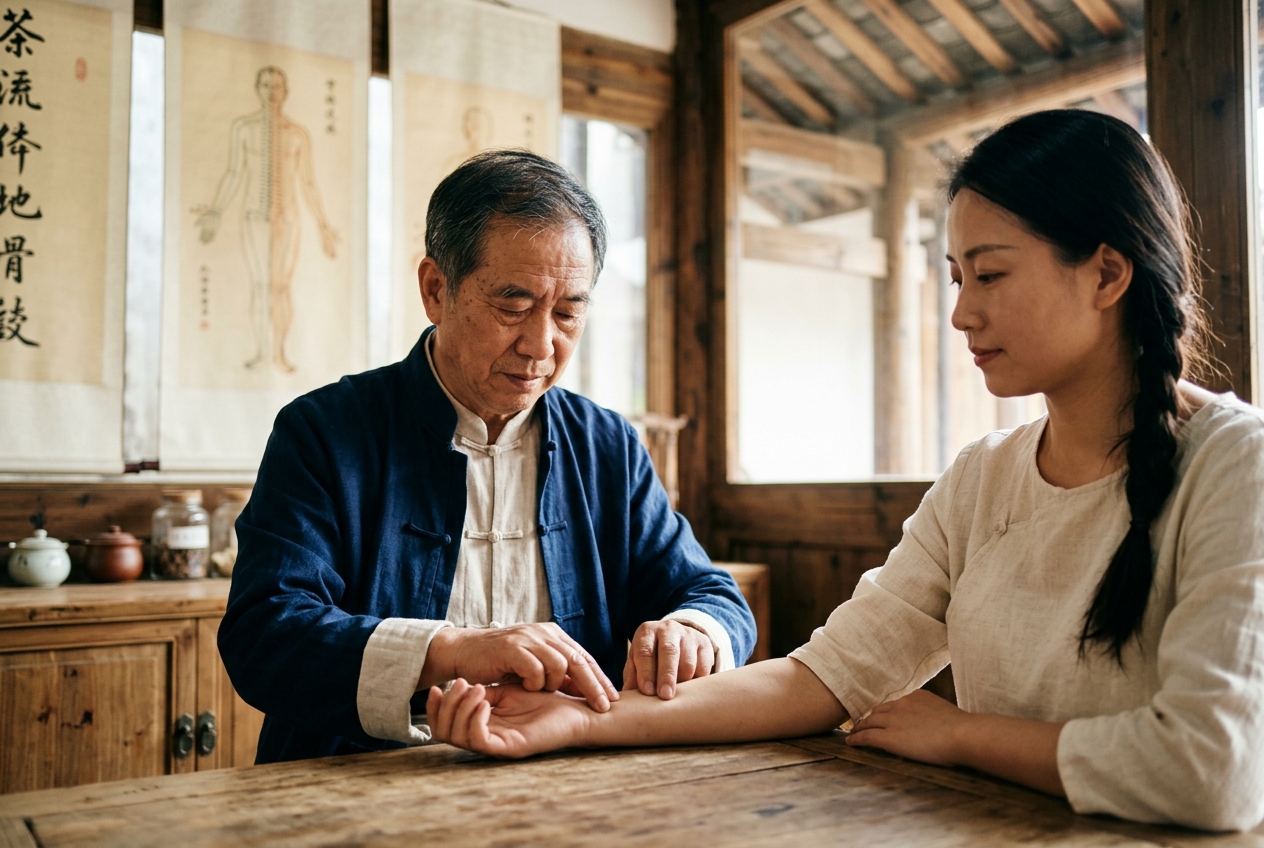
1. Opening Scene — A Moment You’ll Recognise
Consider a physical sensation that many have endured yet few can satisfactorily explain: a dull, persistent constriction nestled deep beneath the lower rib cage or between the shoulder blades that no amount of superficial stretching relieves; a pervasive mental cloudiness accompanied by a heavy, leaden feeling in the limbs following weeks of sustained emotional pressure; or a sudden flutter in the chest alongside an inexplicable knot in the throat when unexpressed tension lingers. You visit your physician, yet standard laboratory blood panels and imaging reveal pristine biochemical markers. Structurally, you appear intact; functionally, your vitality feels obstructed behind an invisible dam.
In modern biomedicine, this liminal state between physiological health and diagnosable pathology is frequently categorised under functional somatic syndromes, myofascial pain dysfunction, or autonomic dysregulation. Yet more than two millennia ago, the foundational texts of East Asian medicine articulated this precise territory with exquisite anatomical and energetic fidelity. In Traditional Chinese Medicine (TCM), these elusive, stubborn, and psycho-emotionally entangled blockages do not reside exclusively within the deep primary meridian trunks (Jing Mai), nor are they merely superficial cutaneous abrasions. They are anchored within the intricate, dynamic vascular-fascial network known as the Luo Collaterals (Luo Mai).
At the pivotal intersections of this network lie the Luo-Connecting Points (Luo Xue). Acting as physiological overflow valves, bidirectional communication bridges between paired organ systems, and reservoirs for unresolved physical and psycho-emotional pathogens, the Luo points hold the clinical master key to resolving stubborn, chronic patterns of disharmony. When we learn how to access, stimulate, and decompress these nodes, we tap into one of antiquity’s most sophisticated systems for microcirculatory renewal and psychosomatic equilibrium.
2. What This Organ System Does: The Architecture of the Fifteen Collaterals
To comprehend the Luo-Connecting points, one must first visualize the human meridian system not as isolated, static lines drawn across a chart, but as a three-dimensional vascular and fascial matrix spanning the entire body. The classic medical treatise, the Huangdi Neijing (The Yellow Emperor's Inner Classic)—specifically the Lingshu (Spiritual Pivot), Chapter 10—lays down the foundational taxonomy of the channels.
The primary meridians (Jing Mai) are likened to deep, subterranean rivers coursing longitudinally to nourish the vital organs (Zang-Fu). Branching perpendicularly and diagonally off these major waterways are the Luo Mai (connecting collaterals)—a vast, multidirectional web that bifurcates into smaller branch collaterals (Sun Luo) and superficial blood collaterals (Fu Luo), ultimately investing every cubic millimetre of myofascia, connective tissue, and microvasculature. Contemporary research documented in the National Center for Biotechnology Information (NCBI) on meridian biology increasingly correlates this classical collateral distribution with the interstitial fluid dynamics of the fascial tensegrity matrix and microcirculatory capillary beds.
Classical canon delineates Fifteen Major Luo-Connecting Points, each giving rise to a distinct collateral pathway: - Twelve Organ-Channel Luo Points: Corresponding to the twelve bilateral primary channels (e.g., Lieque LU7 for the Lungs, Fenglong ST40 for the Stomach, Neiguan PC6 for the Pericardium). - Three Midline and Trunk Luo Points: 1. Changqiang (DU1 / GV1), the Luo point of the Governing Vessel (Du Mai), governing the spinal column, central nervous system tone, and dorsal structural integrity. 2. Jiuwei (RN15 / CV15), the Luo point of the Conception Vessel (Ren Mai), spreading across the epigastrium and abdomen to regulate anterior visceral Yin and autonomic ease. 3. Dabao (SP21), the Great Luo of the Spleen (Pi Zhi Da Luo), emerging at the lateral thoracic wall to encircle and harmonize all blood and interstitial fluids across the entire trunk and limbs. (Certain classical lineages also acknowledge Xuli, the Great Luo of the Stomach, pulsating beneath the left breast to reflect apical cardiac vitality).
The Dual Functional Pathways: Transverse and Longitudinal Luo
Every Luo-Connecting point governs two distinct anatomical and physiological trajectories:
- The Transverse Luo (Heng Luo): The transverse collateral acts as an energetic conduit that directly connects an internally-externally paired Yin-Yang organ couple (Biao-Li relationship). For instance, the Luo point of the Lung channel (Lieque, LU7) projects a transverse branch across the wrist directly into the primary channel of the Large Intestine (Shou Yangming). If the Lungs are burdened by excessive grief or pathogenic dry-heat, the transverse Luo offloads this energetic surplus into its Yang partner, the Large Intestine, for functional elimination. This mechanism prevents dangerous pressure build-up within the delicate Yin viscera.
- The Longitudinal Luo (Zhi Luo): The longitudinal collateral courses alongside or away from the primary pathway, ascending to the head, chest, throat, or descending to the pelvic basin and extremities. These pathways intimately connect with somatic tissue, superficial muscle bands, and the nervous system, explaining why Luo points exert profound clinical influence over somatic pain, sensory organ dysfunction, and emotional turbulence far removed from their physical location.
The Clinical Logic of the 'Host and Guest' (Yuan-Luo / Zhu Ke) System
One of the crown jewels of classical acupuncture pharmacology is the Yuan-Luo or Host and Guest (Zhu Ke) point-pairing methodology. In this strategy: - The Host (Zhu) channel is the primary meridian demonstrating core pathology, addressed via its Yuan-Source Point (Yuan Xue), which taps into the primordial, constitutional energy of the affected organ. - The Guest (Ke) channel is the paired Yin-Yang counterpart, engaged through its Luo-Connecting Point (Luo Xue), which opens the collateral floodgates to balance, drain, or supplement the Host.
For example, when a patient presents with chronic digestive breakdown characterized by Spleen Qi deficiency (fatigue, loose stools, postprandial lethargy) complicated by acute Stomach heat and rebellious reflux (the "Host" is the Spleen, the "Guest" is the Stomach), the clinician pairs Taibai (SP3), the Yuan-Source point of the Spleen, with Fenglong (ST40), the Luo-Connecting point of the Stomach. This pairing simultaneous tonifies the defective metabolic root while clearing the pathogenic metabolic waste through the collateral conduit. Modern clinical protocols endorsed under World Health Organization (WHO) Traditional Medicine benchmarks widely recognize this structural synergy for treating refractory internal disorders.
3. How You Can Feel It: Signs of Balance, Imbalance, and Collateral Pathology
The diagnostic elegance of the Luo Collateral system rests upon its acute sensitivity to changes in physiological pressure, microcirculation, and psycho-emotional equilibrium. The Lingshu provides clear symptomatic dichotomies for every Luo point, distinguishing between Fullness/Excess (Shi)—where energy, heat, or fluid stagnates within the collateral—and Emptiness/Deficiency (Xu)—where the collateral loses structural nourishment and tone.
Key Luo-Connecting Points: excess vs. Deficiency Differentials
The following table details five clinically preeminent Luo points, synthesizing classical descriptions with contemporary neuromuscular and somatic insights:
| Point Name & Code | Classical & Anatomical Trajectory | Excess (Shi) Symptomology | Deficiency (Xu) Symptomology | Psycho-Emotional / Somatosensory Impact |
|---|---|---|---|---|
| Fenglong (ST40) Abundant Bulge |
Anterolateral lower leg; branches to the throat, cranial vertex, and clears through the chest. | Mania, severe agitation, oppressive chest phlegm, intractable constipation, sensation of swelling in the throat (globus hystericus). | Flaccidity or weakness of the lower leg muscles, joint instability, chronic mental fog, apathy, ungroundedness. | The supreme point for transforming physical "phlegm-turbidity" and psycho-emotional obsession, ruminative thinking, or cognitive clouding. |
| Gongsun (SP4) Grandparent-Grandson |
Medial border of the foot; connects directly to the Stomach channel, ascends into the abdomen, intestines, and unites with the Chong Mai (Penetrating Vessel). | Severe, acute cramping, sharp abdominal spasms, food stagnation, rebound digestive pain, sudden vomiting. | Abdominal distension resembling a drum, chronic borborygmus (gut gurgling), severe postprandial fatigue, watery diarrhoea. | Anchors the visceral gut-brain axis; calms deep ancestral anxiety, insecurity, and systemic fluid dysregulation. |
| Lieque (LU7) Broken Sequence |
Proximal to the radial styloid process; splits to the Large Intestine channel, ascends along the forearm, traverses the neck to the occiput and jaw. | Burning heat or sharp tension in the wrist and palm, acute tension headaches, locked neck muscles, dry spasmodic cough. | Frequent yawning, shortness of breath, urinary incontinence or enuresis, chronic coldness and stiffness in the cervical spine. | Master point for the posterior neck and cranial clearing; acts as an emotional release valve for chronic, unresolved grief and respiratory constriction. |
| Neiguan (PC6) Inner Gate |
Palmar aspect of forearm, between the tendons of palmaris longus and flexor carpi radialis; ascends along the Pericardium channel straight into the heart and chest. | Acute chest tightness, sharp precordial pain, severe nausea, motion sickness, tachycardia, explosive emotional irritability. | Stiffness or aching of the neck and head, deep fatigue, restlessness, insomnia with vivid, anxious dreaming, feelings of vulnerability. | The ultimate psychosomatic regulator (Shen stabilizer); balances autonomic heart-rate variability, relieves emotional trauma, and settles rebellious upward gastrointestinal Qi. |
| Ligou (LR5) Woodworm Groove |
Medial lower leg, 5 cun superior to the medial malleolus on the tibia; ascends along the inner thigh to wrap the external genitalia and enter the lower abdomen. | Priapism, chronic sexual arousal without resolution, acute testicular or labial swelling, burning urogenital pain, explosive frustration. | Intractable urogenital pruritus (itching), vaginal dryness, scrotal eczema, muscular flaccidity in the groin, pelvic floor prolapse, chronic apathy. | Resolves somatic holding patterns in the pelvic floor; clears repressed anger, sexual shame, and structural stagnation in the deep fascial core. |
The Cardinal Clinical Maxim: Jiu Bing Ru Luo (久病入络)
One of the most revered dictums in advanced Chinese medicine, articulated decisively by the Qing Dynasty master physician Ye Tianshi, is "Jiu Bing Ru Luo"—Chronic Illness Inevitably Penetrates the Collaterals.
In the acute stage of any ailment, a pathogen (whether physical trauma, viral invasion, metabolic toxicity, or emotional shock) resides in the superficial, defensive layers (Wei level) or the primary channels. If resolved promptly, health is restored. However, if the pathology is neglected, suppressed, or sustained over months and years, the body attempts to protect its core vital organs by shunting the pathological debris sideways into the micro-collaterals.
Over time, this results in three interlocking biomedical phenomena documented in PubMed research on acupuncture and fascial microcirculation: 1. Microvascular Blood Stasis (Xue Yu): Thickening of local capillary beds, reduced endothelial nitric oxide release, and microscopic hypoxia in affected tissues. 2. Myofascial Entrapment and Fibrosis: Pathological collagen cross-linking and trigger point formation within the fascial planes adjacent to Luo junctions. 3. Psychosomatic Somatization: The somatic nervous system "locks" unintegrated emotional trauma into muscular and vascular holding patterns, giving rise to intractable chronic pain syndromes.
Collateral Self-Assessment Matrix
To evaluate whether your own physiology is experiencing collateral congestion, run through this diagnostic inventory:
[ ] Persistent, localized, "fixed" aches that feel sharp or boring (Microvascular Blood Stasis)
[ ] Small visible spider veins (red or purple telangiectasias) around the inner ankles, lower legs, or chest
[ ] A chronic feeling of a "lump in the throat" (*Meiheqi*) that fluctuates with emotional stress
[ ] Post-digestive mental heaviness, brain fog, and obsessive thought loops (ST40 / Phlegm Collateral Stasis)
[ ] Inability to take a deep, diaphragmatic breath accompanied by a band of tension across the solar plexus (RN15 / PC6 Stagnation)
[ ] Deep, localized tender points upon pressing near the wrists, inner ankles, or lower tibia
If you checked three or more items, your system is demonstrating classical indicators of collateral congestion that can benefit immediately from targeted Luo point stimulation.
4. Qigong & Movement Practice: Decompressing the Fifteen Collaterals (Luo Mai Tong Chang Fa)
To systematically unbind the fifteen collaterals, clear microvascular stagnation, and stimulate the Great Luo of the Spleen (Dabao SP21), perform this classical fascial unwinding sequence. It requires no specialized apparatus, relying solely on spiral somatic rotation and synchronized respiration.
       SPIRAL TORSION & GREAT LUO (SP21) RELEASE

              ( \         / )  <--- Lateral Thoracic Expansion
               \ \_______/ /
               /  * SP21 *  \  <--- "Great Luo of the Spleen"
              (   (     )    )
             / \   \   /    / \
            /   \   \_/    /   \
           /     \________/     \
          /                      \
      Spiral Arm Wringing       Opposing Ankle-Knee Pivot
      (Activates LU7/PC6)       (Activates ST40/SP4/LR5)
Phase 1: Foundational Stance and Alignment
- The Neutral Stance (Wuji): Stand with feet parallel, shoulder-width apart. Unlock the knees by flexing them 5%, allowing the tailbone to sink gently as if resting on the edge of a high stool. This elongates the lumbar spine and opens the Governing Vessel Luo point (Changqiang, DU1).
- Suspension of the Crown: Gently elevate the crown of the head (Baihui, DU20) as if suspended by a fine silk thread, softening the jaw and dropping the shoulders away from the ears. Rest the tip of the tongue against the hard palate behind the upper incisors, energetically closing the circuit between the Conception (Ren) and Governing (Du) vessels.
Phase 2: The Spiral Wringing Movement (Xuan Nian Luo Mai)
This movement engages the transverse fascial planes of both upper and lower extremities, directly stretching the Luo points of the wrists (LU7, PC6, HT7, LI6, SJ5, SI7) and ankles (ST40, SP4, LR5, GB37, KI4, BL58).
- Inhalation (Preparation & Expansion): - Inhale slowly through the nose over a count of 4 seconds. - Draw the breath deep into the lower abdomen (Dantian), feeling the lateral ribs expand 360 degrees. - Concurrently, raise both arms forward to shoulder height, elbows soft, palms facing downward.
- Exhalation (Spiral Torsion & Collateral Cleansing): - Exhale smoothly through the nose over a count of 6 seconds. - Slowly rotate your torso 45 degrees to the left. - Simultaneously, spiral the arms in opposing directions: rotate your left arm outward (supinating until the palm faces the ceiling and the thumb points behind you), while rotating your right arm inward (pronating until the palm faces outward and the thumb points downward). - As you wring the arms, shift 70% of your body weight onto the left leg while pivoting the right foot onto its ball, wringing the connective tissue of the right lower leg and activating Fenglong (ST40) and Ligou (LR5). - Gently gaze past the extended left fingertips, feeling a distinct line of elastic fascial tension traveling from the lateral ribcage down the forearm to the wrist.
- Inhalation (Return to Center): - Inhale over 4 seconds as you unwind the arms, rotate the torso back to center, and equalize weight distribution across both feet.
- Exhalation (Mirror Torsion to the Right): - Exhale over 6 seconds, rotating the torso 45 degrees to the right, reversing the arm spiral (right arm supinating upward, left arm pronating outward), and pivoting the left foot.
Phase 3: Decompressing the Great Luo (Dabao SP21 Opening)
- Conclude the sequence by standing tall. Inhale deeply, bringing both hands up and pressing the knuckles gently into the lateral chest wall, approximately four finger-widths below the armpits in the 6th intercostal space—the anatomical home of Dabao (SP21).
- Exhale slowly, rolling the shoulders backward in three broad circles while maintaining gentle, firm knuckle contact on SP21.
- Visualise all microvascular congestion from the extremities draining smoothly inward toward the central lymphatic and visceral trunk, clearing cellular stagnation.
Practice Parameters: - Repetitions: Perform 8 to 12 spiral rotations per side, alternating smoothly. - Duration: Approximately 8–10 minutes daily, ideally performed in the morning or during the mid-afternoon energy lull (3:00 PM – 5:00 PM). - Somatic Milestones: Look for an immediate sensation of cutaneous warmth, tingling in the fingertips (microvascular reperfusion), an involuntary spontaneous deep sigh (autonomic vagal shift), and a release of tension across the diaphragm.
5. Acupressure Points You Can Try Today: Clinical Protocols for Key Luo Nodes
To access the restorative power of the collateral system without acupuncture needles, apply targeted manual ischemic acupressure. Use the padded tip of the thumb or index finger, maintaining perpendicular pressure combined with microscopic clockwise oscillations.
Point 1: Neiguan (PC6) — Inner Gate (Pericardium Channel Luo Point)
- Precise Anatomical Landmark: Turn your hand palm-up. Measure two finger-widths (the width of your index and middle fingers combined) proximally from the distal wrist crease, situated directly between the two prominent cord-like tendons: the flexor carpi radialis and the palmaris longus.
- Application Method: Apply firm, steady perpendicular pressure using the tip of your opposite thumb. You should elicit a distinct, localized aching sensation (De Qi) that may radiate mildly toward the palm or up the forearm. Maintain this pressure for 90 to 120 seconds while taking long, diaphragmatic breaths.
- Primary Clinical Utility: Unrivaled for resolving autonomic nervous system hyper-arousal, anxiety palpitations, chest tightness, motion sickness, stress-induced gastrointestinal reflux, and acute emotional distress.
Point 2: Fenglong (ST40) — Abundant Bulge (Stomach Channel Luo Point)
- Precise Anatomical Landmark: Locate the lateral, outer aspect of your lower leg. Find the midpoint on the line connecting the lateral knee joint crease (popliteal crease) and the tip of the lateral ankle bone (external malleolus). Place your finger at this midpoint, then move two horizontal finger-widths lateral to the anterior crest of the tibia (shin bone), into the fleshy belly of the tibialis anterior muscle.
- Application Method: This is a robust, deep muscle point. Apply sustained, deep circular pressure using the reinforced tip of your thumb or the knuckle of your index finger for 2 to 3 minutes per leg.
- Primary Clinical Utility: The premier point in the entire acupuncture pharmacopeia for transforming physical and psychological "phlegm." Indicated for post-meal mental lethargy, sinus congestion, stubborn brain fog, sensation of a lump in the throat, and chronic obsessive rumination.
Point 3: Lieque (LU7) — Broken Sequence (Lung Channel Luo Point)
- Precise Anatomical Landmark: Cross your two hands at the web spaces between your thumbs and index fingers (as if shaking hands with yourself). The tip of your index finger will naturally fall onto the outer lateral margin of the opposite wrist, resting in a distinct bony cleft just proximal to the radial styloid process.
- Application Method: Press gently yet firmly at a 45-degree angle toward the elbow joint for 90 seconds. Combine this pressure with slow, gentle rolls of the neck from side to side.
- Primary Clinical Utility: Instantly clears occipital tension headaches, chronic stiffness in the neck and upper trapezius, early-stage respiratory congestion, and assists in releasing somatic holding patterns associated with chronic grief and boundary deficits.
Point 4: Gongsun (SP4) — Grandparent-Grandson (Spleen Channel Luo Point)
- Precise Anatomical Landmark: On the medial (inner) border of the foot, locate the prominent joint at the base of the big toe (first metatarsophalangeal joint). Slide your finger backward along the inner edge of the foot into the distinct depression located at the anterior-inferior border of the base of the first metatarsal bone, right at the junction where the red and white skin meet.
- Application Method: Apply steady, firm upward pressure against the metatarsal bone for 2 minutes while slowly flexing and extending the toes.
- Primary Clinical Utility: Regulates the gastrointestinal tract, relieves acute abdominal bloating, menstrual cramps, indigestion, and activates the Chong Mai (Penetrating Vessel) to ground scattered emotional energy.
6. Food & Lifestyle — Small Changes for Collateral Health and Microvascular Flow
In classical Chinese medical dietary philosophy, the health of the Luo Collaterals is governed by two physiological imperatives: preventing the accumulation of Phlegm-Turbidity (Tan Zhuo) and maintaining the free, unhindered movement of Blood (Xue Xing). When our diet introduces excessive cold, greasy, or hyper-refined foods, the micro-vessels become congealed and congested.
The Collateral-Clearing Nutritional Protocol
-
Incorporate Natural Blood-Invigorating (Huo Xue) Botanicals: - Hawthorn Berry (Shan Zha): A traditional powerhouse for dispersing microvascular blood stasis and clearing food stagnation. Incorporate dried hawthorn berries into warm infusions or decoctions after heavy meals. Peer-reviewed pharmacological trials featured on PubMed Central substantiate its efficacy in enhancing coronary and peripheral microcirculation. - Wood Ear Mushroom (Auricularia auricula-judae): Known in TCM as Hei Mu Er, this edible fungus is routinely prescribed in culinary medicine to clear systemic collateral stasis and reduce blood viscosity. Lightly steam and toss with sesame oil, scallions, and rice vinegar. - Fresh Turmeric (Jiang Huang) & Ginger (Sheng Jiang): Turmeric moves Qi and invigorates the blood collaterals, particularly across the shoulder girdle and chest, while ginger warms the channels and expels dampness.
-
Pungent, Phlegm-Resolving Vegetables: - Integrate Daikon Radish (Lai Fu Zi), scallions, leeks, and watercress. The pungent flavor (Xin Wei) exerts a natural dispersing and opening action on the longitudinal Luo vessels, cutting through digestive turbidity and facilitating normal descending Stomach Qi.
-
Dietary Factors to Strictly Reduce: - Thermally Cold & Raw Foods: Consuming iced drinks, ice creams, or large raw salads forces the Spleen to expend massive Yang energy simply to warm the bolus to core body temperature (37°C), leading to metabolic dampness that clogs the Luo network. - Deep-Fried & Hyper-Processed Lipids: Industrial trans-fats and excessive saturated lipids induce endothelial inflammation, accelerating the structural progression toward Jiu Bing Ru Luo (chronic collateral infiltration).
Daily Lifestyle Interventions for Collateral Decompression
- Contrast Hydrotherapy for the Extremities: Conclude your daily shower with a 30-second burst of cool (not freezing) water directed over the hands, wrists, feet, and ankles, followed immediately by 30 seconds of warm water. This vascular pumping mechanism mimics the natural flushing of the transverse Luo collaterals.
- Fascial Gua Sha or Dry Skin Brushing: Using a smooth jade tool or a natural bristle dry brush, perform light, unidirectional strokes along the lateral lower leg (Stomach/Gallbladder collaterals) and inner forearm (Pericardium/Lung collaterals). This mechanical shearing stimulates superficial capillary endothelial release of nitric oxide, decompressing the Sun Luo (minute collaterals).
7. Today’s Takeaway: Your 5-Minute Collateral Reset
If you do only one thing today to awaken your body's collateral circulation, relieve mental stagnation, and decompress accumulated somatic stress, perform this Five-Minute Dual-Luo Bridge: Sit comfortably with your feet flat on the floor; use your right thumb to apply deep, rhythmic circular pressure to Fenglong (ST40) on your left leg for 90 seconds while gently rotating your left ankle, then immediately transition your right hand up to hold firm, steady pressure on Neiguan (PC6) on your left wrist for 90 seconds while taking four slow, 6-second exhalations; repeat on the opposite side. This simple, equipment-free bilateral sequence simultaneously vents physical metabolic turbidity and stabilizes autonomic cardiac rhythm, restoring the free, harmonious flow of vital energy throughout your entire physiological web.