Inquiry Diagnosis (Wen Zhen) Meridian Diagnostics: Governing Ten Questions Protocol, Chronobiological Symptom Differentiation, and Visceral Sensation Inquiry in Traditional Chinese Medicine
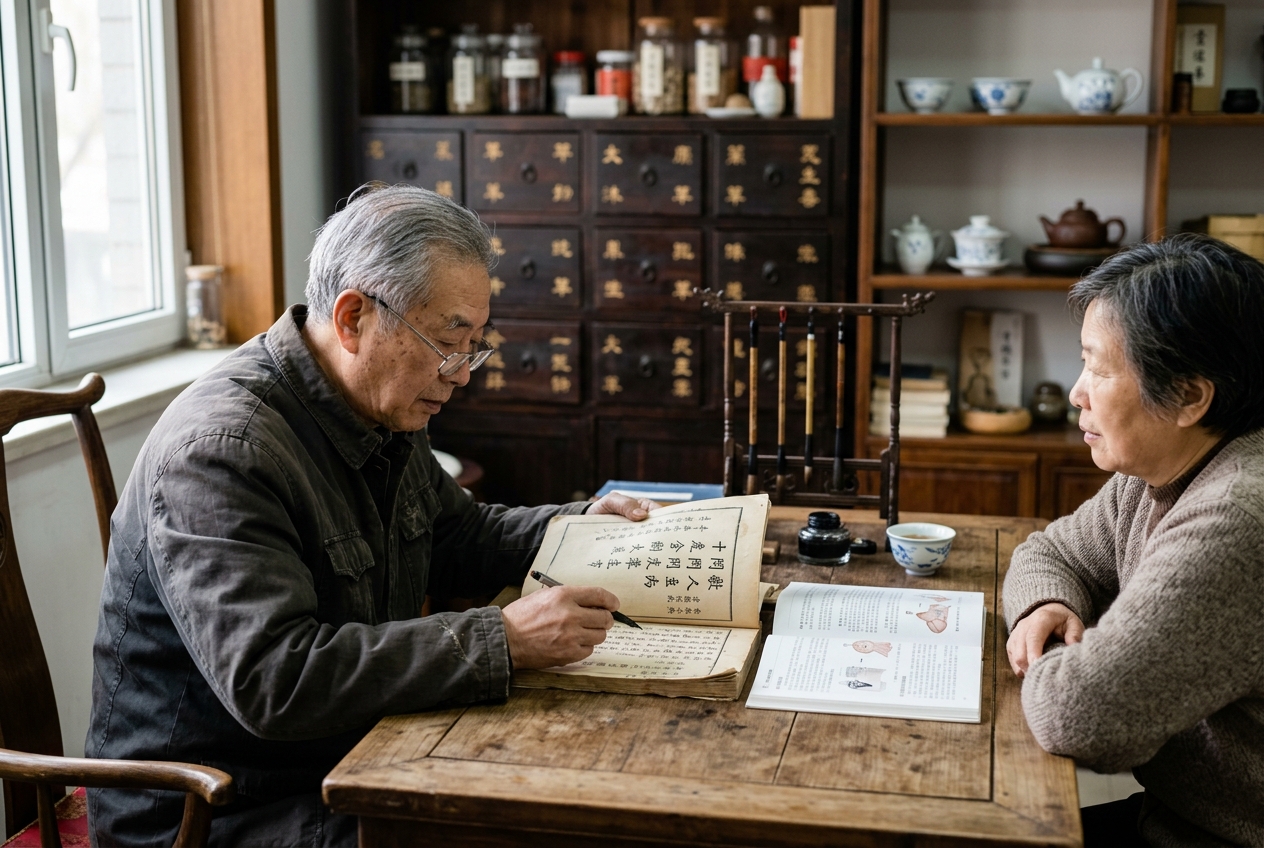
1. Opening Scene — A Moment You’ll Recognise
It is 3:15 in the morning. Without the sound of an alarm or an obvious environmental disturbance, your eyes open in the darkness. Your mouth feels parched, your palms are warm, and your mind races through a disjointed catalogue of anxieties despite feeling utterly exhausted. Twelve hours later, sitting at your desk following a simple lunch, a completely different sensation takes over: a heavy, leaden stupor in your limbs, a subtle throbbing across your temples, and an overwhelming craving for a scalding cup of tea.
In modern biomedical consultations, these seemingly disconnected events are frequently relegated to the category of non-specific functional complaints, stress-induced somatisation, or mild lifestyle fatigue. A clinician might suggest better sleep hygiene or evaluate your thyroid hormones, but unless a serum marker crosses a pathological threshold, the underlying sensations remain clinically mute.
+-------------------------------------------------------------------------+
|                  THE CLINICAL PARADOX OF INTEROCEPTION                  |
|                                                                         |
|  Biomedical Perspective:               TCM Epistemology:                |
|  - Isolated functional symptoms        - Highly integrated matrix       |
|  - Often subclinical or idiopathic     - Direct diagnostic language     |
|  - Awaits structural/biochemical lesion - Early functional disharmony   |
+-------------------------------------------------------------------------+
In Traditional Chinese Medicine (TCM), however, these subjective bodily reports are neither random nor trivial. They constitute an articulate internal dialect. Your nocturnal awakening at 3:00 AM points directly to the circadian peak of the Liver channel; your postprandial heaviness and sweet craving signal a functional distress call from the digestive Spleen network; and the precise geography of your headache maps cleanly onto the meridian pathways traversing your cranium.
This systematic translation of subjective human sensation into rigorous clinical taxonomy is the domain of Wen Zhen (问诊 — Inquiry Diagnosis). Far from being a casual intake chat, Wen Zhen is an exacting, phenomenological interrogation system that allows practitioners to decode systemic imbalances long before they solidify into irreversible organic pathology.
2. What This Diagnostic Architecture Does: Classical Foundations and Epistemological Linchpins
The epistemological bedrock of Chinese medical inquiry rests on a foundational axiom found within the classical canon: “Examine the exterior to know the interior” (Chá wài zhī nèi). The definitive medical treatise Huangdi Neijing (The Yellow Emperor’s Inner Classic), composed between the second century BCE and the second century CE, established that human physiology operates as an open, interconnected microcosm governed by the dynamic interplay of Qi (vital bio-energetic function), Blood (Xue), and Body Fluids (Jinye), housed within the functional organ-networks known as the Zang-Fu.
       +-------------------------------------------------------+
       |   THE HISTORICAL EVOLUTION OF TCM CLINICAL INQUIRY    |
       +-------------------------------------------------------+
                                  |
     [ Huangdi Neijing ] (c. 200 BCE - 200 CE)
     Foundational epistemology: "Examine the exterior to know the interior"
                                  |
                                  v
     [ Bian Que & Zhang Zhongjing ] (c. 150 - 219 CE)
     Systematisation of the Four Diagnostic Methods (Si Zhen)
                                  |
                                  v
     [ Zhang Jingyue: Jingyue Quanshu ] (1624 CE)
     Codification of the definitive "Song of Ten Questions" (Shi Wen Ge)
While objective diagnostic modalities—such as radial pulse palpation (Mai Zhen) and tongue inspection (She Zhen)—provide essential cross-sectional biological data, they offer only a snapshot of the present physical state. Inquiry diagnosis (Wen Zhen), by contrast, reconstructs the patient's longitudinal physiological narrative. It captures chronobiological fluctuations, perceptual thermal shifts, emotional triggers, and subtle systemic transitions that no single physical examination can detect. The World Health Organization Traditional Medicine Strategy increasingly highlights how integrating these validated patient-reported outcome measures and systematic qualitative observations enhances primary diagnostic accuracy in integrative settings.
During the late Ming Dynasty, the eminent physician and scholar Zhang Jingyue (1563–1640 CE) codified this interrogation method in his monumental compendium Jingyue Quanshu (Complete Works of Jingyue, 1624). Zhang composed the celebrated Song of Ten Questions (Shi Wen Ge 十问歌), a rhythmic, highly mnemonic diagnostic rubric that transformed variable clinical interviews into a rigorous, reproducible clinical algorithm:
“First ask of chills and fever, second ask of perspiration,
Third ask of head and body, fourth ask of stools and urine;
Fifth ask of food and beverage, sixth ask of chest and abdomen,
Seventh ask of deafness, eighth of thirst,
Ninth ask of prior illness, tenth of causative factors;
Add to this women’s cycles and childbearing history,
And for infants, inspect the finger veins with care.”
In modern clinical practice, these historical vectors have been refined into a comprehensive framework that maps patient interoception directly onto the classical Eight Principles (Ba Gang — Interior/Exterior, Cold/Heat, Deficiency/Excess, Yin/Yang) and the underlying Zang-Fu network.
3. How You Can Feel It: Signs of Balance and Imbalance Across the Core Diagnostic Vectors
When an individual's physiological matrix is balanced, interoception is tranquil: thermal regulation maintains an effortless homeostasis, sleep is restorative and uninterrupted, appetite responds naturally to metabolic demand, and elimination occurs with clockwork regularity and without discomfort. When internal disharmonies arise, however, the body broadcasts distinct patterns of distress.
Below is an exhaustive clinical breakdown of the primary diagnostic vectors explored during clinical interrogation, as catalogued in peer-reviewed clinical literature available through the National Center for Biotechnology Information (NCBI PubMed).
+-------------------------------------------------------------------------+
|                  THE TEN CORE CLINICAL INQUIRY VECTORS                  |
|                                                                         |
|  1. Chills & Fever (Han Re)       6. Thoracic/Abdominal (Xiong Fu)      |
|  2. Perspiration (Han)             7. Sleep & Shen (Shui Mian)           |
|  3. Head & Somatic Pain (Tou Shen) 8. Thirst & Taste (Kou Wei)          |
|  4. Excretion & Bowels (Er Bian)   9. Chronobiology (Shi Jian)           |
|  5. Appetite & Intake (Yin Shi)   10. Gynecology / Menses (Fu Ke)       |
+-------------------------------------------------------------------------+
I. Chills and Fever (Han Re — 寒热)
The subjective sensation of temperature is one of the most sensitive indicators of the struggle between the body's upright defensive vitality (Zheng Qi) and pathogenic influences (Xie Qi).
- Simultaneous Chills and Fever with Aversion to Cold (E Han Fa Re): Indicates an acute Exterior Invasion. If the aversion to cold is severe, accompanied by body aches and absence of sweat, it denotes an invasion of Wind-Cold (Feng Han), where external cold constricts the superficial pores and obstructs the Defensive Qi (Wei Qi). Conversely, if the fever is more pronounced, accompanied by a sore throat, slight sweating, and thirst, it signifies Wind-Heat (Feng Re), an exterior pathogen that has begun injuring fluids.
- Alternating Chills and Fever (Han Re Wang Lai): The hallmark of a Shaoyang (Lesser Yang) pattern, situated halfway between the exterior and interior (often involving the Gallbladder and San Jiao / Triple Burner channels). Pathogenic factors clash intermittently with Zheng Qi, causing cyclical bouts of shivering chills followed by flushing fevers, accompanied by a bitter taste in the mouth and hypochondriac fullness.
- Tidal Fever (Chao Re): Fever that recurs or surges at predictable times of day, much like the ocean tide:
- Afternoon / Yin Deficiency Tidal Fever: Low-grade fever or sensation of heat emerging in the late afternoon or evening (typically between 5:00 PM and 7:00 PM), accompanied by "Five-Palm Heat" (burning sensation in the palms, soles, and sternum), night sweats, and dry throat. This reflects an absolute deficiency of Yin fluids failing to anchor internal Yang.
- Yangming Tidal Fever: High fever reaching its peak between 3:00 PM and 5:00 PM, accompanied by profuse sweating, intense thirst for iced water, and abdominal fullness with constipation, denoting Interior Full Heat in the Stomach and Large Intestine.
II. Perspiration (Han — 汗)
Sweat is considered the "Fluid of the Heart" (Xin Zhi Ye), regulated at the body's exterior by the opening and closing of the pores (Xuan Fu) through the action of Lung-derived Defensive Qi (Wei Qi).
+-------------------------------------------------------------------------+
|                     DIFFERENTIAL TYPOLOGY OF SWEATING                   |
|                                                                         |
|  Pattern:              Timing / Quality:          Underlying Mechanism: |
|  Spontaneous (Zi Han)  Daytime, on slight exertion  Wei Qi / Yang Def.  |
|  Night Sweats (Dao Han) Sleeps only, stops on waking Yin Fluid Def.     |
|  Profuse Cold (Jue Han) Oily, icy, clammy drop      Yang Collapse (Tuò) |
|  Localized (Tou Han)   Head/Face only, steamy       Damp-Heat / Stg.    |
+-------------------------------------------------------------------------+
- Spontaneous Sweating (Zi Han): Sweating that occurs during the daytime without strenuous exertion, worsening with slight physical effort, accompanied by shortness of breath, pale complexion, and fatigue. This indicates a Deficiency of Lung and Spleen Qi, wherein the unstable Defensive Qi fails to secure the cutaneous pores.
- Night Sweating (Dao Han — literally "Thief Sweating"): Sweating that occurs exclusively while asleep and ceases immediately upon waking. This reflects Yin Deficiency with Empty Heat. When consciousness retreats inward during sleep, the internal Yang floats outward unopposed, steaming the depleted body fluids through the skin.
- Profuse, Icy Cold Sweat (Jue Han / Da Han): A clinical emergency pattern representing the imminent collapse of Yang (Jue Tuo). The sweat is cold, thin, or oily, accompanied by cold extremities, a faint thready pulse, and profound lethargy.
- Localized Diaphoresis:
- Sweating restricted to the head and forehead: Indicates either excess Stomach Heat steaming upward or interior Damp-Heat trapped in the Middle Burner.
- Sweating of the palms and soles: Points to Yin Deficiency with interior deficiency fire or emotional Liver Qi stagnation.
- Hemilateral sweating (one side of the body): Signals severe obstruction of the channels by Wind-Dampness or Phlegm-Blood stasis, frequently seen in post-stroke sequelae.
III. Cranial and Somatic Pain Geometry (Tou Shen — 头身)
Inquiry into pain requires precise differentiation of its geographic location, quality, and behavioral response to palpation, movement, and temperature.
       +-------------------------------------------------------+
       |   THE SIX-CHANNEL TOPOGRAPHY OF HEADACHES (TOU TONG)  |
       +-------------------------------------------------------+
                                  |
         +------------------------+------------------------+
         |                        |                        |
         v                        v                        v
   [ Taiyang Path ]        [ Yangming Path ]       [ Shaoyang Path ]
   Occipital / Nape        Frontal / Forehead      Temporal / Vertex
   Bladder Channel         Stomach Channel         Gallbladder Channel
         |
         +------------------------> [ Jueyin Path ]
                                    Crown / Vertex (Baihui)
                                    Liver Channel Pathway
Cranial Topography (Headache Differentiation):
- Taiyang Headache (Occipital / Upper Neck): Pain radiating from the occipital base down the neck and upper back. It corresponds to the Urinary Bladder meridian, typically induced by exterior Wind-Cold invasion or chronic cervical spine tension.
- Yangming Headache (Frontal / Supraorbital): Throbbing or heavy pain located directly over the forehead, eyebrows, and behind the eyes. It maps to the Stomach channel, often tied to digestive distress, dietary stagnation, or chronic sinusitis.
- Shaoyang Headache (Temporal / Hemicranial / Migraine): Sharp, throbbing, or distending pain localized to the temples and sides of the head. It follows the Gallbladder meridian, heavily associated with emotional stress, repressed anger, and Liver Qi stagnation transforming into ascending Liver Fire.
- Jueyin Headache (Vertex / Crown): Deep, pulling, or bore-like pain situated at the very crown of the head (Baihui point / DU20). It travels along the internal pathway of the Liver channel, caused either by Liver Blood deficiency failing to nourish the head or surging Liver Yang.
Somatic Pain Qualities:
- Distending, Wandering Pain (Zhang Tong): Moves from location to location without a fixed site; classic sign of Qi Stagnation (Qi Zhi).
- Sharp, Stabbing, Fixed Pain (Ci Tong): Localized to one precise point, aggravated at night; diagnostic hallmark of Blood Stasis (Xue Yu).
- Heaviness and Generalized Aching (Zhong Tong): Sensation as if the head or limbs are wrapped in wet towels, accompanied by joint stiffness; indicates Dampness Encumbrance (Shi Xie).
- Response to Pressure:
- Aggravation upon pressure (Ju An): Indicates an Excess (Shi) pattern (stagnation, phlegm, heat, food retention).
- Relief upon gentle pressure or warmth (An Zhi Ze Jian): Indicates a Deficiency (Xu) pattern (insufficient Qi, Blood, or Yang).
IV. Excretory and Bowel Dynamics (Er Bian — 二便)
Elimination is an unvarnished mirror reflecting the functional integrity of the Spleen, Stomach, Intestines, Kidneys, and Urinary Bladder.
- Cock-Crow / Fifth-Watch Diarrhea (Wu Geng Xie — 五更泻): Urgent, watery diarrhea occurring predictably in the pre-dawn hours (around 5:00 AM), accompanied by lower abdominal cramping that eases immediately after defecation, cold lower back, and cold knees. This is the classic presentation of Spleen and Kidney Yang Deficiency failing to warm the lower digestive cauldrons.
- Stool Consistency Nuances:
- Dry, pebble-like, compact stools with heat sensations: Indicates Intestinal Full Heat drying the fluids.
- Dry, difficult-to-pass stools in elderly or postpartum patients without heat: Signals Blood or Yin Deficiency with desiccated bowel walls.
- Stools that are not hard, yet extremely difficult to expel, leaving the patient exhausted and sweating after defecation: Diagnostic sign of Spleen Qi Deficiency.
- Loose stools containing undigested food particles (Wan Gu Bu Hua): Indicates profound Spleen Yang Vacuity.
- Urinary Profiling:
- Copious, clear, pale urine with high frequency: Reflects Kidney Yang Deficiency and systemic Cold.
- Scanty, dark yellow or amber urine with burning or urgency: Indicates Damp-Heat lodged in the Bladder or Heart Fire shifting down to the Small Intestine.
- Nocturia (waking more than once per night to urinate): Direct clinical indicator of dwindling Kidney Qi and Kidney Yang.
V. Appetite, Thirst, and Gustatory Sensations (Yin Shi & Kou Wei — 饮食与口味)
Intake patterns directly reflect the status of the "Root of Post-Heaven Essence" — the Stomach (which rots and ripens) and the Spleen (which transforms and transports).
+-------------------------------------------------------------------------+
|                  THE FIVE-PHASE GUSTATORY CORRELATIONS                  |
|                                                                         |
|  Subjective Taste:     Organ Network:        Underlying Etiology:       |
|  Bitter (Kou Ku)       Liver / Heart         Excess Fire, Damp-Heat     |
|  Sweet (Kou Tian)      Spleen                Spleen Deficiency or Damp  |
|  Sour (Kou Suan)       Liver / Stomach       Food Stagnation, Liver-Stm |
|  Salty (Kou Xian)      Kidney                Kidney Essence/Yin Def.    |
|  Bland / Tasteless     Spleen / Stomach      Qi Deficiency, Cold-Damp   |
+-------------------------------------------------------------------------+
- Thirst Profiling:
- Intense thirst with desire for large quantities of cold beverages: Yangming Full Heat blazing in the interior.
- Thirst with a desire to sip warm fluids, or thirst where one desires to moisten the lips but has no wish to swallow: Indicates Damp-Heat (fluids are present but obstructed by dampness) or Blood Stasis (fluid distribution pathways blocked).
- Absence of thirst: Presence of Cold Patterns or intact, harmonious body fluids.
- Appetite Aberrations:
- Hunger without desire to eat (Ji Bu Yu Shi): The patient feels their stomach rumbling or empty, but the thought of food is unappealing. This pathognomonic symptom indicates Stomach Yin Deficiency — sufficient stomach fire remains to register hunger, but insufficient fluids are available to digest the meal.
- Canine Hunger / Bulimia with Rapid Weight Loss (Xiao Ke): Excessive appetite where food digests instantly, yet the patient remains emaciated; classic sign of Stomach Fire or constitutional wasting syndrome.
VI. Sleep Architecture and Shen Dynamics (Shui Mian & Shen Zhi — 睡眠与神志)
In TCM physiology, normal sleep occurs when the Shen (the conscious spirit, anchored in the Heart Blood) and the Hun (the ethereal soul, anchored in Liver Yin) smoothly descend into the interior Yin landscape at night.
       +-------------------------------------------------------+
       |   THE ETIOLOGICAL TRIANGLE OF SLEEP DISORDERS (BU MEI)|
       +-------------------------------------------------------+
                                  |
         +------------------------+------------------------+
         |                        |                        |
         v                        v                        v
 [ Heart-Spleen Def. ]    [ Yin Def. / Fire ]      [ Phlegm-Heat Agitation ]
 Inability to fall asleep  Waking at 2-4 AM         Nightmares, tossing,
 Dizziness, palpitations   Palms warm, night sweat  Chest fullness, heavy head
- Difficulty Falling Asleep (Prolonged Sleep Latency): The individual lies awake for hours with a calm but ungrounded mind. This stems from Heart and Spleen Blood Deficiency; the blood is too depleted to provide a physical anchor for the Shen.
- Frequent Mid-Cycle Awakenings with Restlessness and Agitation: Waking repeatedly throughout the night with a feeling of heat in the chest, dry throat, and vivid mental chatter. This denotes Heart-Kidney Non-Communication (Xin Shen Bu Jiao) driven by Yin deficiency fire.
- Waking Predictably Between 1:00 AM and 3:00 AM: Corresponds directly to the maximal energetic surge of the Liver Channel according to the Organ Clock (Zi Wu Liu Zhu). It frequently indicates Liver Qi Stagnation, unresolved emotional frustration, or Liver Fire harassing the sleep state.
- Vivid, Dream-Disturbed Sleep with Terrifying Nightmares: Reflects Phlegm-Heat Harassing the Heart or Gallbladder Qi Deficiency causing indecisiveness and timidity during waking hours.
- Postprandial Somnolence and Daytime Cloudiness: Falling into a heavy stupor immediately following meals points to severe Spleen Qi Deficiency with Phlegm-Dampness; available Qi rushes entirely to the struggling digestive tract, starving the brain of clear Yang.
VII. Diagnostic Synthesis & Cross-Verification (Si Zhen He Can — 四诊合参)
+-------------------------------------------------------------------------+
|                  THE FOUR EXAMINATIONS CROSS-VERIFICATION               |
|                                                                         |
|   1. WANG ZHEN (Inspection):     Tongue Body, Coating, Sublingual Veins |
|   2. WEN ZHEN (Auscultation):    Voice Timber, Breath Quality, Odour    |
|   3. WEN ZHEN (Inquiry):         The 10 Vectors, Chronobiology, Pain    |
|   4. QIE ZHEN (Palpation):       Radial Pulse, Abdominal Hara / Fu Zhen |
|                                                                         |
|   CRITICAL CLINICAL OUTCOME: Prevents Diagnostic Pitfalls                |
|   (e.g., Identifying True Cold with False Heat / Zhen Han Jia Re)       |
+-------------------------------------------------------------------------+
A core principle of Chinese medicine is that no single symptom should ever be evaluated in isolation. Clinical interrogation must be verified against the remaining Three Examinations (Si Zhen He Can — 四诊合参) to avoid catastrophic diagnostic errors, most notably the dangerous dilemma of True Cold with False Heat (Zhen Han Jia Re).
In this condition, a patient with profound, life-threatening internal Yang deficiency may present with symptoms that mimic inflammatory heat: a flushed red face, dry throat, irritability, and a rapid pulse. However, meticulous inquiry reveals the truth: 1. The thirst is accompanied by a desire only for warm sips; 2. The red facial flush is concentrated entirely on the cheekbones like rouge (Dai Yang), while the rest of the face is pale; 3. The lower extremities are icy to the touch; 4. The rapid pulse is completely empty and hollow (Xu Mai) upon deep palpation; 5. The tongue body is pale, wet, and swollen beneath a thin white coat.
Here, inquiry and palpation expose the "heat" as a superficial illusion caused by weak, dying Yang floating outward from an icy core. Treating this patient with cold, heat-clearing herbs would be fatal; they require potent, warm Yang-rescuing medicinals (such as Fuzi / Prepared Aconite).
4. Qigong & Movement Practice: Cultivating Interoceptive Acuity and Channel Harmony
To heighten your own sensitivity to internal diagnostic signals and harmonize the circulation of Qi across the twelve primary meridians, practice the following classical Daoyin exercise: “Supporting the Heavens to Regulate the Triple Burner” (Shuang Shou Tuo Tian Li San Jiao), drawn from the ancient Ba Duan Jin (Eight Brocades) tradition.
                  =================================
                  QIGONG: SUPPORTING THE HEAVENS
                  =================================

[ Arms Pressing Upward ]
                                 |
                               ( ^ )   <-- Crown reaches up
                                \|/
                                 |     <-- Ribs expand, Triple Burner opens
                                / \
                               /   \   <-- Feet rooted shoulder-width apart
                  =================================
Step-by-Step Instructions:
-
Starting Position & Setup: * Stand with feet parallel, shoulder-width apart. * Soften your knees slightly; do not lock them. * Allow your tailbone to sink gently as if sitting on the edge of a high stool, flattening the lumbar curve. * Rest the tip of your tongue against the upper palate behind your front teeth (connecting the Conception and Governing vessels). * Rest your hands naturally in front of your lower abdomen (Dan Tian), palms facing upward, fingers loosely pointing toward each other.
-
Movement & Breath Synchronization: * Inhalation (Slow, Diaphragmatic, 4 seconds): Begin inhaling through your nose into the lower abdomen. Slowly elevate your hands along the central midline of your torso up to chest level. As your hands reach the sternum, rotate your wrists outward so the palms face upward toward the ceiling. * Ascent & Gentle Stretch (2 seconds): Continue pressing your palms upward above your head until your elbows are gently straight (not hyper-extended). Direct your gaze softly upward toward your knuckles. Feel a gentle, unforced lengthening from your heels, through your lateral ribcage, up into the palms. * Exhalation & Descent (Slow, Nasal, 6 seconds): Begin exhaling smoothly. Separate your hands and allow your arms to sweep outward in broad, graceful arcs down along your sides, returning to the starting position at the lower abdomen. Soften your shoulders and allow your chest to relax.
-
Duration & Repetitions: * Complete 8 to 12 continuous repetitions. * Total practice time: approximately 6 to 8 minutes every morning upon waking or during mid-afternoon energy slumps.
-
Internal Somatic Markers (What to Look For): * Thermal Shift: A warm, radiant sensation spreading through the center of the palms (Laogong point / PC8) and downward into the lower abdomen. * Thoracic Release: Immediate relief of fullness or constriction across the epigastrium and ribs, indicating the smooth dispersion of stagnant Liver Qi and opening of the Triple Burner conduits. * Salivary Secretion: Accumulation of sweet, thin saliva in the mouth (Yu Ye — Jade Fluid), a clinical sign of Parasympathetic activation and Kidneys replenishing Yin.
5. Acupressure Points You Can Try Today: Somatic Verification and Self-Regulation
Acupressure offers a non-invasive, direct method to test channel tenderness (a physical confirmation of diagnostic inquiry) and restore functional balance. Apply pressure using the thumb pad or knuckle in small circular motions, maintaining a steady, firm pressure that elicits a distinct feeling of soreness, tingling, or distension known in TCM as De Qi (the arrival of Qi).
All point locations correspond to the WHO Standard Acupuncture Nomenclature.
   [ LI4 Hegu ]               [ PC6 Neiguan ]            [ ST36 Zusanli ]
 (Hand Web Space)           (Inner Forearm, 2 cun)     (4 fingers below knee)
        |                           |                          |
   Frontal Headache,           Nausea, Insomnia,          Epigastric Bloating,
   Stress, Sinuses             Shen Agitation, Anxiety    Fatigue, Spleen Yang
1. Zusanli (ST36 — 足三里) "Leg Three Miles"
Anatomical Location:
Four finger-widths (3 cun) below the bottom edge of the kneecap (patella),
one finger-width lateral to the prominent anterior crest of the tibia bone.
- How to Apply Pressure: Use the tip of your thumb or a rounded knuckle. Apply firm, downward and inward pressure toward the bone. Maintain for 2 to 3 minutes per leg while breathing deeply into your abdomen.
- Clinical Indications in Daily Life:
- Profound postprandial fatigue and lethargy (Spleen Qi Deficiency);
- Epigastric fullness, bloating, and irregular bowel movements;
- Building long-term constitutional stamina and boosting Wei Qi.
2. Neiguan (PC6 — 内关) "Inner Gate"
Anatomical Location:
On the palmar side of the forearm, two proportional thumb-widths (2 cun)
above the transverse wrist crease, nestled precisely between the two prominent
palpable tendons (flexor carpi radialis and palmaris longus).
- How to Apply Pressure: Press the thumb directly into the groove between the tendons. Apply steady, perpendicular pressure for 1 to 2 minutes on each arm while making slow micro-rotations.
- Clinical Indications in Daily Life:
- Acute emotional anxiety, chest tightness, and rapid palpitations;
- Restless sleep latency and racing thoughts at bedtime (Shen disturbance);
- Motion sickness, gastroesophageal reflux, and nausea.
3. Sanyinjiao (SP6 — 三阴交) "Three Yin Intersection"
Anatomical Location:
Four finger-widths (3 cun) directly above the prominence of the medial malleolus
(inner ankle bone), along the posterior border of the tibia.
- How to Apply Pressure: Press with the thumb pad, angling slightly forward toward the posterior edge of the shinbone. Hold firm, steady pressure for 2 minutes per side. (Precaution: Contraindicated during pregnancy due to its downward-draining action).
- Clinical Indications in Daily Life:
- Menstrual cramping, irregular cycles, and premenstrual mood swings;
- Nocturnal awakenings with dry mouth and warm palms (Yin Deficiency);
- Lower abdominal distension and sluggish fluid metabolism.
4. Hegu (LI4 — 合谷) "Joining Valley"
Anatomical Location:
On the dorsum of the hand, between the 1st and 2nd metacarpal bones,
at the midpoint of the 2nd metacarpal bone on its radial (thumb) side,
in the muscular mound formed when clamping thumb and index finger together.
- How to Apply Pressure: Pinch the web space between your thumb and index finger, directing the force toward the second metacarpal bone. Apply firm, rhythmic kneading for 1 to 2 minutes per hand.
- Clinical Indications in Daily Life:
- Frontal, supraorbital, and tension headaches (Yangming channel);
- Sinus congestion, toothache, and facial muscular tension;
- Sluggish bowel motility and acute stress-induced muscle clamping.
6. Food & Lifestyle: Small Changes for Today Grounded in Inquiry Diagnostics
The insights gathered through inquiry diagnosis are directly actionable through the lens of dietary therapy (Shi Liao) and circadian lifestyle alignment (Yang Sheng). In Chinese medicine, food is classified not merely by macronutrient ratios, but by its thermal nature (Cold, Cool, Neutral, Warm, Hot), flavor (Sweet, Pungent, Sour, Bitter, Salty), and directional affinity for specific organ networks.
+-------------------------------------------------------------------------+
|                  DIETARY & LIFESTYLE THERAPEUTIC MATRIX                 |
|                                                                         |
|  Identified Pattern:    Foods to Emphasize:       Foods to Restrict:    |
|  Spleen Qi/Yang Def.    Warm cooked meals, soups, Raw salads, iced      |
|  (Bloating, Cold limbs) ginger, oats, squash, rice drinks, excess dairy |
|                                                                         |
|  Yin Deficiency         Hydrating stewed fruits,  Pungent dried spices, |
|  (Night sweats, Thirst) black sesame, pear, eggs  excess coffee/spirits |
|                                                                         |
|  Liver Qi Stagnation    Steamed bitter greens,    Greasy fried food,    |
|  (Stress, Rib tension)  chamomile, mint, citrus   refined sugars, binging|
+-------------------------------------------------------------------------+
1. Digestive Rehabilitation for Spleen Qi & Yang Vacuity
If your inquiry reveals postprandial stupor, loose stools, and cold limbs, the digestive cauldron (Zhong Jiao) lacks adequate metabolic warmth.
- What to Emphasize: Transition entirely to warm, well-cooked, and lightly spiced meals. Center your diet around slow-simmered broths, ginger root teas, roasted root vegetables (carrots, sweet potatoes, butternut squash), rice congee, and oats.
- What to Eliminate: Strictly avoid icy drinks, refrigerated water, large raw green salads, and copious amounts of unpasteurized dairy, all of which extinguish the digestive fire and foster Dampness.
2. Deep Nourishment for Yin Deficiency & Burnout
If you experience night sweats, dry throat, late-afternoon flushing, and a thin, wiry pulse, your cellular Yin reserves are depleted.
- What to Emphasize: Incorporate moistening, building foods that preserve body fluids: gently stewed pears with raw honey, black sesame seeds, goji berries, steamed eggs, tofu, soaked chia seeds, bone broths, and lightly cooked dark leafy greens.
- What to Eliminate: Drastically reduce your intake of dehydrating agents, particularly espresso, high-proof alcohol, chili peppers, deep-fried snacks, and excessive dry-roasted spices.
       +-------------------------------------------------------+
       |   THE 24-HOUR CHINESE ORGAN CLOCK (ZI WU LIU ZHU)     |
       +-------------------------------------------------------+
                                  |
     7:00 AM - 9:00 AM   --> Stomach Hour (Optimal for warm, rich breakfast)
     9:00 AM - 11:00 AM  --> Spleen Hour (Peak mental focus & transformation)
     1:00 PM - 3:00 PM   --> Small Intestine Hour (Nutrient sorting & resting)
     7:00 PM - 9:00 PM   --> Pericardium Hour (Emotional calming & connection)
    11:00 PM - 3:00 AM   --> Gallbladder / Liver Hours (Deep restorative sleep)
3. Circadian Synchronization via the Chinese Organ Clock
Align your daily schedule with the biological peak hours of the organ networks, a concept well supported by modern investigations into Circadian Biology and Chronomedicine at NCBI:
- Eat During the Stomach Hour (7:00 AM – 9:00 AM): The digestive capacity is at its diurnal maximum. Make breakfast substantial, warm, and protein-rich.
- Cease Heavy Digestion During the Triple Burner Hour (9:00 PM – 11:00 PM): The metabolic fire cools to prepare for cellular repair. Avoid late-night eating.
- Be Asleep Before the Gallbladder/Liver Gate (11:00 PM): The Liver and Gallbladder require complete recumbency and darkness to cleanse Blood, anchor the Hun, and facilitate tissue regeneration between 11:00 PM and 3:00 AM.
7. Today’s Takeaway: A Five-Minute Daily Interoceptive Audit
The most transformative clinical practice you can begin right now requires neither specialist equipment nor herbal concoctions: spend five minutes tomorrow morning conducting a structured, honest Wen Zhen Self-Audit.
Before reaching for your smartphone or rising from bed, close your eyes and methodically scan your physiological landscape: 1. Thermal: Are your feet warm or freezing? Is your mouth parched with a craving for cold or comfortable? 2. Cranial & Somatic: Does your head feel light and clear, or is there a band of tension across your forehead (Yangming) or temples (Shaoyang)? 3. Abdominal: Does your stomach feel calm and ready for nourishment, or bloated and tender to gentle pressure?
By consciously noting these interoceptive signals day after day, you cease to be a passive bystander to your health. You begin to understand the nuanced language of your own physiology, catching the earliest whispers of imbalance long before the body is forced to scream.
Authoritative Medical References & Classical Sources
- World Health Organization Traditional Medicine Strategy & Nomenclature
- National Center for Biotechnology Information (NCBI PubMed) — TCM Diagnostics
- Traditional Chinese Medicine Syndrome Differentiation Research on PubMed
- WHO Standard Acupuncture Point Locations in the Western Pacific Region
- Circadian Biology, Chronomedicine, and the Diurnal Rhythm Matrix on PubMed Central
- Historical Overview of the Huangdi Neijing (Yellow Emperor's Inner Classic)