Eighteen Incompatibilities and Nineteen Antagonisms (Shi Ba Fan & Shi Jiu Wei) Herbal Contraindications: Governing Toxic Synergies, Visceral Vulnerabilities, and Prescription Safety in Traditional Chinese Medicine
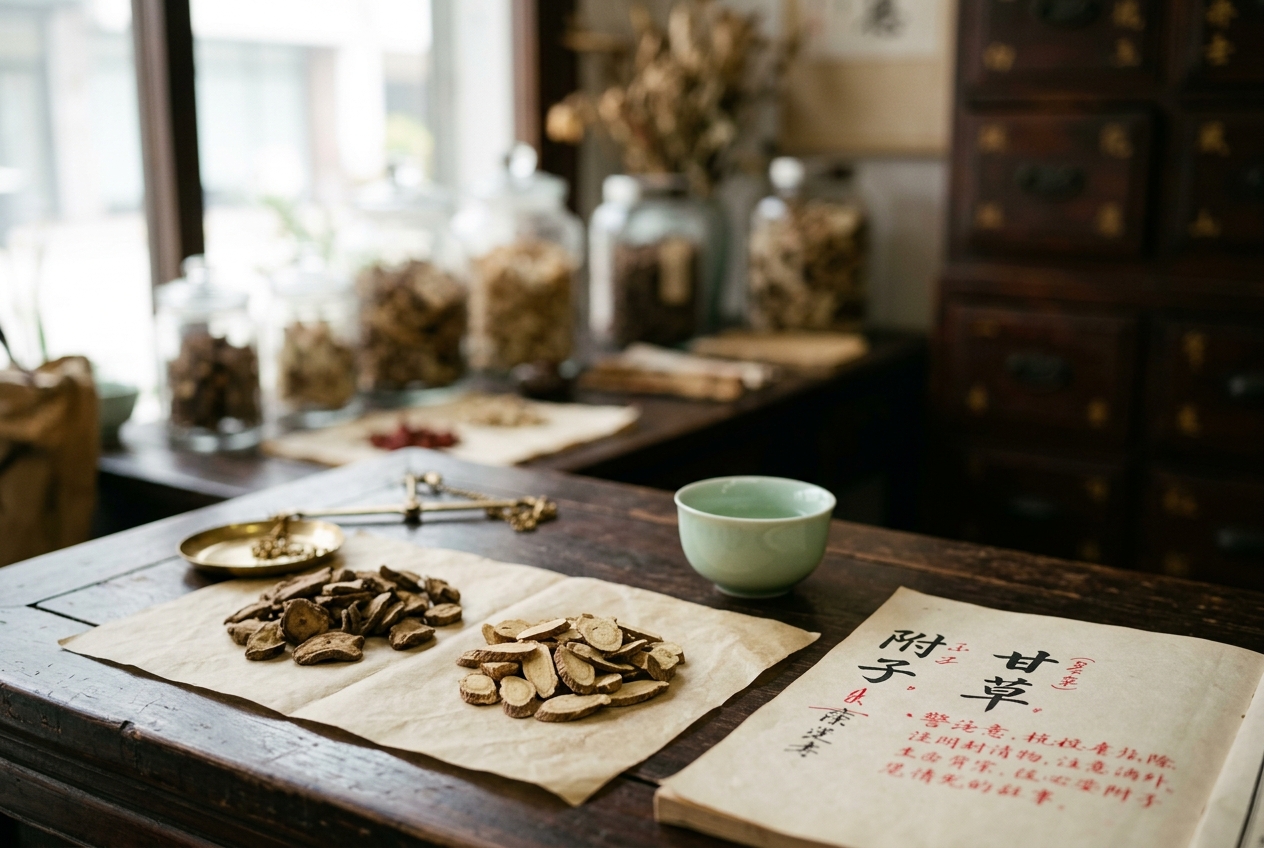
You swallow a steaming cup of dark herbal decoction, expecting the soothing warmth that usually untangles your digestive knots and calms your racing pulse. Within twenty minutes, however, your mouth begins to tingle with a strange, metallic numbness. A wave of cold perspiration washes over your forehead, your stomach clenches in a sudden, violent spasm, and your heart skips a beat, fluttering erratically against your ribs like a trapped bird.
In everyday biomedical terms, this is an acute adverse drug event—a toxic synergy or a severe pharmacodynamic clash. In the classical epistemology of Traditional Chinese Medicine (TCM), you have just triggered a visceral civil war known as Shi Ba Fan (十八反, The Eighteen Incompatibilities) or Shi Jiu Wei (十九畏, The Nineteen Antagonisms).
Long before the advent of mass spectrometry, high-performance liquid chromatography, and cytochrome P450 profiling, classical physicians recognized that the human body is an integrated energetic and chemical ecosystem. When botanical agents are administered together, their molecular constituents do not simply summate; they interact dynamically with the visceral organ systems (Zang-Fu), the circulating bio-electric matrix (Qi and Blood), and the biochemical pathways of cellular metabolism. When harmonious, these combinations generate profound synergistic healing; when incompatible, they trigger severe organ toxicity, cardiac arrhythmias, mucosal destruction, or immediate physiological collapse.
Understanding these classical pharmacological contraindications is not merely an academic exercise in ancient medical history. It is a vital, living science that bridges centuries of empirical clinical toxicology with cutting-edge molecular pharmacology, offering essential lessons for clinical safety, herbal compounding, and daily somatic awareness.
2. What This Organ System and Herb-Organ Matrix Does
In the foundational theory of Chinese medicine, the physiological infrastructure of the body is governed by five primary organ networks—the Zang viscera (Heart, Liver, Spleen, Lung, and Kidney)—paired with their corresponding Fu bowels. Each organ system governs specific physiological processes, emotional resonances, and fluid dynamics:
+----------------------------------------------------------------------------------------------------+
|                                THE FIVE ZANG VISCERAL MATRIX                                       |
+------------------+--------------------------+-----------------------+------------------------------+
| Visceral System  | Primary Physiological    | Emotional & Somatic   | Vulnerability to             |
| (Zang Organ)     | Role                     | Expression            | Toxic Synergies              |
+------------------+--------------------------+-----------------------+------------------------------+
| Heart (Xīn)      | Governs Blood, vessels,  | Joy / Anxiety;        | Aconitine cardiotoxicity,    |
|                  | and conscious spirit     | Sleep and rhythmicity | fatal ventricular arrhythmia |
+------------------+--------------------------+-----------------------+------------------------------+
| Liver (Gān)      | Ensures smooth flow of   | Anger / Frustration;  | Toxic Qi stagnation, CYP450  |
|                  | Qi; stores blood         | Tendon flexibility    | overload, hepatotoxicity     |
+------------------+--------------------------+-----------------------+------------------------------+
| Spleen (Pí)      | Governs transformation,  | Worry / Overthinking; | Severe vomiting, osmotic     |
|                  | transportation & fluids  | Digestion and muscle  | diarrhea, mucosal erosion    |
+------------------+--------------------------+-----------------------+------------------------------+
| Lung (Fèi)       | Governs respiration, Qi  | Grief / Melancholy;   | Impaired Qi dissemination,   |
|                  | distribution & defense   | Skin, immune boundary | respiratory depression       |
+------------------+--------------------------+-----------------------+------------------------------+
| Kidney (Shèn)    | Stores Jing (essence);   | Fear / Willpower;     | Electrolyte collapse,        |
|                  | governs water and marrow | Bones, vitality, ears | acute renal tubular necrosis |
+------------------+--------------------------+-----------------------+------------------------------+
When multi-herb prescriptions (Fāng Jì) are formulated, herbs act as targeted biological keys that modulate these visceral networks. To systematize how botanicals interact, the earliest foundational text of East Asian pharmacopoeia, the Shennong Bencao Jing (Divine Farmer's Classic of Materia Medica, c. 200 CE), established the axiom of the Seven Modes of Herb Combination (Qī Qíng, 七情):
- Single Effect (Dān Xíng): An herb acting independently (e.g., Panax ginseng alone for hemorrhagic shock).
- Mutual Accentuation (Xiāng Xū): Combining herbs with identical therapeutic trajectories to enhance efficacy (e.g., Shi Gao and Zhi Mu to purge intense Heat).
- Mutual Enhancement (Xiāng Shǐ): Combining an active agent with a secondary herb that amplifies its principal action (e.g., Huang Qi augmented by Fu Ling).
- Mutual Counteraction (Xiāng Wèi): An herb whose intrinsic toxicity is neutralized or curbed by another (e.g., Ban Xia toxicity restrained by Sheng Jiang).
- Mutual Suppression (Xiāng Shā): The active capacity of one herb to eliminate the specific poison of another (e.g., Sheng Jiang neutralizing Ban Xia or Sheng Nan Xing poison).
- Mutual Antagonism (Xiāng Wù): Two herbs that neutralize each other's therapeutic actions, rendering them clinically inert (e.g., Ren Shen negated by Lai Fu Zi).
- Mutual Incompatibility (Xiāng Fǎn): Two substances that, upon co-administration or co-decoction, produce intense toxic side effects, visceral damage, or lethal reactions.
Centuries later, during the Jin-Yuan medical renaissance, master Zhu Danxi formalized these hazards in the Danxi Xinfa (丹溪心法), consolidating oral mnemonic rhymes that have served as the strict pharmacological safety compass for herbalists up to the modern era.
                    +--------------------------------------------------+
                    |        CLASSICAL PHARMACOLOGICAL TRIPWIRES       |
                    +--------------------------------------------------+
                                     /                \
                                    /                  \
    +------------------------------------+    +-------------------------------------+
    |  EIGHTEEN INCOMPATIBILITIES        |    |  NINETEEN ANTAGONISMS               |
    |  (Shi Ba Fan / 十八反)             |    |  (Shi Jiu Wei / 十九畏)             |
    +------------------------------------+    +-------------------------------------+
    | • Severe, potentially lethal toxic |    | • Competitive kinetic inhibition    |
    |   synergies and chemical precipitates|  | • Mutual nullification of therapeutic|
    | • Three distinct botanical triads  |    |   potency                           |
    |   centered on Gan Cao, Wu Tou,     |    | • Subtle metabolic clashes & chronic|
    |   and Li Lu                        |    |   visceral stress                   |
    +------------------------------------+    +-------------------------------------+
The Structural Triads of the Eighteen Incompatibilities (Shi Ba Fan)
The Eighteen Incompatibilities comprise three master botanical groups whose chemical constituents undergo catastrophic toxic amplification when co-decocted:
                            +-------------------------------------+
                            |    THE THREE SHI BA FAN TRIADS      |
                            +-------------------------------------+
                                               |
         +-------------------------------------+------------------------------------+
         |                                     |                                    |
+------------------+                 +--------------------+                +-------------------+
|  GAN CAO TRIAD   |                 |   WU TOU TRIAD     |                |   LI LU TRIAD     |
| (Radix           |                 |  (Radix Aconiti    |                | (Veratrum nigrum) |
| Glycyrrhizae)    |                 |   Carmichaeli)     |                +-------------------+
+------------------+                 +--------------------+                          |
         |                                     |                     Incompatible with:
   Incompatible with:                    Incompatible with:          • Ren Shen (Ginseng)
   • Gan Sui (Euphorbia kansui)          • Ban Xia (Pinellia)        • Sha Shen (Adenophora)
   • Da Ji (Euphorbia pekinensis)        • Gua Lou (Trichosanthes)   • Dan Shen (Salvia miltiorrhiza)
   • Yuan Hua (Daphne genkwa)            • Bei Mu (Fritillaria)      • Ku Shen (Sophora flavescens)
   • Hai Zao (Sargassum)                 • Bai Lian (Ampelopsis)     • Xi Xin (Asarum)
                                         • Bai Ji (Bletilla)         • Bai Shao (Paeonia lactiflora)
1. The Radix Glycyrrhizae (Gān Cǎo) Incompatibility Matrix
Gan Cao (Sweet Licorice Root) is celebrated as the "Grand Preceptor" (Guó Lǎo) because its primary saponin, glycyrrhizic acid, moderates toxicity across hundreds of formulas. However, when combined with the harsh, water-purging diterpenoids of Gān Suì (Euphorbia kansui), Dà Jǐ (Euphorbia pekinensis), or Yuán Huā (Daphne genkwa), an acute toxic reversal occurs.
Modern bio-analytical research indexed on NCBI PubMed Central confirms that glycyrrhizin significantly increases intestinal membrane permeability and inhibits hepatic efflux transporter P-glycoprotein (P-gp). This dramatically increases systemic absorption of the toxic diterpene esters (such as kansuinine A and B) from Gan Sui, precipitating severe intestinal ulceration, profuse watery diarrhea, hypokalemia, and acute hepatorenal necrosis.
Furthermore, the co-decoction of Gan Cao with Hǎi Zǎo (Sargassum, brown seaweed) precipitates insoluble polysaccharide-protein-tannin complexes and alters thyroid hormone regulation via unbuffered iodine-saponin loading, overloading the Spleen's metabolic capacity.
2. The Radix Aconiti (Wū Tóu / Fù Zǐ) Incompatibility Matrix
Wu Tou (Radix Aconiti Kusnezoffii) and Fu Zi (Radix Aconiti Carmichaeli Lateralis Praeparata) contain highly potent C19-diterpenoid diester alkaloids (aconitine, mesaconitine, and hypaconitine). In standard classical decoction, prolonged boiling (1–2 hours) hydrolyzes these lethal diesters into relatively benign monoester alkaloids (benzoylaconine and aconine), reducing toxicity by more than 95%.
However, co-decocting Wu Tou with Bàn Xià (Rhizoma Pinelliae), Guā Lóu (Fructus Trichosanthis), Bèi Mǔ (Bulbus Fritillariae), Bái Liǎn (Radix Ampelopsis), or Bái Jí (Rhizoma Bletillae) severely impedes this hydrolysis. The alkaloids and mucilage in Ban Xia and Bei Mu compete for cytochrome P450 enzymes (specifically CYP3A4 and CYP2D6), dramatically elevating the plasma concentration of unhydrolyzed diester aconitine.
Aconitine binds with high affinity to voltage-gated sodium channels in cardiac myocytes and neuronal membranes, preventing their inactivation. This induces persistent intracellular sodium influx, secondary calcium overload, and triggers fatal ventricular tachycardia, ventricular fibrillation, and cardiac standstill.
3. The Veratrum (Lǐ Lú) Incompatibility Matrix
Li Lu (Rhizoma et Radix Veratri Nigri) contains high concentrations of neurotoxic cevanine and jervine steroidal alkaloids (such as protoveratrine A and B, and veratridine). When paired with Rén Shēn (Radix Ginseng), Shā Shēn (Radix Adenophorae/Glehniae), Dān Shēn (Radix Salviae Miltiorrhizae), Kǔ Shēn (Radix Sophorae Flavescentis), Xì Xīn (Herba Asari), or Bái Sháo (Radix Paeoniae Alba), catastrophic cardiorespiratory depression ensues.
Veratrum alkaloids stimulate the afferent vagal endings in the left ventricle and pulmonary capillary bed, triggering the profound Bezold-Jarisch reflex—characterized by the lethal triad of severe bradycardia, profound systemic hypotension, and central apnea. The ginsenosides of Ren Shen and the tanshinones of Dan Shen amplify peripheral vasodilation and accelerate alkaloid uptake, rapidly inducing hypovolemic collapse and cardiovascular arrest.
The Toxicological Dynamics of the Nineteen Antagonisms (Shi Jiu Wei)
While Shi Ba Fan denotes acute, potentially fatal incompatibilities, the Nineteen Antagonisms (Shi Jiu Wei) represent subtler, deep-seated pharmacodynamic clashes where herbs actively degrade each other's metabolic efficacy, irritate the visceral linings, or induce chronic organ stress.
+----------------------------------------------------------------------------------------------------+
|                         THE NINETEEN ANTAGONISMS (SHI JIU WEI) MATRIX                              |
+----+--------------------------------+--------------------------------+-----------------------------+
| No.| Herb A                         | Herb B (Antagonistic Partner)  | Pharmacological & Energetic |
|    |                                |                                | Consequence                 |
+----+--------------------------------+--------------------------------+-----------------------------+
| 1  | Ding Xiang (Flos Caryophylli)  | Yu Jin (Radix Curcumae)        | Volatile oil competition;   |
|    |                                |                                | nullifies Liver Qi descent  |
+----+--------------------------------+--------------------------------+-----------------------------+
| 2  | Ren Shen (Radix Ginseng)       | Wu Ling Zhi (Faeces Trogopteri)| Terpene chelation; destroys |
|    |                                |                                | Spleen Qi tonification      |
+----+--------------------------------+--------------------------------+-----------------------------+
| 3  | Rou Gui (Cortex Cinnamomi)     | Chi Shi Zhi (Halloysitum Rub.) | Mineral adsorption of       |
|    |                                |                                | cinnamaldehyde; GI distress |
+----+--------------------------------+--------------------------------+-----------------------------+
| 4  | Ba Dou (Fructus Crotonis)      | Qian Niu Zi (Semen Pharbitidis)| Lethal intestinal purge;    |
|    |                                |                                | acute dehydration & erosion |
+----+--------------------------------+--------------------------------+-----------------------------+
| 5  | Liu Huang (Sulfur)             | Po Xiao (Natrii Sulfas)        | Violent thermogenic clash;  |
|    |                                |                                | toxic thermal enteritis     |
+----+--------------------------------+--------------------------------+-----------------------------+
| 6  | Shui Yin (Hydrargyrum/Mercury) | Pi Shuang (Arsenicum Sublim.)  | Acute heavy metal poisoning;|
|    |                                |                                | multi-organ failure         |
+----+--------------------------------+--------------------------------+-----------------------------+
| 7  | Ya Xiao (Nitrum)               | San Leng (Rhizoma Sparganii)   | Severe Blood stagnation and |
|    |                                |                                | microvascular hemorrhage    |
+----+--------------------------------+--------------------------------+-----------------------------+
| 8  | Chuan Wu / Cao Wu (Aconitum)   | Shui Niu Jiao / Xi Jiao (Horn) | Antipyretic neutralization; |
|    |                                |                                | severe cardiac strain       |
+----+--------------------------------+--------------------------------+-----------------------------+
| 9  | Mang Xiao (Natrii Sulfas)      | Jing San Leng (Sparganii Rhiz.)| Osmotic breakdown; severe   |
|    |                                |                                | splenic depletion           |
+----+--------------------------------+--------------------------------+-----------------------------+
- Dīng Xiāng (Flos Caryophylli) versus Yù Jīn (Radix Curcumae): Ding Xiang is an acrid, warm, aromatic Kidney-Yang and Stomach warmer, whereas Yu Jin is a cold, bitter, Blood-invigorating and Liver-resolving botanical. When co-prescribed, their volatile oils (eugenol versus curcumol/curdione) undergo competitive hepatic biotransformation, neutralizing Yu Jin's capacity to clear biliary stagnation while causing severe epigastric burning and counterflow belching.
- Rén Shēn (Radix Ginseng) versus Wǔ Líng Zhī (Faeces Trogopteri): Ren Shen is a premier restorative tonic that supplements central Primordial Qi, whereas Wu Ling Zhi is an acrid, bitter agent that vigorously breaks Blood stasis. Co-decoction causes macromolecular precipitation: the tannins and organic resins in Wu Ling Zhi bind to the active dammarane-type triterpene saponins (ginsenosides Rg1, Rb1, Re), rendering them completely insoluble and bio-unavailable while inducing severe epigastric distension and splenic fullness.
- Ròu Guì (Cortex Cinnamomi) versus Chì Shí Zhī (Halloysitum Rubrum): Rou Gui relies on volatile cinnamaldehyde to warm the lower gate of vitality (Ming Men), while Chi Shi Zhi is a heavy, astringent hydrated aluminum silicate mineral. The porous mineral matrix of Chi Shi Zhi physically adsorbs the volatile cinnamaldehyde molecules, completely suppressing the herb's therapeutic heat while producing heavy, indigestible mineral precipitates that irritate the gut lining.
3. How You Can Feel It — Signs of Balance, Visceral Turbulence, and Toxic Synergy
Your visceral ecosystem constantly communicates its state of balance through precise bio-electric and somatic signals. Recognizing the difference between a harmonious internal environment and the onset of an incompatible herbal reaction or visceral imbalance is an essential diagnostic skill.
+----------------------------------------------------------------------------------------------------+
|                         SOMATIC ASSESSMENT MATRIX: BALANCE VS. TOXIC CLASH                         |
+----------------------+------------------------------------+----------------------------------------+
| Visceral System      | Signs of Thriving Balance          | Signs of Pharmacological Incompatibility|
|                      |                                    | or Acute Functional Strain             |
+----------------------+------------------------------------+----------------------------------------+
| Heart & Circulation  | Calm, steady pulse (60-75 bpm);    | Palpitations, dropped beats, chest     |
|                      | restful, uninterrupted sleep;      | constriction, perioral/fingertip       |
|                      | clear speech, warm extremities     | numbness, cold sweat, panic, syncope   |
+----------------------+------------------------------------+----------------------------------------+
| Liver & Qi Dynamics  | Smooth, adaptable stress response; | Temporal migraines, bitter taste,      |
|                      | flexible sinews; clear, bright     | ribside distension, irritability,      |
|                      | vision; effortless emotional flow  | sudden muscle twitching or spasms      |
+----------------------+------------------------------------+----------------------------------------+
| Spleen & Digestion   | Robust appetite; clear mind after  | Severe epigastric cramping, burning,   |
|                      | eating; well-formed stools;        | sudden nausea, explosive watery stools,|
|                      | vibrant physical vitality          | extreme post-ingestion brain fog       |
+----------------------+------------------------------------+----------------------------------------+
| Kidney & Fluid Axis  | Strong lower back and knees; deep, | Lower back ache, sudden ankle edema,   |
|                      | unhurried breath; balanced fluid   | urinary retention or clear copious     |
|                      | regulation; resilient stamina      | output, inner ear ringing, dizziness   |
+----------------------+------------------------------------+----------------------------------------+
Self-Assessment: Evaluating Your Systemic Resonance
Take a moment to perform this immediate somatic inventory:
- The Oral & Facial Sensory Check: Touch your tongue to the roof of your mouth and gently press your lips together. Do you feel a normal, warm, moist sensation? Or is there an unprovoked acrid bitterness, a sudden astringent dryness, or an electric, prickling numbness around the lips? (Prickling numbness is the classic first-stage sensory warning of aconite alkaloid overload).
- The Epigastric Tension Check: Place your palm flat over your solar plexus (the area between your sternum and navel). Press inward 2–3 centimeters with moderate firmness. In a balanced state, the tissue feels soft, resilient, and non-tender. If you encounter a hard, resisting knot that elicits nausea or sharp discomfort, your digestive axis is experiencing counterflow (Nì) or toxic stagnation.
- The Radial Pulse Synchrony Check: Place the pads of your three middle fingers along the radial artery of your opposite wrist. Note not just the speed, but the quality: Is the rhythm supple, smooth, and wave-like (balanced Qi and Blood)? Or does it feel taut like a guitar string (Wired—Liver tension), slippery and rapid (Damp-Heat), or irregular with sudden hesitations (Knotted/Intermittent—cardiac stress)?
4. Qigong & Somatic Movement Practice: The Visceral Harmonization and Clearing Sequence
When incompatible energetic currents or metabolic toxins stagnate within the visceral matrix, targeted somatic movement can discharge stagnant heat, regulate rebellious Qi, and restore autonomic harmony. The following practice, derived from the classical Five Animal Frolics (Wu Qin Xi) and Six Healing Sounds (Liu Zi Jue), is designed to harmonize the Triple Burner (San Jiao) and protect the visceral systems from toxic counterflow.
Step-by-Step Practice Guide (No Equipment Required)
1. Starting Posture and Structural Alignment (Wuji Posture)
- Stand with your feet parallel, precisely shoulder-width apart.
- Soften your knees slightly—never lock the joint.
- Tuck your tailbone subtly under to flatten the lumbar curve and open the Gate of Vitality (Ming Men).
- Suspend the crown of your head (Baihui, GV20) gently toward the ceiling, as if held by an invisible silk thread, allowing your chin to tuck slightly.
- Rest the tip of your tongue against the upper palate just behind the front teeth, connecting the Conception and Governing vessels (Ren and Du Mai).
- Rest your hands naturally at your sides, fingers relaxed, palms facing inward. Take three deep, unhurried breaths into your lower abdomen (Lower Dan Tian).
2. Phase I: Regulating the Triple Burner and Harmonizing the Heart (Shu San Jiao)
- Inhalation (4 Seconds): Slowly float both hands upward along the midline of your torso, palms facing upward as if scooping clear spring water, until your hands reach the level of your chest (Shanzhong, CV17).
- Transition: Rotate your wrists outward so the palms face upward toward the sky, fingers pointing toward each other across the midline.
- Exhalation (6 Seconds): Press your palms smoothly upward toward the heavens, fully straightening the arms without locking the elbows. Simultaneously, gently lift your gaze toward your hands. Feel the physical stretch expanding the intercostal muscles, elongating the stomach meridian along the front of the body, and decompressing the solar plexus.
- Hold & Circulate (2 Seconds): Maintain the upward extension while softening your shoulders away from your ears.
3. Phase II: Discharging Toxins with the Clearing Sound (Tu Gu Na Xin)
- Inhalation (4 Seconds): Separate your hands and begin sweeping them downward in wide, protective arcs at your sides, palms facing outward, while returning your head and gaze to the horizontal horizon.
- Exhalation with Sound (6 Seconds): As your hands descend past shoulder height, rotate your palms downward toward the earth. Shape your mouth into an open oval and softly whisper the Heart/Triple Burner clearing sound: "HUUUUUU" (or "HEEEEE") on a long, continuous exhalation.
- Imagine descending golden-white light flushing down from the crown of your head through your chest, digestive organs, and legs, carrying any dark, stagnant, toxic heat deep into the porous soil of the earth.
- When your hands reach the level of your hips, form loose hollow fists, draw them gently back to your waist, and release your fingers.
4. Duration, Repetitions, and Somatic Feedback
- Repetitions: Perform 9 complete cycles every morning upon waking or in the late afternoon (between 5:00 PM and 7:00 PM, during the Kidney meridian phase).
- Expected Sensations: Within 3 to 5 repetitions, you should observe an involuntary softening of the diaphragm, followed by spontaneous salivation (the "Golden Fluid" or Jin Jin Yu Ye, indicating parasympathetic activation), gentle digestive gurgling, and a warm, magnetic tingling in the fingertips and palms. This confirms the descent of rebellious Qi and the restoration of visceral microcirculation.
5. Acupressure Points You Can Try Today
Targeted stimulation of classical acupoints can dramatically regulate visceral motility, reduce nausea, soothe cardiac arrhythmias, and enhance hepatic-renal clearance pathways.
+----------------------------------------------------------------------------------------------------+
|                               CLINICAL ACUPRESSURE SPECIFICATION TABLE                             |
+-----------+----------------------+--------------------+---------------------+----------------------+
| Point     | Anatomical Location  | Pressure Technique | Duration & Force    | Primary Clinical     |
| Name      |                      |                    |                     | Applications         |
+-----------+----------------------+--------------------+---------------------+----------------------+
| PC6       | Inner forearm, 2 cun | Perpendicular thumb| 2–3 minutes; firm   | Acute nausea, motion |
| (Neiguan) | (three finger-widths)| pressure between   | pressure evoking a  | sickness, palpitations,|
|           | above wrist crease   | flexor tendons     | radiating "De Qi" ache| chest constriction   |
+-----------+----------------------+--------------------+---------------------+----------------------+
| ST36      | Anterior leg, 3 cun  | Deep rotary thumb  | 3–5 minutes; robust | Epigastric pain,     |
| (Zusanli) | below lateral eye of | or knuckle pressure| downward force into | food stagnation,     |
|           | the patella          | against the bone   | muscle belly        | fatigue, bloating    |
+-----------+----------------------+--------------------+---------------------+----------------------+
| LR3       | Dorsum of foot, in   | Angled pressure    | 2 minutes per foot; | Headaches, bitter    |
| (Taichong)| depression distal to | pressing proximal  | moderate to firm,   | taste, frustration,  |
|           | junction of 1st/2nd metatarsals| toward the junction| sensitive ache      | metabolic tension    |
+-----------+----------------------+--------------------+---------------------+----------------------+
| GV26      | Philtrum, at junction| Upward fingernail  | 30–60 seconds; sharp| Acute syncope, shock,|
| (Renzhong)| of upper 1/3 and     | or thumb edge pinch| stimulating pressure| extreme dizziness,   |
|           | lower 2/3 of upper lip| toward nasal septum|                     | sensory collapse     |
+-----------+----------------------+--------------------+---------------------+----------------------+
1. Neiguan (PC6, Inner Pass)
- Precise Anatomical Location: Turn your palm upward. Measure precisely three finger-widths (the index, middle, and ring finger held flush together) down from the primary transverse crease of your wrist. The point lies directly between the two prominent, rope-like tendons (tendon of flexor carpi radialis and tendon of palmaris longus).
- Application Technique: Press the tip of your thumb perpendicularly into the groove between the tendons. Maintain firm, steady pressure while executing tiny circular motions. You should feel a distinct, heavy, dull ache (Dé Qì) that radiates upward along the forearm or into the palm.
- Clinical Utility: PC6 is the master node for regulating Heart rate, relaxing coronary vasospasm, suppressing vagal-induced vomiting, and neutralizing acute epigastric nausea.
2. Zusanli (ST36, Leg Three Miles)
- Precise Anatomical Location: Sit with your knees bent at a 90-degree angle. Place your four fingers horizontally across the shin, starting immediately below the outer indentation of your kneecap (the lateral eye of the patella). ST36 is located one finger-breadth lateral to the sharp anterior crest of the tibia bone, in the soft belly of the tibialis anterior muscle.
- Application Technique: Using your thumb knuckle or the reinforced pad of your thumb, press firmly downward and slightly inward toward the shinbone. Apply deep, rhythmic pressure for 3 to 5 minutes.
- Clinical Utility: Celebrated as the ultimate tonification and digestive guardian point, ST36 enhances gastric mucosal blood flow, accelerates peristaltic gastric emptying, and stimulates cellular immunity via the vagus-adrenal axis.
3. Taichong (LR3, Great Surge)
- Precise Anatomical Location: On the top of your foot, locate the webbing between your big toe and second toe. Slide your finger upward along the groove between the first and second metatarsal bones toward the ankle until your finger falls into a deep, tender hollow just before the bones meet.
- Application Technique: Apply firm, steady pressure angled slightly toward the ankle joint. Press for 2 minutes on each foot, breathing out slowly to vent internal tension.
- Clinical Utility: LR3 resolves Liver Qi stagnation, regulates hepatic vascular resistance, clears bitter tastes and temporal headaches, and mitigates autonomic over-reactivity.
6. Food, Processing & Lifestyle Protocols — Classical Precautions and Clinical Countermeasures
Pao Zhi (Herbal Processing) as Modern Detoxification Chemistry
In Chinese herbal pharmacology, raw toxicity is systematically neutralized through standardized processing methods known as Pao Zhi (炮制). This ancient pharmaceutical engineering alters the chemical structure of raw botanical toxins:
- Thermal Hydrolysis of Aconite Diesters: Boiling raw Wu Tou or Fu Zi with water, ginger juice, or black soybean broth for 4–8 hours cleaves the dangerous acetyl group at the C-8 position of the diterpene skeleton, transforming deadly aconitine into benzoylaconine and aconine, which are 1/200th to 1/2000th as toxic while retaining cardiotonic properties.
- Vinegar-Processing (Cù Zhì) of Euphorbia: Frying Gan Sui or Da Ji with rice vinegar alters the solubility of their corrosive diterpene resins, reducing mucosal ulceration and systemic enterotoxicity while preserving targeted diuretic-ascites actions.
Dietary Contraindications (Jiè Kǒu) and Herb-Drug Interactions
When administering potent botanicals, classical clinical doctrine dictates strict dietary prohibitions (Jie Kou, 忌口) to prevent metabolic competition in the gut and liver:
- Avoid High-Tannin Beverages (Tea, Red Wine, Coffee): Tannic acids form insoluble, unabsorbable precipitates with herbal alkaloids (such as those in Coptis/Huang Lian, Sophora/Ku Shen, and Aconitum/Fu Zi), neutralizing their therapeutic potency while causing severe gastric irritation.
- Eliminate Raw, Cold, and Greasy Foods During Tonic Protocols: Consuming refrigerated drinks, iced foods, or excessive saturated fats impairs Spleen transformation (Pi Zhu Yun Hua), generating internal Dampness that delays the hepatic clearance of botanical metabolites.
- Biomedical Drug-Herb Clashes: * Licorice (Gan Cao) + Loop Diuretics (Furosemide): Glycyrrhizic acid inhibits renal 11-beta-hydroxysteroid dehydrogenase type 2 (11β-HSD2), leading to cortisol-induced mineralocorticoid receptor overactivation. Combined with loop or thiazide diuretics, it causes severe hypokalemia, hypertension, and life-threatening cardiac dysrhythmias. * Salvia (Dan Shen) + Anticoagulants (Warfarin/Aspirin): Dan Shen extracts inhibit platelet aggregation and competitively displace warfarin from human serum albumin binding sites, significantly elevating international normalized ratio (INR) levels and creating severe hemorrhage risks.
The Great Clinical Debates: Controlled Co-Prescription in Ancient and Modern Medicine
One of the most fascinating intellectual controversies in Chinese medical history revolves around whether the Shi Ba Fan incompatibilities are absolute, inviolable laws or conditional pharmacological barriers that can be surmounted by master clinicians.
+----------------------------------------------------------------------------------------------------+
|                         CLASSICAL PARADOXES: BREAKING THE SHI BA FAN                               |
+----------------------+---------------------------+-------------------------------------------------+
| Classical Formula    | Incompatible Pair Prescribed| Clinical Rationale & Biochemical Safeguards   |
+----------------------+---------------------------+-------------------------------------------------+
| Gan Sui Ban Xia Tang | Gan Cao + Gan Sui +       | Used by Zhang Zhongjing for recalcitrant        |
| (Jin Gui Yao Lue)    | Ban Xia                   | rheum/ascites; utilizes white honey (Feng Mi)   |
|                      |                           | and high-heat processing to cushion toxicity    |
+----------------------+---------------------------+-------------------------------------------------+
| Hai Zao Yu Hu Tang   | Gan Cao + Hai Zao         | Used by Chen Shigong for hard thyroid goiters   |
| (Waike Zhenggong)    | (Seaweed)                 | (Ying Liu); creates harsh synergistic dispersing|
|                      |                           | power to soften calcified masses                |
+----------------------+---------------------------+-------------------------------------------------+
In the Jin Gui Yao Lue (Essential Prescriptions from the Golden Cabinet, c. 220 CE), the sage physician Zhang Zhongjing deliberately prescribed Gan Sui Ban Xia Tang—containing Gan Cao, Gan Sui, and Ban Xia together—to treat severe, life-threatening fluid accumulation (pleural effusion and ascites) that resisted all standard formulas.
Zhang Zhongjing mitigated this extreme risk through three rigorous pharmacological safeguards: 1. Precise Low Dosing: Utilizing minimal amounts of Gan Sui (only the size of a bird's egg, powdered). 2. Protective Excipient Buffer: Decocting the herbs with White Honey (Fēng Mì), which lines the gastric mucosa, slows intestinal absorption, and supplies concentrated glucose to support hepatic glycogen detoxification. 3. Short-Term, Monitored Administration: The formula was administered as a single, acute intervention, immediately terminated upon the evacuation of fluids.
Similarly, Chen Shigong's Waike Zhenggong (Orthodox Manual of External Medicine, 1617 CE) famously paired Gan Cao with Hai Zao in Hai Zao Yu Hu Tang to soften rock-hard, calcified thyroid nodules (Ying Liu). Chen reasoned that the fierce, antagonistic clash between these two botanicals produced a targeted, explosive dispersal dynamic capable of dissolving stubborn phlegm-stasis masses that gentle harmonizers could not touch.
Emergency Toxicology and Clinical Detoxification Strategies
In the event of accidental ingestion or severe toxicity arising from an incompatible botanical combination, immediate medical intervention is critical:
1. Modern Biomedical Emergency Interventions
- Aconitine Poisoning (Wu Tou Triad): Do not delay. Call emergency medical services immediately. The primary life-threat is polymorphic ventricular tachycardia and refractory ventricular fibrillation. Electrical cardioversion is often ineffective alone due to sustained open sodium channels; first-line antiarrhythmic agents include intravenous Lidocaine (which blocks sodium channels) and Amiodarone, combined with Atropine for severe bradycardia.
- Gastric Decontamination: Administer medical-grade activated charcoal (1 g/kg body weight) within 1–2 hours of ingestion to bind circulating alkaloids, diterpenes, and glycosides in the stomach lumen.
2. Classical Emergency Herbal Antidote (Jie Du Tang)
While awaiting emergency medical transport, traditional clinical doctrine utilizes the classic emergency antitoxin decoction: * The Master Mung Bean & Licorice Antidote (Lù Dòu Gān Cǎo Tāng): * Lù Dòu (Semen Phaseoli Radiati, Mung Bean): 60–120 grams (crushed). * Shēng Gān Cǎo (Raw Radix Glycyrrhizae): 30–60 grams. * Preparation: Boil vigorously in 1000 mL of water for 15 minutes; strain the cloudy green broth, cool rapidly, and administer orally. The heavy phaseolin proteins in mung beans bind heavy metals and toxic alkaloids, while concentrated raw glycyrrhizin provides competitive hepatic glucuronidation support to accelerate toxin clearance.
7. Today's Takeaway
The single most empowering action you can take right now to protect your visceral health requires zero equipment and less than five minutes: perform the Neiguan (PC6) + Mindful Exhalation Reset. Sit upright in a comfortable chair, locate the PC6 point on your left inner wrist (three finger-widths below the wrist crease, between the two tendons), and apply firm, steady, circular thumb pressure while closing your eyes. Inhale deeply through your nose for four counts, feeling your lower abdomen expand, and exhale slowly through your mouth for six counts, silently releasing any residual muscular and visceral tension. This simple practice instantly down-regulates the sympathetic nervous system, stabilizes cardiac rhythmicity, protects the stomach and spleen axis from stress-induced counterflow, and restores the natural, unhindered circulation of vital energy throughout your body.
Authoritative References and External Reading
- World Health Organization (WHO) Traditional, Complementary and Integrative Medicine Guidelines
- NCBI PubMed Central: Botanical Toxicology, CYP450 Interactions, and Herbal Safety Protocols
- NCBI PubMed: Mechanisms and Clinical Toxicities of Aconitum Alkaloids in East Asian Medicine
- Wikipedia: Traditional Chinese Medicine Pharmacological Foundations
- National Center for Complementary and Integrative Health (NCCIH): Clinical Overview of Traditional Chinese Medicine