Herbal Dosage Forms (Ji Xing) Delivery Dynamics: Governing Decoctions, Pills, Powders, Pastes, and Pharmacokinetic Bioavailability in Traditional Chinese Medicine
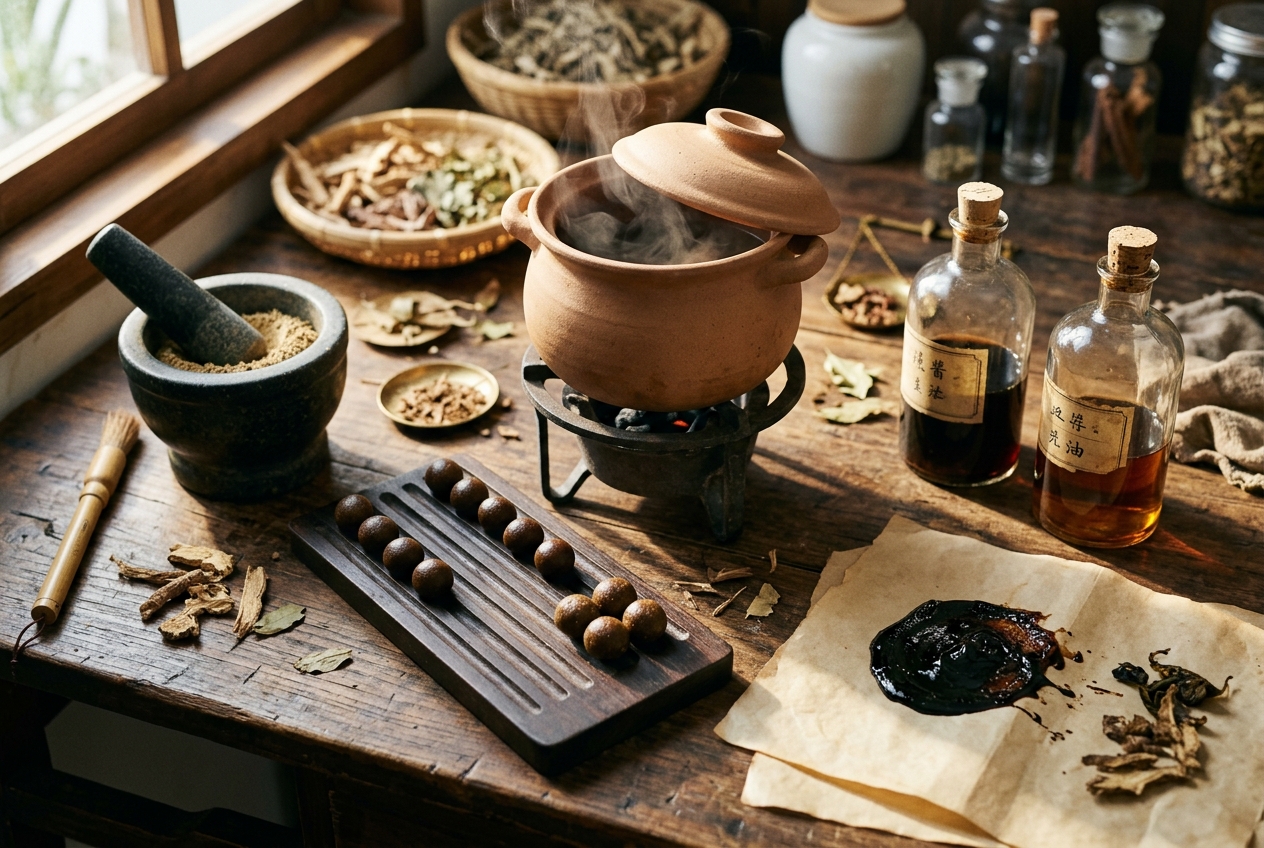
In the classical canon of East Asian medicine, the therapeutic efficacy of a botanical prescription is governed not merely by the qualitative synergy of its constituent medicinals (Fāng Jì Xué, 方剂学), but fundamentally by the biophysical matrix through which those medicinals are delivered. The physical state of a formula—its Jì Xíng (剂型, dosage form)—acts as a spatial-temporal vector. It dictates the rate of gastrointestinal disintegration, mucosal absorption, circulating bioavailability, metabolic clearance, and the physiological vector of the therapeutic response within the human organism.
Historically documented in foundational texts such as the Shénnóng Běncǎo Jīng (Divine Farmer’s Classic of Materia Medica) and codified systematically during the Qing dynasty by scholar-physician Xu Dachun in his seminal Yīxué Yuánliú Lùn (On the Origin and Development of Medicine, 1757), the selection of dosage form represents a sophisticated pharmacodynamic decision. Far from an arbitrary convenience of preparation, the choice between an aqueous decoction, a honey-bound bolus, an ultra-fine powder, an electuary paste, or a hydroalcoholic tincture alters the biochemical constituents extracted, their pharmacokinetic velocity, and their affinity for the three functional metabolic divisions known as the Triple Burner (Sān Jiāo, 三焦).
Contemporary biomedical inquiries indexed across NCBI PubMed and tracked by the World Health Organization Traditional Medicine Programme increasingly corroborate this classical wisdom. Modern analytical chemistry reveals that solvent polarities, thermal exposure, and vehicular excipients fundamentally alter the supramolecular structures, nanoparticle self-assemblies, and bioavailability profiles of complex multi-herb matrices.
1. Classical Theoretical Foundation: The Bio-Energetic Physics of Physical State
The structural philosophy governing Chinese pharmaceutical delivery is crystallized in the foundational medical aphorism:
$$\text{“汤者荡也,丸者缓也,散者散也,膏者滋也,酒者行也”}$$
“Tāng zhě dàng yě, Wán zhě huǎn yě, Sǎn zhě sǎn yě, Gāo zhě zī yě, Jiǔ zhě xíng yě.”
(Decoctions sweep and purge; pills act gently and sustained; powders disperse swiftly to the periphery; pastes enrich and consolidate essence; medicinal wines mobilize, propel, and open the channels.)
1.1 Deconstruction of Classical Aphorisms
- Tāng zhě Dàng Yě (汤者荡也 — Decoctions as Sweeping Deluges): The character Dàng denotes washing away, scouring, or cleansing via a torrential aqueous surge. Decoctions are liquid extractions administered warm or hot, yielding rapid gastric emptying, accelerated small intestinal absorption, and rapid systemic distribution. They are deployed when the therapeutic objective demands immediate physiological alteration: resolving acute exterior pathogenic invasions (Bǐng Tǐng), resuscitating collapsed Yang, or purging toxic Heat from the interior.
- Wán zhě Huǎn Yě (丸者缓也 — Pills as Gradual Sustenance): The character Huǎn signifies slowness, unhurried moderation, and chronic integration. Bound with water, honey, concentrated pastes, or wax, pills undergo gradual mechanical disintegration and delayed enzymatic dissolution in the gastrointestinal tract. This retards active release, mitigates the mucosal irritation of harsh constituents, and facilitates prolonged, continuous systemic exposure over months of chronic constitutional rehabilitation.
- Sǎn zhě Sǎn Yě (散者散也 — Powders as Radial Dispersers): The character Sǎn conveys the concept of scattering or radiating outward to every quadrant. Finely pulverized botanicals expose an extensive surface area directly to gastric and sublingual mucosa. Because they bypass the sustained thermal boiling of decoctions, they retain delicate, low-boiling-point aromatic monoterpenes and volatile compounds, allowing them to disperse pathogenic Wind, unblock congested orifices, or directly adhere to mucosal lesions.
- Gāo zhě Zī Yě (膏者滋也 — Pastes as Deeply Nourishing Electuaries): The character Zī implies moistening, lubricating, and augmenting fundamental fluids. Internal semi-solid syrups (Gāo Zī) are concentrated through prolonged decoction, reduction, and the addition of gelatinous excipients (ē Jiāo, Lù Jiǎo Jiāo) and unrefined sugars. Their rich, viscous consistency anchors floating Yin, enriches the marrow (Suǐ), and repairs profound constitutional depletion (Xū Láo).
- Jiǔ zhě Xíng Yě (酒者行也 — Medicinal Wines as Dynamic Navigators): Alcohol (Jiǔ) acts as an acrid, sweet, and warm vehicle that ascends swiftly and permeates the collateral network (Luò Mài). As an amphiphilic solvent, ethanol extracts both moderately polar and non-polar lipophilic fractions, accelerating vascular flow, breaking blood stasis, and driving herbal constituents to the deep osteoarticular and sinew levels.
2. Systematic Analysis of Classical and Modern Delivery Forms
==================================================================================================
DOSAGE FORM (剂型)     PRIMARY SOLVENT/VEHICLE       T_max / ONSET      PRIMARY THERAPEUTIC VECTOR
==================================================================================================
Tāng (Decoction)       Purified Boiling Water        15–45 minutes      Acute, Exterior, Critical
Wán: Shuǐ Wán (Water)  Water / Dilute Juices         1–2 hours          Subacute, Spleen/Stomach Damp
Wán: Mì Wán (Honey)    Refined Honey (Liàn Mì)       2–6 hours          Chronic Tonic, Lower Jiao Yin
Wán: Là Wán (Wax)      Purified Beeswax (Cera Alba)  4–8 hours (Enteric)Toxic/Harsh Intestinal Purgative
Sǎn: Nèi Fú (Internal) Micro-milled Biomass Dry      20–40 minutes      Aromatic, Orifice-Opening, Wind
Gāo: Gāo Zī (Syrup)    Aqueous Extract + Gelatin     2–4 hours          Deep Yin/Blood Rebuilding
Jiǔ (Medicinal Wine)   Grain Distillate (Ethanol)    10–30 minutes      Collateral-Dredging, Bi Syndrome
Kē Lì (Modern Granule) Hydro-extracted Spray-Dried   20–50 minutes      Standardized Outpatient Care
==================================================================================================
2.1 Tāng (汤剂 — Decoctions / Boiling Aqueous Liquids)
The decoction remains the preeminent dosage form in classical Chinese herbology, serving as the foundational clinical vehicle of Zhang Zhongjing’s Shānghán Zázbìng Lùn (Treatise on Cold Damage and Miscellaneous Diseases, c. 220 CE).
Extraction Dynamics and Solvent Properties
Water functions as a highly polar solvent (dielectric constant $\epsilon \approx 80$ at room temperature, decreasing at boiling point). Under rolling boil conditions—divided into vigorous "Martial Fire" (Wǔ Huǒ, 武火) and simmering "Civil Fire" (Wén Huǒ, 文火)—water extracts polar glycosides, flavonoids, hydrophilic saponins, polysaccharides, organic acids, and free amino acids.
Pharmacokinetic Profile
Aqueous decoctions empty from the stomach into the duodenum with minimal mechanical delay (gastric clearance occurring within 15–30 minutes post-ingestion). Active hydrophilic compounds are absorbed rapidly via passive transcellular diffusion, carrier-mediated transport, or paracellular pathways across the enterocyte monolayer, achieving peak plasma concentration ($T_{\max}$) within 15 to 45 minutes.
Clinical Deployment and Botanical Trade-offs
Decoctions are the primary intervention for acute, fast-evolving pathology: 1. Acute Exterior Syndromes: Máhuáng Tāng (Ephedra Decoction) requires fast diaphoresis to release the exterior cold before pathogens penetrate the interior. 2. Critical Yang Collapse: Sì Nì Tāng (Frigid Extremities Decoction) requires immediate absorption of processed aconitine derivatives to restore cardiac output and systemic vascular resistance.
The Biochemical Compromise: Prolonged boiling causes thermal degradation and evaporation of thermolabile monoterpenes and sesquiterpenes (e.g., menthol in Bòhé, pinene in Cháihú, zingiberene in Shēngjiāng). Formula science resolves this dilemma via sequential decoction protocols: * Hòu Xià (后下 — Added Late): Volatile medicinals (e.g., Bòhé, Shārén, Qīnghāo) are introduced during the final 3–5 minutes of boiling to preserve aromatic compounds. * Xiān Jiǎn (先煎 — Decoct First): Dense minerals, shells, and toxic roots (e.g., Shígāo, Mǔlì, Fùzǐ) are boiled for 30–60 minutes prior to adding other herbs. This facilitates the dissolution of heavy minerals and hydrolyzes toxic diester-diterpenoid alkaloids (such as aconitine) into far less toxic monoester-diterpenoid alkaloids (such as benzoylaconine).
2.2 Wán (丸剂 — Pills, Boluses, and Sustained-Release Spheres)
Pills comprise pulverized botanical powders integrated with a cohesive binding medium. They are the hallmark of chronic therapy, designed to regulate Zang-Fu disharmonies over weeks or months without exhausting Spleen-Stomach Qi.
A. Shuǐ Wán (水丸 — Water-bound Pills)
- Binding Matrix: Purified water, dilute herbal teas, vinegar, or botanical juices (e.g., Zǐsūzhī, Jiāngzhī).
- Dissolution Mechanics: Highly porous matrix. In the presence of gastric juices, capillary action draws liquid rapidly into the pill interior, provoking rapid swelling and mechanical disintegration within 60 minutes.
- Clinical Utility: Suited for subacute syndromes, resolving phlegm-dampness (Hòupò Wēnzhōng Wán), clearing stagnant food (Bǎohé Wán), and dispersing liver stagnation (Zuǒjīn Wán).
B. Mì Wán (蜜丸 — Honey-bound Pills / Boluses)
- Binding Matrix: Refined Honey (Liàn Mì, 炼蜜), categorized by moisture reduction into Tender Honey (Nèn Mì, 105–110°C), Medium Honey (Zhōng Mì, 111–115°C), and Old Honey (Lǎo Mì, 116–122°C).
- Dissolution Mechanics: Honey consists primarily of fructose and glucose, forming a hypertonic, highly viscous, cohesive colloid that encapsulates herbal particles. Upon ingestion, the outer layers slowly hydrate while the dense core resists acid permeation. Disintegration requires 2 to 4 hours.
- Pharmacological Synergy: Honey acts as an active therapeutic agent: it supplements Middle Jiao Qi, moistens dry Lung/Large Intestine patterns, coats the gastric mucosa as a demulcent, and exerts an osmotic bacteriostatic preservative effect that grants shelf stability for several years. Honey pills are the classic vehicle for heavy tonics (Bǔ Yì Fāng, 补益剂), such as Shíquán Dàbǔ Wán and Guīpí Wán.
C. Nóng Suǒ Wán (浓缩丸 — Concentrated Extract Pills)
- Binding Matrix: A hybrid delivery vehicle wherein a portion of the herbal ingredients is decocted, concentrated into a thick fluid extract, and used as the binding fluid to pelletize the pulverized powder of the remaining dry ingredients.
- Clinical Utility: Bridges the potency gap between bulky water decoctions and low-potency crude pills. Offers elevated active marker density per dose with minimal digestive burden, ideal for modern outpatient maintenance regimens.
D. Là Wán (蜡丸 — Beeswax Pills / Cera Alba Formulation)
- Binding Matrix: Molten pharmaceutical-grade beeswax (Fēng Là, 蜂蜡), an ester matrix composed primarily of myricyl palmitate, cerotic acid, and hydrocarbons.
- Dissolution Mechanics: Insoluble in water and resistant to the acidic environment of gastric secretions ($pH \approx 1.5–2.0$). The wax matrix remains intact through the stomach, only softening and disintegrating in the alkaline environment ($pH \approx 7.0–8.5$) and enzymatic conditions (pancreatic lipases) of the duodenum, jejunum, and ileum.
- Clinical Utility: The classical enteric-coated targeted delivery system. Wax pills are reserved for toxic, caustic, or drastically purgative medicinals—such as Bàdòu (Croton tiglium) and Qiānjīnzǐ (Euphorbia lathyris) in the classical emergency formula Sān Wù Bái Sǎn Là Wán. This prevents severe gastric mucosal ulceration while ensuring targeted delivery to the lower intestines to break deep cold-mass accumulations (Hán Jī).
2.3 Sǎn (散剂 — Micro-pulverized Powders)
Powders represent mechanically pulverized, un-extracted botanical biomass reduced to fine (Xì Fěn, ~80–120 mesh) or ultra-fine (Wēi Fěn, >200 mesh) particle distributions.
                           SURFACE AREA PHENOMENON
                     Raw Herb Chip vs. Micro-Milled Powder

      [ Crude Herb Marc ]                       [ Ultra-Fine Powder ]
      Surface Area: Low                         Surface Area: Exponentially High
      Extraction Time: Long (Boiling)           Absorption: Direct Mucosal Translocation
      Aromatic Loss: High (Thermal)             Aromatic Loss: Zero (Cold-Processed)
Ingestible Internal Powders (Nèi Fú Sǎn)
- Bio-Surface Area Maximization: The mechanical reduction of cell walls increases the specific surface area exponentially, facilitating rapid wetting, solvent penetration, and mucosal contact along the gastrointestinal tract.
- Preservation of Volatile and Heat-Sensitive Constituents: Medicinals whose efficacy relies upon fragile aromatic compounds (e.g., Borneol / Bīngpiàn, Musk / Shèxiāng, Cinnabar / Zhūshā, Amber / Hǔpò) cannot be subjected to aqueous extraction without destroying their pharmacological integrity.
- Resuscitation and Emergency Orifice-Opening: Formulations such as Āngōng Niúhuáng Wán (traditionally prepared as a powder enclosed in an edible wax/gold-leaf matrix) and Sūhéxiāng Wán depend on rapid sublingual and gastric diffusion of volatile terpenoids to penetrate the blood-brain barrier during acute wind-stroke (Zhòng Fēng) or toxic encephalopathy.
External Topical Powders (Wài Yòng Sǎn)
Topical powders (e.g., Shēngjī Sǎn, Jīnhuáng Sǎn) are dusted directly over cutaneous ulcerations, burns, and trauma sites. They function via local physical adsorption of exudates, astringent protein precipitation (via plant tannins), direct membrane disruption of local pathogens, and microvascular stimulation that accelerates granulation tissue formation (Shēng Jī).
2.4 Gāo (膏剂 — Pastes, Concentrated Syrups, and Transdermal Plasters)
The Gāo classification encompasses two distinct delivery vectors: internal viscous electuaries and external transdermal plasters.
A. Internal Syrups and Semi-Solid Electuaries (Gāo Zī / 膏滋)
- Preparation Protocol: Raw botanicals undergo multiple cycles of extended aqueous extraction, mechanical filtration, and prolonged evaporation down to a concentrated fluid extract with a specific gravity $\ge 1.30$. This extract is then incorporated with animal gelatins (ē Jiāo, Gūi Bǎn Jiāo, Lù Jiǎo Jiāo) and unrefined rock sugar (Bīng Táng) or honey.
- Pharmacological Action: High-density colloidal delivery. The inclusion of hydrolyzed collagens and polysaccharides creates an osmotic, sustained-release matrix that nourishes the Liver and Kidneys, restores circulating erythrocytes, and anchors empty Yang in chronic wasting syndromes (Xū Láo).
B. External Transdermal Plasters (Tiē Gāo / 贴膏 & Gǒu Pí Gāo / 狗皮膏)
- Preparation and Structure: Botanicals are infused into vegetable oils (traditionally sesamum seed oil) heated to temperatures exceeding 200°C to extract non-polar constituents, followed by reaction with yellow lead oxide (litharge, $\text{PbO}$) to yield a lead soap base, or formulated into modern rubber and polyacrylate adhesive matrices.
- Transdermal Kinetics: Volatile terpenes and aromatic penetration enhancers (e.g., Camphor, Menthol, Methyl Salicylate, Chánjié) fluidize the intercellular lipid bilayer of the stratum corneum. This allows lipophilic active constituents to bypass first-pass hepatic metabolism, producing sustained local vasodilation, suppression of peripheral nociceptors, and resolution of deep osteoarticular and muscular Bi syndrome (Bì Zhèng, 痹证).
2.5 Jiǔ (酒剂 — Medicinal Tinctures, Elixirs, and Herbal Wines)
Medicinal wines combine the pharmacological actions of botanical constituents with the inherent bio-energetics of distilled or fermented grain spirits.
Hydroalcoholic Extraction Chemistry
Ethanol possesses an amphiphilic molecular structure (a polar hydroxyl group paired with a non-polar ethyl chain). At concentrations between 30% and 60% ABV, hydroalcoholic solvents solubilize lipophilic alkaloids, lactones, coumarins, triterpenoid resins, and steroidal saponins that remain locked in the plant matrix during pure aqueous extraction.
Energetic Synergy and Channel Dredging
In traditional terms, grain alcohol is pure Acrid (Xīn), Sweet (Gān), and Hot (Rè) Qi. It moves through the channels, dissolves blood stasis, and expels pathogenic Wind-Cold-Dampness. * Target Pathology: Chronic Cold-Damp Bi syndrome (Fēng Hán Shī Bì), post-traumatic blood stasis from bone fractures (Diē Dǎ Sǔn Shāng), and geriatric depletion of Mingmen Fire. Formulations like Húguò Jiǔ or Shēnghuà Jiǔ utilize ethanol as an energetic engine that drives medicinals deep into synovial spaces and microvascular beds.
2.6 Modern Innovations: Concentrated Granules (Kē Lì) and the Bioequivalence Debate
The evolution of modern clinical practice has made Concentrated Granules (Pèifāng Kē Lì, 配方颗粒) the predominant dispensing format in hospital and outpatient settings worldwide.
Industrial Preparation
Single raw botanicals are extracted in industrial pressurized aqueous reactors, filtered, concentrated under vacuum, and spray-dried onto excipient carriers (maltodextrin, starch, or microcrystalline cellulose) to yield uniform, water-soluble dry granules.
The Scientific Bioequivalence Debate: Gòng Jiǎn (共煎) vs. Dān Jiǎn (单煎)
A major pharmacognostic controversy centers on whether dissolving individual, separately extracted herbal granules (Dān Jiǎn) in hot water matches the therapeutic profile of herbs decocted together in a single vessel (Gòng Jiǎn).
Research published in international journals, such as the Frontiers in Pharmacology and analyzed through National Center for Biotechnology Information (NCBI), demonstrates that co-decocting creates complex chemical interactions: * Supramolecular Complexation: During the co-boiling of Huánglián (Coptis chinensis, rich in quaternary ammonium alkaloid berberine) and Huángqín (Scutellaria baicalensis, rich in flavonoid glucuronide baicalin), an electrostatic interaction produces a self-assembled, micro-colloidal Berberine-Baicalin complex precipitate. This precipitate acts as a natural sustained-release delivery vehicle that alters solubility, modulates intestinal membrane transport, and reduces the gastrointestinal toxicity of pure berberine. * Solubilizing Micelle Formation: Saponin-rich botanicals (such as Gānzǎo / Glycyrrhiza glabra) form natural amphiphilic micelles in aqueous solutions, boosting the solubility of poorly water-soluble compounds from other herbs in the same vessel. * Clinical Synthesis: While unit granules provide dosing precision, hygienic safety, and convenient dispensing, clinicians must recognize that for certain classical pairs, granules function as a simple mechanical mixture rather than a chemically integrated matrix.
3. Pharmacokinetics & Form Conversion Dynamics: Clinical Formula Transformations
Altering the dosage form of an identical botanical assembly redirects its therapeutic vector, shifts its metabolic target, and changes its clinical indication.
Case Study 1: Sì Nì Tāng (四逆汤 Decoction) vs. Sì Nì Wán (四逆丸 Pill)
- Botanical Composition: Processed Radix Aconiti Lateralis (Fùzǐ), Rhizoma Zingiberis (Gānjiāng), Radix Glycyrrhizae Preparata (Zhì Gānzǎo).
- Decoction Dynamics (Sì Nì Tāng): Prescribed in the Shānghán Lùn for acute Shàoyīn disease characterized by severe aversion to cold, curled posture, cold extremities (Jué Nì), profuse cold sweat, and a faint, thready pulse indicative of imminent cardiogenic or hypovolemic shock. Boiling yields rapid bioavailability of demethylated aconitine metabolites, liquiritin, and gingerols, rapidly increasing heart rate, central venous pressure, and peripheral vascular tone within minutes to hours.
- Pill Dynamics (Sì Nì Wán): Prescribed for chronic Spleen-Kidney Yang deficiency with enduring cold intolerance, poor digestion of dietary fats, chronic morning diarrhea (Wǔ Gēng Xiè), and deep fatigue. Bound in honey, the active alkaloids and warming phenylpropanoids are released slowly over 6 to 8 hours. This avoids a sudden surge of heat that could trigger "False Fire" (Fú Huǒ) or exhaust delicate body fluids, providing steady, enduring constitutional support.
Case Study 2: Liù Wèi Dì Huáng Wán (六味地黄丸 Pill) vs. Liù Wèi Dì Huáng Tāng (六味地黄汤 Decoction)
- Botanical Composition: Prepared Radix Rehmanniae (Shú Dìhuáng), Fructus Corni (Shān Zhū Yú), Rhizoma Dioscoreae (Shānyào), Rhizoma Alismatis (Zéxiè), Poria (Fúlíng), Cortex Moutan (Mǔdānpí).
- Pill Dynamics (Liù Wèi Dì Huáng Wán): Developed by Song Dynasty pediatrician Qian Yi in the Xiao'er Yaozheng Zhijue (Key to Therapeutics of Children's Diseases, 1114 CE). Its clinical purpose is the gentle, steady rebuilding of deep Kidney Yin and Marrow (Jīng-Suǐ). The dense honey matrix buffers the rich, cloying properties of Shú Dìhuáng and Shān Zhū Yú, preventing the stagnation of Spleen Qi while gradually replenishing depleted baseline fluids over a course of months.
- Decoction Dynamics (Liù Wèi Dì Huáng Tāng): When this formula is prepared as an aqueous decoction, its primary clinical focus shifts. The rapid extraction and absorption of paeoniflorin, paeonol, and catalpol rapidly clear acute Yin-deficiency Heat (Yīn Xū Huǒ Wàng). It is used to manage acute post-febrile consumptive fever, severe nocturnal hot flashes in rapid-onset menopausal crises, and steaming bone conditions (Gǔ Zhēng Cháo Rè) that require urgent cooling rather than slow baseline tonification.
Case Study 3: Sān Huáng Xiè Xīn Tāng (三黄泻心汤 Decoction/Maceration) vs. Xiè Xīn Sǎn (Powder)
- Botanical Composition: Radix et Rhizoma Rhei (Dàhuáng), Rhizoma Coptidis (Huánglián), Radix Scutellariae (Huángqín).
- Decoction / Flash-Maceration Dynamics: Zhang Zhongjing instructed that the medicinals should be scalded briefly with boiling water (Mázhī) rather than subjected to long boiling. This brief, high-temperature extraction releases active anthraquinone glycosides (such as sennosides) and free berberine while limiting tannin co-extraction, producing rapid downward purgation of toxic Heat from the Triple Burner.
- Raw Powder Dynamics (Xiè Xīn Sǎn): When finely milled and swallowed raw, the unheated sennosides, baicalein, and berberine maintain extended, direct contact with the gastric and duodenal mucosa. The unhydrolyzed tannins precipitate surface proteins along ulcerated microvasculature, making the powder a powerful local hemostatic and anti-inflammatory intervention for acute upper gastrointestinal bleeding (Tǔ Xuè) and bleeding gastric ulcers.
4. Comprehensive Physicochemical and Clinical Dosage Matrices
The following tables summarize the biophysical properties and clinical selection criteria for classical and modern Chinese medicinal delivery systems.
Table 1: Physicochemical and Pharmacokinetic Characteristics of Dosage Forms
| Dosage Form (剂型) | Primary Matrix / Vehicle | Disintegration Profile | Bioavailability Velocity ($T_{\max}$) | Relative Active Compound Density | Optimal Shelf Stability |
|---|---|---|---|---|---|
| Tāng (汤) Aqueous Decoction | Purified Water ($\text{H}_2\text{O}$) | Immediate liquid solution | Fastest: 15 – 45 min | Low per unit volume (dilute aqueous) | Poor (consume within 24–48 h) |
| Shuǐ Wán (水丸) Water Pill | Water / Botanical juices | Rapid: 30 – 60 min | Moderate: 1 – 2 h | Medium (compact biomass) | Moderate (6 – 12 months) |
| Mì Wán (蜜丸) Honey Pill | Refined Honey (Liàn Mì) | Slow: 120 – 240 min | Sustained: 2 – 6 h | High (concentrated biomass + sugar) | Exceptional (2 – 5 years) |
| Là Wán (蜡丸) Wax Pill | Cera Alba (Beeswax) | Enteric: 240 – 480 min | Delayed: 4 – 8 h | High (sealed hydrophobic core) | Superior (> 5 years) |
| Sǎn (散) Micro-powder | Solid Biomass (No vehicle) | Fast: 15 – 30 min | Rapid: 20 – 40 min | Maximum (100% active marc) | High if dry (1 – 2 years) |
| Gāo Zī (膏滋) Semi-solid Syrup | Decoction + Gelatin + Sugars | Colloidal: 60 – 180 min | Extended: 2 – 4 h | Maximum (concentrated fluid extract) | High (1 – 3 years refrigerated) |
| Jiǔ (酒) Medicinal Tincture | Hydroalcoholic (30–60% EtOH) | Direct absorption solution | Rapid: 10 – 30 min | Medium to High (select lipophiles) | Indefinite (natural preservation) |
| Kē Lì (颗粒) Concentrated Granule | Spray-dried Maltodextrin/Starch | Complete dissolution in 2 min | Fast: 20 – 50 min | Standardized high yield | High (2 – 3 years sealed) |
Table 2: Clinical Matrix of Dosage Form Selection Across Pathological Profiles
| Clinical Indication & Pathological Profile | Target Anatomical Division (Sān Jiāo) | Mandatory Dosage Form | Justification & Energetic Vector |
|---|---|---|---|
| Fulminant Exterior Pathogen Invasion (e.g., Acute Wind-Cold / Wind-Heat) | Upper Jiao (Lungs, Skin, Defensive Wei Level) | Tāng (Decoction) or Sǎn (Fine Powder) | Requires fast diaphoresis; moves rapidly through the Upper Jiao to open pores and release exterior tension. |
| Sudden Yang Collapse / Cardiogenic Shock (e.g., Jue Ni, Profuse Icy Sweat) | Central Heart-Kidney Axis (Shaoyin Level) | Tāng (Decoction) — Xian Jian protocol | Immediate gastrointestinal absorption of detoxified monoester diterpenes; rapidly boosts vascular resistance and cardiac output. |
| Chronic Constitutional Yin/Blood Deficit (e.g., Consumptive Xu Lao, Dryness) | Lower Jiao (Liver, Kidneys, Bone Marrow) | Gāo Zī (Syrup) or Mì Wán (Honey Pill) | Viscous, heavy matrix settles into the Lower Jiao; provides continuous, months-long replenishment of deep essence (Jīng). |
| Subacute Food Stagnation / Damp Accumulation (e.g., Epigastric Glomus, Torpid Digestion) | Middle Jiao (Spleen and Stomach) | Shuǐ Wán (Water Pill) | Dissolves easily in the stomach; disperses stagnation and harmonizes gastric secretions without overwhelming Spleen Qi. |
| Chronic Wind-Cold-Damp Arthralgia (e.g., Deep Osteoarticular Bi Syndrome) | Deep Channels, Sinews, and Collaterals (Luò Mài) | Jiǔ (Medicinal Wine) or Tiē Gāo (Plaster) | Ethanol drives lipophilic alkaloids deep into the channels; transdermal plasters provide sustained local relief without systemic digestive strain. |
| Coma / Heat Invading Pericardium (e.g., Toxic Delirium, Wind-Stroke) | Heart, Brain Orifices (Shén-Qì Orifices) | Sǎn (Ultra-fine Powder) / Aromatic Bolus | Protects fragile aromatic monoterpenes from heat degradation; sublingual and gastric diffusion rapidly clears sensory orifices. |
| Intractable Toxic Cold-Mass Constipation (e.g., Deep Intestinal Obstruction) | Lower Jiao (Large and Small Intestines) | Là Wán (Beeswax Pill) | Resists stomach acid; delivers caustic botanicals (e.g., Croton resin) directly to the intestines, preventing severe gastric ulceration. |
5. Summary and Clinical Prescribing Synthesis
Mastering formula science (Fāng Jì Xué) requires recognizing that an herbal prescription is a dynamic delivery system. The clinical utility of Chinese pharmacology depends on matching the physical state of the formulation to the patient's pathological presentation.
- For Acute, Exterior, and Emergency Patterns: Deploy Tāng (Decoctions). Utilize targeted boiling protocols—such as Xiān Jiǎn (pre-boiling) for minerals and toxic alkaloids, and Hòu Xià (late addition) for aromatics—to fine-tune aqueous extraction rates and peak plasma timing.
- For Chronic, Depleted, and Consumptive Conditions: Transition to Mì Wán (Honey Pills) or Gāo Zī (Electuary Syrups). The honey and gelatin matrices ensure sustained, slow-release delivery over several months, avoiding digestive fatigue while steadily replenishing essential Yin, Blood, and Essence.
- For Heat-Sensitive, Aromatic, or Emergency Resuscitation Needs: Rely on Sǎn (Powders). Cold-milling preserves low-boiling-point terpenoids, maximizing active surface area for swift mucosal absorption.
- For Deep Collateral Obstruction and Stubborn Bi Syndrome: Use Jiǔ (Hydroalcoholic Tinctures) and Tiē Gāo (Transdermal Plasters). Ethanol extraction yields lipophilic compounds and provides an ascending, channel-clearing vehicle, while plasters deliver direct, targeted anti-inflammatory relief to musculoskeletal structures.
- In Modern Outpatient Practice: Understand the strengths and limitations of Kē Lì (Concentrated Granules). While they offer standard, convenient dosing, remember that dissolving single-herb granules does not replicate the supramolecular complexes (like the berberine-baicalin precipitate) formed during traditional co-decoction (Gòng Jiǎn).
By aligning botanical selection with the biophysical dynamics of dosage design, the practitioner moves beyond static ingredient lists—transforming herbal medicine into a precise, targeted therapeutic intervention tailored to the patient's individual physiology.
Authoritative References & Academic Resources
- WHO Traditional, Complementary and Integrative Medicine Strategy
- National Center for Biotechnology Information (NCBI / PubMed)
- Traditional Chinese Medicine — Historical & Conceptual Foundations (Wikipedia)
- Chinese Herbology & Materia Medica Standards (Wikipedia)
- National Center for Complementary and Integrative Health (NCCIH) Herb Portal