Twelve Heavenly Star Points: Navigating Ma Danyang's Empirical Master Loci, Multi-Channel Bi Syndromes, and Classical Acupressure Protocols
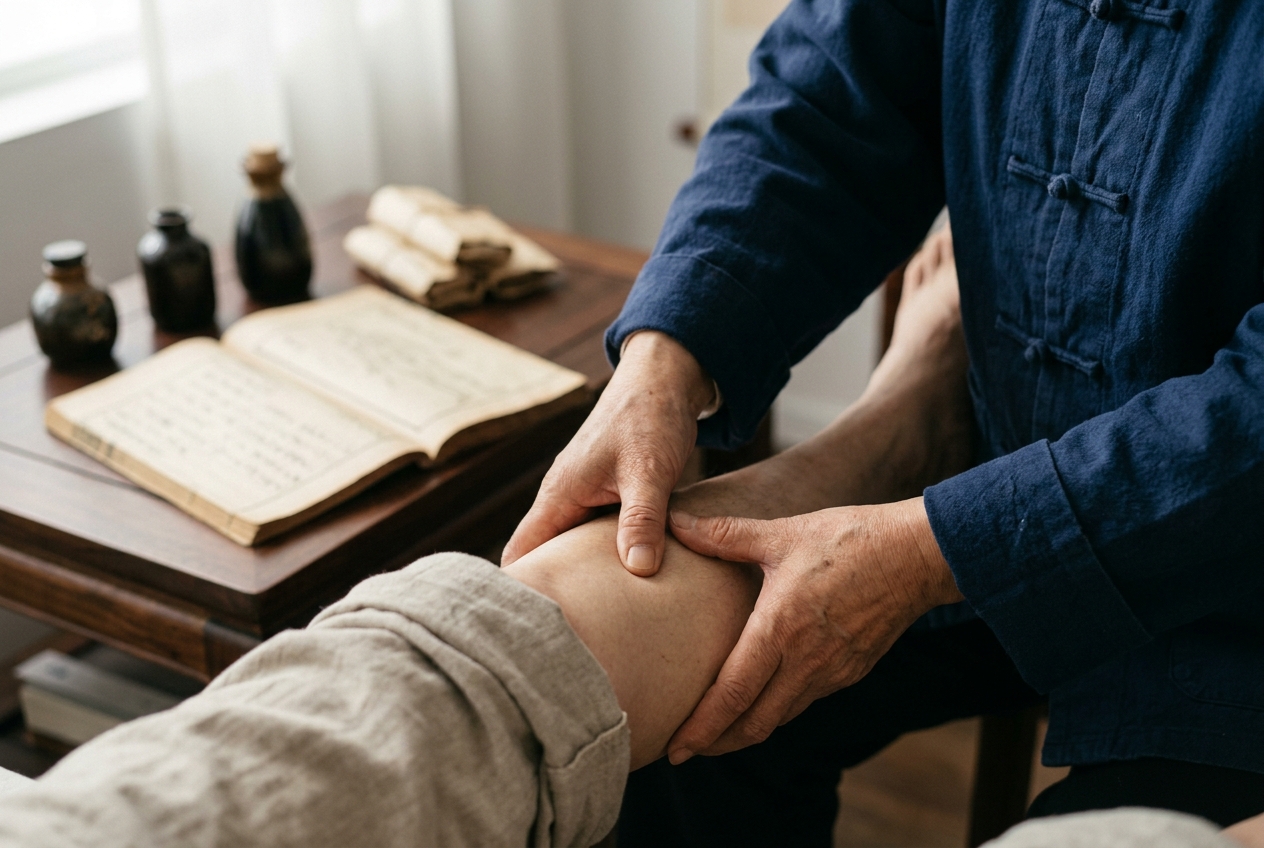
1. Opening — A Problem This Solves Today
If you spend your daylight hours anchored to an office chair, gazing into the luminous glow of a monitor, you are likely intimately acquainted with a distinct cluster of somatic complaints. It begins as a dull, vice-like tension across the base of the skull, cascades down the cervical spine into locked shoulder blades, settles into the epigastrium as sluggish digestion or post-prandial bloating, and culminates in a pervasive, low-grade cognitive irritability. We often dismiss this state as the inevitable tax of modern productivity. We treat it with fragmented remedies: ergonomic peripherals, non-steroidal anti-inflammatory drugs, secondary cups of espresso, or over-the-counter antacids.
Yet within the paradigm of traditional East Asian medicine, these seemingly disparate symptoms—occipital migraine, gastrointestinal stagnation, trapezius spasm, and affective restlessness—are not isolated mechanical failures. They represent systematic interruptions along interconnected pathways of mechanical tension and bioelectric signaling known as meridian pathways.
Eight centuries ago, during the Jin Dynasty, a legendary physician and Taoist adept named Ma Danyang (Ma Yu, 1123–1183 CE) recognized that clinical practice was becoming overwhelmed by overly complex, esoteric point selections. In response, he distilled the vast topography of human acupoints into an empirical master formula: the Twelve Heavenly Star Points (Ma Danyang Tian Xing Shi Er Xue, 马丹阳天星十二穴). Later canonized in Yang Jizhou’s seminal Ming Dynasty compendium, the Zhen Jiu Da Cheng (1601 CE), this twelve-point canon serves as an elegant protocol for systemic recalibration.
Modern bio-mechanics and translational neuroscience now confirm what Ma Danyang observed clinically: stimulating these precise distal loci modulates the central nervous system, alters visceral autonomic tone via somatovisceral reflex arcs, and releases continuous fascial planes that span from the soles of our feet to the crown of the head.
2. The Meridian Path — A Journey Through the Body
To comprehend the therapeutic power of the Twelve Heavenly Star Points, one must first dismantle the misconception that acupoints are arbitrary dots scattered across the skin. Instead, envision the human body as an interconnected web of living tensegrity, mapped in Classical Chinese Medicine as twelve primary conduits (Jing Mai). These pathways course through the interstitial matrix, bridging deep visceral organs with peripheral muscular tracks.
Consider the path of the Stomach Meridian (Foot Yangming). Rather than existing merely inside the gut, this dynamic highway commences just below the orbit of the eye, travels through the jaw and throat, descends across the chest and abdomen, plunges through the powerful muscles of the thigh, courses down the front of the shinbone—the exact ridge that aches after an exhausting trek—and terminates at the tip of the second toe. When your digestion stalls or your forehead throbs after a heavy meal, tension radiates along this entire kinetic chain.
Similarly, running down the entire dorsal aspect of the body is the Bladder Meridian (Foot Taiyang). It initiates at the inner corner of the eye, arcs over the vault of the skull, blankets the spinal erectors in two parallel columns, travels down the hamstrings, bisects the calf muscle belly, curves behind the lateral ankle bone, and anchors into the little toe. It is the longest myofascial track in the human organism, closely mirroring the "Superficial Back Line" identified in modern structural anatomy. When you sit immobile for hours, this posterior fascial sheet dehydrates and locks, pulling mechanically on the cranium and restricting venous return from the lower limbs.
The remaining channels weave analogous trajectories: the Large Intestine and Lung pathways traverse the anterior and lateral aspects of the arm, governing respiratory dynamics, upper enteric motility, and the cervical spine; the Gallbladder meridian navigates the lateral zig-zag of the flank, hip, and temple; the Liver channel ascends the medial leg to regulate emotional tension, pelvic blood flow, and tendon elasticity; and the Heart channel tracks down the inner arm to regulate psycho-emotional stability and vascular rhythm.
Research pioneered by Dr. Helene Langevin and published in the Journal of Anatomy demonstrates that acupoints correspond with high statistical significance to areas of increased connective tissue cleavage planes, subcutaneous fascial whorls, and rich neurovascular bundles. Ma Danyang’s Twelve Heavenly Star Points are the quintessential neuro-fascial intersections of this network—the master hydraulic switches of the human form.
3. Comprehensive Analysis of the Twelve Heavenly Star Points
Each of Ma Danyang’s twelve loci was chosen for its capacity to exert immediate local relief while sending potent, distal regulatory signals along its respective channel. Below is the systematic breakdown of all twelve points, their precise topography, neuro-fascial substrates, energetic mandates, and clinical applications.
=============================================================================================
                  THE TWELVE HEAVENLY STAR LOCI (MA DANYANG TIAN XING SHI ER XUE)
=============================================================================================
 CHANNEL                POINT NAME                 NOTABLE CLINICAL TARGET
 --------------------------------------------------------------------------------------------
 Stomach (ST)           Zusanli (ST36)             Gastric Stasis, Systemic Fatigue, Immunity
 Stomach (ST)           Neiting (ST44)             Acid Regurgitation, Frontal Sinusitis, Heat
 Large Intestine (LI)   Quchi (LI11)               Systemic Inflammation, Hypertension, Elbow Bi
 Large Intestine (LI)   Hegu (LI4)                 Orofacial Pain, Tension Headaches, Stress
 Bladder (BL)           Weizhong (BL40)            Acute & Chronic Lumbar Spine Pathology
 Bladder (BL)           Chengshan (BL57)           Calf Spasm, Sciatica, Hemorrhoids
 Bladder (BL)           Kunlun (BL60)              Occipital Cephalea, Rigid Neck, Heel Pain
 Gallbladder (GB)       Huantiao (GB30)            Piriformis Syndrome, Sciatica, Hip Immobility
 Gallbladder (GB)       Yanglingquan (GB34)        Sinew/Tendon Rigidity, Biliary Sluggishness
 Heart (HT)             Tongli (HT5)               Cardiovascular Palpitation, Aphasia, Anxiety
 Lung (LU)              Lieque (LU7)               Cervicogenic Migraine, Grief, Cough
 Liver (LV)             Taichong (LV3)             Liver Qi Stagnation, Irritability, Spasm
=============================================================================================
1. Zusanli (ST36) — "Leg Three Miles"
- Topographical Location: Located on the anterior-lateral lower leg. Position four fingers horizontally below the bottom edge of your kneecap, and place your thumb one finger-breadth lateral to the sharp crest of your shinbone (tibial anterior margin). You will find a muscular depression within the tibialis anterior muscle.
- Neuro-Fascial & Energetic Substrate: Sits directly over the deep peroneal nerve and anterior tibial artery/vein within the crural fascia. Traditionally designated as the He-Sea and Earth point of the Stomach channel, it functions as the supreme tonic locus for Qi, Blood, and post-natal vitality.
- Palpation & Sensation (De Qi): Apply firm, perpendicular thumb pressure slightly angled toward the shinbone. Upon accurate contact, a profound dull distension, radiating warmth, or mild downward tingling into the dorsum of the foot will emerge.
- Modern Clinical Indications: Post-prandial bloating, chronic lethargy, functional dyspepsia, autonomic dysregulation, and athletic recovery. Research indexed in PubMed Central demonstrates ST36's capacity to modulate vagal nerve pathways and suppress systemic inflammatory cytokines via the cholinergic anti-inflammatory pathway.
2. Neiting (ST44) — "Inner Courtyard"
- Topographical Location: Located on the dorsum of the foot, in the web margin between the second and third toes, proximal to the margin of the interdigital skin fold.
- Neuro-Fascial & Energetic Substrate: Intersects the lateral branch of the deep peroneal nerve and the dorsal digital dorsal venous network. As the Ying-Spring and Water point of the Stomach channel, it is the premier locus for draining pathogenic "Stomach Fire."
- Palpation & Sensation (De Qi): Grasp the foot and apply pincer-like compression between your index finger (on the sole) and thumb (on the dorsal web space), pressing slightly backward toward the metatarsophalangeal joints. Evokes an exquisite, localized tenderness accompanied by an energetic spreading sensation.
- Modern Clinical Indications: Severe acid reflux, toothaches, trigeminal neuralgia, frontal sinus pressure, burning epigastric discomfort, and stress-induced binge eating.
3. Quchi (LI11) — "Pool at the Crook"
- Topographical Location: Situated at the lateral end of the transverse cubital crease when the elbow is flexed to a right angle (90 degrees). It rests in the palpable depression between the biceps tendon lateral border and the extensor carpi radialis longus muscle.
- Neuro-Fascial & Energetic Substrate: Positioned over the radial nerve, recurrent radial artery, and the articular capsule of the elbow. Classified as the He-Sea and Earth point of the Large Intestine channel, it governs the systemic expulsion of systemic Heat, febrile pathogens, and cutaneous irritation.
- Palpation & Sensation (De Qi): Flex the arm across the chest and drive the thumb tip deeply into the lateral crease terminus toward the humerus bone. Produces an intense, expanding ache that often travels down the forearm.
- Modern Clinical Indications: Systemic inflammatory states, lateral epicondylitis (tennis elbow), essential hypertension, pruritic skin conditions (eczema, hives), and high-stress agitation.
4. Hegu (LI4) — "Joining Valleys"
- Topographical Location: On the dorsum of the hand, situated in the muscular mound between the first and second metacarpal bones. If you adduct your thumb closely against your index finger, Hegu sits at the highest point of the resulting muscle bulge; to press it, abduct the thumb and slide into the radial border of the second metacarpal bone.
- Neuro-Fascial & Energetic Substrate: Embedded within the first dorsal interosseous muscle, innervated by the superficial branch of the radial nerve and the deep ulnar nerve. It is the Yuan-Source point of the Large Intestine channel and the primary command point for the entire craniocervical and facial territory according to the World Health Organization Acupuncture Standards.
- Palpation & Sensation (De Qi): Direct your thumb pressure not flatly into the fleshy webbing, but angled inward against the bony shaft of the second metacarpal bone. The sensation is sharp, deeply spreading, and remarkably potent.
- Modern Clinical Indications: Tension headaches, migraine attacks, temporomandibular joint (TMJ) dysfunction, rhinitis, dental pain, shoulder tightness, and sympathetic nervous system hyper-reactivity.
5. Weizhong (BL40) — "Middle of the Crease"
- Topographical Location: Located at the exact midpoint of the popliteal crease on the posterior aspect of the knee joint, midway between the tendons of the biceps femoris and semitendinosus muscles.
- Neuro-Fascial & Energetic Substrate: Directly overlies the popliteal artery, popliteal vein, and the substantial tibial nerve branch of the sciatic nerve. It is the He-Sea and Earth point of the Bladder channel and the classical command point for the entire lumbar and sacral domain (Yao Bei Weizhong Qiu).
- Palpation & Sensation (De Qi): With the knee slightly relaxed, support the front of the knee with both hands and drive both thumbs softly into the popliteal fossa. Maintain a steady, rhythmic compression. Expect a deep, heavy, warm ache that radiates into the calf and up the hamstring.
- Modern Clinical Indications: Acute lumbar sprains, chronic disc herniation discomfort, pelvic pain, sciatica, knee stiffness, and heat exhaustion.
6. Chengshan (BL57) — "Mountain Support"
- Topographical Location: Located on the posterior midline of the lower leg, precisely at the apex of the V-shaped muscular notch where the two bellies of the gastrocnemius muscle separate and merge into the Achilles tendon. Stand on tiptoe to clearly visualize this anatomical cleft.
- Neuro-Fascial & Energetic Substrate: Positioned over the medial sural cutaneous nerve and the tibial nerve deep within the crural fascia. Energetically, it relaxes the sinews, harmonizes the lower intestines, and removes stagnation from the posterior kinetic chain.
- Palpation & Sensation (De Qi): Grasp the calf and press your thumb vertically into the center of the muscular junction. A sudden, radiant dull ache will instantly confirm accuracy.
- Modern Clinical Indications: Acute nocturnal calf cramps, Achilles tendonitis, chronic low back rigidity from prolonged sitting, and venous stasis/hemorrhoidal congestion.
7. Kunlun (BL60) — "Kunlun Mountains"
- Topographical Location: On the lateral aspect of the ankle, situated in the prominent depression between the external ankle bone (tip of the lateral malleolus) and the posterior Achilles tendon.
- Neuro-Fascial & Energetic Substrate: Traversed by the sural nerve, small saphenous vein, and the calcaneal fascial sheath. Classified as the Jing-River and Fire point of the Bladder channel, celebrated for clearing systemic wind-heat and opening the entire dorsal meridian network.
- Palpation & Sensation (De Qi): Pinch the tissue behind the ankle between your thumb and forefinger, directing firm pressure toward the bone. Sensation presents as an electric, spreading warmth running upward into the calf or down into the calcaneus.
- Modern Clinical Indications: Occipital headaches, upper cervical stiffness, stiff neck, lower lumbar spine pain, sciatica, and plantar fasciitis.
8. Huantiao (GB30) — "Jumping Circle"
- Topographical Location: Located on the posterolateral aspect of the hip. To locate, find the most prominent lateral bony point of your hip (the greater trochanter) and the base of your sacrum (sacral hiatus); imagine a line connecting these two landmarks. Huantiao sits precisely at the junction of the lateral one-third and medial two-thirds of this line.
- Neuro-Fascial & Energetic Substrate: Lies immediately adjacent to the deep piriformis muscle and the major pathway of the sciatic nerve, beneath the dense gluteus maximus fascia. As an intersection point of the Gallbladder and Bladder channels, it commands lower limb mobility.
- Palpation & Sensation (De Qi): Place a tennis ball, massage sphere, or your elbow/knuckles against this spot while lying on your side or sitting. Apply body-weight pressure. The result is a profound, sprawling ache deep within the gluteal bed.
- Modern Clinical Indications: Sciatica, piriformis syndrome, gluteal amnesia, chronic hip impingement, iliotibial band (ITB) friction syndrome, and gait imbalances.
9. Yanglingquan (GB34) — "Yang Mound Spring"
- Topographical Location: On the lateral side of the lower leg, in the tender hollow situated approximately one thumb-width anterior and inferior to the bony prominence of the fibular head.
- Neuro-Fascial & Energetic Substrate: Intersects the common peroneal nerve just before its bifurcation into superficial and deep branches, nestled within the peroneus longus muscle. It is celebrated as the Hui-Meeting Point of Sinews (Jin Hui) and the He-Sea Earth point of the Gallbladder channel.
- Palpation & Sensation (De Qi): Slide your thumb just beneath the round fibular head into the forward dip. Press firmly inward and slightly upward. Sensation is a sharp, vibrant distension traveling down the outer leg into the foot.
- Modern Clinical Indications: Generalized ligamentous and muscular stiffness, lateral knee pain, ribcage tightness, intercostal neuralgia, biliary sludge/cholecystitis, and emotional frustration.
10. Tongli (HT5) — "Penetrating the Interior"
- Topographical Location: On the palmar aspect of the wrist, on the radial side of the flexor carpi ulnaris tendon, approximately one thumb-width (1 cun) proximal to the transverse crease of the wrist.
- Neuro-Fascial & Energetic Substrate: Traversed by the ulnar artery, ulnar vein, and the medial antebrachial cutaneous and ulnar nerves. It is the Luo-Connecting Point of the Heart channel, bridging the energetic conduit directly into the Small Intestine channel and ascending to the root of the tongue and eye.
- Palpation & Sensation (De Qi): Support the back of the wrist and sink your thumb tip medial to the prominent tendon on the inner wrist. Use gentle circular friction. Generates a soothing, serene ache that cascades into the palm and little finger.
- Modern Clinical Indications: Psycho-emotional distress, sudden emotional fatigue, cardiac palpitations, sleep-onset insomnia, nervous throat constriction (globus hystericus), and speech hesitation.
11. Lieque (LU7) — "Broken Sequence"
- Topographical Location: On the radial margin of the forearm, approximately two finger-breadths proximal to the most distal wrist crease. An effortless anatomical alignment: interlock the webbing of your thumbs and index fingers of both hands; your index finger will naturally lay across the lateral radius bone of the opposite arm. Lieque is situated precisely in the small bony notch underneath the tip of that index finger.
- Neuro-Fascial & Energetic Substrate: Located over the brachioradialis tendon, cephalic vein, and the superficial branch of the radial nerve. It is the Luo-Connecting Point of the Lung channel, the Master Confluent Point of the Ren Mai (Conception Vessel), and the primary command point for the back of the head and neck.
- Palpation & Sensation (De Qi): Hook the nail of your thumb into the radial groove and exert pressure diagonally toward the elbow. Sensation is electric, releasing an immediate reflex relaxation across the nape of the neck.
- Modern Clinical Indications: Cervicogenic headaches, chronic stiff neck from digital screen posture, early-stage respiratory infections, asthma, emotional grief, and wrist/thumb tendinopathy (De Quervain's tenosynovitis).
12. Taichong (LV3) — "Great Surge"
- Topographical Location: On the dorsum of the foot, in the hollow junction where the first and second metatarsal bones converge. Slide your index finger backward along the groove between the big toe and second toe toward your ankle until your finger naturally drops into a deep bony "valley."
- Neuro-Fascial & Energetic Substrate: Positioned directly over the deep peroneal nerve, dorsalis pedis artery, and the first dorsal interosseous muscle. It is the Shu-Stream and Yuan-Source Earth point of the Liver channel, functioning as the body's primary somatic valve for dispersing physical stagnation and psycho-emotional stress.
- Palpation & Sensation (De Qi): Apply firm, vertical downward pressure angled slightly toward the metatarsal bone of the big toe. Taichong is notoriously tender; expect an unmistakable dull, spreading ache that instantly dissipates systemic muscular guarding.
- Modern Clinical Indications: Chronic tension, emotional irritability, hypertension, vascular migraines, eye strain, menstrual cramps, and sleep disturbances. When paired with Hegu (LI4), it forms the classic "Four Gates" (Si Guan) protocol, celebrated for opening systemic Qi flow across the entire somatic matrix.
4. A Point Combination for One Common Issue: The "Digital Screen Overdrive" Decompression Sequence
Modern knowledge workers frequently experience a consolidated symptom cluster: a rigid neck, throbbing temporal pressure, sympathetic nervous agitation, and a clenched, unresponsive digestive tract. This is the physiological footprint of prolonged mental strain coupled with physical immobility.
The following master sequence combines four of Ma Danyang’s most potent loci into a continuous 10-minute restorative circuit. Execute this protocol seated comfortably in an upright chair or reclined on a yoga mat with feet uncrossed.
+-----------------------------------------------------------------------------------------+
|                  THE "DIGITAL SCREEN OVERDRIVE" EVENING RESET                           |
|                                                                                         |
|  [Phase 1: Cervicocranial Release]                                                      |
|  Point: Lieque (LU7)                                                                    |
|  Target: Clenching of Nape & Occiput                                                    |
|  Duration: 2 Minutes Bilaterally                                                        |
|                                                                                         |
|  [Phase 2: Craniofacial & Sympathetic Desensitization]                                  |
|  Point: Hegu (LI4)                                                                      |
|  Target: Ocular Strain, Jaw Clenching, Frontal Headaches                               |
|  Duration: 2 Minutes Bilaterally                                                        |
|                                                                                         |
|  [Phase 3: Systemic Vasodilation & Stress Depressurization]                             |
|  Point: Taichong (LV3)                                                                  |
|  Target: Liver Qi Stagnation, Irritability, Muscular Tone                               |
|  Duration: 2 Minutes Bilaterally                                                        |
|                                                                                         |
|  [Phase 4: Parasympathetic Core & Enteric Re-Awakening]                                  |
|  Point: Zusanli (ST36)                                                                  |
|  Target: Digestive Stasis, Fatigue, Vagal Tone Upregulation                             |
|  Duration: 2 Minutes Bilaterally                                                        |
+-----------------------------------------------------------------------------------------+
Step-by-Step Protocol:
-
Step 1: Release the Craniocervical Gate with Lieque (LU7) * Method: Interlock your hands and find the radial notch of LU7 on your left wrist. Inhale deeply through the nose for 4 seconds; as you exhale for 6 seconds, apply steady, upward-angled thumb pressure. Maintain for 60 seconds, then repeat on the right wrist. * Physiological Intention: Decompresses the upper cervical spine, releases tension along the trapezius, and promotes open, diaphragmatic breathing.
-
Step 2: Clear Orofacial & Neural Tension with Hegu (LI4) * Method: Shift to the dorsum of the hand. Clamp your right thumb onto the radial bone of your left LI4 point. Apply sustained, clockwise spiral pressure with moderate-to-firm intensity for 60 seconds per hand. * Physiological Intention: Induces trigeminal nerve relaxation, melts jaw clenching, and stimulates descending endorphinergic pain modulation.
-
Step 3: Downregulate Somatic Stress with Taichong (LV3) * Method: Cross one foot over your opposite knee. Locate the deep valley of LV3 on the foot dorsum. Use your thumb to apply deep, circular kneading for 60 seconds on each foot while consciously dropping your shoulders and unclamping your jaw. * Physiological Intention: Balances the "Four Gates" circuit with LI4, promoting peripheral vasodilation, lowering arterial blood pressure, and quelling psychological irritation.
-
Step 4: Ground Energy & Re-engage the Enteric Core with Zusanli (ST36) * Method: Place your thumbs into the soft muscular depression of ST36 below each knee simultaneously. Lean your upper torso forward slightly to leverage natural body weight through your thumbs. Hold continuous, firm, pulsing pressure for 2 full minutes while breathing deeply into your lower abdomen. * Physiological Intention: Initiates parasympathetic splanchnic circulation, stimulates gastrointestinal peristalsis, and grounds mental agitation into embodied, centered vitality.
5. Safety, Biomechanics & Sensible Caution
While acupressure is an extraordinarily safe, non-pharmacological modality, applying focused mechanotransduction to neural and fascial tissue requires clear clinical boundaries and technical sensitivity.
+-----------------------------------------------------------------------------------------+
|                               CRITICAL SAFETY PROTOCOLS                                 |
+-----------------------------------------------------------------------------------------+
|  PREGNANCY CONTRAINDICATIONS:                                                           |
|  * AVOID Hegu (LI4), Kunlun (BL60), and Taichong (LV3) entirely during all trimesters. |
|    These points exert potent downward-draining vectors and can stimulate uterine        |
|    contractions or induce premature labor.                                              |
|                                                                                         |
|  PRESSURE THRESHOLD & MECHANOTRANSDUCTION:                                              |
|  * The objective is *De Qi* (dull, heavy, warm, radiant distension).                    |
|  * NEVER induce sharp, lancinating, burning, or electric neurogenic pain.               |
|  * Avoid pressing directly on varicose veins, open wounds, bruised tissue, or acute    |
|    fractures.                                                                           |
|                                                                                         |
|  RED FLAGS FOR PROFESSIONAL INTERVENTION:                                               |
|  * Acupressure is an adjunct therapy. Consult a licensed medical provider for sudden    |
|    unexplained thunderclap headaches, acute neurological deficits (numbness, drop-foot),|
|    uncontrolled abdominal pain, or cardiac chest discomfort.                            |
+-----------------------------------------------------------------------------------------+
The Biology of Pressure
When applying pressure, understand that connective tissue responds to mechanical loading via the phenomenon of piezoelectricity and purinergic signaling. As demonstrated in research on purinergic signaling and acupuncture, sustained manual stimulation of interstitial tissue triggers a local release of extracellular adenosine. Adenosine acts on local A1 receptors to suppress peripheral nociceptive signaling, providing profound anti-nociception and local vasodilation.
Therefore, aggressive stabbing motions are counterproductive; they induce reflexive muscular guarding. The proper technique requires a gradual, perpendicular sink into the tissue, maintaining steady compression for 90 to 180 seconds, allowing the fascia to melt around your finger pad.
6. Today's Takeaway: The Two-Minute Reset
You do not need an hour of leisure or specialized equipment to experience the profound clinical efficacy of Ma Danyang’s system.
- The Choice: Hegu (LI4) on the hand webbing.
- The Target: That low-grade tension building behind your eyes, the stiffness in your neck, and the general mental fog from hours of continuous screen immersion.
- The 2-Minute Practice: * Right now, place your right thumb into the soft pocket on the radial bone of your left hand's first web space. * Press firmly inward until you feel a distinct, heavy, dull ache—the classical signature of De Qi. * Close your eyes. Inhale slowly through your nose for four counts; exhale smoothly for six counts. Maintain continuous, firm, circular pressure for 60 seconds. * Switch hands and apply the exact same focused, mindful pressure on your right Hegu for another 60 seconds.
As you release your grip, observe the immediate physiological shift: the unclamping of your jaw, the softening of your facial muscles, the sudden warmth in your hands, and the clear, renewed mental spaciousness. You have just activated a proven physiological feedback loop refined by Ma Danyang eight centuries ago—a testament to the enduring genius of classical medicine preserved for our modern world.