Heat-Clearing Herbs (Qing Re Yao) Pharmacodynamics: Governing Fire-Purging, Blood-Cooling, Toxin-Resolving, and Pathogenic Heat Dissipation in Traditional Chinese Medicine
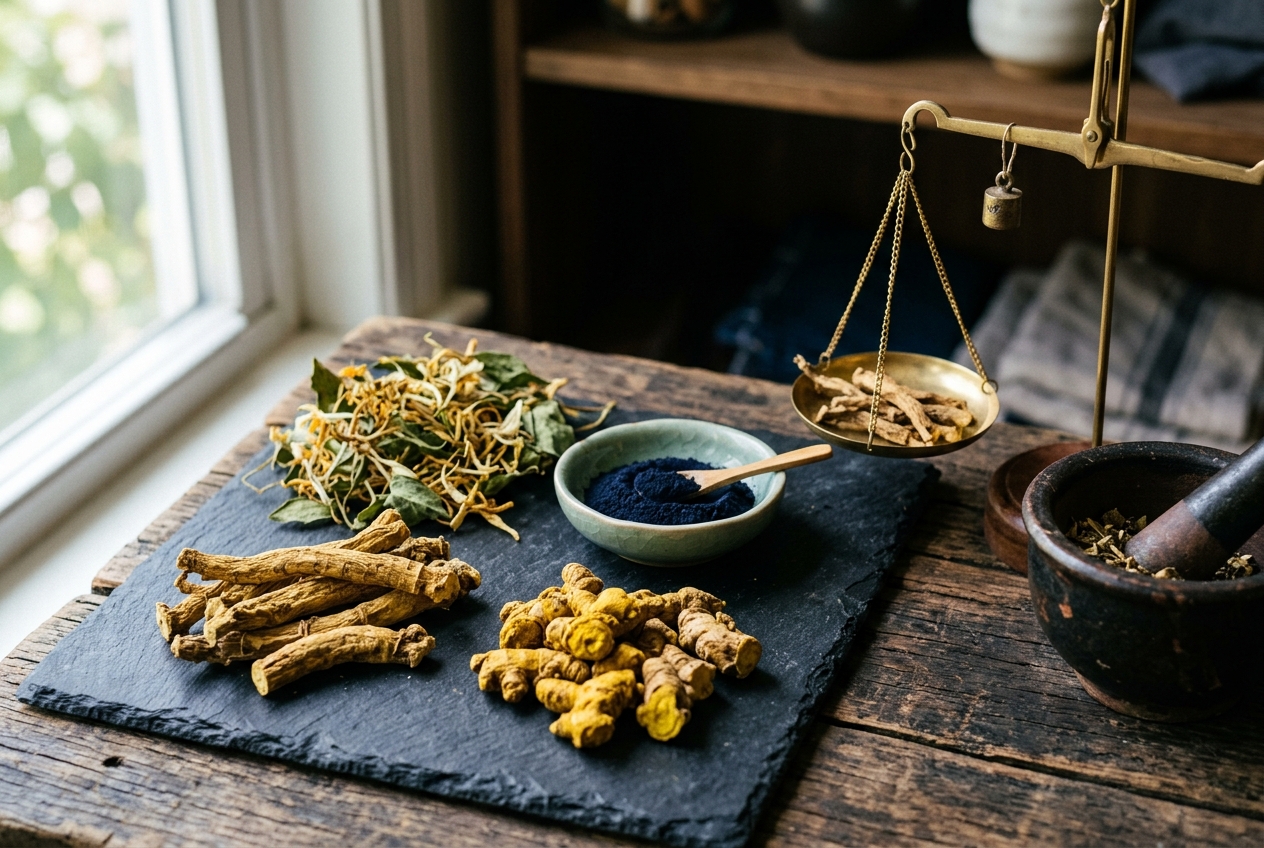
1. Foundational Energetics and Thermodynamic Actions
1.1 The Nature of Pathogenic Heat, Fire, and Fluid Depletion
In classical pathophysiology, Pathogenic Heat is characterized as a Yang pathogen (Yang Xie) exhibiting ascending, dispersive, and desiccating tendencies. When heat evades the superficial defensive barrier (Wei Fen), it penetrates into the interior organs (Zang-Fu), accelerating metabolic processes, causing vascular hyper-permeability, agitating the Mind (Shen), and consuming essential Yin fluids (Yin Jin).
The severity of thermal pathology progresses along a continuum: 1. Heat (Re, 熱): A general hyperthermal state marked by functional acceleration, thirst, and systemic inflammation. 2. Fire (Huo, 火): An intense, localized, or ascending manifestation of heat capable of inducing tissue necrosis, severe agitation, and bleeding. 3. Toxin (Du, 毒): Virulent, necrotic, or infectious manifestations of fire, often associated with suppurative processes, microbial proliferation, and septic cascades.
1.2 Thermodynamic Properties: The Synergy of Bitter (Ku) and Cold (Han)
The pharmacodynamic foundation of Qing Re Yao rests predominantly upon the energetic pairing of Bitter flavor (Ku, 苦) and Cold nature (Han, 寒). According to foundational texts such as the Huangdi Neijing (Inner Canon of the Yellow Emperor), "Heat shall be cooled with cold; fire shall be drained with bitter" (熱者寒之, 火者苦之).
- The Cold Property (Han Xing): Direct thermodynamic antagonism to heat. It depresses metabolic hyper-reactivity, lowers core body temperature, attenuates capillary dilation, and quells sympathetic nervous hyperactivity.
- The Bitter Property (Ku Wei): Governs two essential biomechanical movements:
- Downward Directing (Jiang, 降): Bitter substances direct ascending pathological fire downwards, restoring the natural descending vector of the Stomach, Lung, and Heart networks.
- Drying (Zao, 燥): Bitter substances clear turbidity and eliminate endogenous Dampness (Shi), preventing the formation of stagnant, festering microbial niches.
- The Sweet-Cold Variant (Gan Han, 甘寒): Certain heat-clearing agents combine sweetness with coldness. Sweetness generates fluids (Sheng Jin) and tonifies without cloying, allowing these agents to eliminate heat while simultaneously rehydrating tissues damaged by thermal desiccation.
1.3 Penetration Across Diagnostic Systems: Wei-Qi-Ying-Xue and San Jiao
To accurately administer Qing Re Yao, clinicians apply two major warm-disease (Wen Bing, 溫病) diagnostic models that delineate the anatomical depth and physiological phase of heat penetration:
- The Four Levels (Wei-Qi-Ying-Xue): * Qi Level Heat: The pathogen is lodged fully in the interior visceral systems, characterized by the "Four Bigs" (Big Fever, Big Sweat, Big Thirst, Big Pulse). Qing Re Xie Huo Yao (Heat-Draining herbs) clear this level. * Ying (Nutritive) and Xue (Blood) Levels: Heat has breached deep vascular and neurological compartments, leading to neurocognitive disturbance, endothelial breakdown, disseminated intravascular coagulation, and hemorrhage. Qing Re Liang Xue Yao (Blood-Cooling herbs) target these phases.
- The Triple Burner (San Jiao) Model: * Upper Burner (Shang Jiao): Heat lodged in the Lungs and Pericardium. * Middle Burner (Zhong Jiao): Blazing heat or damp-heat residing in the Stomach, Spleen, and Intestines. * Lower Burner (Xia Jiao): Deep heat burning Kidney/Liver Yin, or damp-heat accumulating in the Bladder, Uterus, and lower intestines.
1.4 Preserving Yin Fluids (Bao Jin Cun Yin)
A primary axiom of TCM therapeutics in febrile pathology is that "as long as one portion of Yin fluid remains, one portion of life is preserved." Heat-clearing herbs arrest the rapid consumption of body fluids (Jin Ye), preserving cardiovascular volume, renal filtration capacity, and mucosal barrier integrity during hypermetabolic stress. Detailed reviews of these classic therapeutic models are cataloged across Wikipedia's Traditional Chinese Medicine Overview.
2. Botanical Sub-Classifications and Representative Materia Medica
The broad category of Qing Re Yao is systematically divided into five distinct sub-classifications based on therapeutic targets, energetic nuances, and clinical indications.
2.1 Herbs that Clear Heat and Drain Fire (Qing Re Xie Huo Yao, 清熱瀉火藥)
These agents specialize in treating severe, high-grade interior excess heat at the Qi level or blazing fire within the Lung and Stomach channels.
Gypsum Fibrosum (Shi Gao, 石膏)
- Energetic Profile: Pungent (Xin), Sweet (Gan), Very Cold (Da Han). Meridians: Lung, Stomach.
- Mechanism & Actions: Shi Gao is a mineral consisting primarily of hydrated calcium sulfate ($\text{CaSO}_4 \cdot 2\text{H}_2\text{O}$). Its pungent nature permits the dispersion of trapped internal heat to the exterior, while its intense coldness purges hyperpyrexia directly. It is the sovereign agent for resolving the Qi-level "Four Bigs" syndrome.
- Classic Archetype: The core ingredient of Bai Hu Tang (White Tiger Decoction), clearing blazing Stomach fire manifest as unrelenting fever, burning thirst for cold beverages, profuse sweating, and a surging, bounding pulse (Hong Da Mai).
Rhizoma Anemarrhenae (Zhi Mu, 知母)
- Energetic Profile: Bitter (Ku), Sweet (Gan), Cold (Han). Meridians: Lung, Stomach, Kidney.
- Mechanism & Actions: Unlike Shi Gao, which purely clears excess heat, Zhi Mu possesses a moistening, fluid-generating sweetness. It drains Lung and Stomach fire while simultaneously enriching Kidney Yin to resolve both excess and deficient heat states.
- Synergistic Dynamic: In combination with Shi Gao, Zhi Mu counterbalances the drying, harsh mineral nature of gypsum, ensuring comprehensive antipyresis without depleting systemic hydration.
2.2 Herbs that Clear Heat and Cool Blood (Qing Re Liang Xue Yao, 清熱涼血藥)
These herbs operate in the deepest energetic layers—the Ying and Xue levels—where heat has invaded the blood vascular bed, induced consumption of vital fluids, and destabilized hemodynamic equilibrium.
Radix Rehmanniae Recens (Sheng Di Huang, 生地黃)
- Energetic Profile: Sweet (Gan), Bitter (Ku), Cold (Han). Meridians: Heart, Liver, Kidney.
- Mechanism & Actions: Sheng Di Huang clears heat from the nutritive and blood levels, enriches Yin, and generates fluids. It treats deep-seated nocturnal fevers, scarlet tongue, extreme restlessness, and hematologic extravasation (such as hematemesis, epistaxis, and hematuria) caused by thermal vessel damage.
- Clinical Nuance: Its sweet, heavy, unctuous nature allows it to rescue renal Yin during protracted warm diseases without causing the rebound dryness common to purely bitter botanicals.
Cortex Moutan (Mu Dan Pi, 牡丹皮)
- Energetic Profile: Pungent (Xin), Bitter (Ku), Slightly Cold (Wei Han). Meridians: Heart, Liver, Kidney.
- Mechanism & Actions: Derived from the root bark of Paeonia suffruticosa, Mu Dan Pi clears heat and cools blood while simultaneously activating blood circulation and dissipating blood stasis (Huo Xue Hua Yu).
- Clinical Significance: Classical blood-cooling herbs carry the risk of congealing the blood through excessive coldness. Mu Dan Pi uniquely prevents this complication, clearing blood heat and resolving subcutaneous purpura or maculopapular eruptions without inducing intravascular stagnation.
2.3 Herbs that Clear Heat and Dry Dampness (Qing Re Zhao Shi Yao, 清熱燥濕藥)
This sub-classification addresses the complex interplay of Heat and Dampness—a viscous, heavy, and obstinate pathogenic combination. The foundation of this category is the renowned "San Huang" (Three Yellows) botanical triad, organized systematically to treat the Three Burners (San Jiao).
- Radix Scutellariae (Huang Qin, 黃芩): Focuses on Upper Burner heat. It clears Lung fire presenting as productive cough with thick yellow sputum, calms the fetus in heat-induced restless pregnancy, and drains heat from the Gallbladder.
- Rhizoma Coptidis (Huang Lian, 黃連): Focuses on Middle Burner damp-heat and Heart fire. It is one of the most intensely bitter and cold substances in the Materia Medica, acting as the premier botanical for damp-heat dysentery, toxic gastroenteritis, epigastric fullness, aphthous stomatitis, and insomnia driven by Heart-Kidney disharmony.
- Cortex Phellodendri (Huang Bai, 黃柏): Focuses on Lower Burner damp-heat. It targets urinary tract infections, foul vaginal discharge (leukorrhea), damp-heat eczema of the lower extremities, and damp-heat arthralgia (gouty arthritis).
2.4 Herbs that Clear Heat and Relieve Toxicity (Qing Re Jie Du Yao, 清熱解毒藥)
These botanicals specialize in neutralizing virulent fire toxins (Huo Du), treating acute viral epidemics, pyogenic dermatological infections (carbuncles, furuncles, abscesses), and severe inflammatory ulcerations.
Flos Lonicerae (Jin Yin Hua, 金銀花) & Fructus Forsythiae (Lian Qiao, 連翹)
- Energetic Profile: Both are Pungent (Xin), Bitter (Ku), and Cold (Han), entering the Lung, Heart, and Stomach channels.
- Mechanism & Synergistic Pair: These two botanicals represent the quintessential aromatic, heat-resolving pair in TCM, famously united in the classic Qing Dynasty formula Yin Qiao San.
- Jin Yin Hua excels at clearing surface toxins, sore throat, and blood-borne toxic heat.
- Lian Qiao disperses clumps, reduces lymphadenopathy, softens subcutaneous nodules, and drains Heart fire.
- Together, they vent heat outward through the pores while clearing internal toxicity, preventing the inward collapse of acute infectious pathogens.
Radix Isatidis (Ban Lan Gen, 板藍根)
- Energetic Profile: Bitter (Ku), Cold (Han). Meridians: Heart, Lung, Stomach.
- Mechanism & Actions: Renowned for its pronounced affinity for the pharynx, larynx, and respiratory tract, Ban Lan Gen is used to treat severe epidermic toxins, mumps, acute tonsillitis, and erythematous pharyngeal swelling.
2.5 Herbs that Clear Deficiency Heat (Qing Xu Re Yao, 清虛熱藥)
These botanicals treat fevers stemming from Yin depletion (Yin Xu) or residual latent pathogens lingering in the deep tissue planes after acute febrile illnesses.
Herba Artemisiae Annuae (Qing Hao, 青蒿)
- Energetic Profile: Bitter (Ku), Pungent (Xin), Cold (Han). Meridians: Liver, Gallbladder.
- Mechanism & Actions: Qing Hao possesses an aromatic, venting quality that enables it to penetrate deep into the Yin levels of the body, mobilize latent heat, and guide it outward to the Yang level to be expelled through the pores without damaging Yin fluids.
- Indications: Essential for nocturnal fever that abates in the morning (Ye Re Zao Liang) with absence of sweating, steaming bone fever, and malarial chills and fevers. Its active constituent, artemisinin, earned the 2015 Nobel Prize in Physiology or Medicine, as documented across Wikipedia's Artemisinin Profile.
Cortex Lycii (Di Gu Pi, 地骨皮)
- Energetic Profile: Sweet (Gan), Bland (Dan), Cold (Han). Meridians: Lung, Liver, Kidney.
- Mechanism & Actions: Derived from the root bark of Lycium chinense, Di Gu Pi drains hidden Kidney fire, clears deficiency heat without bitterness, eliminates steaming bone fever (Gu Zheng), and calms Lung heat to treat chronic, dry consumptive coughing and hemoptysis.
3. Modern Pharmacological and Biochemical Mechanisms
Modern biomedical analysis has systematically characterized the pharmacologically active phytochemicals within Qing Re Yao. The biological efficacy of these herbs is primarily mediated through broad anti-inflammatory signaling cascades, suppression of pro-inflammatory cytokines, hypothalamic thermoregulatory reset, and direct antimicrobial activity.
3.1 Phytochemical Taxonomy and Molecular Constituents
| Botanical Class / Herb | Key Active Compound | Chemical Classification | Primary Molecular Target |
|---|---|---|---|
| Huang Lian (Coptis chinensis) | Berberine | Isoquinoline Alkaloid | AMPK activation, NF-κB inhibition, TLR4 down-regulation |
| Huang Qin (Scutellaria baicalensis) | Baicalin / Baicalein | Lipophilic Flavonoid | COX-2/5-LOX inhibition, IκB kinase ($\text{IKK}$) suppression |
| Jin Yin Hua (Lonicera japonica) | Chlorogenic Acid | Polyphenolic Acid | Scavenging ROS, inhibition of IL-6 and TNF-$\alpha$ |
| Qing Hao (Artemisia annua) | Artemisinin | Sesquiterpene Lactone | Cleavage of endoperoxide bridge by heme-iron, parasite lysis |
| Mu Dan Pi (Paeonia suffruticosa) | Paeonol | Phenolic Compound | Down-regulation of iNOS, reduction of vascular ICAM-1 |
| Sheng Di Huang (Rehmannia glutinosa) | Catalpol | Iridoid Glycoside | Attenuation of oxidative stress, mitochondrial membrane protection |
3.2 Interception of Intracellular Signaling: The NF-κB and MAPK Pathways
The nuclear factor kappa-light-chain-enhancer of activated B cells (NF-κB) and mitogen-activated protein kinase (MAPK) pathways are central drivers of acute and chronic systemic inflammation.
- NF-κB Down-Regulation: * Under basal conditions, the NF-κB heterodimer (p50/p65) remains sequestered in the cytoplasm bound to the inhibitory protein IκB-$\alpha$. * Pathogenic triggers such as bacterial lipopolysaccharide (LPS) activate the IκB kinase ($\text{IKK}$) complex, triggering IκB-$\alpha$ phosphorylation, ubiquitination, and proteasomal degradation. * Active constituents such as baicalin and berberine directly suppress $\text{IKK}$ phosphorylation, maintaining IκB-$\alpha$ integrity and preventing the nuclear translocation of p65. Comprehensive reviews detailing these actions can be explored in NCBI PubMed's Baicalin Pharmacology Database.
- MAPK Pathway Attenuation: * Phytochemicals in Qing Re Yao simultaneously inhibit the phosphorylation cascades of the three major MAPK axes: extracellular signal-regulated kinase (ERK), c-Jun N-terminal kinase (JNK), and p38 MAPK. * This multi-target suppression arrests the activation of downstream activator protein 1 (AP-1) transcription factors, halting the transcription of acute-phase inflammatory proteins.
3.3 Cytokine Storm Suppression and Nitric Oxide Modulation
Hyper-inflammatory states, such as sepsis and severe acute respiratory distress, are characterized by an uncontrolled surge of pro-inflammatory cytokines: * Interleukin-6 (IL-6), Interleukin-1$\beta$ (IL-1$\beta$), and Tumor Necrosis Factor-alpha (TNF-$\alpha$): Chlorogenic acid, berberine, and paeonol significantly lower circulating levels of these mediators in a dose-dependent manner. * Inducible Nitric Oxide Synthase (iNOS) & Cyclooxygenase-2 (COX-2): By preventing the transcriptional induction of iNOS and COX-2 enzymes, heat-clearing phytochemicals arrest excessive production of cytotoxic nitric oxide ($\text{NO}$) and inflammatory prostaglandins ($\text{PGE}_2$), mitigating vascular collapse, capillary leak syndrome, and tissue edema. Scientific evaluations of these multi-target pathways are indexed in NCBI PubMed's Herbal Mechanisms Index.
3.4 Central Hypothalamic Thermoregulatory Antipyresis
The antipyretic dynamics of Qing Re Xie Huo Yao (such as Shi Gao) and Qing Re Jie Du Yao (such as Jin Yin Hua) operate through central neurochemical pathways: 1. Circulating endogenous pyrogens (IL-1$\beta$, TNF-$\alpha$, IL-6) act on the vascular endothelial cells of the hypothalamic organum vasculosum of the lamina terminalis (OVLT). 2. This interaction induces microsomal prostaglandin E synthase-1 (mPGES-1) and COX-2, leading to elevated synthesis of prostaglandin $\text{E}_2$ ($\text{PGE}_2$). 3. Hypothalamic $\text{PGE}_2$ binds to EP3 receptors in the preoptic area, increasing cyclic adenosine monophosphate (cAMP) and resetting the core thermal set-point upward. 4. Chemical fractions from Shi Gao and Huang Qin inhibit OVLT COX-2 and mPGES-1 expression, suppress central hypothalamic cAMP concentrations, and normalize the thermoregulatory set-point, inducing peripheral vasodilation and diaphoresis to release excess heat.
3.5 Broad-Spectrum Antimicrobial, Antiviral, and Anti-Endotoxin Activity
- Antimicrobial & Anti-Biofilm Action: Berberine acts as a DNA topoisomerase inhibitor and intercalates into bacterial nucleic acids, while simultaneously disrupting the electrical potential of bacterial cell membranes. Furthermore, it impairs bacterial quorum sensing, disrupting the formation of antibiotic-resistant biofilms. Extensive pharmacological profiles are documented on NCBI PubMed's Berberine Research Database.
- Anti-Endotoxin (LPS Neutralization): Compounds such as chlorogenic acid and baicalin bind directly to circulating bacterial lipopolysaccharides (LPS) through electrostatic interactions, preventing the binding of LPS to the TLR4/MD-2 receptor complex on macrophages and halting endotoxin shock.
- Antiviral Direct Interception: Polyphenols from Jin Yin Hua and Ban Lan Gen bind to viral hemagglutinin and neuraminidase enzymes, blocking viral attachment, penetration, and release during orthomyxovirus and coronavirus replication cycles.
4. Clinical Safety, Contraindications, and Middle-Jiao Preservation
While the therapeutic efficacy of Qing Re Yao is profound, its potent bitter and cold properties carry inherent physiological risks when administered inappropriately, excessively, or for prolonged durations.
4.1 Pathophysiology of Bitter-Cold Induced Spleen-Yang Injury (Ku Han Shang Wei)
The Middle Jiao (Spleen and Stomach) requires warmth and dynamic movement to execute its primary physiological function: the transformation and transportation of nutritional essences (Yun Hua). * Thermal Suppression: Excessive coldness directly injures Spleen Yang (Pi Yang), leading to metabolic slowdown, gastric mucosal hypoperfusion, and enzyme down-regulation. * Drying Desiccation: Excessive bitterness, although drying to dampness, desiccates genuine Yin fluids if dampness is absent, resulting in localized mucosal atrophy. * Symptom Manifestations: Patients suffering from Ku Han Shang Wei present with epigastric pain relieved by warmth and pressure, watery diarrhea, anorexia, postprandial distension, nausea, cold extremities, a pale tongue with a wet white coating, and a deep, thready pulse.
4.2 Diagnostic Precautions and Differential Exclusion
- Absolute Contraindication in Spleen-Stomach Deficiency Cold (Pi Wei Xu Han): Patients with baseline chronic fatigue, malabsorption, loose stools, and cold intolerance must not receive bitter-cold heat-clearing herbs without protective modifications.
- True Cold, False Heat (Zhen Han Jia Re) Syndromes: In critical, end-stage Yang-collapse patterns, extreme internal Yin cold forces the remnants of depleted Yang upward to float on the body's surface, manifesting as facial flushing, mild thirst, and subjective heat sensations with a faint, dying pulse. Administering Qing Re Yao in this scenario extinguishes the remaining Yang, resulting in rapid circulatory collapse.
- Blood Deficiency Without Fire: Anemia and exhaustion of body fluids must not be confused with pure heat syndromes.
4.3 Formulatory Countermeasures: Protecting the Spleen and Stomach
To prevent adverse digestive events during the clinical deployment of Qing Re Yao, classic formula architecture incorporates three strategic safeguarding mechanisms:
- Integration of Sweet-Moistening Agents (Gan Run Yao): Pairing intensely bitter substances with herbs such as Zhi Mu, Mai Men Dong, or Sheng Di Huang ensures that internal heat is cleared while protecting the mucus membranes and vascular endothelium from drying damage.
- Use of Stomach-Protecting Vectors (He Wei Yao): Classic formulations combine high doses of bitter herbs with non-cloying gastroprotective agents: * Nonglutinous Rice (Geng Mi, 粳米) & Radix Glycyrrhizae (Gan Cao, 甘草): Present in Bai Hu Tang to create a mucosal protective buffer in the stomach, preserving gastric acid equilibrium and enzymatic function. * Fresh Ginger (Sheng Jiang, 生薑) & Jujube (Da Zao, 大棗): Mildly warm the Middle Jiao, regulate Stomach Qi descending, and prevent nausea induced by bitter alkaloids.
- Strategic Pharmacoprocessing (Pao Zhi, 炮製): The raw energetics of Qing Re Yao can be modified through classical processing methods: * Wine-Frying (Jiu Zhi): Moderates the excessive coldness of Huang Lian or Huang Qin, directing their therapeutic actions upward to clear head and eye inflammation without disrupting Middle Jiao digestion. * Ginger Juice-Frying (Jiang Zhi Zhi): Diminishes the emetic potential of bitter alkaloids and prevents cold-induced stomach pain.
5. Synthesis and Comparative Formulary Matrix
To illustrate how these pharmacological and energetic principles translate into clinical application, the following matrix summarizes representative classic formulas that harness the five sub-classifications of Qing Re Yao:
| Clinical Formula | Primary Category | Sovereign Herbs (Jun Yao) | Classic Indication | Molecular Correlate |
|---|---|---|---|---|
| Bai Hu Tang (White Tiger Dec.) |
Clear Heat & Drain Fire | Shi Gao (Gypsum), Zhi Mu (Anemarrhena) |
Qi-level high fever, copious sweat, intense thirst, surging pulse | OVLT mPGES-1 inhibition, central cAMP reduction, antipyresis |
| Xi Jiao Di Huang Tang (Rhinoceros & Rehmannia) |
Clear Heat & Cool Blood | Sheng Di Huang, Mu Dan Pi, Chi Shao |
Ying/Blood level heat, hematemesis, purpura, scarlet tongue | Capillary permeability stabilization, inhibition of thrombin pathways |
| Huang Lian Jie Du Tang (Coptis Detox Dec.) |
Clear Heat & Dry Dampness / Toxin | Huang Lian, Huang Qin, Huang Bai, Zhi Zi |
Triple-burner severe toxic fire, high fever, delirium, jaundice | Complete NF-κB blockade, broad-spectrum anti-microbial synergy |
| Yin Qiao San (Honeysuckle & Forsythia) |
Clear Heat & Relieve Toxicity | Jin Yin Hua, Lian Qiao |
Wei/Qi stage warm disease, acute sore throat, fever, viral onset | Neuraminidase inhibition, suppression of IL-6 and TNF-$\alpha$ |
| Qing Hao Bie Jia Tang (Artemisia & Soft Turtle) |
Clear Deficiency Heat | Qing Hao, Bie Jia (Trionycis) |
Post-febrile nocturnal fever abating in morning, deep hidden heat | Heme-mediated endoperoxide activation, cellular oxidative reset |
Through the balanced integration of thermodynamic properties (Ku Han), anatomical tropisms (San Jiao), clinical depth stages (Wei-Qi-Ying-Xue), and intracellular target modulation (NF-κB, MAPK, pyrogenic prostaglandins), the class of Heat-Clearing Herbs provides a sophisticated, multi-targeted pharmacotherapy for inflammatory, hyperpyrexic, and infectious pathologies.