Gui Xi Gong Tortoise Breathing Qigong: Hypometabolic Pulmonary Mechanics, Vagal Autonomic Modulation, and Daoist Longevity Daoyin
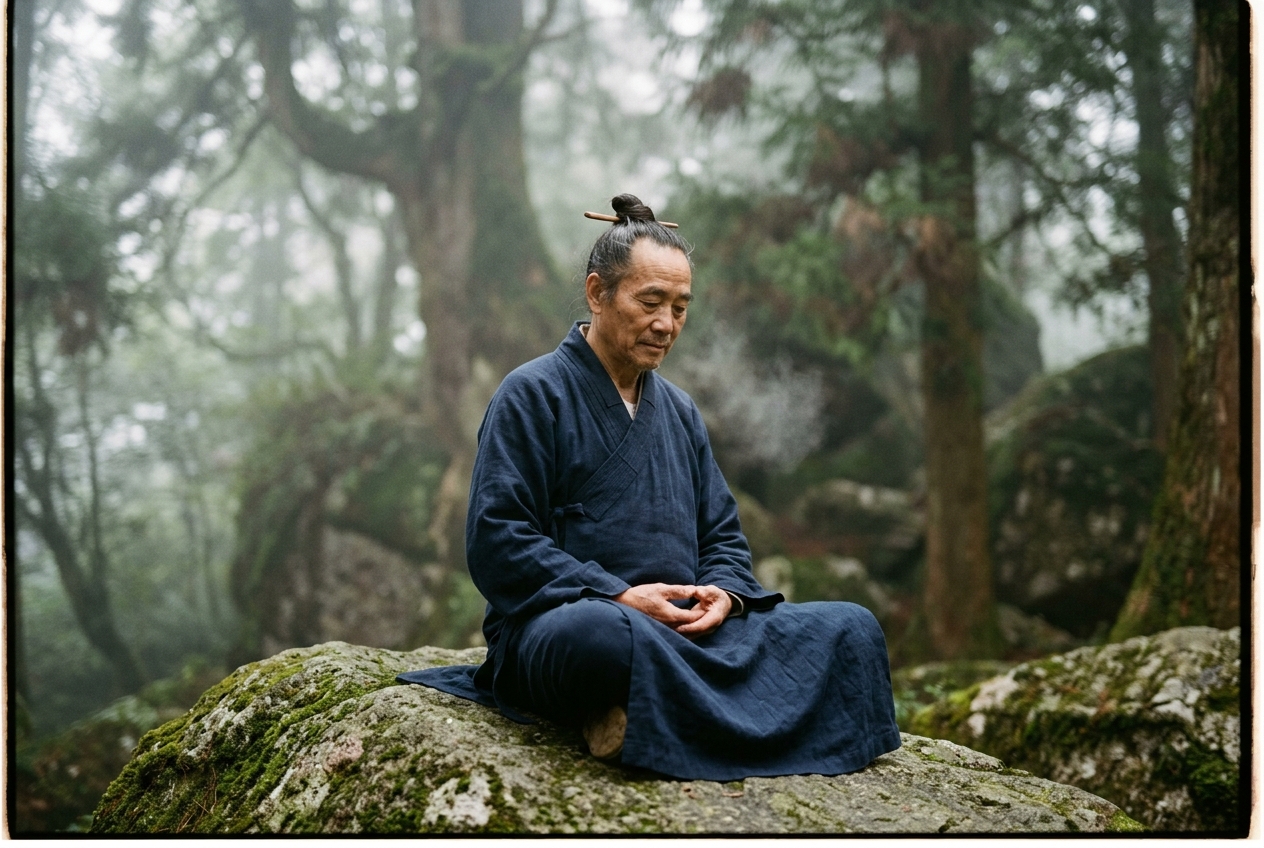
In traditional terminology, this lower abdominal reservoir is known as the Lower Dantian (Xia Dantian, 下丹田)—a biomechanical and energetic center of gravity situated roughly two to three finger-widths below the navel and deep within the pelvic bowl. By progressively slowing the respiratory cycle from the typical adult rate of twelve to twenty breaths per minute down to an ultra-slow rhythm of two or three breaths per minute, Gui Xi Gong shifts the entire nervous system from chronic vigilance into restorative equilibrium. What begins as a simple physical discipline gradually becomes a gateway into classical embryonic respiration (Tai Xi, 胎息), where cellular oxygenation becomes remarkably efficient and physiological strain gently dissolves.
Step-by-Step Practice Guide
The foundational mastery of Gui Xi Gong demands strict adherence to structural alignment, nuanced pelvic-diaphragmatic engagement, and meticulous psychological neutrality. Practiced without postural integrity, slow breathing can inadvertently induce hyperventilation, carbon dioxide panic, or muscular bracing.
1. Postural Architecture and Somatosensory Setup
- The Base and Pelvic Positioning: Sit with the pelvis in neutral tilt, avoiding both posterior lumbar collapse (slouching) and excessive anterior lordosis (flaring the lower back). The perineum—designated in Traditional Chinese Medicine as the acupoint Huiyin (CV-1, 會陰)—rests lightly anchored above the seat, providing an elastic, supportive pelvic floor base.
- Sternal Softening (Han Xiong Ba Bei, 含胸拔背): Without rounding forward into a hunch, release the sternum inward and downward. Allow the sternocostal junctions to soften so that the chest feels spacious and empty, releasing any tension across Tanzhong (CV-17, 膻中), the mid-chest acupoint.
- Axial Cervical Lengthening (Xu Ling Ding Jin, 虛靈頂勁): Emulating the tortoise drawing its head smoothly along the axis of its shell, gently draw the chin horizontally backward by a fraction of an inch, simultaneously elevating the crown of the head (Baihui, GV-20, 百會) toward the ceiling. This subtly decompresses the atlanto-occipital joint and relieves chronic compression along the vagus nerve and carotid sinuses.
- Palatal Seal (Que Qiao, 鵲橋): Place the broad surface of the tongue gently against the upper alveolar ridge behind the front teeth. This completes the energetic circuit between the Governing Vessel (Du Mai) and Conception Vessel (Ren Mai), while encouraging laminar, filtered nasal airflow.
2. The Four-Phase Chelonian Respiratory Cycle
Once the posture is stable, practice the four discrete phases of the micro-tidal breath without straining the respiratory muscles:
- Phase I: Micro-Tidal Inhalation (Xi, 吸 — 6 to 10 Seconds): Draw ambient air through the nostrils with absolute quietude—so soft that a feather suspended before the nares would not flutter. Instead of lifting the ribcage, visualize the breath descending smoothly down the central axial channel (Zhong Mai) directly into the pelvic basin. The lower abdominal wall, flanks, and lower lumbar region expand omnidirectionally like a gentle balloon filling with warm water.
- Phase II: Post-Inspiratory Suspension (Bi Qi, 閉氣 / Kumbhaka — 4 to 8 Seconds): When the lungs reach a comfortable, unpressurized 70–80% of capacity, cease airflow without closing the vocal cords with a harsh muscular grip. Maintain an open glottis, allowing the inhaled volume to settle into the lower abdomen. Gently sustain a very slight, buoyant upward tone in the pelvic floor (Huiyin). This creates a steady, contained intra-abdominal warmth without generating intracranial or ocular pressure.
- Phase III: Continuous, Frictionless Exhalation (Hu, 呼 — 8 to 12 Seconds): Release the breath through the nostrils in an unbroken, whisper-fine stream. Allow the abdominal wall to recede passively toward the spine via natural elastic recoil, rather than through forceful contraction of the transversus abdominis. Keep the shoulders and chest entirely still throughout the release.
- Phase IV: Post-Expiratory Quietude (Ting, 停 — 2 to 4 Seconds): Rest in the neutral, empty basin of complete exhalation. In this brief interlude of metabolic suspension, the physical body rests in absolute stillness before the autonomic nervous system quietly signals the next natural impulse to inhale.
3. Somatosensory Benchmarks: What to Look For
As you sustain this rhythm for ten to fifteen minutes, specific neurovascular sensations will predictably emerge:
- Thermal Radiation at the Lower Back (Mingmen, 命門): A distinct sensation of spreading warmth at the second and third lumbar vertebrae indicates vasodilation and the activation of deep abdominal parasympathetic networks.
- Micro-Vascular Tingling in Extremities: A fine, effervescent tingling across the fingertips and palms reflects enhanced peripheral perfusion and microvascular dilation driven by regulated carbon dioxide retention.
- Salivary Secretion (Yu Jin, 玉液 — "Jade Fluid"): The accumulation of sweet, thin saliva in the oral cavity confirms strong parasympathetic activation through the glossopharyngeal and facial cranial nerves. In classical Daoist hygiene, this saliva is swallowed in small portions down into the Dantian to nourish internal vitality.
- Somatic Heaviness and Grounding: A sensation of structural density, as if the physical body has settled downward with the stable mass of a mountain tortoise.
4. Common Technical Errors and Precision Corrections
| Technical Error | Biomechanical Consequence | Systematic Correction |
|---|---|---|
| Apical Chest Lifting | Elevates sympathetic arousal; causes scalene and trapezius strain. | Place one hand on the sternum and one on the lower belly; ensure the upper hand remains entirely motionless during inhalation. |
| Glottic Clamping (Valsalva) | Spikes blood pressure and increases intracranial pressure during suspension. | Keep the back of the throat wide and relaxed, as if silently whispering the vowel sound "Ah" with an open airway during breath holds. |
| Air Hunger Over-Breathing | Induces compensatory gasping, triggering panic and hyperventilation. | Shorten the suspension phase immediately. Reduce the respiratory cycle to a comfortable baseline (e.g., 4s in, 2s hold, 6s out) and expand gradually. |
| Lumbar Collapse / Slouching | Compresses the lower diaphragm and blocks peritoneal displacement. | Place a firm wedge beneath the ischial tuberosities to elevate the hips slightly above the knees, restoring the natural lumbar curve. |
5. Safety Considerations and Clinical Contraindications
While Gui Xi Gong is deeply restorative, the intentional modulation of respiratory chemistry requires thoughtful application. Individuals with uncontrolled Stage II hypertension, severe arterial aneurysms, active retinal detachment, or acute cardiovascular instability should entirely omit the breath retention (Bi Qi) phase, engaging solely in continuous, unpaused slow breathing. Pregnant practitioners should avoid prolonged post-inspiratory suspension and strong pelvic floor engagement, adhering instead to smooth, unrestricted tidal pacing.
Why It Works — The Body Science
The profound therapeutic outcomes of Gui Xi Gong are rooted in precise neurorespiratory, hemodynamic, and autonomic mechanisms validated by modern physiological research. Rather than acting as a mystical abstraction, the chelonian breath functions as a direct, voluntary intervention into autonomic regulation.
Hypercapnic Tolerance and the Bohr Effect
Spontaneous breathing in modern urban environments is frequently characterized by chronic, low-grade hyperventilation—a pattern that chronically expels carbon dioxide ($CO_2$) and induces systemic vasoconstriction. When an individual adopts the micro-tidal volume and decelerated frequency of Gui Xi Gong (<3 breaths/minute), alveolar ventilation is intentionally diminished. This produces a state of mild, controlled, normoxic hypercapnia, elevating the arterial partial pressure of carbon dioxide ($PaCO_2$).
As documented across clinical literature hosted by the NCBI PubMed Central Database, gradual adaptation to elevated $PaCO_2$ resets the sensitivity threshold of the central medullary and peripheral carotid chemoreceptors. Furthermore, via the well-established Bohr Effect, a mild increase in carbon dioxide concentration decreases blood pH locally, which alters the allosteric structure of hemoglobin to release bound oxygen molecules much more readily into metabolically active peripheral tissues. Paradoxically, by breathing significantly less air by volume, the practitioner delivers substantially more oxygen to the brain, myocardium, and visceral organs.
Vagal Tone, Baroreflex Resonation, and Heart Rate Variability
The prolonged exhalation and tranquil breath holds of Gui Xi Gong act as a direct biomechanical stimulus for the vagus nerve (Cranial Nerve X). During slow diaphragmatic descent, increased intra-thoracic pressure during exhalation stimulates the low-pressure pulmonary stretch receptors and high-pressure aortic baroreceptors.
This sensory afferent cascade travels through the solitary tract (nucleus tractus solitarii) into the brainstem, driving a sharp increase in cardiac vagal efferent activity. The clinical metric for this state is High-Frequency Heart Rate Variability (HF-HRV), an established biological marker of parasympathetic nervous system dominance, cardiovascular resilience, and emotional self-regulation.
Practicing at approximately 0.05 to 0.1 Hz (roughly 3 to 6 breaths per minute, stepping down to even lower micro-cycles) synchronizes heart rate fluctuations, blood pressure waves (Mayer waves), and respiration into a state of cardiorespiratory resonance. Comprehensive scientific syntheses from the National Center for Biotechnology Information on Slow Breathing Mechanisms demonstrate that this resonance dampens sympathetic tone, downregulates systemic pro-inflammatory cytokines, and conserves myocardial energy expenditure.
Transdiaphragmatic Hemodynamics and Splanchnic Massage
In thoracic or apical breathing, the diaphragm moves mere millimeters, leaving the blood within the large abdominal venous reservoirs relatively stagnant. In Gui Xi Gong, the piston-like descent of the diaphragmatic crus compresses the liver, spleen, pancreas, and mesenteric vessels against the elastic resistance of the pelvic floor (Huiyin).
This rhythmic alternation of positive intra-abdominal pressure during inhalation and negative intra-thoracic pressure during exhalation acts as an auxiliary hemodynamic pump. It accelerates venous return through the inferior vena cava toward the right atrium of the heart, reducing cardiac workload while gently massaging the gastrointestinal tract to enhance motility and lymphatic clearance.
Classical Lineage & The Chelonian Metaphor in Daoist Longevity
The systematic cultivation of Gui Xi Gong occupies an esteemed position in China's classical longevity arts, bridging historical classical texts with modern integrative health practices recognized by the World Health Organization Traditional Medicine Guidelines.
Ge Hong's Baopuzi and the Daoist Canon
The earliest systematic expositions of chelonian and embryonic respiration appear within the Jin Dynasty foundational text, the Baopuzi (抱朴子, "Master Who Embraces Simplicity"), authored by the renowned physician, alchemist, and philosopher Ge Hong (葛洪, 283–343 CE). In the Neipian (Inner Chapters), Ge Hong observed that creatures renowned for exceptional lifespans—most notably the crane and the tortoise—possess distinct postural alignments and slow respiratory rhythms that conserve vital energy:
"The tortoise and crane live for countless ages because they excel at gathering their breath into the interior, drawing their necks into their bodies, and moving their spirit without agitation. Those who refine the inner breath model themselves upon the tortoise's withdrawal, allowing the breath to settle into the cinnabar field until the ordinary breath ceases and the embryonic breath is born." — Ge Hong, Baopuzi Neipian, Chapter 8 (釋滯)
Throughout the classical Daoist Canon (Daozang, 道藏), this methodology was codified under the broader discipline of Daoyin (導引)—the art of guiding physical movement and breath to harmonize internal physiology. Classical texts such as the Tai Xi Jing (胎息經, "Scripture of Embryonic Respiration") describe how the fetus in the womb does not respire through the mouth or nostrils, but absorbs nourishment directly through the umbilical cord connected to the maternal matrix. Gui Xi Gong was engineered as a systematic technology to return the adult practitioner to this primordial state of metabolic conservation.
Bioenergetic Dimensions: Yuan Qi and Mingmen Ignition
In Traditional Chinese Medicine and Internal Alchemy (Neidan, 內丹), every individual is born with a finite reservoir of Prenatal Original Qi (Yuan Qi, 元氣), housed between the kidneys in the energetic furnace known as Mingmen (命門, "The Gate of Vitality"). In everyday living, Yuan Qi is steadily depleted through physiological stress, emotional agitation, and erratic respiration.
Gui Xi Gong reverses this depletion through the interplay of breath (Qi), essence (Jing), and awareness (Shen). When the breath is retained softly at the Lower Dantian without muscular clamping, it kindles the digestive fire at Mingmen. The continuous downward pressure of the diaphragm drives physiological warmth into the lower abdomen, consolidating Yuan Qi so that it is not dissipated upward as pathologically rising heat (Shang Huo, 上火).
Through long-term regular practice, the respiratory mechanics transition from muscular, effortful pulmonary ventilation to an effortless internal energetic pulse—a benchmark celebrated across scholarly institutions like the National Qigong Association as the hallmark of internal longevity cultivation.
Today's Practice Commitment
To transform theoretical understanding into tangible neurophysiological adaptation, begin with an accessible daily protocol that anchors this state before the demands of daily life intervene:
The 7-Minute Morning Chelonian Protocol
Tomorrow morning, immediately upon waking and before consuming coffee or checking digital devices:
- Sit upright on the edge of your bed or a sturdy chair with your spine axially elongated and the crown of your head lifted.
- Rest your tongue on the palate, soften your sternum, and place both palms over your lower abdomen (Lower Dantian).
- Perform 12 cycles of Tortoise Breathing: Inhale silently for 6 seconds into your belly, pause comfortably with an open throat for 4 seconds, exhale smoothly for 8 seconds, and rest in the quiet empty space for 2 seconds.
- Conclude by rubbing your palms together until warm, placing them over your lower back to gently massage the Mingmen area, and observing the sense of mental clarity, grounded calm, and physiological composure that accompanies you into the day.