Four Seas Points: Navigating Deep Physiological Reservoirs, Ling Shu Energetic Basins, and Systemic Tonic Acupressure Protocols
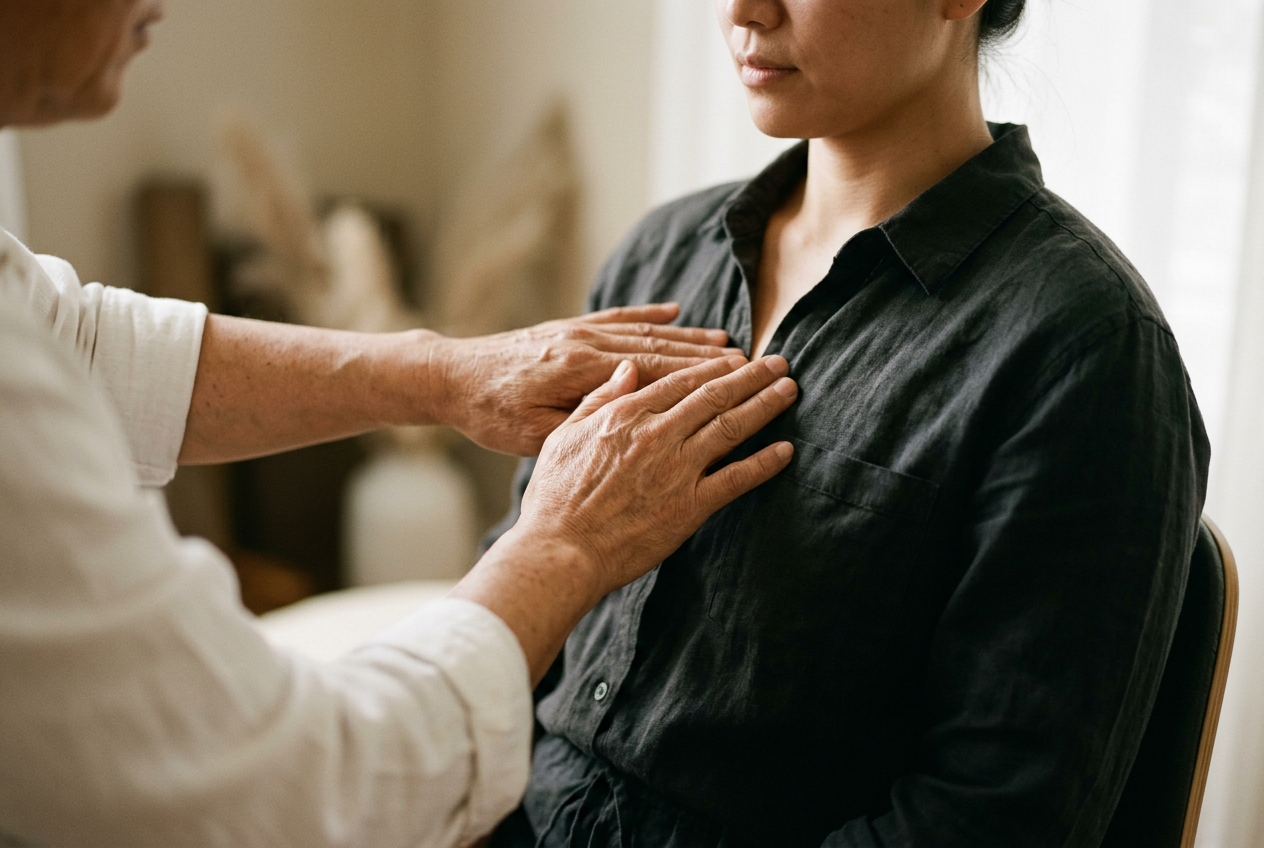
If you move through the contemporary world with an insidious, low-grade exhaustion—a heavy postprandial stupor after lunchtime meals, a persistent tension coiling behind the sternum, or a cognitive cloudiness that caffeine fails to dispel—you are navigating a breakdown in your internal systemic reservoirs. In modern medicine, these ubiquitous complaints are frequently atomized into separate clinical categories: functional dyspepsia, autonomic dysregulation, tension cephalalgia, or chronic fatigue syndrome. Yet, long before the invention of biochemical assays, traditional East Asian medicine recognized that human physiology does not operate merely through isolated, linear conduits, but through expansive, deep-seated functional reservoirs known as the Four Seas (Si Hai, 四海).
First codified systematically in Chapter 33 of the ancient classical treatise Huangdi Neijing Ling Shu (The Spiritual Pivot: Treatise on the Seas), this theoretical framework posits that just as terrestrial rivers and streams ultimately originate from and drain into vast oceans, the body’s twelve primary meridians and collateral networks draw their reserves from four systemic basins: the Sea of Qi, the Sea of Blood, the Sea of Water and Grain, and the Sea of Marrow. When these reservoirs are replete and circulating smoothly, physical vigor and cognitive clarity remain unshakeable. When they fall into systemic excess (shi) or depletion (xu), the body generates distinct clusters of somatic distress.
Modern physiological research increasingly validates this ancient model. Contemporary neurobiology, fascial biotensegrity, and vascular physiology demonstrate that the classical transport points (shu xue) governing these Four Seas correspond precisely with critical neurovascular bundles, baroreceptor zones, autonomic ganglia, and myofascial nodal intersections. By translating classical channel mechanics into targeted, non-invasive acupressure protocols, we obtain a sophisticated somatic toolkit capable of modulating autonomic tone, relieving visceral congestion, and re-establishing homeostasis.
The Meridian Path — A Journey Through the Body
To understand how the Four Seas function, one must visualize the human body not as a collection of static organs, but as an interconnected hydraulic landscape. Traditional meridian theory, documented comprehensively in standardized international nomenclature, maps twelve primary channels that traverse the extremities and torso like swift-flowing rivers. However, Chapter 33 of the Ling Shu introduces a profound structural distinction: linear channels distribute kinetic flow, whereas the Four Seas serve as regulatory reservoirs that maintain systemic hydrostatic balance.
The geographical layout of these four basins traces the primary axes of human anatomy:
- The Vertical Axis of Consciousness (The Sea of Marrow): Centered within the cranium and spinal canal, this reservoir encompasses the cerebrospinal fluid axis and neural architecture. Its energetic domain extends from the very apex of the skull—the cranial vertex—down to the suboccipital hollow at the base of the skull, where the brainstem transitions into the cervical spinal cord.
- The Cardiopulmonary Epicenter (The Sea of Qi): Situated in the thoracic cavity, this reservoir spans the center of the breastbone, ascends along the lateral corridors of the throat alongside the carotid pulse, and wraps posteriorly around the prominent bony junction at the base of the neck where the cervical spine meets the thoracic rib cage.
- The Metabolic Cauldron (The Sea of Water and Grain): Anchored across the mid-abdomen and the digestive tract, this reservoir spans the lower abdominal crease where the torso meets the thigh, extending down the powerful muscular ridge running along the outer side of the shinbone.
- The Circulatory Matrix (The Sea of Blood): Intersecting with the primordial Chong Mai (Penetrating Vessel), this reservoir connects the upper posterior rib cage—adjacent to the upper dorsal spine—with the deep fascial highways running down the lateral compartment of the lower leg, just outside the shin.
Contemporary biomedical research into connective tissue tensegrity, pioneered in studies published on fascial mechanotransduction, suggests that these vast reservoir pathways align with major continuous fascial planes (such as the Superficial Back Line, Deep Front Line, and Spiral Line). Mechanical compression applied to points situated along these planes generates piezoelectric and hydraulic signals through the extracellular matrix, altering interstitial fluid pressure and eliciting systemic autonomic reflexes.
The Four Seas System: Key Points & Clinical Protocols
The Ling Shu provides precise diagnostic criteria for identifying whether a Sea is in a state of pathological excess (fullness) or deficiency (emptiness). Below, we systematically analyze each of the Four Seas, contrasting classical pathology with contemporary neurovascular correlates, and detailing exact acupressure protocols.
1. The Sea of Qi (Qi Hai, 气海)
The Sea of Qi governs respiration, cellular oxygenation, speech vitality, and thoracic hemodynamic output. It is situated primarily in the chest (Shanzhong), with its peripheral transport portals located at the neck, upper back, and lateral throat.
+---------------------------------------------------------------------------------------+
|                                    THE SEA OF QI                                      |
+---------------------------------------------------------------------------------------+
|  Primary Loci:  CV17 (Shanzhong), ST9 (Renying), GV14 (Dazhui) / GV15 (Yamen)        |
|  Energetic Core: Pectoral Qi (Zong Qi), Cardiorespiratory rhythm, Thoracic fascial dome|
+---------------------------------------------------------------------------------------+
|  SYMPTOM PROFILES (Ling Shu Ch. 33):                                                  |
|  • Fullness (Excess): Sensation of oppressive thoracic congestion, rapid or labored  |
|    breathing (息贲), facial flushing, emotional agitation, sudden hypertensive rise.  |
|  • Emptiness (Deficiency): Insufficient breath to sustain clear speech (气少不足以言),|
|    apathy, weak vocal projection, chronic respiratory fatigue, postural collapse.    |
+---------------------------------------------------------------------------------------+
Key Acupoints & Palpation Dynamics
- CV17 (Shanzhong /膻中 - Conception Vessel 17):
- Everyday Location: Positioned directly on the anterior midline of the sternum, at the horizontal level of the fourth intercostal space (traditionally aligned with the midpoint between the nipples in men, or the level of the armpit fold).
- Palpatory Feedback: A distinct, highly sensitive depression along the bone that feels tender, bruised, or radiating when congested.
- Biomedical Mechanism: Overlies the cardiac nerve plexus and internal thoracic vascular chain; rich in sensory nociceptors and low-threshold mechanoreceptors that directly influence vagal cardiac modulation.
-
Application: Place the pad of your middle finger over the central sternal indentation. Apply perpendicular, gentle to moderate pressure (never jarring force). Hold with a slow, circular rocking motion for 60 to 90 seconds, breathing deeply into the upper chest to expand the anterior ribcage.
-
ST9 (Renying /人迎 - Stomach 9):
- Everyday Location: Located on the neck, 1.5 fingerbreadths lateral to the prominent point of the thyroid cartilage ("Adam's apple"), situated right on the anterior border of the sternocleidomastoid (SCM) muscle, directly over the pulsating carotid artery.
- Palpatory Feedback: A noticeable arterial pulse with surrounding myofascial tenderness.
- Biomedical Mechanism: Directly overlies the carotid sinus, housing high-density baroreceptors and the glossopharyngeal/vagus nerve pathway that regulates systemic blood pressure and arterial tone.
-
Application: Caution: Use ultra-light, unilateral pressure only. Never press bilaterally or forcefully. Lightly cup the neck and rest two finger pads along the anterior edge of the SCM. Maintain featherlight contact for 30 to 45 seconds per side to soothe sympathetic hyperarousal.
-
GV14 (Dazhui /大椎 - Governing Vessel 14):
- Everyday Location: At the posterior base of the neck, directly in the depression below the spinous process of the seventh cervical vertebra (the most prominent bony bump that moves when you bow your head).
- Palpatory Feedback: A warm, broad depression that feels stiff or achy after prolonged desk work.
- Biomedical Mechanism: Major junction of sympathetic chains and cervicothoracic spinal nerve roots.
- Application: Using the reinforced pads of the middle and index fingers, exert firm, steady perpendicular pressure angled slightly upward toward the crown of the head for 90 seconds.
2. The Sea of Blood (Xue Hai, 血海)
The Sea of Blood represents the deep vascular, hematopoietic, and microcirculatory reservoir of the body, intimately linked with the Chong Mai (Penetrating Vessel). It governs systemic tissue perfusion, muscular nourishment, and gynecological equilibrium.
+---------------------------------------------------------------------------------------+
|                                   THE SEA OF BLOOD                                    |
+---------------------------------------------------------------------------------------+
|  Primary Loci:  BL11 (Dazhu), ST37 (Shangjuxu), ST39 (Xiajuxu)                        |
|  Energetic Core: Vascular storage, Microcirculatory perfusion, Endothelial resilience  |
+---------------------------------------------------------------------------------------+
|  SYMPTOM PROFILES (Ling Shu Ch. 33):                                                  |
|  • Fullness (Excess): Sensation of the body feeling uncomfortably large or bloated   |
|    (身大), generalized cutaneous puffiness, vague systemic distress with ill-defined  |
|    pain, vascular congestion, or emotional irritability.                              |
|  • Emptiness (Deficiency): Sensation of the body feeling diminished, frail, or       |
|    "small" (身小狭), chronic dry skin, cold extremities, deep fatigue, inability to   |
|    sustain physical exertion without profound muscle soreness.                        |
+---------------------------------------------------------------------------------------+
Key Acupoints & Palpation Dynamics
- BL11 (Dazhu /大杼 - Bladder 11):
- Everyday Location: On the upper back, approximately 1.5 thumb-widths lateral to the lower border of the spinous process of the first thoracic vertebra (T1), situated just below the neck-shoulder transition.
- Palpatory Feedback: Deep, fibrous muscular tension along the erector spinae muscles with an intense, pleasurable ache upon sustained compression.
- Biomedical Mechanism: Influential point for Bone and Blood vessel convergence; modulates sympathetic efferent pathways to the pulmonary and cardiovascular beds.
-
Application: Lean back against a firm foam roller or place two tennis balls on either side of the spine at this level, applying body-weight compression for 60 to 90 seconds while focusing on slow exhalations.
-
ST37 (Shangjuxu /上巨虚 - Stomach 37) & ST39 (Xiajuxu /下巨虚 - Stomach 39):
- Everyday Location: Located along the outer edge of the shinbone (anterior tibialis muscle). ST37 lies roughly 6 fingerbreadths below the knee joint line, one fingerbreadth lateral to the tibial crest. ST39 sits 3 fingerbreadths further down the same muscular groove.
- Palpatory Feedback: A distinct, exquisitely tender neurofascial trough that evokes a deep, heavy radiating sensation (De Qi) down to the dorsum of the foot.
- Biomedical Mechanism: Lower He-Sea points of the Large and Small Intestines; closely associated with the deep peroneal nerve and anterior tibial artery, modulating mesenteric and peripheral microcirculation via somatic-visceral spinal reflexes.
- Application: Using the reinforced thumb or knuckle, apply deep, perpendicular pressure directed slightly inward toward the shinbone. Maintain firm, steady pressure with a rhythmic kneading motion (1 Hz frequency) for 90 seconds per leg.
3. The Sea of Water and Grain (Shui Gu Zhi Hai, 水谷之海)
The Sea of Water and Grain is the quintessential metabolic reservoir, residing in the Stomach and Spleen functional axis. It oversees nutritional breakdown, energy extraction, fluid assimilation, and enteric vitality.
+---------------------------------------------------------------------------------------+
|                             THE SEA OF WATER AND GRAIN                                |
+---------------------------------------------------------------------------------------+
|  Primary Loci:  ST30 (Qichong), ST36 (Zusanli)                                        |
|  Energetic Core: Enteric nervous system, Vagal-gut axis, Postnatal Qi production      |
+---------------------------------------------------------------------------------------+
|  SYMPTOM PROFILES (Ling Shu Ch. 33):                                                  |
|  • Fullness (Excess): Epigastric and abdominal distension (腹满), severe postprandial |
|    bloating, acid reflux, constipation, visceral tension, restlessness.               |
|  • Emptiness (Deficiency): Constant hunger accompanied by an inability to digest food |
|    properly (饥不能食), chronic loose stools, profound post-meal fatigue, metabolic  |
|    weakness, muscle wasting, and generalized lethargy.                                |
+---------------------------------------------------------------------------------------+
Key Acupoints & Palpation Dynamics
- ST36 (Zusanli /足三里 - Stomach 36):
- Everyday Location: Sit comfortably with your knee bent at 90 degrees. Locate the prominent bump just below your kneecap (the tibial tuberosity). Move one fingerbreadth to the outside of your leg into the soft muscular dip of the tibialis anterior muscle.
- Palpatory Feedback: A distinct, dull, spreading ache that radiates downwards toward the ankle or upward toward the knee when pressed firmly.
- Biomedical Mechanism: Extensively validated in PubMed neurobiological studies as a master hub for the cholinergic anti-inflammatory pathway, stimulating the vagus nerve and down-regulating systemic inflammatory cytokines (TNF-α, IL-6).
-
Application: Press deeply with your thumb pad at a 90-degree angle. Apply sustained, pulsing pressure (3 seconds firm, 1 second release) continuously for 2 to 3 minutes per side.
-
ST30 (Qichong /气冲 - Stomach 30):
- Everyday Location: In the lower abdominal/groin crease, approximately 2 thumb-widths lateral to the midline of the pubic bone (superior border of the pubic symphysis).
- Palpatory Feedback: A deep, warm vascular groove where the femoral arterial pulse can be palpated nearby.
- Biomedical Mechanism: Regional crossway of the ilioinguinal nerve, genital branch of the genitofemoral nerve, and deep pelvic lymphatic drainage pathways.
- Application: Lie supine with knees slightly bent to soften the abdominal wall. Apply broad, gentle palm or paired-finger pressure directed posteriorly and slightly inferiorly for 60 seconds, cultivating a sensation of warmth spreading across the lower pelvis.
4. The Sea of Marrow (Sui Zhi Hai, 髓之海)
The Sea of Marrow is the neurobiological reservoir encompassing the brain, spinal cord, and sensory organs. In classical physiology, Marrow (Sui) is generated by the distillation of Kidney Essence (Jing) and nourished continuously by the Sea of Water and Grain.
+---------------------------------------------------------------------------------------+
|                                  THE SEA OF MARROW                                    |
+---------------------------------------------------------------------------------------+
|  Primary Loci:  GV20 (Baihui), GV16 (Fengfu)                                          |
|  Energetic Core: Central nervous system, Glymphatic clearance, Sensory integration    |
+---------------------------------------------------------------------------------------+
|  SYMPTOM PROFILES (Ling Shu Ch. 33):                                                  |
|  • Fullness (Excess): Sensation of excessive, frantic cognitive overdrive, manic      |
|    energy, feeling invincible or disconnected from physical limits (轻劲多力自倍),    |
|    intense cranial pressure, ocular tension.                                          |
|  • Emptiness (Deficiency): Vertigo, rotational dizziness, tinnitus (脑转耳鸣),      |
|    weakness and aching in the lower limbs, blurred vision (目无所见), brain fog,      |
|    profound mental fatigue, irresistible urge to lie down (懈怠安卧).                 |
+---------------------------------------------------------------------------------------+
Key Acupoints & Palpation Dynamics
- GV20 (Baihui /百会 - Governing Vessel 20):
- Everyday Location: At the highest apex of the crown of your head. To locate it, fold your ears forward, trace an imaginary line straight up from the tips of both ears to the top of your skull, and feel for a slight depression right along the midline.
- Palpatory Feedback: A sensitive, pliable indentation in the galea aponeurotica that feels relieving and expansive when pressed.
- Biomedical Mechanism: Overlies the superior sagittal sinus and the convergence of trigeminal, greater occipital, and cervical spinal sensory nerves; induces parasympathetic alpha-wave synchrony in electroencephalography (EEG).
-
Application: Place the pad of your right middle finger directly into the vertex hollow. Apply gentle, stationary downward pressure, coordinating with deep abdominal breaths for 90 to 120 seconds.
-
GV16 (Fengfu /风府 - Governing Vessel 16):
- Everyday Location: At the back of the head, in the large, soft hollow directly below the external occipital protuberance (the base of the skull), situated between the two thick muscular columns of the trapezius muscle.
- Palpatory Feedback: A deep, cavernous groove that elicits an immediate sensation of ocular and cranial release.
- Biomedical Mechanism: Proximity to the suboccipital venous plexus, greater occipital nerve, and the atlanto-occipital junction; modulates cerebrovascular inflow and suboccipital fascial tension.
- Application: Rest your head slightly back into your hands, placing one thumb pad into the central suboccipital hollow. Press gently upward at a 45-degree angle toward the center of the brain for 60 to 90 seconds. Never apply sharp, sudden, or forceful thrusts here.
+===================================================================================================================+
|                                    SUMMARY OF THE FOUR SEAS IN LING SHU CH. 33                                    |
+=========================+=============================+===============================+===========================+
| RESERVOIR (SEA)         | PRIMARY ACUPOINTS           | EXCESS (FULLNESS) PATTERN     | DEFICIENCY (EMPTINESS)    |
+=========================+=============================+===============================+===========================+
| Sea of Qi (气海)        | CV17, ST9, GV14/GV15        | Thoracic oppression, panting, | Weak voice, shortness of  |
|                         |                             | red face, hypertension        | breath, fatigue, silence  |
+-------------------------+-----------------------------+-------------------------------+---------------------------+
| Sea of Blood (血海)     | BL11, ST37, ST39            | Feeling body is enlarged,     | Feeling body is small,    |
|                         |                             | diffuse skin swelling/ache    | emaciation, poor stamina  |
+-------------------------+-----------------------------+-------------------------------+---------------------------+
| Sea of Water & Grain    | ST30, ST36                  | Abdominal distension,         | Hunger with inability to  |
| (水谷之海)              |                             | severe bloating, fullness     | eat, severe weak digestion|
+-------------------------+-----------------------------+-------------------------------+---------------------------+
| Sea of Marrow (髓之海)  | GV20, GV16                  | Manic hyper-energy, excess    | Vertigo, tinnitus, sore   |
|                         |                             | physical force, tension       | shins, ocular blur, fog   |
+=========================+=============================+===============================+===========================+
A Point Combination for One Common Issue
The Clinical Scenario: Neurovisceral Burnout & Autonomic Overdrive
Consider a typical modern predicament: You have spent ten hours staring into high-luminance screens under deadline pressure, skipped lunch, and consumed an excess of stimulants. Your head is throbbing with fuzzy cranial tension (Sea of Marrow deficiency/stasis), your chest feels shallow and restricted (Sea of Qi stagnation), and your epigastrium is knotted in a state of nervous digestion (Sea of Water and Grain dysregulation).
To resolve this multi-reservoir crisis, we employ a synergistic three-step somatic reset designed to downshift the sympathetic nervous system, open the thoracic dome, and anchor erratic Qi back into the lower physical matrix.
The Step-by-Step "Do This Tonight" Protocol:
-
Positioning & Preparation (30 seconds): * Sit comfortably on the floor or in a supportive armchair with your feet flat on the ground and your spine upright but unforced. Dim the overhead lights and close your eyes. Inhale slowly through the nose for 4 counts, and exhale smoothly through the mouth for 6 counts.
-
Step 1: Release the Cranium via the Sea of Marrow (90 seconds): * Place the pad of your dominant middle finger directly onto GV20 (Baihui) at the crown of your skull. * Apply a continuous, gentle downward pressure. Do not rub or rotate; simply sustain a calm, unyielding presence. * As you maintain contact, visualize tension draining out from behind your eyes and forehead down toward the floor. You should feel a slight warmth or subtle pulsation at the vertex.
-
Step 2: Liberate the Breath via the Sea of Qi (90 seconds): * Transition your middle and index finger pads to the center of your breastbone at CV17 (Shanzhong). * Exert moderate pressure, pressing directly into the sternal bone. * Begin slow, deep diaphragmatic inhalations. Feel the breastbone physically push against your finger pads on the inhale, and allow your shoulders to drop completely on the exhale. This directly disinhibits the phrenic and vagal pathways, breaking the somatic pattern of shallow panic-breathing.
-
Step 3: Ground the Energy via the Sea of Water and Grain (90 seconds per leg): * Slide down to a seated position where you can easily reach your lower legs. * Place your thumbs firmly onto ST36 (Zusanli), located one fingerbreadth lateral to the shinbone crest below the knee. * Press with firm, deliberate force, creating a deep, radiating ache that travels downward along the tibialis anterior muscle. Use a rhythmic 3-second compression followed by a 1-second partial release. * This powerful distal point anchors blood flow away from the congested cranium and back into the somatic and visceral core.
Safety & Sense
While non-invasive acupressure is remarkably safe and self-regulating, working with the primary reservoirs of the human body demands clinical respect and anatomical awareness. The following boundaries must be strictly observed:
+---------------------------------------------------------------------------------------+
|                               CRITICAL SAFETY GUIDELINES                              |
+---------------------------------------------------------------------------------------+
|  1. PREGNANCY CONTRAINDICATIONS:                                                      |
|     Avoid deep or forceful downward stimulation on lower abdominal points like ST30   |
|     (Qichong) and upper back descending hubs like BL11 (Dazhu) during pregnancy.      |
|                                                                                       |
|  2. VASCULAR & CAROTID PRECAUTIONS:                                                   |
|     NEVER apply bilateral, simultaneous, or forceful pressure to ST9 (Renying) along  |
|     the neck. Excessive stimulation of the carotid sinus can trigger abrupt brady-   |
|     cardia or transient hypotension.                                                  |
|                                                                                       |
|  3. PRESSURE THRESHOLD ("DE QI" vs. TISSUE DAMAGE):                                   |
|     Correct stimulation produces "De Qi"—a distinct dull ache, pleasant soreness, or  |
|     spreading warmth. Sharp, piercing, or electric pain signals neural compression    |
|     or bruising; back off immediately.                                                |
|                                                                                       |
|  4. CLINICAL REFERRAL CRITERIA:                                                       |
|     Acupressure is a restorative and regulatory modality, not an emergency treatment.|
|     Sudden crushing chest pain, severe neurological deficits, unexplained fainting,   |
|     or chronic unremitting vertigo require immediate medical evaluation by a licensed |
|     physician or qualified clinical acupuncturist.                                    |
+---------------------------------------------------------------------------------------+
Today's Takeaway
To immediately experience the regulatory power of the Four Seas framework, take two minutes right now to reset your central Sea of Qi:
+---------------------------------------------------------------------------------------+
|                             YOUR 2-MINUTE SOMATIC RESET                               |
+---------------------------------------------------------------------------------------+
|  TARGET POINT:  CV17 (Shanzhong /膻中 - Sea of Qi Epicenter)                         |
|  TARGET ISSUE:  Midday brain fog, postural chest tightness, low-level anxiety         |
|                                                                                       |
|  THE 120-SECOND PROTOCOL:                                                             |
|  1. Find the exact center of your sternum, level with your armpits.                   |
|  2. Rest your thumb or middle finger in the central tender depression.               |
|  3. Apply steady, moderate pressure (5/10 intensity).                                 |
|  4. Close your eyes and take 10 slow breaths: 4 seconds in, 6 seconds out.            |
|  5. Feel your shoulders drop and your thoracic capacity expand.                       |
+---------------------------------------------------------------------------------------+
By understanding and engaging the classical Four Seas, we move beyond temporary symptomatic patches. We begin to interact directly with the deep physiological architecture of our vitality—cultivating a grounded body, a calm spirit, and a resilient mind.
Authoritative References & Further Reading
- World Health Organization: Standard Acupuncture Point Locations in the Western Pacific Region
- National Center for Biotechnology Information (NCBI) Bookshelf: Acupuncture Mechanisms
- PubMed: Connective Tissue Tensegrity & Fascial Mechanotransduction in Acupuncture
- PubMed Central: Neurobiological Mechanisms of Acupoint Stimulation and Autonomic Homeostasis
- Wikipedia: Meridian Theory in Traditional Chinese Medicine
- Wikipedia: Huangdi Neijing (The Yellow Emperor's Classic of Internal Medicine)