Four Levels Differentiation (Wei Qi Ying Xue Bian Zheng) Meridian Dynamics: Governing Warm Pathogen Transmission, Defensive-to-Blood Phase Progression, and Systemic Heat Clearance in Traditional Chinese Medicine
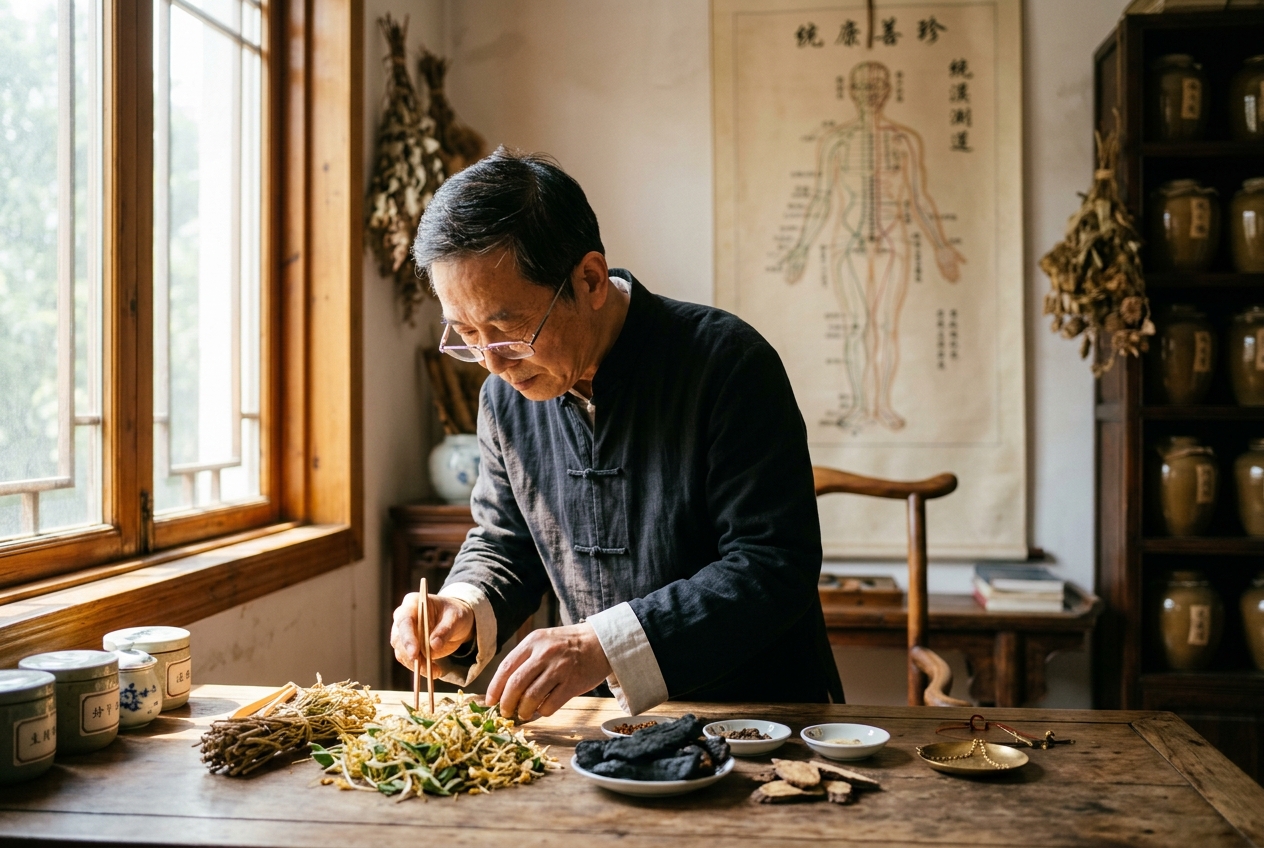
It begins as an imperceptible scratch at the posterior wall of the nasopharynx—a subtle, arid friction that signals a systemic threshold has been breached. Within hours, a paradox takes hold of the body: your skin feels radiant, dry, and uncomfortably hot to the touch, yet a sudden draft across the room induces a sharp, involuntary shiver down your spine. Your forehead burns while your shoulder blades contract against an invisible chill. As the day wanes, a heavy, parched sensation settles deep behind the sternum; cold water offers only fleeting respite, your thoughts become fragmented and agitated, and the quiet comfort of restorative sleep is replaced by tossing, turning, and vivid, feverish dreams.
+-------------------------------------------------------------------------------+
|                        THE PROGRESSION OF FEBRILE HEAT                        |
|                                                                               |
|   [ WEI / Defensive ]       -->   [ QI / Visceral ]                           |
|   Superficial skin & lungs        Interior organ metabolic excess             |
|   Chills, fever, sore throat      Intense thirst, high fever, heavy sweat     |
|              |                                   |                            |
|              v                                   v                            |
|   [ YING / Nutritive ]      -->   [ XUE / Blood ]                             |
|   Pericardium & nervous system    Vascular extravasation & stasis             |
|   Nocturnal heat, delirium        Hemorrhage, petechiae, Shen collapse        |
+-------------------------------------------------------------------------------+
In the diagnostic architecture of Traditional Chinese Medicine, this escalating cascade is neither random nor merely symptomatic; it is the predictable, lawful progression of pathogenic heat traveling through the concentric biological layers of the human organism. Long before modern immunology mapped the cytokine cascade and systemic inflammatory response syndromes, classical Chinese physicians developed a sophisticated framework to understand how external environmental stressors penetrate the body's superficial defenses, ignite internal organ fires, and disrupt neurovascular harmony. Recognizing these somatic signals at their inception transforms an overwhelming illness into an intelligible physiological dialogue—one where targeted breathwork, meridian acupressure, and dietary choices can vent the blaze before it consumes the body's vital fluids.
2. What This Organ System Does: Theoretical Foundations of Wen Bing Xue
To understand internal heat, one must enter the intellectual revolution of the Qing Dynasty (1644–1912), led by the master physician Ye Tianshi (1666–1746). For over a millennium, Chinese medicine had conceptualized acute infectious and febrile diseases primarily through the lens of Zhang Zhongjing’s Han Dynasty classic, the Shang Han Lun (Treatise on Cold Damage). The Shang Han Lun described how pathogenic Cold invades the body through the Six Channels (Liu Jing), beginning at the outermost Yang meridian (Taiyang) and slowly freezing the body's metabolic warmth as it sinks into the deepest Yin channels.
+-----------------------------------------------------------------------------------+
|               DIAGNOSTIC PARADIGM COMPARISON: SHANG HAN VS. WEN BING             |
+------------------------------------+----------------------------------------------+
| Shang Han Lun (Cold Damage)        | Wen Bing Xue (Warm Disease)                  |
+------------------------------------+----------------------------------------------+
| Pathogen: Cold / Wind-Cold         | Pathogen: Warmth / Heat / Toxic Fire         |
| Vector: Exterior Yang to Inner Yin | Vector: Superficial Wei to Deep Xue          |
| Progression: 6 Channels            | Progression: 4 Concentric Energetic Depths   |
| Primary Risk: Loss of Yang Fire    | Primary Risk: Scorching of Yin Body Fluids   |
| Primary Organs: Bladder/Kidney/    | Primary Organs: Lung/Stomach/Large Intestine/|
|                 Spleen Axis        |                 Pericardium/Heart/Liver Axis |
+------------------------------------+----------------------------------------------+
However, in the warmer, densely populated river deltas of southern China, physicians encountered virulent, fast-moving epidemics that defied Cold Damage protocols. Warming herbs like aconite and cinnamon often proved fatal to these patients. In response, Ye Tianshi formulated the Warm Disease School (Wen Bing Xue), establishing the Four Levels Differentiation (Wei Qi Ying Xue Bian Zheng). This revolutionary doctrine models acute febrile illness as a dynamic conflict between pathogenic heat and the body's homeostatic reserves across four functional strata:
- Wei Level (Defensive Layer): The outermost immunological shield, governed by the Lung (Fei) and circulating through the skin, fascia, and superficial interstitial fluid. Its role is thermal regulation and mucosal defense.
- Qi Level (Visceral Metabolic Layer): The interior organ domain, governed primarily by the Stomach (Wei) and Large Intestine (Dachang). When heat breaches the Wei layer, it ignites high metabolic inflammation, creating massive thermodynamic output and rapid fluid consumption.
- Ying Level (Nutritive Layer): The threshold of the vascular and central nervous systems, governed by the Pericardium (Xinbao) and Heart (Xin). Nutritive Qi is the refined energetic precursor to blood; when heated, it produces severe neurological agitation, cognitive delirium, and sleep-wake disruption.
- Xue Level (Blood Layer): The deepest physiological stratum, involving the Blood vascular network, the Liver (Gan) blood reservoir, and the Kidney (Shen) fluid foundation. Heat at this level disrupts coagulation, damages capillary walls, causes cellular hyper-viscosity, and destabilizes the Shen (conscious spirit).
As documented in contemporary reviews by the World Health Organization and studies indexed on PubMed Central, these traditional energetic layers correlate closely with modern pathophysiological phases: superficial mucosal defense, systemic inflammatory response, neuro-inflammatory activation, and microvascular endothelial dysfunction with disseminated intravascular coagulation.
3. How You Can Feel It: Signs of Balance and Imbalance Across the Four Depths
Recognizing where heat resides within the Four Levels allows for prompt, precise intervention. Below is the clinical and somatic taxonomy of each stage, accompanied by its definitive tongue and radial pulse markers.
+------------------------------------------------------------------------------------------+
|                  CLINICAL TAXONOMY OF THE FOUR LEVELS (WEN BING)                         |
+-------+--------------------+-----------------------+-------------------+-----------------+
| Level | Primary Symptoms   | Emotional / Shen State| Tongue Morphology | Radial Pulse    |
+-------+--------------------+-----------------------+-------------------+-----------------+
| WEI   | Fever, slight chill| Mild unease, sensory  | Red edges/tip,    | Floating-Rapid  |
|       | sore throat, cough | hyper-reactivity      | thin white coat   | (Fu Shu)        |
+-------+--------------------+-----------------------+-------------------+-----------------+
| QI    | Four Bigs: fever,  | Irritability, extreme | Vibrant red body, | Surging-Rapid   |
|       | thirst, sweat, pulse| restlessness, agitation| thick yellow coat | (Hong Shu)      |
+-------+--------------------+-----------------------+-------------------+-----------------+
| YING  | Nocturnal fever,   | Insomnia, vivid dreams| Deep crimson/red, | Thready-Rapid   |
|       | dry mouth, no thirst| confusion, delirium   | peeled/no coat    | (Xi Shu)        |
+-------+--------------------+-----------------------+-------------------+-----------------+
| XUE   | Petechiae, bleeding| Mania, convulsions,   | Dark purple/deep  | Wiry-Deep-Rapid |
|       | dark stools, coma  | complete Shen collapse| crimson, mirror   | (Xian Chen Shu) |
+-------+--------------------+-----------------------+-------------------+-----------------+
Stage 1: The Wei (Defensive) Stage — The Superficial Perimeter
- Physical Experience: The onset is marked by an acute aversion to wind and chills alongside an escalating fever. You may experience a dry, hacking cough, localized swelling of the tonsils, occipital headache, and general muscular aches across the upper back and neck.
- Tongue Diagnostics: The tongue body remains largely normal in color or presents with slight erythema at the tip and lateral margins (the anatomical reflection of the Upper Burner and Lungs). The coat is characteristically thin and white, signaling that the pathogen has not yet scorched the interior fluids.
- Pulse Quality: Floating-Rapid (Fu Shu Mai). The radial artery is easily felt with light surface pressure, pulsating with elevated frequency, reflecting the mobilization of Defensive Qi to the vascular periphery.
Stage 2: The Qi (Interior Metabolic) Stage — The Visceral Conflagration
- Physical Experience: Chills disappear entirely; the patient now experiences intense, radiant heat. This stage is universally defined by the "Four Bigs": 1. Big Fever (unremitting high body temperature) 2. Big Thirst (an unquenchable desire for cold liquids) 3. Big Sweating (profuse diaphoresis as the body attempts evaporative cooling) 4. Big Pulse (wide, bounding vascular expansion) If heat binds with physical matter in the Large Intestine, it produces abdominal distension, severe constipation, and foul-smelling loose stool.
- Tongue Diagnostics: The tongue body turns bright red (Hong She). The tongue coat becomes thick, coarse, dry, and distinctly yellow or brown, reflecting the combustion of Stomach fluids.
- Pulse Quality: Surging-Rapid (Hong Shu Mai) or Full-Slippery (Hua Shu Mai). The pulse arrives like a crashing ocean wave, large and forceful, filling the palpating fingers before receding quickly.
Stage 3: The Ying (Nutritive) Stage — Neurocognitive Penetration
- Physical Experience: Heat escapes the gastrointestinal tract and breaches the protective pericardial envelope of the heart and brain. Fever worsens noticeably at night. Paradoxically, the patient experiences a dry mouth but exhibits little to no desire to swallow fluids. The skin may display faint, transient maculopapular eruptions.
- Emotional and Cognitive State: Sleep architecture disintegrates. The patient experiences profound insomnia, constant tossing, vocal mutterings during sleep, disorientation, and incoherent speech, indicating that pathogenic heat is harassing the Shen (the seat of consciousness).
- Tongue Diagnostics: The tongue body transforms into a Deep Crimson (Jiang She)—a rich, dark ruby hue indicating concentrated heat in the nutritive fluid matrix. The lingual coating is largely absent, dry, or cracked, representing severe depletion of physiological Yin.
- Pulse Quality: Thready-Rapid (Xi Shu Mai). The radial vessel feels narrow, fine, and taut like a silk thread, yet beats with sustained rapid velocity.
Stage 4: The Xue (Blood) Stage — Vascular Breakdown and Shen Collapse
- Physical Experience: This is the critical, life-threatening culmination of unmitigated febrile heat. As heat boils the blood (Re Ru Xue Fen), it causes hyper-viscosity, micro-thrombi, and vascular extravasation. The patient manifests petechiae, purpura, epistaxis (nosebleeds), hematemesis (vomiting blood), or melena (blood in stool). Internal heat stirs "Liver Wind," manifesting as involuntary muscular tremors, tetanic spasms, or locked jaw.
- Emotional and Cognitive State: Severe delirium, wild manic behavior, auditory/visual hallucinations, or lethargy progressing rapidly into comatose stupor.
- Tongue Diagnostics: Deep purple-crimson or dark indigo tongue body, often dry as a polished mirror with deep fissures across its center.
- Pulse Quality: Wiry-Deep-Rapid (Xian Chen Shu Mai) or Hollow-Rapid (Kou Shu Mai), reflecting severe internal vascular tension paired with intravascular fluid depletion.
4. Qigong & Movement Practice: Venting the Triple Burner and Calming the Internal Blaze
When internal heat begins to accumulate in the chest, diaphragm, and head, somatic movement can re-establish the downward flow of descending Qi, vent pathogenic warmth through the meridian terminals, and induce parasympathetic down-regulation. This practice, adapted from the classical Six Healing Sounds (Liu Zi Jue) and the Eight Pieces of Brocade (Ba Duan Jin), is designed for immediate home practice without equipment.
===================================================================================
                QIGONG SOMATIC PROTOCOL: CLEARING THE TRIPLE BURNER
===================================================================================

Phase 1: Inhalation (Cooling Ascent)       Phase 2: Exhalation (Heat Venting 'HE')
               [ Palms Ascend ]                             [ Palms Press Down ]
                     |                                              |
                     v                                              v
           Draws earth-coolness up                       Vents visceral fire outward
           along Lung/Pericardium                         via breath sound & fingertips
===================================================================================
Postural Setup and Initial Alignment
- Stand with feet parallel, shoulder-width apart. Unlock your knees, allowing the tailbone to sink gently toward the floor to release the lumbar spine.
- Rest the tip of your tongue against the hard palate, just behind your upper incisors, connecting the Governing (Du) and Conception (Ren) vessels.
- Relax the shoulders and allow the palms to rest naturally at your sides with fingers softly extended.
The Movement: "Clearing the Triple Burner Fire" (San Jiao Xie Huo)
-
Inhalation (Cooling Qi Ascent): * Slowly inhale through the nose over a count of 4 seconds. * Simultaneously raise your hands along the anterior midline of your body, palms facing upward, fingertips pointing toward one another. * Draw the breath and hands past the lower abdomen (Lower Burner), past the solar plexus (Middle Burner), up to the level of the throat (Upper Burner). * As your hands reach the throat, rotate your wrists so the palms turn outward and face forward.
-
Exhalation (Heat-Venting Release): * Open your mouth slightly, keeping the throat relaxed, and produce the sub-vocalized sound "HĒ" (pronounced h-u-r-r-r-y with a soft, warm breath out) over a slow 6-to-8 second exhalation. * Slowly press both palms outward and downward away from your torso at a 45-degree angle, visualizing excessive, turbulent heat descending from your head and chest, down through your legs, and dissipating deep into the earth. * As your hands reach hip level, extend the fingers fully, visualizing heat venting out through the terminal points of the fingers (the Jing-Well points).
-
Duration and Repetitions: * Perform this cycle 12 to 18 continuous repetitions twice daily, or whenever you feel internal restlessness, tension headaches, or digestive heat building.
-
Somatic Shifts to Observe: * Within 6 to 8 cycles, notice a cooling sensation across the palms and the back of the neck. * Spontaneous salivation (Jin Ye) often returns under the tongue; swallow this saliva slowly, mentally guiding it down to the stomach to replenish internal fluids. * The resting heart rate decelerates, and muscular tension across the upper trapezius and temporalis muscles softens.
5. Acupressure Points You Can Try Today: Precision Meridian De-escalation
Clinical research evaluated by the National Center for Complementary and Integrative Health (NCCIH) highlights the role of acupuncture and acupressure points in modulating systemic inflammatory pathways, reducing pyrexia, and altering autonomic tone. The following four acupoint clusters represent the most potent meridian gateways for venting heat across the Four Levels.
+-----------------------------------------------------------------------------------------+
|                        TARGETED ACUPOINT LOCATION SCHEMATIC                             |
+-------------------+------------------------------------+--------------------------------+
| Acupoint          | Exact Anatomical Landmark          | Primary Clinical Action        |
+-------------------+------------------------------------+--------------------------------+
| LU11 (Shaoshang)  | 0.1 cun radial to thumbnail corner | Vents Wei-level fever & throat |
| LI11 (Quchi)      | Lateral end of flexed cubital fold | Clears Qi-level visceral heat  |
| PC8 (Laogong)     | Center of palm (mid-finger tip)   | Clears Ying-level Shen fire    |
| SP10 (Xuehai)     | 2 cun superior-medial to patella   | Cools Xue-level blood & stasis |
+-------------------+------------------------------------+--------------------------------+
           [ LU11 ]                                        [ LI11 ]
       Radial Nail Base                              Lateral Elbow Crease
              |                                               |
              v                                               v
   +---------------------+                         +---------------------+
   |  * (0.1 cun from    |                         |      \____          |
   |     nail corner)    |                         |           \  *      |
   +---------------------+                         +---------------------+

[ PC8 ]                                         [ SP10 ]
         Mid-Palm                                     Medial Supra-Patellar
              |                                               |
              v                                               v
   +---------------------+                         +---------------------+
   |      / | \          |                         |       | (Fastus     |
   |     (  *  )         |                         |     * |  Medialis)  |
   +---------------------+                         +---------------------+
1. LU11 (Shaoshang — Lesser Shang): The Defensive Gate
- Anatomical Location: On the radial aspect of the distal phalanx of the thumb, approximately 0.1 cun (about 1–2 millimeters) posterior and lateral to the corner of the thumbnail base.
- Palpation and Technique: Use the edge of your thumbnail or a rounded stylus to apply firm, localized pressure perpendicular to the skin. Perform small, rhythmic circular motions for 60 to 90 seconds per side.
- Clinical Utility: LU11 is the Jing-Well and Wood point of the Lung channel. It is the premier emergency point for expelling exterior pathogenic factors, reducing high fevers in the Wei stage, easing severe pharyngeal constriction (acute sore throat), and restoring mental alertness.
2. LI11 (Quchi — Pool at the Bend): The Visceral Heat Drain
- Anatomical Location: With the elbow flexed at a 90-degree angle, locate the point in the depression situated at the lateral terminus of the transverse cubital crease, midway between the biceps tendon and the lateral epicondyle of the humerus.
- Palpation and Technique: Anchor your thumb into the muscular groove. Apply sustained, deep, circular pressure with an inward and slightly medial vector for 2 to 3 minutes. Maintain a steady, firm pressure that elicits a distinct distending ache (De Qi sensation).
- Clinical Utility: LI11 is the He-Sea and Earth point of the Large Intestine meridian. It is celebrated in classical texts as the master systemic antipyretic point. It clears interior Qi-level heat, reduces systemic inflammatory markers, relieves gastrointestinal heat, and cools cutaneous erythema.
3. PC8 (Laogong — Palace of Toil): The Pericardial Calming Center
- Anatomical Location: Located on the palmar surface of the hand, between the second and third metacarpal bones. When you make a loose fist, the point lies directly beneath where the tip of the middle finger touches the palm.
- Palpation and Technique: Use the fleshy pad of the opposing thumb to apply moderate, rhythmic kneading pressure for 2 minutes per hand, coordinating your pressure with slow, elongated exhalations.
- Clinical Utility: PC8 is the Ying-Spring and Fire point of the Pericardium channel. It is clinically utilized to clear Nutritive (Ying) level heat, extinguish Heart fire, alleviate nighttime restlessness, soothe heart palpitations, and settle neurocognitive agitation.
4. SP10 (Xuehai — Sea of Blood): The Hematological Cooler
- Anatomical Location: On the medial aspect of the anterior thigh, 2 cun (approximately three finger-widths) superior to the superior-medial border of the patella, located directly in the fleshy belly of the vastus medialis muscle.
- Palpation and Technique: Cup the knee with your opposing palm; your thumb will naturally rest over SP10. Apply deep, firm compression for 2 to 3 minutes, using slow circular motions to disperse stagnation.
- Clinical Utility: SP10 governs the circulation and quality of the blood. It clears heat from the Xue level, cools blood extravasation, resolves vascular stasis, and calms acute allergic, dermatological, and purpuric eruptions.
6. Food & Lifestyle: Small Changes for Today to Preserve Yin and Clear Heat
In the philosophy of Chinese dietary therapeutics (Shi Liao), foods possess intrinsic thermal natures (cold, cool, neutral, warm, hot) and specific directional affinities. When the organism is confronted with internal heat, the primary objective is twofold: disperse pathogenic fire and conserve biological Yin fluids (Jin Ye).
+-----------------------------------------------------------------------------------------+
|                  DIETARY AND LIFESTYLE THERAPEUTICS FOR INTERNAL HEAT                   |
+------------------------------------+----------------------------------------------------+
| Foods to Emphasize (Cooling & Yin) | Foods to Eliminate (Thermal Igniters)              |
+------------------------------------+----------------------------------------------------+
| - Poached Asian Pears (Lungs)      | - Pungent Alliums (Garlic, raw onions, scallions)  |
| - Mung Bean Decoction (Qi/Blood)   | - Deep-fried lipids and cured red meats            |
| - Chrysanthemum & Mint Infusion    | - Pungent spices (Chili, black pepper, ginger)     |
| - Steamed Lotus Root & Cucumber    | - High-proof ethanol, coffee, energy stimulants    |
| - Barley and White Rice Congee     | - Refined sugars and heavily processed dairy       |
+------------------------------------+----------------------------------------------------+
1. Therapeutic Hydration Protocols
- Mung Bean Decoction (Lu Dou Tang): Simmer 50 grams of whole green mung beans in 1 liter of water for only 15 to 20 minutes until the water turns a brilliant clear green (do not boil until the skins burst if your goal is solely clearing superficial heat). Strain and sip the liquid at room temperature. This clear broth clears heat from the Heart, Stomach, and Qi levels.
- Chrysanthemum (Ju Hua) and Peppermint (Bo He) Infusion: Steep 5 grams of dried white chrysanthemum flowers with 3 grams of dried peppermint leaves in hot water for 7 minutes. This combination vents the Wei and Qi layers, clearing heat from the eyes, throat, and head while preserving upper-body fluids.
- Asian Pear and Tremella Stew: Gently poach one peeled, sliced Asian pear with 5 grams of soaked snow fungus (Yin Er) in water with a touch of honey for 30 minutes. This classic recipe restores depleted lung and stomach Yin, coating parched mucosal membranes and soothing a dry cough.
+-------------------------------------------------------------------------------+
|             THE 24-HOUR CIRCADIAN THERMAL MANAGEMENT PROTOCOL                 |
|                                                                               |
|   07:00 - 09:00 (Stomach Time):    Hydrate with warm congee or pear water     |
|   11:00 - 13:00 (Heart Time):      5-minute rest; avoid heating foods         |
|   17:00 - 19:00 (Kidney Time):     Drink cooling mung bean broth              |
|   21:00 - 23:00 (San Jiao Time):   Acupressure (PC8 & LI11) + cool bedroom    |
+-------------------------------------------------------------------------------+
2. Foods and Habits to Restrict
- Eliminate Heating Stimulants: Discontinue coffee, high-proof alcohol, and energy drinks, which directly agitate Heart fire and consume Kidney Yin.
- Avoid Pungent and Greasy Foods: Strip your diet of raw garlic, chili peppers, dry roasted nuts, and deep-fried fatty foods, which trap heat in the Middle Burner and impede the digestive transformation of fluids.
3. Environmental and Sleep Hygiene
- Optimize Bedroom Ambient Temperature: Maintain sleeping quarters between 17°C and 19°C (63°F–66°F). Ensure natural ventilation to allow Defensive Qi to circulate freely without fighting ambient heat.
- Circadian Down-Regulation: Power down all blue-light screens by 21:30. In Chinese chronobiology, the hours between 21:00 and 23:00 belong to the Triple Burner (San Jiao), the systemic regulatory network of metabolic and fluid balance. Calming the mind during this window allows the nervous system to shift smoothly into restorative parasympathetic repair.
7. Today's Takeaway
If you do only one thing today to regulate internal heat and calm an overactive nervous system, take four minutes right now for this targeted reset: sit comfortably in an upright chair, uncross your legs, and place your right thumb firmly on your left LI11 (Quchi) at the outer crease of your elbow. Apply steady, moderate circular pressure while taking five slow, deep belly breaths—inhaling for four seconds through your nose and exhaling for six seconds through slightly parted lips with a silent, cooling "HĒ" sound. Switch arms and repeat on the right side for two minutes. This single, zero-cost practice immediately vents excess visceral heat, calms vascular tension, and resets your body's internal thermostat.
Academic References & Further Reading
- World Health Organization: Traditional, Complementary and Integrative Medicine
- National Center for Biotechnology Information (NCBI PubMed): Research in Traditional Chinese Medicine
- National Center for Complementary and Integrative Health (NCCIH): Acupuncture and Health
- Wikipedia: Wenbing (Warm Disease School)
- Wikipedia: Traditional Chinese Medicine