Eight Therapeutic Methods (Ba Fa) Treatment Strategies: Governing Sweating, Purging, Harmonizing, Warming, Clearing, Reducing, Tonifying, and Emesis in Traditional Chinese Medicine
You wake on a damp autumn morning with an unmistakable tightness across the back of your neck. Your skin feels hypersensitive to the slightest draft; a faint chill creeps along your spine even under a heavy duvet, accompanied by a dry, tickling throat and an encroaching dull ache behind the temples. Instinctively, you reach for a steaming mug of spiced tea, draw your shoulders upward, and curl under the blankets, waiting for that subtle, pore-opening warmth to break the shivering tension.
A few hours later, or perhaps following a week of relentless professional stress paired with rich, rushed meals, the bodily narrative shifts: your epigastrium feels bloated and obstructed, your mouth tastes bitter, and your mind oscillates between irritable restlessness and heavy, foggy lethargy.
These physical sensations—the shivering exterior constriction, the recalcitrant digestive stagnation, the visceral craving for warmth or cooling release—are not isolated physiological accidents. In the sophisticated clinical framework of East Asian medicine, they represent the dynamic vector shifts of the human organism responding to environmental insults, metabolic gridlock, and systemic exhaustion. Long before modern immunology categorized the inflammatory cascade or neurogastroenterology mapped the enteric nervous system, classical physicians recognized that the living body is an open thermodynamic and energetic matrix. When illness strikes, the clinical objective is neither to suppress symptoms blindly nor to wage a war of attrition against physiology, but rather to direct the body’s innate vector forces toward resolution.
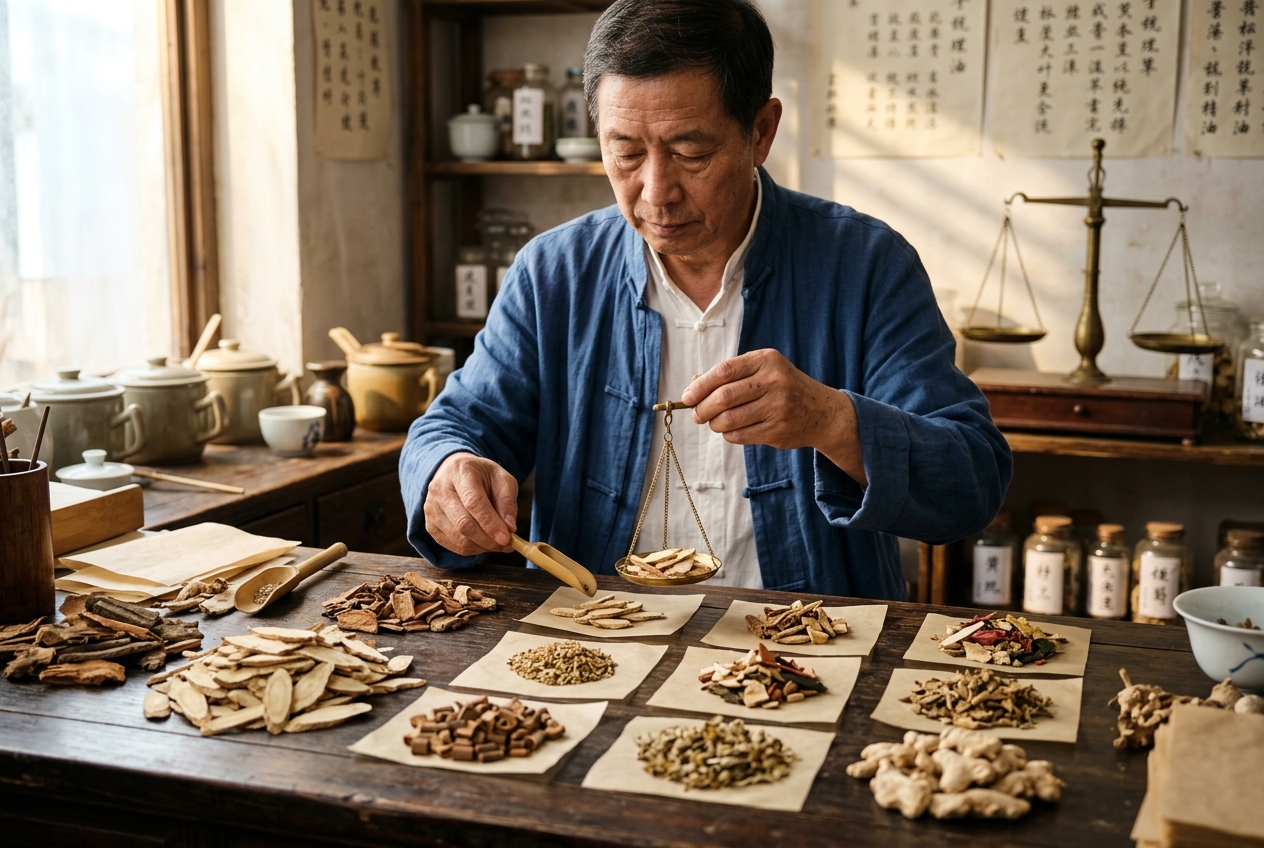
In 1732, during the height of the Qing Dynasty, the master physician Cheng Zhongling (程钟龄) codified this fluid therapeutic reality in his seminal work Medical Revelations (Yixue Xinyu, 《医学心悟》). Surveying centuries of accumulated herbal strategies dating back to Zhang Zhongjing’s Han Dynasty foundational text, the Shanghan Lun, Cheng recognized that beneath thousands of disparate herbal recipes and clinical presentations lay eight universal therapeutic vectors: the Eight Methods (Ba Fa, 八法). Whether an ailment requires sweat to expel an exterior invasion, heat to subdue a raging systemic fire, purgation to unlock a toxic intestinal blockage, or tonification to rescue collapsing vitality, Cheng Zhongling’s Ba Fa established the definitive systematic bridge connecting pattern differentiation (Bian Zheng) with decisive clinical therapeutics.
2. What This Organ System Does: The Eight Therapeutic Methods & Zang-Fu Dynamic Equilibrium
To comprehend how the Eight Therapeutic Methods operate, one must first appreciate the multidimensional architecture of the Zang-Fu (internal organ) systems as articulated in Traditional Chinese Medicine (TCM). Unlike the strictly anatomical definitions of Western biomedicine, a Zang or Fu organ in classical physiology represents an integrated functional network uniting energetic pathways (meridians), visceral biomechanics, fluid metabolic vectors, and psycho-emotional states.
The central physiological engine revolves around three fundamental vector systems: 1. The Middle Burner Earth Pivot (Spleen-Stomach / Pi-Wei): The Spleen governs the transformation and transportation of fluids and nutrients (Yun Hua), directing clear nutrient essence upward to the Lungs and Heart, while the Stomach directs turbid metabolic byproducts downward. 2. The Free Coursing Wood Axis (Liver-Gallbladder / Gan-Dan): The Liver regulates the smooth, unhindered movement of Qi (vital biological energy and systemic circulation) throughout the vascular, neuroendocrine, and emotional spheres. 3. The Upper/Lower Water-Fire Continuum (Heart-Kidney / Xin-Shen): The Heart houses the Shen (consciousness and mental clarity) and propels Blood, while the Kidneys store Jing (vital essence) and anchor the primordial Yang (Ming Men fire) and Yin (basal fluids).
When pathogens penetrate the exterior defensive perimeter (Wei Qi) or internal dysfunction breeds metabolic waste (phlegm, dampness, blood stasis, or toxic heat), the physiological vectors become inverted or paralyzed. Cheng Zhongling’s Eight Methods intervene precisely at these biomechanical junctions. Modern inquiries into integrative physiology, supported by initiatives at the World Health Organization Global Traditional Medicine Centre and studies cataloged on NCBI PubMed, demonstrate that these eight strategies modulate microcirculation, neuroendocrine-immune axes, and enteric microbiota homeostasis.
The Eight Classical Strategies Formulated in Yixue Xinyu
1. Diaphoresis / Sweating Method (Han Fa — 汗法)
- Pathophysiological Mechanism: Han Fa opens the interstitial spaces (Cou Li) and stimulates the Lung’s dispersing function (Xuan Fei), mobilizing the defensive Wei Qi and body fluids to conduct pathogens out through the pores via controlled perspiration. It addresses external pathogenic factors—chiefly Wind-Cold or Wind-Heat—lodged in the superficial muscle and skin layers before they penetrate the internal Zang-Fu.
- Classical Formula Archetype: Ma Huang Tang (Ephedra Decoction) for exterior Wind-Cold excess characterized by chills, anhidrosis, and wheezing; Gui Zhi Tang (Cinnamon Twig Decoction) for exterior deficiency with disharmony between nutritive (Ying) and defensive (Wei) levels; Yin Qiao San (Honeysuckle and Forsythia Powder) for exterior Wind-Heat.
- Acupoint Synergies: Hegu (LI-4) combined with Fuliu (KI-7) to induce or regulate sweating; Fengchi (GB-20) and Dazhui (GV-14) to release exterior tension and clear pathogen invasion.
- Contraindications: Depleted body fluids, severe spontaneous sweating, profuse postpartum hemorrhage, or chronic blood deficiency, where sweating will precipitate severe dehydration and collapse of Yang (Wang Yang).
2. Emesis / Vomiting Method (Tu Fa — 吐法)
- Pathophysiological Mechanism: Tu Fa induces the upward ejection of toxic substances, stagnant food, or copious phlegm-drool lodged firmly in the throat, chest, or stomach fundus (Upper Burner). By deliberately reversing stomach Qi upward, it relieves acute, life-threatening thoracic oppression or mental clouding caused by phlegm misting the Heart orifice.
- Classical Formula Archetype: Gua Di San (Melon Pedicle Powder), which uses bitter, irritating emetic botanicals to trigger rapid gastric evacuation in acute Upper Burner repletion.
- Acupoint Synergies: Vigorous stimulation of Tiantu (CV-22) and Zhongwan (CV-12) to alter esophageal and diaphragmatic motility.
- Contraindications: Extreme physical exhaustion, pregnancy, postpartum debility, gastrointestinal ulcerations, hematemesis, or aortic aneurysm, due to the violent intra-thoracic and intra-abdominal pressures generated.
3. Purgation / Draining Downward Method (Xia Fa — 下法)
- Pathophysiological Mechanism: Xia Fa stimulates the downward peristalsis of the Large Intestine and drains interior excess heat, accumulated dry feces, stagnant blood, or retained pathological water. In Yangming bowel syndromes, dry heat congeals with fecal matter, generating severe systemic delirium, abdominal rigidity, and high tidal fevers; purgation expels the physical accumulation, simultaneously extinguishing the metabolic fire (Fu Di Chou Xin — "pulling the firewood from beneath the cauldron").
- Classical Formula Archetype: Da Cheng Qi Tang (Major Order the Qi Decoction), utilizing Da Huang (Radix et Rhizoma Rhei) and Mang Xiao (Natrii Sulfas) for severe heat-accumulation constipation; Run Chang Wan for lubricating dryness in elderly or blood-deficient patients.
- Acupoint Synergies: Tianshu (ST-25), Shangjuxu (ST-37), and Dachangshu (BL-25) to purge stagnancy and regulate intestinal conduction.
- Contraindications: Exterior syndromes that have not yet localized in the interior, pregnancy, general physical debility, or severe spleen cold deficiency.
4. Harmonization Method (He Fa — 和法)
- Pathophysiological Mechanism: He Fa reconciles functional disharmonies when a disease process is neither purely exterior nor interior, but trapped in the half-exterior, half-interior Shaoyang hinge (Gallbladder/San Jiao), or when two organ systems are locked in conflict (such as Liver Wood overacting on Spleen Earth, or cold and heat coexisting in the digestive tract). It neither forces aggressive upward nor downward vectors; instead, it untangles physiological stagnation and restores systemic communication.
- Classical Formula Archetype: Xiao Chai Hu Tang (Minor Bupleurum Decoction) for Shaoyang syndrome presenting with alternating chills and fever, hypochondriac fullness, and a bitter taste in the mouth; Xiao Yao San (Free and Easy Wanderer Powder) for Liver constraint with Spleen deficiency; Ban Xia Xie Xin Tang for mixed cold-heat glomus in the epigastrium.
- Acupoint Synergies: Waiguan (TE-5) paired with Zulinqi (GB-41) to regulate the Dai and San Jiao vessels; Taichong (LV-3) with Zusanli (ST-36) to harmonize Wood and Earth.
- Contraindications: Pure, unmixed exterior patterns or acute, isolated interior excess conditions that require direct elimination strategies.
5. Warming Method (Wen Fa — 温法)
- Pathophysiological Mechanism: Wen Fa introduces warming, Yang-activating therapeutic agents to dispel deep interior pathogenic Cold, warm the Zang-Fu organs, unblock freezing stagnation within the meridian channels, and revive devastated Yang energy. It is employed when Spleen Yang fails to warm the digestive fire, or when Kidney Yang collapses, leading to icy extremities, clear watery diarrhea, deep lethargy, and a faded, pale pulse.
- Classical Formula Archetype: Si Ni Tang (Frigid Extremities Decoction) containing processed aconite (Fu Zi) and dry ginger (Gan Jiang) to rescue devastated Yang; Li Zhong Wan (Regulate the Middle Pill) to warm the Spleen and Stomach.
- Acupoint Synergies: Direct or indirect moxibustion over Shenque (CV-8), Guanyuan (CV-4), and Mingmen (GV-4) to ignite primordial kidney fire.
- Contraindications: True internal heat with false external cold symptoms, Yin-deficiency fire, or acute febrile disorders.
6. Heat-Clearing Method (Qing Fa — 清法)
- Pathophysiological Mechanism: Qing Fa employs cold- and cool-natured agents to sedate internal fire, eliminate toxic heat accumulations, and cool the blood. As explored extensively in modern research on phytomedicine mechanisms via NCBI, heat-clearing botanicals contain powerful anti-inflammatory and antimicrobial alkaloids (e.g., berberine) that suppress hyper-immune cascades. In TCM, this method resolves high fever without constipation (Qi-level heat), blood heat with rashes (Ying/Xue level), or localized suppurative fire toxins (carbuncles, acute dysenteric inflammation).
- Classical Formula Archetype: Bai Hu Tang (White Tiger Decoction) for the "Four Bigs" of Qi-level heat (Big fever, Big sweat, Big thirst, Big surging pulse); Huang Lian Jie Du Tang (Coptis Decoction to Relieve Toxicity) for raging fire toxins across all three burners.
- Acupoint Synergies: Quchi (LI-11), Dazhui (GV-14 with bloodletting), and Neiting (ST-44) to discharge interior heat and sedate hyperactive vascular flow.
- Contraindications: Spleen-Stomach cold deficiency, weak digestion with loose stools, or false heat syndromes arising from depleted Yang floating to the exterior.
7. Reduction / Dispersing Method (Xiao Fa — 消法)
- Pathophysiological Mechanism: Xiao Fa gently and progressively dissolves, softens, and breaks down physical or energetic accumulations—including food stagnation, phlegm nodules, goiters, abdominal glomus masses (Ji Ju), and blood stasis clots. Unlike Purgation (Xia Fa), which expels masses abruptly through the bowels, Reduction works gradually over weeks or months to degrade structural consolidations without causing acute constitutional depletion.
- Classical Formula Archetype: Bao He Wan (Preserve Harmony Pill) for chronic dietary and food stagnation; Gui Zhi Fu Ling Wan (Cinnamon Twig and Poria Pill) for resolving pelvic blood stasis masses; Hai Zao Yu Hu Tang for softening phlegm-fire thyroid nodules.
- Acupoint Synergies: Zhongwan (CV-12), Xiawan (CV-10), Fenglong (ST-40) for phlegm dispersal, and Geshu (BL-17) for blood stasis dissolution.
- Contraindications: Severe deficiency states where the body lacks the underlying Qi to endure dispersing agents, and during pregnancy when moving pelvic masses.
8. Tonification / Supplementation Method (Bu Fa — 补法)
- Pathophysiological Mechanism: Bu Fa directly nourishes, replenishes, and restores depleted physiological substances, including Qi (functional vital energy), Xue (Blood/nutritive fluids), Yin (structural moisture and cooling reserve), Yang (metabolic heat and kinetic drive), and Jing (kidney essence). When an organism is profoundly deficient, elimination methods will induce severe systemic collapse; Bu Fa rebuilds the vital foundation (Zheng Qi), enabling the body’s self-regulatory homeostasis to reignite.
- Classical Formula Archetype: Si Jun Zi Tang (Four Gentlemen Decoction) for basic Qi deficiency; Si Wu Tang (Four Substances Decoction) for Blood deficiency; Ba Zhen Tang (Eight Treasures Decoction) combining both; Liu Wei Di Huang Wan (Six-Flavor Rehmannia Pill) for Kidney/Liver Yin deficiency; Jin Gui Shen Qi Wan for Kidney Yang deficiency.
- Acupoint Synergies: Guanyuan (CV-4), Qihai (CV-6), Zusanli (ST-36), and Pishu (BL-20) stimulated with nourishing, tonifying needle manipulation or moxibustion.
- Contraindications: Acute exterior pathogenic invasions or severe internal repletion states (phlegm, food stagnation, fire excess) where tonification will "feed the pathogen" (Zhu Xie), trapping it deeper within the tissues.
3. How You Can Feel It: Signs of Balance and Imbalance
When your internal organ systems and their directional energetic vectors exist in dynamic harmony, your body exhibits unmistakable physiological balance: your digestion operates silently without postprandial heaviness or distension, your sleep is restorative and uninterrupted by nocturnal heat or night sweats, your emotional state displays adaptive resilience rather than chronic frustration or lethargy, and your thermoregulation adapts fluidly across environmental shifts.
Conversely, when vector failure or pathogenic stagnation supervenes, the body broadcasts distinct clinical markers corresponding to Cheng Zhongling's framework. The following structured self-assessment allows you to map your current somatic state against the diagnostic axes of classical Chinese medicine.
Guided Diagnostic Self-Assessment
-
Thermoregulation & Sensory Sensitivity: * The Exterior Wind-Cold Axis: Do you feel a localized shivering aversion to wind at the nape of your neck, accompanied by clear nasal discharge and the absence of thirst? This indicates a superficial constriction requiring the Diaphoresis Method (Han Fa). * The Deep Interior Cold Axis: Are your hands and feet chronically cold to the touch, accompanied by a desire for warm liquids, lower back aches, and loose, watery stool? This indicates deep Kidney-Spleen Yang deficiency requiring the Warming Method (Wen Fa). * The Interior Fire Axis: Do you experience hot flashes, an aversion to warm rooms, persistent mouth ulcers, intense thirst for ice water, and foul-smelling dark stools? This signals internal heat toxicity requiring the Heat-Clearing Method (Qing Fa).
-
Digestive Mechanics & Abdominal Sensations: * The Food/Phlegm Accumulation Axis: Following moderate eating, do you feel an oppressive, heavy glomus in the epigastrium, accompanied by foul-smelling belching, acid reflux, or thick white tongue coating? This reflects stagnancy requiring the Reduction Method (Xiao Fa). * The Acute Bowel Excess Axis: Is your abdomen visibly distended, hard, and painful upon light palpation, paired with several days of severe constipation, restlessness, and dry tongue coating with prickly red spots? This represents Yangming bowel excess requiring the Purgation Method (Xia Fa).
-
Emotional Dynamics & Energetic Rhythms: * The Wood-Earth / Shaoyang Disharmony Axis: Do you experience a sensation of a foreign object in the throat (globus hystericus), frequent deep sighing, hypochondriac distension, alternating sensations of chills and warmth, and sudden flashes of irritability? This demonstrates Liver-Spleen friction requiring the Harmonization Method (He Fa). * The Depletion / Spleen-Kidney Exhaustion Axis: Does your energy crash between 1:00 PM and 3:00 PM, accompanied by shortness of breath upon mild exertion, spontaneous sweating, pale lips, brittle nails, and poor memory? This indicates systemic depletion requiring the Tonification Method (Bu Fa).
4. Qigong & Movement Practice: The Eight Brocades Triple-Burner Harmonization Sequence
To actively engage and physically harmonize the vector forces governed by the Eight Methods, classical medical traditions developed targeted somatic exercises (Daoyin / Qigong). The following practice—adapted from the ancient Ba Duan Jin (Eight Pieces of Brocade)—specifically mobilizes the Triple Burner (San Jiao) network, opens the chest and diaphragmatic hinge (Upper/Middle Burner), stretches the Liver meridians, and strengthens the Kidney-Spleen Yang root.
Step-by-Step Exercise Instructions
Phase 1: The Wuji Foundation (Setup & Grounding)
- Stance: Stand with your feet parallel, precisely shoulder-width apart. Unlock your knees slightly, allowing the tailbone to sink gently toward the earth as though lightly resting on the edge of a high stool.
- Alignment: Suspend the crown of your head (Baihui, GV-20) upward toward the sky, tucking the chin slightly to elongate the cervical spine. Relax your shoulders completely, allowing space beneath the armpits (as if holding a soft bird’s egg under each arm).
- Breath Integration: Rest the tip of your tongue lightly on the upper palate just behind the front teeth. Breathe through the nose in a slow, silent, diaphragmatic rhythm: allow the lower abdomen (Dantian) to expand on inhalation and gently draw inward on exhalation.
Phase 2: "Supporting the Heavens with Two Hands to Regulate the Triple Burner" (Shuang Shou Tuo Tian Li San Jiao)
This movement stretches the pericardium, opens the chest, stimulates the Lung and San Jiao meridians, and regulates the ascending and descending Qi vectors (Harmonization / Heat-Clearing).
- Movement Initiation (Inhale): Interlace your fingers loosely in front of your lower abdomen, palms facing upward. Inhale smoothly over a 4-second count while floating the interlaced hands up along the centerline of the body to the level of the chest.
- The Turn & Press: As the hands reach the throat, rotate the palms outward and push upward toward the ceiling, fully extending the arms without locking the elbows. Simultaneously gaze up at the back of your hands, lifting the ribcage away from the pelvis to decompress the spine and open the Upper Burner.
- The Sinking Release (Exhale): Hold the peak upward extension for 1 second. Then, release the finger interlace and exhale slowly over a 6-second count, floating the arms laterally down in a wide, circular arc back to the sides of the hips. As the arms descend, lower your gaze back to the horizon and consciously sink your breath and physical weight into the bubbling springs of your feet (Yongquan, KI-1).
- Repetitions: Complete 6 full, uninterrupted cycles.
Phase 3: "Harmonizing the Spleen and Stomach by Lifting Single Hands" (Tiao Li Pi Wei Xu Dan Ju)
This alternating vertical stretch uncoils the hypochondriac regions, massages the Liver and Spleen, and clears food and fluid stagnation (Harmonization / Reduction).
- Movement Initiation (Inhale): Bring both palms to face upward at the level of the solar plexus. Inhale deeply: press your left palm upward toward the sky, rotating the palm to face up with fingers pointing toward the right, while simultaneously pressing your right palm downward beside the right hip, palm facing the earth with fingers pointing forward.
- Vector Tension: Feel a gentle, opposing vertical traction extending through your torso—stretching the Spleen/Stomach digestive axis and opening the Liver-Gallbladder channels on your sides.
- Transition & Switch (Exhale): Exhale slowly as both hands glide back to the center of the chest, returning to the neutral starting position.
- Opposite Side: Inhale and reverse the hands: press the right palm to the heavens and the left palm to the earth.
- Repetitions: Perform 6 alternating pairs (12 total movements).
Sensations & Somatic Markers of Success
During the sequence, observe the emergence of a gentle, uniform warmth radiating from the lower abdomen and spreading outward across the palms and fingertips (a marker of peripheral microvascular vasodilation and Wei Qi mobilization). You should notice increased salivary secretion (Jin Ye—saliva of the kidneys), spontaneous muscular relaxation in the trapezius and suboccipital regions, and an expansive feeling of lightness in the epigastrium.
5. Acupressure Points You Can Try Today: Meridian Synergies for Clinical Regulation
Acupressure applies mechanical stimulus to precise neurovascular nodes (acupoints) along the meridian channels, eliciting reflex cascades that replicate the therapeutic vectors of the Eight Methods. Detailed research documented by the National Center for Complementary and Integrative Health (NCCIH) confirms that stimulating these classical points modulates central autonomic pathways, downregulates visceral pain perception, and restores gut motility.
1. Zusanli (ST-36) — "Leg Three Miles" (足三里)
The Primary Axis for Tonification (Bu Fa) and Downward Regulation (Xia / Xiao Fa)
- Precise Anatomical Location: Located on the anterior aspect of the lower leg. Place the palm of your right hand flat over your right kneecap; your middle finger naturally extends down along the shinbone (tibia). Locate the small notch on the outside edge of the shin crest: Zusanli sits one finger-width lateral to the anterior crest of the tibia, approximately four finger-widths directly below the inferior border of the patella. When you flex your foot upward, you will feel the tibialis anterior muscle swell directly under your finger.
- Application Technique: Place the tip of your thumb or the knuckle of your index finger firmly into the fleshy depression. Apply sustained, deep, circular pressure perpendicular to the bone. Maintain firm pressure for 2 to 3 minutes on each leg. The sensation should be a heavy, pleasant, radiating distension (De Qi), often travelling down the shin toward the foot.
- Daily Clinical Applications: Relieves chronic physical exhaustion, postprandial bloating, weak digestion, loose stools, and general immune insufficiency. It stimulates the parasympathetic nervous system and rebuilds Spleen-Stomach Qi.
2. The "Four Gates" Synergy: Taichong (LV-3) and Hegu (LI-4)
The Definitive Synergy for Harmonization (He Fa) and Dispersal (Xiao Fa)
- Precise Anatomical Locations:
- Taichong (LV-3, "Great Rushing"): Located on the top dorsum of the foot. Slide your fingertip backward into the groove between the big toe and the second toe, moving upward toward the ankle until your finger falls into the triangular depression just before the junction of the two metatarsal bones.
- Hegu (LI-4, "Joining Valley"): Located on the dorsum of the hand. Spread your thumb and index finger apart. Locate the midpoint of the second metacarpal bone on the index-finger side. Place your opposite thumb on the highest prominence of the muscular bulge formed between the thumb and index finger.
- Application Technique: Press Taichong on the foot with your thumb, directing the pressure slightly toward the heel, while simultaneously or sequentially pressing Hegu on the hand with the opposite thumb, angling the pressure inward toward the second metacarpal bone. Apply firm, pulsing pressure for 1.5 to 2 minutes per point bilaterally.
- Daily Clinical Applications: Breaks through physical and emotional gridlock, soothing severe tension headaches, neck and jaw clenching (bruxism), acute stress, menstrual cramping, and hypochondriac irritability. Note: Hegu (LI-4) is strictly contraindicated during pregnancy due to its strong downward, labor-stimulating vector.
3. Neiguan (PC-6) — "Inner Gate" (内关)
The Master Median Point for Harmonizing the Middle Burner and Calming the Shen
- Precise Anatomical Location: Located on the palm side of the forearm. Lay three fingers (index, middle, and ring) flat across the inner crease of your wrist, with your ring finger resting on the crease line. Neiguan is located just proximal to your index finger, precisely centered between the two prominent, rope-like tendons (flexor carpi radialis and palmaris longus). If you make a fist and flex your wrist inward, these two tendons will stand out prominently.
- Application Technique: Using the tip of your thumb, press directly straight down between the two tendons. Maintain steady, firm, stationary pressure while taking slow, deep abdominal breaths for 2 minutes. You should experience a distinct aching sensation that radiates up the inner forearm or into the palm.
- Daily Clinical Applications: Rapidly terminates nausea, motion sickness, epigastric reflux, hiccupping, palpitations, chest constriction, and acute emotional panic. It coordinates the descent of rebellious Stomach Qi while harmonizing the Pericardium and Heart Shen.
6. Food & Lifestyle: Small Changes for Today
Dietary therapy (Shi Liao) in classical Chinese medicine operates on the exact same thermodynamic and vector principles as pharmacology. What you ingest enters the Middle Burner cauldron (Pi-Wei); its temperature, thermal nature, flavor profile, and directional tendencies directly implement the Eight Methods within your daily metabolism.
Rather than relying on rare, obscure botanicals, you can dramatically modulate your Zang-Fu balance using common, accessible, whole foods sourced from your local market.
1. Dietary Adjustments Aligned with the Therapeutic Methods
- To Support the Warming and Tonification Vectors (Wen Fa & Bu Fa):
- Foods to Add: Slow-cooked, thermal-warming foods that nourish Spleen and Kidney Yang without overtaxing digestion. Emphasize roasted root vegetables (sweet potatoes, parsnips, butternut squash), simmered whole-grain porridges (warm steel-cut oats, rice congee), stewed bone or mushroom broths, and warming spices such as fresh ginger (Sheng Jiang), ground cinnamon (Rou Gui), cardamom, and toasted black sesame seeds.
-
Foods to Reduce: Cold, raw salads, iced beverages, and frozen foods straight from the refrigerator. Consuming ice water forces the Spleen to extinguish its metabolic digestive fire, directly precipitating internal cold and damp stagnancy.
-
To Support the Reduction and Heat-Clearing Vectors (Xiao Fa & Qing Fa):
- Foods to Add: Naturally bitter, aromatic, and sour foods that break up stagnation and drain systemic inflammation. Include daikon radish (an exceptional food-grade reducer of middle-burner phlegm and gas), fresh pear slices (to moisten Lung Yin and clear dry heat), steamed leafy greens (dandelion greens, arugula, bok choy), fermented foods (unpasteurized miso, sauerkraut in small amounts), and unsweetened herbal teas such as chrysanthemum (Ju Hua) or peppermint.
- Foods to Reduce: Deep-fried, greasy, heavy meats, highly processed refined sugars, and excessive dairy products. These substances congeal into viscous, intractable internal phlegm-dampness (Tan Shi) that obstructs the Zang-Fu energetic pathways.
2. Daily Circadian Rhythms for Vector Preservation
- The Spleen-Stomach Golden Window (7:00 AM – 9:00 AM): According to the classical Chinese Organ Clock (Zi Wu Liu Zhu), digestive fire is at its peak between 7:00 AM and 9:00 AM (Stomach time). Eat your most substantial, warm, nourishing meal of the day during this window. Skipping breakfast starves the transformation pivot, setting off afternoon fatigue and systemic Qi deficiency.
- The Evening Yang Consolidation (Before 11:00 PM): Between 11:00 PM and 1:00 AM (Gallbladder time), systemic Yang descends into the interior to recharge Kidney essence (Jing). To allow your organ networks to restore cellular vitality, be asleep in a completely dark, cool room before 11:00 PM. Chronic late-night wakefulness burns through Kidney and Liver Yin, resulting in empty fire, restless agitation, and systemic premature aging.
7. Today's Takeaway
The most powerful intervention you can make right now requires no equipment, costs nothing, and takes less than five minutes: sit quietly in an upright chair, place both warm palms directly over your lower abdomen (Dantian), close your eyes, and inhale deeply through your nose down into your hands for a count of four, pausing for one second, and then exhaling slowly for a count of six.
As you exhale, consciously drop your shoulders, relax your jaw, and visualize all accumulated tension, heat, and digestive stagnancy draining down through the soles of your feet into the earth. Practicing this simple vector-grounding breath immediately restores communication between the Upper and Lower Burners, recalibrates your autonomic nervous system, and anchors the timeless wisdom of Cheng Zhongling’s Eight Methods within your living body today.
Authoritative References & Further Reading
- World Health Organization (WHO) Traditional, Complementary and Integrative Medicine
- National Center for Biotechnology Information (NCBI) on Chinese Herbal Medicine & Physiology
- PubMed Central: Mechanisms of Zang-Fu Meridian Physiology and Therapeutics
- Wikipedia: Traditional Chinese Medicine & Classical Formulations
- National Center for Complementary and Integrative Health (NCCIH) Research Overview