Dazhui Cavity Great Hammer: Cervicothoracic Kinetic Decompression, Hexa-Yang Meridian Confluence, and Neuro-Spinal Yang Modulation in Classical Neigong
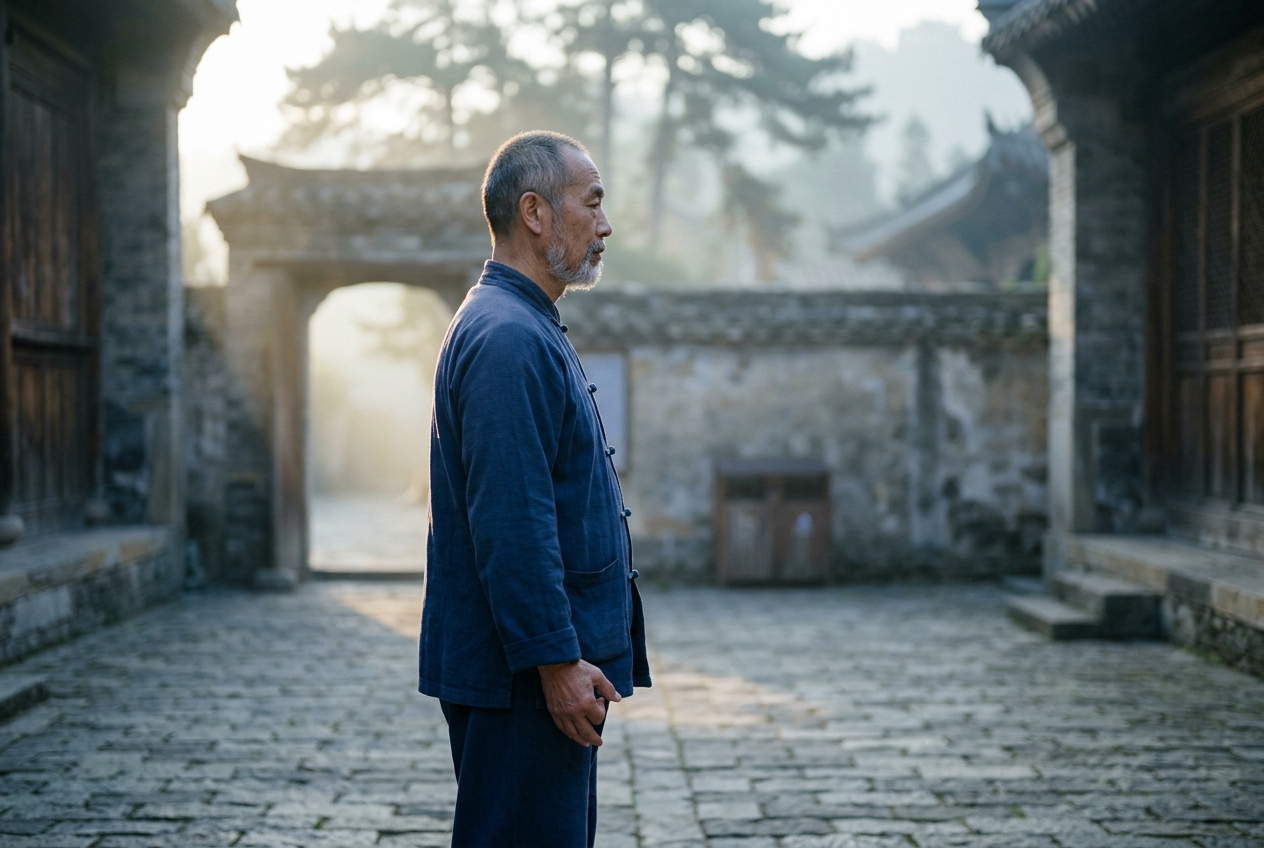
In traditional energetic anatomy, as cataloged by the World Health Organization Traditional Medicine guidelines and classical texts, Dazhui is revered as the grand meeting point (Hui) where all six Yang meridians of the human body intersect with the Governing Vessel (Du Mai). The three Yang channels of the hand (Large Intestine, Small Intestine, and Triple Burner) and the three Yang channels of the foot (Stomach, Gallbladder, and Bladder) converge at this single intervertebral crossroad before ascending into the brain and crown. When Dazhui is mechanically compressed or structurally occluded, Yang Qi stagnates in the upper thoracic spine, leading to systemic heat dysregulation, cranial pressure, mental agitation, and depleted physical resilience. Conversely, opening this cavity transforms the junction into a dynamic thermoregulatory valve and a clear bioelectric bridge connecting the middle spinal gate (Jiaji), the occipital gate (Yuzhen or "Jade Pillow"), and the crown (Baihui).
Step-by-Step Practice Guide: Somatic Calibration of the Great Hammer
To de-densify the C7-T1 intervertebral space and open Dazhui, execute the following somatic calibration protocol. This method integrates static standing pole cultivation (Zhan Zhuang) with dynamic spinal wave unwinding (Daoyin).
+-----------------------------------------------------------------------------------------+
|                               SOMATIC CALIBRATION PROTOCOL                              |
+-----------------------------------------------------------------------------------------+
| Phase 1: Zhan Zhuang Grounding  -> Rooting the feet, dropping the sacrum (Song Kua)     |
| Phase 2: Crown Elevation        -> Suspending the occiput (Xu Ling Ding Jin)            |
| Phase 3: Thoracic Containment   -> Hollow chest, rounded upper back (Han Xiong Ba Bei)  |
| Phase 4: Daoyin Spinal Wave     -> Fluid segmental articulation from coccyx to C7-T1    |
+-----------------------------------------------------------------------------------------+
Phase 1: Static Architectural Alignment (Zhan Zhuang)
- Establish the Base: Position your feet parallel, hip-width apart, with your weight evenly distributed across the "nine points" of the soles (the balls of the feet, the outer lateral edges, and the centers of the heels). Soften your knees so they track directly over your second toes without locking.
- Sink the Pelvis (Song Kua): Relax the inguinal crease, allowing your tailbone to hang heavy as if anchored by a plumb line toward the earth. This gently flattens the lumbar curve without forcing a rigid posterior pelvic tilt.
- Engage Crown Suspension (Xu Ling Ding Jin): Imagine an ethereal filament attached to Baihui (the crown vertex), suspending your cranium effortlessly from above. Rather than tilting your head back or driving your nose down, slide your chin horizontally backward in a micro-retraction (cervical axial elongation). This unlocks the suboccipital junction at the atlanto-occipital joint.
- Hollow the Chest and Pluck the Back (Han Xiong Ba Bei): Allow the sternum to sink inward and downward by several millimeters. Simultaneously, broaden the space between the medial borders of the scapulae. Do not round your shoulders forward into a slump; instead, widen the latissimus dorsi and relax the pectoral girdle so that the upper back domes gently outward like the skin of a drum.
- Micro-Respiratory Dilation: Breathe according to natural diaphragmatic expansion (Tuina respiration). On every inhalation, draw breath into the lower abdomen (Dantian); on every exhalation, guide your somatic awareness to the C7-T1 junction, visualizing the intervertebral disc space expanding laterally and longitudinally, releasing deep muscular grip.
Phase 2: Dynamic Spinal Wave Unwinding (Daoyin)
- Initiation from the Base: From the static standing posture, slightly increase the bend in your knees. Begin a slow, undulating sagittal wave by tucking the coccyx forward and upward.
- Ascending Wave Propagation: Allow this movement to ripple sequentially upward through the five lumbar vertebrae, through the twelve thoracic vertebrae, mobilizing each segment like links in a weighted chain.
- The Dazhui Hinge Articulation: As the wave reaches the upper back, resist the temptation to throw the head backward. Keep the cervical spine long. Feel the wave crest precisely between the C7 spinous process and the T1 vertebra, generating a momentary myofascial stretch across the ligamentum nuchae.
- Cranial Release and Descent: Let the wave gently roll through the suboccipitals to the crown, and then reverse the trajectory, allowing the shoulders to sink, the ribcage to drop, and the intra-abdominal pressure to settle back into the lower abdomen. Perform this cycle 9 to 18 times at a tempo synchronized with smooth, uninterrupted nasal breathing.
Common Mistakes and Somatic Corrections
- The Military Hyper-Extension Error: Retracting the shoulder blades rigidly toward the midline (pinching the rhomboids) while thrusting the sternum forward. This jams the thoracic spine, compresses Dazhui from below, and restricts breath to the upper chest.
- Correction: Think of widening the armpits from the inside out, creating a spherical openness in the chest cavity while keeping the chest soft and hollow.
- The "Text-Neck" Slump: Collapsing the thoracic spine and poking the chin forward. While the neck bends down, the suboccipital joints hyper-extend, creating a severe shearing force at the cervical vertebrae junction at C7-T1.
- Correction: Elevate the base of the skull while gently drawing the ears directly over the acromion process of the shoulders.
- Shoulder Elevation Guarding: Subconsciously hiking the upper trapezius muscles toward the ears during inhalation.
- Correction: Consciously decouple diaphragmatic descent from scapular movement. Direct the scapulae downward along the fascial planes of the ribcage.
Interoceptive Sensation Milestones
| Sensation Category | Somatic Sensation | Neuro-Energetic Meaning | Action Required |
|---|---|---|---|
| Mechanical Release | Cool breeze or spacious release at C7-T1 | Successful de-densification of the nuchal ligament and C7-T1 facet joints | Maintain alignment; do not over-stretch |
| Vascular Wave | Spreading warmth across upper back and shoulders | Microvascular dilation via sympathetic tone reduction | Allow the warmth to sink toward the elbows and fingers |
| Bioelectric Flow | Fine vibrational tingling radiating down the arms or spine | Decompression of cervical nerve roots and activation of Yang channel conduits | Maintain relaxed focus (Yi); avoid muscular clamping |
| Stagnation Indicator | Throbbing pressure at temples or occiput | Qi deviation caused by forcing the breath or lifting the chest | Immediately sink the chest, soften the eyes, and guide awareness to the feet |
Why It Works: The Neuro-Physiological and Biomechanical Science
The transformation experienced when opening Dazhui is anchored in precise biomechanical and neurovascular mechanisms investigated in contemporary kinesiology and neuroscience literature available through the National Center for Biotechnology Information (NCBI).
1. Cervicothoracic De-densification and Fascial Tensegrity
The transition from the highly mobile lordotic cervical spine to the rigid, kyphotic thoracic cage constitutes a primary mechanical fulcrum subject to extreme shear forces. Pathological anterior head carriage amplifies the effective load of the cranium on the C7-T1 junction by up to fourfold. This chronic load forces the upper trapezius, levator scapulae, and splenius cervicis into constant isometric contraction, producing densified, fibrotic cross-linking in the deep cervical fascia and the ligamentum nuchae.
When you apply the classical maxim of Han Xiong Ba Bei (contain the chest, expand the back) alongside Xu Ling Ding Jin (suspending the crown), you trigger reciprocal inhibition of the overactive superficial cervical extensors while recruiting the deep neck flexors (longus colli and longus capitis). This axial traction expands the intervertebral foramina, relieves mechanical irritation of the exiting C8 and T1 spinal nerve roots, and restores biotensegrity across the superficial back line of fascia.
2. Vertebral Artery Perfusion Dynamics
The vertebral arteries ascend through the transverse foramina of the cervical vertebrae from C6 upward before merging at the pontomedullary junction to form the basilar artery—the critical blood supply to the brainstem, cerebellum, and visual cortex. Cervicothoracic hyperextension and hyper-lordosis compress these arterial pathways and impede suboccipital venous drainage. By decompressing Dazhui and the suboccipital triangle, practitioners normalize blood flow velocity through the vertebrobasilar circulation, as highlighted in studies on PubMed investigating cerebral hemodynamics during mindful postural alignment. This hemodynamic balance resolves the lightheadedness, ocular strain, and throbbing vertex headaches historically classified as upper-burner Yang Qi stagnation.
3. Autonomic Regulation via the Stellate Ganglion Complex
Located immediately anterior to the neck of the first rib and the C7 transverse process lies the cervicothoracic ganglion—commonly known as the stellate ganglion. This critical hub of the sympathetic nervous system mediates autonomic tone to the heart, head, neck, and upper extremities. Chronic compressive tension and forward spinal posturing irritate the sympathetic chain, locking the body into hyper-adrenergic fight-or-flight states, elevating systemic inflammation, and accelerating heart rate variability (HRV) decay.
Decompressing the C7-T1 intervertebral region releases fascial tension directly over the prevertebral fascia, modulating stellate ganglion hyperactivity. This biomechanical release induces immediate parasympathetic resurgence, marked by systemic peripheral vasodilation (felt as the characteristic warm, heavy sensation in the palms), a drop in resting blood pressure, and an optimization of vagal nerve activity.
4. Bioelectric Conduction and Dural Tube Dynamics
The spinal cord is encased within the protective dural sheath, which anchors superiorly to the foramen magnum and the upper cervical vertebrae, and inferiorly to the sacrum and coccyx. Axial elongation through Dazhui and the tailbone applies gentle, longitudinal traction across the entire dural tube. This dynamic unwinding facilitates the rhythmic tidal oscillation of cerebrospinal fluid (CSF) and enhances the bioelectric conductivity of the central nervous system. In the vernacular of traditional internal alchemy, this smooth dural flow prevents "Qi deviations"—dangerous somatic overloads where ascending bio-energy becomes trapped in the cranium rather than cycling smoothly through the Microcosmic Orbit (Xiao Zhou Tian).
Classical Lineage, Daoist Neidan, and Martial Heritage
The cultivation of Dazhui is neither a modern physical therapy innovation nor a peripheral esoteric theory; it forms the central axis of Chinese somatic cultivation spanning over two millennia.
In the foundational medical canon Huangdi Neijing (The Yellow Emperor’s Inner Classic, c. 100 BCE), Dazhui is identified as the singular structural bridge governing the body’s defensive energy (Wei Qi). The classical acupuncture treatise Zhenjiu Jiayi Jing (The Systematic Classic of Acupuncture and Moxibustion, 282 CE) systematically codifies Dazhui as the primary point for purging febrile pathogens and restoring thermoregulatory balance across the hand and foot Yangming (digestive and metabolic fire), Taiyang (outer boundary defenses), and Shaoyang (internal pivot mechanisms).
In the internal alchemical (Neidan) traditions preserved within Daoist monasteries along the Wudang and Mount Hua ranges, the spine is conceptualized as a heavenly path traversed by three narrow, fortified passes known as the Three Gates (San Guan): 1. The Lower Gate: Weilü or Mingmen (the lumbar-sacral gate). 2. The Middle Gate: Jiaji (the dorsal thoracic gate between the shoulder blades). 3. The Upper Gate: Yuzhen (the suboccipital Jade Pillow gate).
Within this esoteric geography, Dazhui is the dynamic hydraulic regulator controlling the transit of refined generative essence (Jing) into vital energy (Qi) as it ascends along the spine to nourish the upper brain center (Niwan Gong or Upper Dantian). Daoist adepts understood that if Dazhui remained collapsed, the ascending fire energy would scorch the upper faculties, causing madness, insomnia, or sensory degeneration.
When internal martial arts crystallized during the late Qing Dynasty, master Yang Chengfu embedded this wisdom directly into his seminal Ten Essential Principles of Taijiquan. His opening two principles—Xu Ling Ding Jin (empty and agile energy at the crown) and Han Xiong Ba Bei (contain the chest and pluck the back)—serve as direct somatic instructions to keep Dazhui permanently open and functional during combat. In martial applications, an open Dazhui acts as an elastic spring, allowing kinetic power generated from the feet and directed by the waist to surge without impedance through the spine and out through the hands (Fajin). If the neck tenses or the chest puffs forward, kinetic continuity breaks at the base of the neck, dissipating explosive force and leaving the practitioner vulnerable to structural displacement. Modern instruction endorsed by the National Qigong Association preserves these exact alignment tenets to safeguard both health and martial efficacy.
Today's Practice Commitment
Transforming intellectual understanding into somatic architecture requires consistent, micro-dosed practice. Dedicate yourself to the following seven-minute protocol starting tomorrow morning before consuming breakfast or interacting with any digital screens:
- Minutes 0–2: Structural Calibration: Stand in Zhan Zhuang. Check the foundation: feet grounded, tailbone weighted, sternum dropped, crown lifted. Place two fingers over the C7-T1 junction, verify that the cervical spine has lengthened and the spinous process has receded into the neck, and then return your arms to a natural resting drape at your sides.
- Minutes 2–5: Resonant Micro-Respirations: Close your eyes partway. Inhale into your lower abdomen for a count of four seconds; hold the breath gently for two seconds while bringing somatic awareness to the C7-T1 intervertebral space; exhale smoothly for a count of six seconds, visualizing a wave of warm, soothing energy unwinding the upper trapezius, melting through Dazhui, and cascading down your arms into the centers of your palms (Laogong / PC8).
- Minutes 5–7: Daoyin Spinal Waves: Perform 12 slow, rhythmic spinal undulations. Track the wave from the soles of your feet, through the sacrum and dorsal spine, articulating the C7-T1 junction with precision before releasing through the crown.
By consciously clearing this master energetic nexus each morning, you decompress your cervical spine, restore balance to your autonomic nervous system, and establish an unimpeded channel for vitality, physical strength, and mental clarity that endures throughout your day.