Cutaneous Regions: Navigating Dermal Topography, Wei Qi Exterior Defense, and Superficial Acupressure Protocols
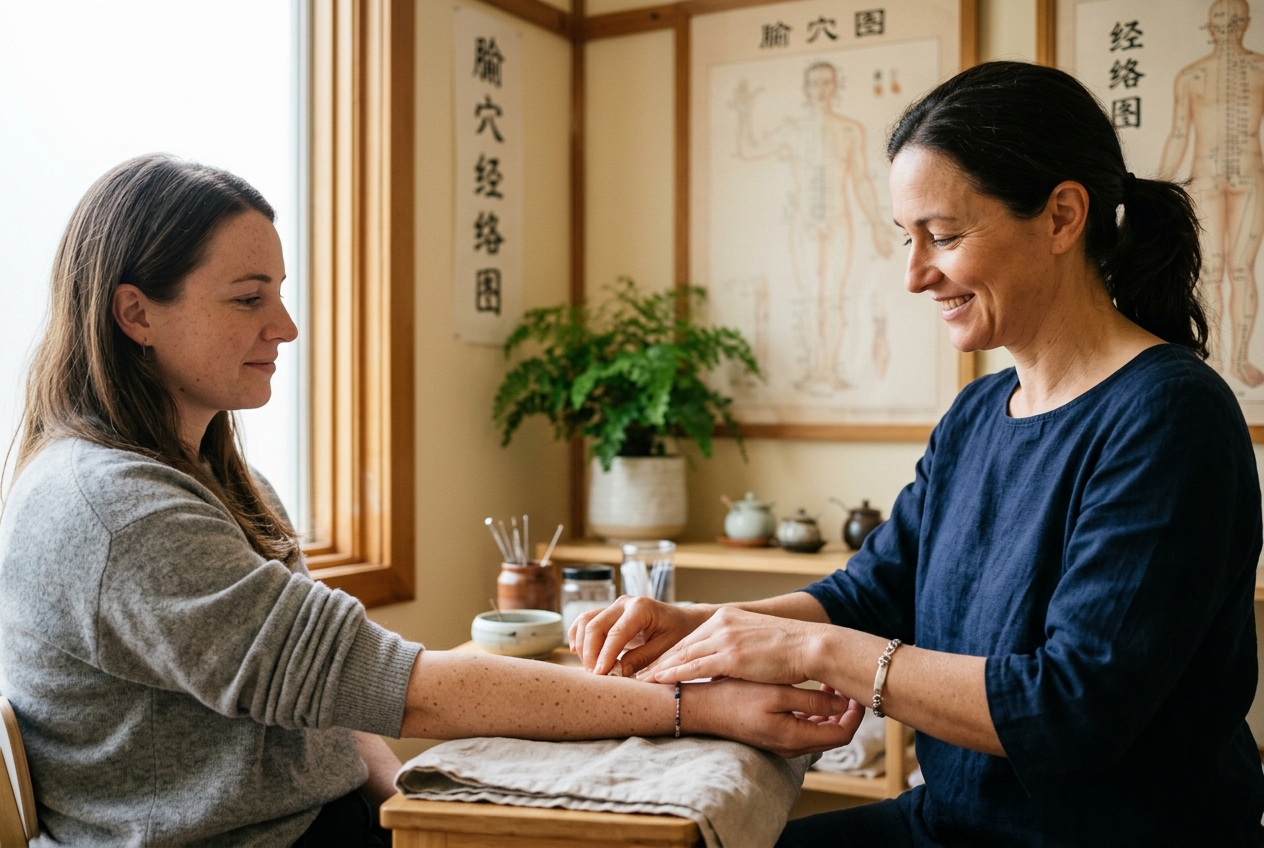
When modern life leaves us chronically fatigued, susceptible to recurrent seasonal chills, or trapped in the postural tension of desk-bound work, our exterior boundary is frequently the first domain to register the strain. TCM offers a remarkably sophisticated, non-invasive anatomical and physiological map of this interface. By understanding how the outermost dermal layer communicates with our deepest internal organs, we can utilize simple, precise superficial stimulation protocols to restore autonomic equilibrium, enhance defensive resilience, and alleviate systemic musculoskeletal strain.
1. OPENING — A Problem This Solves Today: The Burden of the Over-Sensitized Exterior
In our hyper-connected, climate-controlled environments, modern individuals frequently suffer from a subtle yet pervasive syndrome of "exterior disharmony." We spend hours stationary before radiant digital screens under artificial lighting, only to transition abruptly into refrigerated air conditioning or harsh outdoor winds. The consequence is a familiar constellation of sub-clinical complaints: a persistent low-grade stiffness localized along the upper shoulders and occiput, unexplainable dermal hypersensitivity, recurrent afternoon brain fog, and an uncomfortable feeling of being perpetually vulnerable to every fluctuating temperature shift.
In contemporary biomedical discourse, this condition mirrors dysregulation within the cutaneous neurovascular bed and sympathetic nervous system overdrive. When chronic stress stimulates sustained vasoconstriction in the superficial microvasculature, the skin’s baseline sensory thresholds shift, predisposing an individual to myofascial hypertonicity and systemic fatigue.
Traditional Chinese Medicine conceptualizes this identical phenomenon through the prism of Wei Qi (卫气)—the dynamic, defensive essence that circulates within the interstitial spaces, skin, and fascia. When Wei Qi stagnates or fails to distribute smoothly across the superficial layers, the body loses its adaptive thermoregulatory and immunological buffer. Rather than resorting immediately to aggressive interventions or pharmaceuticals, classical medicine directs our attention to the outermost tier of the energetic anatomy: the Cutaneous Regions. By restoring flow across these superficial dermatomal territories through gentle, directed touch, we can alleviate dorsal tension, recalibrate autonomic tone, and rebuild our baseline physiological resilience.
2. THE MERIDIAN PATH — A Journey Through the Body: The Structural Continuum of the Pi Bu
To comprehend the Twelve Cutaneous Regions, one must appreciate the complete anatomical continuum of the classical meridian system (Jing-Luo / 经络). Rather than viewing acupuncture channels as isolated linear pathways, classical treatises—most notably Chapter 56 of the Huangdi Neijing Suwen (Pi Bu Lun / Treatise on the Cutaneous Regions)—describe an interconnected concentric hierarchy.
The continuum spans from the deepest internal trajectories outward: 1. The Primary Channels (Jingmai / 经脉) and their Divergent Branches (Jingbie / 经别), which penetrate the deep visceral cavities (Zang-Fu) and skeletal structures. 2. The Sinew Meridians (Jingjin / 经筋), which integrate the muscular and tendinous chains. 3. The Connecting Collaterals (Luomai / 络脉) and Minute Superficial Collaterals (Sunmai / 孙络 and Fumai / 浮络), which arborize outwards like the capillaries of a river delta. 4. The Twelve Cutaneous Regions (Pi Bu / 皮部), which represent the ultimate planar, superficial manifestation of the internal channels, blanketing the entire dermal and epidermal matrix.
Rather than existing as twelve narrow lines, the Cutaneous Regions are broad, contiguous spatial territories that correspond directly to the Six Channel Divisions (Liu Jing / 六经): Taiyang, Shaoyang, Yangming, Taiyin, Shaoyin, and Jueyin. Each division unites one arm channel and one leg channel into a shared physiological domain.
The Six Cutaneous Divisions and Modern Topography
-
The Taiyang Cutaneous Division (The Great Yang Shield) - Classical Anatomy: Governed by the Bladder and Small Intestine channels. This is the body's most expansive posterior barrier. - Everyday Topography: It runs from the outside edge of the little toe, ascends the back of the calf and the hamstrings, broadens into the twin muscular bands along either side of the spine, climbs over the base of the skull, and wraps across the crown of the head to the inner eye. - Functional Significance: Taiyang is our primary immunological parapet. When cold wind strikes, this posterior zone contracts to prevent the interior invasion of environmental pathogens.
-
The Shaoyang Cutaneous Division (The Lateral Pivot) - Classical Anatomy: Governed by the Gallbladder and Sanjiao (Triple Burner) channels. - Everyday Topography: It covers the lateral aspects of the body: the outer rim of the fourth toe, the side of the ankle and calf, the long band along the outside of the thigh (the IT band), the side seams of the ribcage, the crest of the shoulders, and the sides of the neck, jaw, and temple. - Functional Significance: Shaoyang serves as the dynamic hinge between the body’s exterior and interior. Stagnation here manifests as temporal headaches, ribcage tightness, and an inability to adapt smoothly to emotional or environmental fluctuations.
-
The Yangming Cutaneous Division (The Anterior Fortress) - Classical Anatomy: Governed by the Stomach and Large Intestine channels. - Everyday Topography: This zone blankets the anterior surface of the physical frame. It extends from the top of the second and third toes up the front of the shinbone (the muscular ridge alongside the shin that aches during prolonged standing), over the kneecap and front of the thigh, through the groin, up the muscular surface of the abdomen and chest, and terminates across the throat, jaw, and face. On the arm, it traces the web between the thumb and forefinger and the top crest of the forearm. - Functional Significance: Yangming is abundant in both Qi and Blood (Duo Qi Duo Xue). It regulates thermogenesis, digestive vitality, and facial tone.
-
The Taiyin Cutaneous Division (The Anteromedial Nurturing Canopy) - Classical Anatomy: Governed by the Lung and Spleen channels. - Everyday Topography: It encompasses the fleshy, soft territory starting at the inside edge of the big toe, travelling up the inner arch of the foot, along the front-inside edge of the lower leg and inner thigh, through the soft center of the abdomen, and outward across the chest just beneath the collarbone, before descending down the front-facing inner edge of the biceps to the thumb. - Functional Significance: Taiyin governs fluid distribution, tissue hydration, and the primary synthesis of Wei Qi from respiration and nutritional intake.
-
The Shaoyin Cutaneous Division (The Deep Medial Root) - Classical Anatomy: Governed by the Kidney and Heart channels. - Everyday Topography: Originating under the ball of the foot, this region ascends behind the inner ankle bone, follows the deep posterior-medial border of the calf and thigh into the pelvic floor, and ascends along the deep midline to surface on the inner aspect of the arm, continuing down to the little finger. - Functional Significance: Shaoyin provides the baseline thermal and energetic substrate for the entire organism. Depletion in this zone manifests as chronic coldness in the extremities and systemic exhaustion.
-
The Jueyin Cutaneous Division (The Innermost Hinge) - Classical Anatomy: Governed by the Liver and Pericardium channels. - Everyday Topography: Tracing from the web between the first and second toes, this territory ascends the exact medial midline of the inner leg, traverses the lower abdomen and flanks, and corresponds on the upper limb to the central pathway of the inner arm, running down the midline of the forearm into the center of the palm. - Functional Significance: Jueyin modulates smooth microvascular circulation, emotional regulation, and systemic stress decompression.
The Neurobiology of the Dermal-Visceral Interface
Modern neurophysiology provides compelling insights into the mechanisms underlying the Pi Bu. The human skin is densely populated with primary afferent nerve fibers, including unmyelinated C-tactile (CT) afferents, low-threshold mechanoreceptors (Merkel discs, Meissner’s corpuscles, Ruffini endings), and autonomic vasomotor fibers.
Research catalogued within PubMed on Cutaneous Neurovascular Complexes and Acupuncture highlights that acupuncture channels and their overlying cutaneous territories correspond to fascial cleavage planes rich in neurovascular bundles, mast cells, and interstitial fluid channels.
When mechanical or thermal stimuli are applied to a specific cutaneous division, the signals are transduced via segmental spinal pathways. Because visceral organs share common embryonic dermatomal origins with corresponding areas of the skin—a concept formalized in Western neurology as Head's Zones and Dermatomal Innervation—superficial stimulation triggers somatovisceral reflexes.
Studies indexed on NCBI on Meridian Channels and Somatovisceral Reflexes show that gentle tactile stimulation of specific dermatomes directly modulates the autonomic efferent output to internal organs, altering gastric motility, cardiac variability, and mucosal immune response.
Furthermore, the epidermal-dermal matrix houses an extensive neuro-immune interface comprising keratinocytes, Langerhans cells, and dermal mast cells. When light mechanical traction is exerted on the skin, it stimulates the local release of sensory neuropeptides—such as Calcitonin Gene-Related Peptide (CGRP) and Substance P—which induce microvascular vasodilation and mobilize local immune surveillance. This physiological sequence represents the empirical biomedical translation of "mobilizing Wei Qi to consolidate the exterior."
Visual and Palpatory Diagnostics of the Cutaneous Zones
Because the Pi Bu represents the mirror of the internal Zang-Fu, clinical inspection and palpation of the skin offer direct diagnostic insights into systemic equilibrium:
- Chromatic Variations:
- Erythema (Redness): Indicates exuberant Heat or inflammatory hyperactivity within the corresponding channel or organ system.
- Cyanosis or Bluish-Purple Discoloration: Reflects cold-induced vasoconstriction, stagnation of Qi, or local Blood stasis.
- Pallor (Dull White/Ashen): Signifies a deficiency of Qi and Blood, or a collapse of Yang thermogenesis.
- Sallow or Yellowish Hues: Points to Dampness accumulation and impaired metabolic transformation within the Spleen-Stomach system.
- Thermal and Moisture Fluctuations: Localized cold patches along a cutaneous division indicate deficient Wei Qi and microvascular hypoperfusion, whereas localized heat or hyperhidrosis (excessive sweating) points to unresolved interior pathogenic heat venting outward.
- Turgor, Elasticity, and Subcutaneous Textures: Loss of cutaneous elasticity, paper-thin fragility, or the presence of nodular, granular indurations (Ashi textures) within the superficial fascia indicate chronic nutritional deficiency or long-standing connective-tissue stagnation.
3. KEY POINTS YOU CAN PRESS RIGHT NOW: Master Gates of the Exterior
While the Cutaneous Regions are broad spatial territories, certain focal nodes—classical acupressure points—act as concentrated amplifiers to regulate these superficial domains. As detailed in the World Health Organization Standard Acupuncture Point Locations, the following three points are primary master keys for modulating the exterior cutaneous barrier and relieving tension.
Point 1: Lieque (LU-7 / Lung 7) — The Master of the Exterior and Head
- Everyday Physical Location: Interlock the webs of your thumbs and index fingers of both hands as if shaking hands with yourself. Let your top index finger rest naturally on the outer edge of your opposite wrist bone. You will feel a distinct, small bony notch just above the styloid process of the radius bone, roughly two finger-widths above the crease of the wrist.
- Somatic Sensation: When pressed accurately, you will perceive a distinct, resonant ache, accompanied by a light, pleasant tingling sensation that may travel outward toward the base of the thumb or along the side of the forearm.
- Application Method: Use the tip of your thumb to apply angled pressure back toward the elbow joint. Maintain firm, steady, circular pressure for 90 to 120 seconds per side while taking slow, deep diaphragmatic breaths.
- Daily Functional Relief:
- Averts Incipient Chills: Rapidly disperses acute feelings of cold or drafts caught in the upper back.
- Cervical and Occipital Release: Relieves stubborn stiffness in the neck caused by prolonged screen viewing.
- Respiratory Expansion: Clears mild throat scratchiness and promotes free, open breathing.
Point 2: Hegu (LI-4 / Large Intestine 4) — The Great Equalizer of the Yangming
- Everyday Physical Location: Bring your thumb and index finger flat together. You will see a small mound of muscle rise in the webbing between them. Place your opposite thumb on the highest point of that muscular mound, then relax your hand. The point lies in the deep groove between the first and second metacarpal bones, slightly closer to the index finger bone.
- Somatic Sensation: This is one of the most reactive points on the body. You will experience an unmistakable, profound dull ache (De Qi) that may radiate into the palm or up the forearm.
- Application Method: Direct your thumb pressure inward and slightly underneath the edge of the index finger’s bone, rather than pressing straight down into the muscle. Apply firm, pulsing pressure (pressing firmly for 5 seconds, slightly releasing for 2 seconds) for 2 to 3 minutes on each hand.
- Daily Functional Relief:
- Cranial and Facial Decompression: Relieves tension headaches, jaw clenching (bruxism), and eye strain.
- Digestive Harmonization: Alleviates post-meal abdominal fullness and promotes healthy bowel transit.
- Stress-Induced Vasomotor Tension: Downregulates systemic sympathetic arousal and eases general anxiety.
Point 3: Fengchi (GB-20 / Gallbladder 20) — The Wind Pool at the Base of the Skull
- Everyday Physical Location: Interlace your fingers behind the back of your head and let your thumbs point downward. Slide your thumbs upward along the back of the neck until they reach the base of your skull. Let them slip into the two distinct, soft hollows between the thick vertical neck muscles (the trapezius) and the large muscle behind the ear (the sternocleidomastoid).
- Somatic Sensation: A deeply satisfying, grounding sensation of pressure that spreads across the base of the skull, up toward the crown, or behind the eyes.
- Application Method: Tilt your chin slightly downward. Using the pads of both thumbs, exert firm upward and inward pressure toward the center of your head, as if gently lifting the skull off the neck. Hold with steady, continuous pressure for 2 minutes while practicing relaxed nasal breathing.
- Daily Functional Relief:
- Cerebral Clarity: Banishes late-afternoon mental fogginess and heavy-headedness.
- Visual Fatigue: Soothes burning or tired eyes caused by extensive digital display exposure.
- Autonomic Reset: Triggers a rapid transition into parasympathetic recovery, alleviating acute mental overwhelm.
4. A POINT COMBINATION & DERMAL PROTOCOL FOR ONE COMMON ISSUE
Scenario: The "Digital Screen Slump" (Upper-Body Hypertonicity, Chilled Shoulders, and Depleted Exterior Defense)
After ten hours seated at a computer under climate-controlled airflows, the body exhibits a classic dual impairment: the posterior Taiyang and lateral Shaoyang cutaneous zones contract from postural tension and drafts, while Wei Qi circulation stagnates, leaving you feeling mentally depleted, physically stiff, and vulnerable to catching a chill.
Follow this complete, 8-minute restorative evening routine before sleep.
Step 1: Dermal Warming & Clearing (2 Minutes)
- Position: Seated comfortably with an upright, relaxed spine, feet flat on the floor.
- Execution: Vigorously rub your palms together until they generate significant heat. Place both warm palms on the back of your neck. With sweeping, broad strokes, sweep your hands downward and outward across your shoulders toward the tips of your collarbones.
- Effect: Mechanically warms the superficial capillary beds, dilates the superficial microvasculature, and mobilizes stagnated Wei Qi across the cervical Taiyang cutaneous zone.
Step 2: Cutaneous Pinch-Rolling (Nie Ji / 捏脊 technique) along the Trapezius (2 Minutes)
- Position: Maintain a relaxed, forward-leaning posture with your elbows resting on a desk or your knees.
- Execution: Using the index fingers and thumbs of both hands, gently grasp, lift, and roll the skin and superficial subcutaneous layer along the top ridge of your shoulder muscles (the Gallbladder/Shaoyang cutaneous territory). Avoid pinching the muscle belly; focus purely on rolling the loose dermal envelope between your fingers from the base of the neck outward toward the shoulder joint.
- Effect: Releases superficial fascial adhesions, stimulates unmyelinated mechanoreceptive C-fibers, and reduces local sympathetic hypertonicity.
Step 3: Sequential Acupressure Activation Chain (4 Minutes)
- Engage GB-20 (Fengchi): Place your thumbs into the suboccipital hollows. Apply firm, upward-inward traction for 90 seconds. Close your eyes and visualize tension draining down the back of your body.
- Transition to LU-7 (Lieque): Interlock your thumbs. Apply targeted, angled pressure into the radial notch for 60 seconds on the left wrist, then 60 seconds on the right. Inhale deeply, focusing on expanding the upper chest and dorsal spine.
- Anchor at LI-4 (Hegu): Finish by pressing deeply into the web of the left hand for 60 seconds, followed by the right hand. Feel the downward, grounding release of muscular tension throughout your entire face, jaw, and neck.
5. SAFETY & SENSE: Responsible Dermal and Acupressure Practice
While non-invasive superficial dermal stimulation and acupressure are exceptionally safe modalities, foundational physiological rules and contraindications must be respected:
- Skin Integrity and Vascular Contraindications: Never apply cutaneous rolling, firm friction, or acupressure over areas of broken skin, active dermatitis, open wounds, burns, localized infections, or acute bruises. Individuals with severe peripheral vascular disease, active deep vein thrombosis (DVT), or advanced varicose veins must avoid deep or vigorous dermal traction on the lower extremities.
- Calibrating Applied Force: Acupressure should produce what classical practitioners term De Qi—a sensation characterized by a dull ache, distension, warmth, or mild tingling. It should never evoke sharp, piercing, or excruciating pain. If an area feels acutely bruised or causes reflex muscle tensing, reduce your pressure immediately. Excessive force triggers a protective sympathetic reflex, counteracting the therapeutic goal.
- When to Seek Professional Medical Care: Self-administered dermal stimulation is an empowering hygiene practice for functional maintenance and sub-clinical tension, but it does not replace medical evaluation. Consult a physician or a licensed East Asian Medicine practitioner for sudden, severe, or persistent symptoms, such as:
- Thunderclap headaches or headaches accompanied by visual disturbances and neck stiffness.
- Unexplained unilateral numbness, tingling, or motor weakness.
- High fever, severe shortness of breath, or suspicious dermal lesions that exhibit asymmetrical changes in color, border, or diameter.
For further exploration of the evidence base and regulatory standards surrounding East Asian therapeutic modalities, consult the National Center for Complementary and Integrative Health (NCCIH) on Acupuncture and the clinical literature repository at PubMed Central.
6. TODAY’S TAKEAWAY: The Two-Minute Desk Reset
If you have only two minutes right now before moving to your next task, perform this rapid exterior reset to clear cranial tension and refresh your physiological boundary:
+-------------------------------------------------------------------------+
|                        THE 2-MINUTE DESK RESET                          |
|                                                                         |
|  [0:00 - 0:30] PALM FRICTION                                            |
|                Vigorously rub palms together to generate intense heat;  |
|                cup them over your closed eyes and breathe deeply.       |
|                                                                         |
|  [0:30 - 1:15] FENGCHI (GB-20) DECOMPRESSION                            |
|                Place your thumbs into the soft hollows at the base of   |
|                your skull; apply upward-inward pressure while breathing.|
|                                                                         |
|  [1:15 - 2:00] HEGU (LI-4) ANCHOR                                       |
|                Firmly compress the fleshy web of each hand for 20       |
|                seconds to drop your shoulders and release jaw clenching.|
+-------------------------------------------------------------------------+
- Rub and Cup (30 Seconds): Vigorously rub your palms together until hot. Cup them over your closed eyes, allowing the soothing heat to relax the periorbital tissues. Inhale deeply through your nose for four counts; exhale slowly through your mouth for six counts.
- Suboccipital Lift at GB-20 (45 Seconds): Slide your thumbs directly into the hollows at the base of your skull. Apply steady, upward pressure while letting your head drop slightly forward. Feel the decompression across your cranial base.
- Metacarpal Release at LI-4 (45 Seconds): Grasp the web of your left hand with your right thumb and index finger. Apply firm, pulsing pressure for 20 seconds. Switch hands and repeat on the right.
Release your hands, take one full, clearing breath, and notice the immediate sensation of lightness across your brow and the warm, protective presence across your skin.