Channel Tropism (Gui Jing) Meridian Pharmacodynamics: Governing Visceral Selectivity, Guide Herb Transmission, and Targeted Organ Delivery in Traditional Chinese Medicine
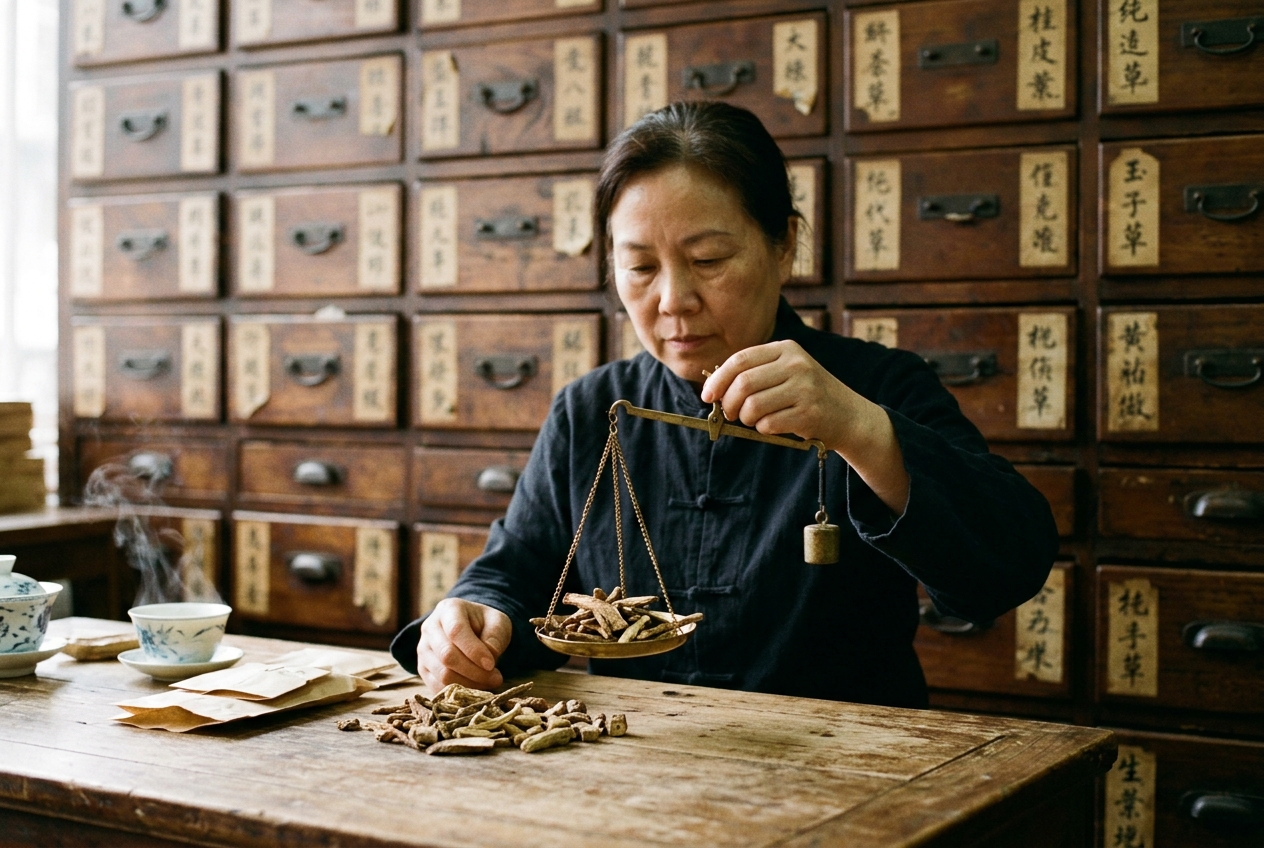
1. Opening Scene — A Moment You’ll Recognise: The Somatic Geographies of Botanical Precision
You swallow a steaming infusion of ginger and scallion white, and within three minutes, a tingling warmth prickles across the nape of your neck, loosening your tight shoulders and opening your sinuses before a light sweat breaks across your forehead. Contrast this with the experience of drinking an intensely bitter decoction of dandelion and gentian root: rather than climbing upward and outward, the sensation plunges rapidly into the gut, cooling digestive heat and stimulating lower bowel motility.
We instinctively experience the body not as a homogenous chemical flask, but as an interconnected landscape of distinct anatomical territories and energetic conduits. When illness strikes, it rarely presents as a generalized malaise; rather, it stakes a claim on specific anatomical zones. A tension headache grips the lateral temples along the hairline; a chronic cough lodges deep within the chest; an inflammatory flare burns through the urinary tract.
In Western biomedicine, pharmacokinetics describes how an active chemical compound is absorbed, distributed, metabolized, and excreted throughout tissue compartments. Yet, more than eight centuries before modern pharmacology isolated organ-specific ligands and vascular receptors, Chinese medical practitioners developed an empirical, target-delivery science known as Channel Tropism (Guī Jīng, 归经)—literally translated as "meridian homing" or "channel entry."
Gui Jing explains why two herbs with identical thermal properties and chemical classes exert radically different clinical effects. It represents the conceptual bridge between systemic botanical energetics and targeted organ-system bioavailability, transforming raw polyherbal decoctions into guided therapeutic payloads.
2. Theoretical Foundations & Historical Lineage: From Empirical Resonance to the Pearl Bag System
The conceptual evolution of Gui Jing reflects a multi-millennial transition from intuitive, correlative cosmology to an exacting, empirical pharmacological taxonomy. Its earliest roots appear in the foundational classic of Chinese internal medicine, the Huangdi Neijing (Inner Canon of the Yellow Emperor, c. 1st century BCE), which established the theory of visceral resonance (Wu Xing correspondences). The Neijing posited that specific environmental flavors naturally home to specific internal organs: sourness enters the Liver (Gān), bitterness enters the Heart (Xīn), sweetness enters the Spleen (Pí), acridity enters the Lung (Fèi), and saltiness enters the Kidney (Shèn).
While the Shennong Bencao Jing (Divine Farmer's Materia Medica, c. 200 CE) documented the thermal natures (Si Qi) and flavors (Wu Wei) of 365 core substances, it categorized herbs primarily by therapeutic tier rather than discrete channel trajectories. Classical practitioners understood that herbs treated specific symptom clusters, but the systematic codification of how these herbs navigated the twelve primary meridians remained unformalized for another millennium.
The definitive scientific breakthrough occurred during the Song, Jin, and Yuan Dynasties (960–1368 CE), an era of profound medical innovation. The Jin-dynasty master Zhang Yuansu (张元素, c. 1151–1234 CE), in his seminal treatise Zhenzhu Nang (The Pearl Bag / 珍珠囊), revolutionized Chinese pharmacodynamics by explicitly assigning specific channel entries to individual medicinals. Zhang recognized that empirical clinical efficacy depended not merely on what an herb was capable of clearing or tonifying, but on where within the meridian network its active dynamic manifested.
Zhang’s brilliant disciple, Li Dongyuan (李杲, 1180–1251 CE), author of the Pi Wei Lun (Treatise on the Spleen and Stomach), expanded this framework into architectural polyherbal prescribing. Li demonstrated that without specific "courier" or "channel-guiding" medicinals (Yǐn Jīng Yào, 引经药), broad-spectrum tonics or clearing agents would diffuse haphazardly throughout the systemic circulation, dissipating their potency before reaching the diseased visceral locus. Through the works of Zhang Yuansu, Li Dongyuan, and later Ming-dynasty encyclopedists such as Li Shizhen, Gui Jing became a pillar of systematic prescription design, recognized today by global health bodies including the World Health Organization Traditional Medicine Programme.
3. Mechanisms of Visceral Selectivity: Flavor, Thermal Nature, and Vector Dynamics
Visceral selectivity in Chinese herbal pharmacology is governed by a multidimensional energetic matrix. An herb's therapeutic destination is not dictated by an isolated parameter, but emerges from the synthesis of four fundamental attributes:
- Thermal Nature (Sì Qì, 四气): Cold (Hán), Hot (Rè), Warm (Wēn), Cool (Liáng), and Neutral (Píng).
- Five Flavors (Wǔ Wèi, 五味): Acrid/Pungent (Xīn), Sweet (Gān), Bitter (Kǔ), Sour (Suān), and Salty (Xián).
- Directional Vectors (Shēng Jiàng Chén Fù, 升降沉浮): Ascending (Shēng), Descending (Jiàng), Sinking (Chén), and Floating (Fù).
- Channel Tropism (Guī Jīng, 归经): Selective affinity for one or more of the twelve primary organ-meridian circuits.
The relationship between flavor and visceral affinity reveals deep physiological logic as categorized in classical Chinese Herbology:
- Acridity (Xīn) acts through volatilization and exteriorization. It enters the Lung (Fèi) and Large Intestine (Dà Cháng) networks because its light, diffusive compounds disperse surface wind-cold, mobilize defensive Wei Qi, and clear pulmonary congestion.
- Bitterness (Kǔ) induces downward drainage and drying. It exhibits natural affinity for the Heart (Xīn) and Liver (Gān), where it purges scorching pathogenic fire, quells arterial agitation, and clears inflammatory damp-heat.
- Sweetness (Gān) tonifies, nourishes, and stabilizes. It enters the central Spleen (Pí) and Stomach (Wèi) axis, providing slow-burning metabolic fuel to rebuild vital fluid, digestive enzymes, and post-heaven Qi.
- Sourness (Suān) exerts astringency and muscular gathering. Entering the Liver (Gān) and Gallbladder (Dǎn), it arrests the leakage of vital essences, anchors rising hepatic fire, and preserves cellular integrity.
- Saltiness (Xián) softens nodular indurations and enters the deep water realm of the Kidney (Shèn) and Urinary Bladder (Páng Guāng), modulating osmotic pressure and mineral regulation.
Vector dynamics (Sheng Jiang Chen Fu) intersect directly with these flavors. Aerial plant structures (flowers, upper leaves, light seeds) naturally ascend and float (Sheng/Fu), steering medicinal effects toward the upper body, cranium, and skin surface. In contrast, subterranean plant parts (heavy roots, minerals, dense barks) descend and sink (Jiang/Chen), anchoring metabolic fire and directing therapeutic payloads into the pelvic bowl, intestines, and lower extremities.
4. Guide Herbs (Yin Jing Yao) Across the Twelve Channels: An Exhaustive Pharmacological Matrix
In classical formulation science, the concept of Guide Herbs (Yǐn Jīng Yào, 引经药) represents an ingenious method of precision pharmacotherapy. A guide herb functions as a molecular tractor: included in modest doses within a multi-herb compound, it navigates the entire formula’s active constituents toward a targeted anatomical region or meridian pathway, preventing diffuse systemic loss.
The authoritative matrix of channel-guiding medicinals across the twelve classical channels and Six Divisions encompasses:
I. Taiyin Channels (Lung & Spleen Axis)
- Lung Channel (Shǒu Tàiyīn Fèijīng):
- Platycodon grandiflorus (Jié Gěng, 桔梗): The ultimate upper-body courier. Due to its ascending vector, it carries formulas directly into the throat, chest, and pulmonary alveoli.
- Allium fistulosum (Cōng Bái, 葱白): Disperses exterior cold and guides therapeutic compounds into the superficial Taiyin barrier.
- Spleen Channel (Zú Tàiyīn Píjīng):
- Atractylodes macrocephala (Bái Zhú, 白术) and Cimicifuga heracleifolia (Shēng Má, 升麻): Bai Zhu homes directly to the central digestive mucosa to dry dampness, while Sheng Ma elevates clear Spleen Yang out of the lower abdomen.
II. Yangming Channels (Stomach & Large Intestine Axis)
- Stomach Channel (Zú Yángmíng Wèijīng) & Large Intestine (Shǒu Yángmíng Dàchángjīng):
- Angelica dahurica (Bái Zhǐ, 白芷): Specifically guides formulas to the forehead, supraorbital ridges, nasal sinuses, and facial tissues along the Yangming pathway.
- Pueraria lobata (Gě Gēn, 葛根): Homes to the upper back, nape of the neck, and cranial capillary beds, releasing muscle spasms and venting heat.
- Gypsum fibrosum (Shí Gāo, 石膏): Heavy and cold, it directs formulas downward into the Stomach furnace to clear excess fire.
III. Shaoyang Channels (Gallbladder & San Jiao Axis)
- Gallbladder Channel (Zú Shàoyáng Dǎnjīng) & San Jiao (Shǒu Shàoyáng Sānjiāojīng):
- Bupleurum chinense (Chái Hú, 柴胡): The primary courier for the lateral costal regions, temples, ears, and the half-interior/half-exterior immune hinge.
- Scutellaria baicalensis (Huáng Qín, 黄芩): Clears inflammatory heat specifically from the upper burner and Gallbladder meridian.
- Cyperus rotundus (Xiāng Fù, 香附): Guides Qi-regulating medicinals into the subcostal, hypochondriac, and pelvic San Jiao pathways.
IV. Taiyang Channels (Urinary Bladder & Small Intestine Axis)
- Urinary Bladder (Zú Tàiyáng Pángguāngjīng) & Small Intestine (Shǒu Tàiyáng Xiǎochángjīng):
- Notopterygium incisum (Qiāng Huó, 羌活): The master guide for the entire posterior chain, occiput, upper spine, and dorsal musculature.
- Ligusticum sinense (Gǎo Běn, 藁本): Homes specifically to the vertex of the cranium (Baihui, GV20) and the highest reaches of the Taiyang network.
V. Shaoyin Channels (Heart & Kidney Axis)
- Heart Channel (Shǒu Shàoyīn Xīnjīng) & Kidney Channel (Zú Shàoyīn Shènjīng):
- Coptis chinensis (Huáng Lián, 黄连): Enters the Heart channel with clinical affinity, clearing central nervous system agitation and myocardial heat.
- Cinnamomum cassia Bark (Ròu Guì, 肉桂): Leads therapeutic formulas downward into the primal Kidney gate (Ming Men) to kindle metabolic fire.
- Anemarrhena asphodeloides (Zhī Mǔ, 知母) and Phellodendron amurense (Huáng Bò, 黄柏): Guide nourishing and fire-draining formulas directly into the lower urinary and reproductive tracts.
VI. Jueyin Channels (Liver & Pericardium Axis)
- Liver Channel (Zú Juéyīn Gānjīng) & Pericardium (Shǒu Juéyīn Xīnbāojīng):
- Ligusticum chuanxiong (Chuān Xiōng, 川芎): Penetrates the blood-vascular system of the Liver and Pericardium, carrying formulas throughout the cranium and intercostal spaces.
- Evodia rutaecarpa (Wú Zhū Yú, 吴茱萸): Directs warming, pain-relieving agents to the vertex, hepatic duct, and lower abdominal meridian pathways.
- Achyranthes bidentata (Niú Xī, 牛膝): The premier descending vector guide, steering blood and active constituents down through the lumbar spine, hips, knees, and ankles.
For further exploration of anatomical meridian mappings, consult the historical surveys indexed in Wikipedia's Meridian Analysis.
5. Clinical Formulation Dynamics & Target Delivery: Classical Polyherbal Architectures
In traditional Chinese pharmacology, a formula is structured not as a random mixture of isolated compounds, but as an orchestrated military hierarchy: Monarch (Jūn, 君), Minister (Chén, 臣), Assistant (Zuǒ, 佐), and Courier/Guide (Shǐ, 使). The Shi herb embodies the practical realization of Gui Jing, acting as the steering mechanism for the entire prescription.
Case Archetype 1: Xiao Chai Hu Tang (Minor Bupleurum Decoction)
- Clinical Target: The Shaoyang pivot (half-exterior, half-interior stage characterized by alternating chills and fever, bitter taste in the mouth, ribside fullness, and emotional constraint).
- Target Delivery Mechanism: Chai Hu (Monarch) and Huang Qin (Minister) possess exclusive tropism for the Gallbladder and San Jiao channels. Chai Hu acts simultaneously as the primary therapeutic agent and the channel guide, navigating Ban Xia (digestive harmonizer) and Ren Shen (Qi tonic) directly to the reticuloendothelial and hepatobiliary systems, resolving the disease pivot without depleting surrounding organ systems.
Case Archetype 2: Dao Chi San (Guide Out the Red Powder)
- Clinical Target: Heart fire transmitting downward into the Small Intestine, manifesting as mouth ulcers, mental restlessness, dark or painful urination, and hematuria.
- Target Delivery Mechanism: Sheng Di Huang clears heat from the blood and Heart, while Mu Tong (or contemporary substitutes like Tong Cao) acts as the specialized courier. Mu Tong exhibits paired channel tropism for both the Heart and Small Intestine/Bladder meridians. It literally "guides the red" (Heart heat) downward through the internal visceral connection between Heart and Small Intestine, venting inflammatory heat out of the body through the urine.
Case Archetype 3: Bu Zhong Yi Qi Tang (Tonify the Middle and Augment the Qi Decoction)
- Clinical Target: Spleen-Stomach Qi sinking, leading to visceral prolapse (uterine, rectal, gastric), chronic fatigue, and organ ptosis.
- Target Delivery Mechanism: While heavy tonics like Huang Qi, Dang Shen, and Bai Zhu replenish total energy reserves, their unguided kinetic weight would naturally settle in the lower burner. Li Dongyuan introduced small quantities of Chai Hu and Sheng Ma as couriers. With their ascending, buoyant vectors, these two guide herbs reverse the pathological downward vector, lifting the Spleen's clear Yang upward toward the chest and head.
6. Modern Pharmacological Correlates: Receptor Affinity, Tissue Distribution, and Barrier Permeation
Contemporary ethnopharmacology and molecular biology increasingly validate Gui Jing through the lenses of organ-specific tissue distribution, receptor binding kinetics, and membrane permeability. Research accessible through the National Center for Biotechnology Information (NCBI PubMed) confirms that herbs traditionally categorized as entering specific channels frequently exhibit pronounced chemical accumulation in corresponding anatomical tissues.
Tissue-Selective Biodistribution
Modern chromatographic and radiolabeling studies reveal distinct organ-distribution profiles matching classical channel assignments: * Berberine, the primary isoquinoline alkaloid in Huang Lian (Heart/Stomach/Large Intestine tropism), exhibits marked concentration in the intestinal epithelium, myocardium, and hepatic tissue, matching its classical roles in clearing cardiac fire and gastrointestinal damp-heat. * Baicalin from Huang Qin (Lung/Gallbladder tropism) shows rapid, selective deposition in pulmonary parenchymal tissue and biliary secretions, downregulating inflammatory cytokines (TNF-α, IL-6) directly within the bronchoalveolar space. * Puerarin and isoflavones from Ge Gen (Stomach/Spleen/Yangming tropism) selectively cross the cranial vascular bed, dilating vertebral and carotid arteries to alleviate occipital-neck tension and cerebral ischemia.
Barrier Permeation and Courier Synergism
The most striking modern parallel to Yin Jing Yao is the discovery of botanical bio-enhancers and blood-brain barrier (BBB) modulators: * Monoterpenes such as Borneol (Bīng Piàn, 冰片) and aromatic constituents from Acorus (Shí Chāng Pǔ, 石菖蒲) have been shown in molecular studies to temporarily and reversibly loosen tight junction proteins (Claudin-5, Occludin, and ZO-1) within the cerebral microvascular endothelium. When co-administered with larger neuroprotective polyphenols or active alkaloids, these guide herbs facilitate transit across the BBB, multiplying active compound concentrations in brain tissue by factors of three to ten. * Couriers also function as P-glycoprotein (P-gp) efflux pump inhibitors, preventing the extrusion of therapeutic molecules from target cells and elevating intracellular bioavailability in targeted organs. Methodological reviews on herbal pharmacokinetics can be studied via PubMed Central Research Repository.
7. How You Can Feel It: Signs of Channel Harmony and Visceral Obstruction
You do not need an advanced herbal laboratory to observe channel dynamics in action. The human body provides continuous sensory feedback regarding the patency, tension, and flow of its meridian pathways.
                           SELF-ASSESSMENT PROTOCOL

   [BALANCED MERIDIAN FLOW]                [OBSTRUCTED MERIDIAN CHANNEL]
   • Nimble cervical rotation              • Occipital headache / neck rigidity
   • Clear, alert sensorium                • Temporal throbbing / bitter taste
   • Unrestricted subcostal breathing      • Hypochondriac fullness / sighing
   • Rhythmic peristaltic vitality         • Mid-afternoon postprandial stupor
Meridian Self-Assessment Checkpoints
- The Craniofacial & Occipital Circuit (Taiyang / Yangming Axis): * In Balance: Free, supple cervical rotation; clear vision; absence of frontal sinus pressure; light and alert mental clarity. * Imbalance / Obstruction: A band-like tension wrapping across the forehead (Yangming obstruction) or a stiff, aching tightness anchoring the occiput down into the trapezius muscles (Taiyang cold-stagnation).
- The Lateral Costal & Temporal Circuit (Shaoyang Axis): * In Balance: Smooth, unrestricted lateral ribcage expansion during deep inhalation; even emotional regulation; crisp auditory acuity. * Imbalance / Obstruction: Frequent involuntary sighing, intercostal fullness, sharp or throbbing headaches localized around the temples, and an unpleasant, metallic-bitter taste upon waking.
- The Central Digestive & Extremity Axis (Taiyin / Spleen Axis): * In Balance: Steady, sustained vitality after meals; well-formed bowel movements; warm hands and feet; resilient muscular tone. * Imbalance / Obstruction: Overwhelming postprandial brain fog, heavy and leaden limbs, abdominal distension, and water retention around the ankles.
8. Qigong & Movement Practice: The Twelve Meridian Vector Alignment
To cultivate visceral sensitivity and facilitate unobstructed channel conductance, perform this daily somatic sequence: "Guiding the Clear Upward, Descending the Turbid Downward" (Shēng Qīng Jiàng Zhuó Fǎ, 升清降浊法). This sequence actively harmonizes the ascending and descending meridian vectors without requiring any specialized equipment.
Step-by-Step Exercise Instructions
- Starting Position & Setup: Stand barefoot on a level surface with your feet parallel, hip-width apart. Unlock your knees slightly. Allow your tailbone to sink gently toward the earth while suspending the crown of your head (Baihui, GV20) as if drawn upward by a silk thread. Let your arms rest naturally at your sides, with your tongue resting lightly on the roof of your mouth behind your upper teeth.
- Phase 1: Ascending the Clear (Taiyin/Yangming Sweep):
- Inhale smoothly through your nose for a slow count of 4.
- Turn your palms forward and draw your hands upward along the midline of your abdomen and chest, imagining you are drawing cool, pure spring water up through the soles of your feet (Yongquan, KI1) along the inner legs to your heart center.
- Phase 2: Spiraling Through the Flanks (Shaoyang Expansion):
- At the peak of your inhale, rotate your right palm to face upward toward the sky while your left palm presses downward toward the earth.
- Gently extend your spine and look slightly over your left shoulder, feeling a pleasant, opening stretch through your lateral ribcage, intercostal spaces, and flanks (opening the Gallbladder and San Jiao pathways).
- Phase 3: Descending the Turbid (Taiyang/Shaoyin Clearing):
- Exhale steadily through your nose for a count of 6.
- Sweep both hands in a broad, graceful arc outward and down past your hips, tracing the posterior line of your shoulders, lower back, hamstrings, and calves.
- Visualize all metabolic heat, nervous tension, and stagnant fluids draining down through your heels deep into the earth.
- Repetitions and Duration: Perform 8 complete alternating cycles (4 per side), lasting approximately 5 to 7 minutes.
- Sensations to Notice: Look for a distinct sensation of spreading warmth across your lower back (Ming Men), an involuntary relaxation of your diaphragm, and a light tingling sensation in your fingertips—clear physiological markers of renewed microvascular perfusion and meridian patency.
9. Acupressure Points You Can Try Today: Key Meridian Courier Nodes
You can directly stimulate the bioelectrical nexus of these major channel highways through targeted acupressure. Use these three premier courier points to clear tension, redirect pathological vectors, and enhance visceral function.
1. Hégǔ (LI4, Large Intestine 4 — "Union Valley")
- Anatomical Location: On the dorsum of the hand, between the first and second metacarpal bones, situated in the fleshy mound at the midpoint of the second metacarpal bone when the thumb and index finger are pressed together.
- Application Technique: Place the thumb of your opposite hand on the point and your index finger on the palm side. Apply firm, perpendicular pressure while making tiny circular oscillations. Maintain for 90 to 120 seconds per hand until a deep, aching distension (De Qi) radiates through the hand.
- Clinical Indications: The master command point for the entire Yangming craniofacial zone. Rapidly relieves frontal headaches, sinus congestion, jaw tension, and toothaches, while encouraging healthy downward intestinal peristalsis. (Note: Contraindicated during pregnancy).
2. Tàichōng (LR3, Liver 3 — "Great Surge")
- Anatomical Location: On the top of the foot, in the hollow depression distal to the junction of the first and second metatarsal bones (approximately two finger-widths back from the web between your big toe and second toe).
- Application Technique: Press with your thumb angled slightly toward the ankle joint. Apply firm, steady pressure for 2 minutes while taking slow, deep diaphragmatic breaths.
- Clinical Indications: The primary source point of the Jueyin Liver channel. It immediately descends rising emotional agitation, relieves temporal and vertex headaches, alleviates eye strain, and relieves hepatic Qi stagnation.
3. Zúsānlǐ (ST36, Stomach 36 — "Leg Three Miles")
- Anatomical Location: Four finger-widths below the lower border of your kneecap, and one thumb-width lateral to the anterior crest of the tibia (in the soft belly of the tibialis anterior muscle).
- Application Technique: Use your thumb or knuckle to apply deep, firm downward-angled pressure. Pulse the pressure rhythmically (press for 5 seconds, release slightly for 2 seconds) over a 3-minute period on each leg.
- Clinical Indications: The supreme tonic node of the Yangming/Earth axis. Activates systemic nutrient assimilation, clears chronic digestive fatigue, builds red blood cells, and boosts whole-body energetic resilience.
10. Food & Lifestyle: Small Changes for Today
You do not need rare botanical compounds to harness the power of Gui Jing. Your kitchen pantry is already stocked with potent foods characterized by distinct flavors, thermal natures, and meridian trajectories. By strategically aligning your daily diet with these classical vector dynamics, you can direct therapeutic nourishment precisely where your body needs it.
What to Add
- To Vent the Upper Exterior (Lung/Taiyang Axis): Simmer two sliced scallion whites (Cong Bai) and three thin coins of fresh ginger (Sheng Jiang) in two cups of water for 8 minutes. Drink warm when experiencing early neck stiffness or sinus congestion to direct therapeutic diaphoresis to the cranial surface.
- To Drain Inflammatory Heat (Liver/Stomach Axis): Incorporate slightly bitter spring greens (dandelion greens, arugula, radicchio, or endive) dressed with a dash of extra-virgin olive oil into your midday meal. The bitter flavor steers digestive secretions downward, clearing latent heat from the hepatobiliary tract.
- To Anchor Kidney Water (Kidney/Shaoyin Axis): Drink a warm cup of kelp, wakame, or kombu broth seasoned with a teaspoon of fermented dark miso paste. The natural marine saltiness directs deep electrolytes directly into the Kidney-adrenal axis, nourishing cellular hydration.
What to Reduce
- Excessive Refined Sugars and Heavy Dairy: Their cloying, hyper-sweet nature overwhelms the Spleen (Pí) channel, bogging down metabolic transformation and generating systemic dampness and brain fog.
- Scorching, Deep-Fried Spicy Foods: Excessive consumption of capsicum peppers and fried oils injects chaotic fire into the Stomach (Yangming) and Liver (Jueyin) meridians, drying out internal Yin fluids and causing facial breakouts, heartburn, and irritability.
11. Today’s Takeaway: A Five-Minute Channel Realignment
The fundamental lesson of Channel Tropism (Gui Jing) is that direction matters as much as substance. Whenever you feel physical tension, mental stagnation, or digestive sluggishness, you can realign your body's energetic traffic in five minutes: sit tall with your spine elongated, sip a cup of warm water steeped with a single slice of fresh ginger and a squeeze of fresh lemon (marrying acrid dispersion with sour hepatic containment), and apply two minutes of rhythmic thumb pressure to Hegu (LI4) on your hand while breathing deeply into your lower belly. In doing so, you deploy the ancient science of the Pearl Bag masters—guiding clear energy upward to your mind, anchoring your physical core, and restoring dynamic harmony across your twelve meridian channels.