Auricular Diagnosis (Er Zhen) Meridian Diagnostics: Governing Somatotopic Inverted Fetus Topography, Concha Reflex Differentiation, and Visceral Vagal Resonance in Traditional Chinese Medicine
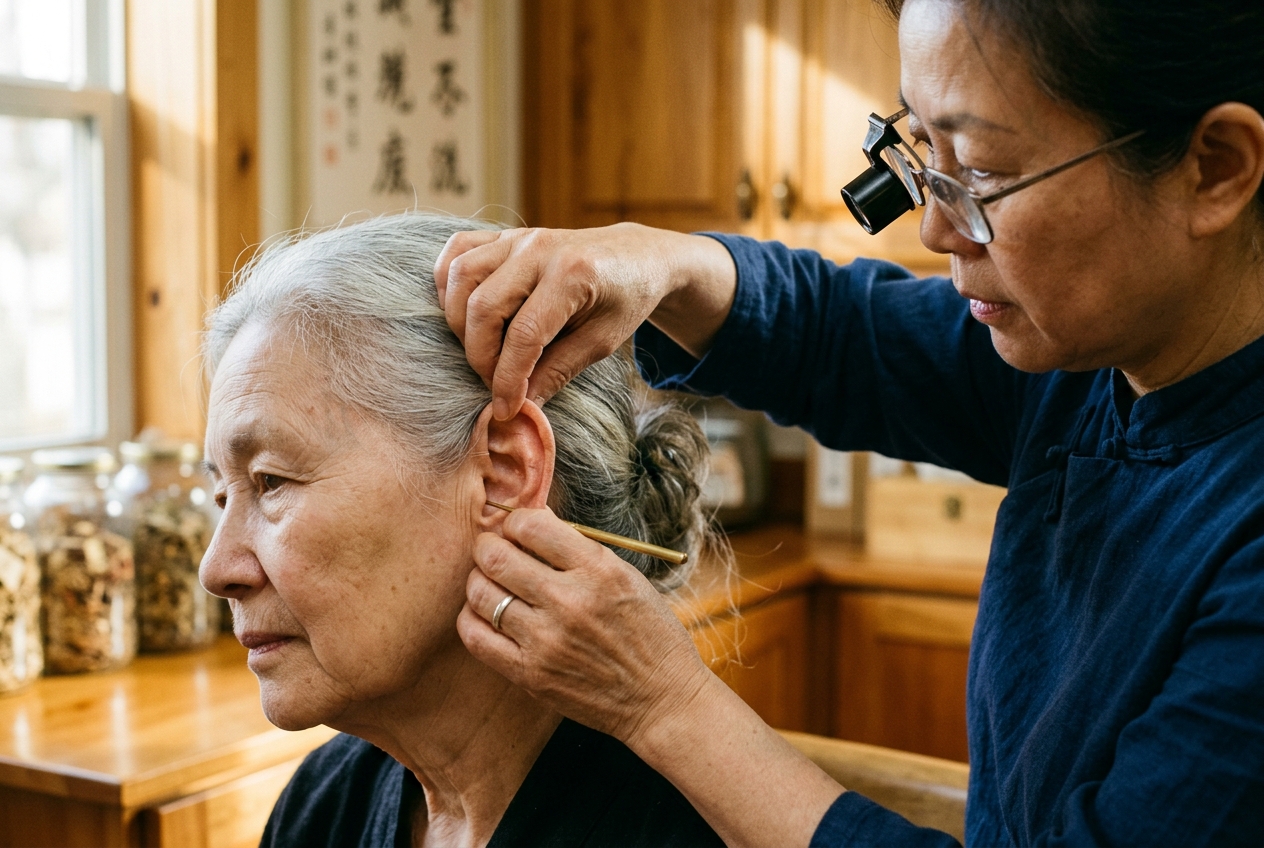
Run a fingertip along the rim of your outer ear and trace its curving cartilage down toward the lobe. If you have spent the last four hours hunched over a backlit screen, under deadline pressure with shallow breathing, you may notice something surprising: a distinct, tender heat radiating from the small hollow just above your ear canal, or an exquisite, pinpoint ache along the raised ridge of the antihelix. You might dismiss this as simple mechanical compression from headphones or postural strain. In the clinical tradition of Traditional Chinese Medicine (TCM), however, this localized sensitivity is neither random nor superficial.
The auricle functions as a high-fidelity biological transducer—a miniature diagnostic screen displaying the real-time operational status of your internal organs (Zang-Fu) and meridian networks. Long before an internal imbalance manifests as structural tissue pathology or macroscopic disease, the microvascular networks, cutaneous nerve terminals, and energetic pathways of the external ear register the disturbance. By learning to decode the visual signatures, tactile resistance variations, and electro-dermal fluctuations across the auricular terrain, clinicians and practitioners gain immediate access to an elegant, non-invasive diagnostic methodology that bridges ancient channel theory with contemporary neuro-autonomic physiology.
2. What This Organ System Does: Classical Canonical Foundations & Somatotopic Neuroanatomy
In classical Chinese medical epistemology, the ear is not merely an auditory organ; it is an energetic confluence where systemic Qi and Blood concentrate. The foundational canon Huangdi Neijing (The Yellow Emperor’s Inner Classic), specifically the Ling Shu (Spiritual Pivot, Chapter 28), explicitly states:
"The ear is the place where the ancestral meridians gather" (耳者,宗脈之所聚也).
All six Yang primary channels—Large Intestine, Small Intestine, Triple Burner (San Jiao), Stomach, Bladder, and Gallbladder—either enter the external ear directly or dispatch collateral branches (Luo-mai) to encircle its base. Furthermore, the six Yin primary channels (Lung, Spleen, Heart, Kidney, Liver, and Pericardium) connect indirectly with the auricle through internal divergent branches (Jing Bie) and the twelve muscle regions (Jing Jin). The Ling Shu (Chapter 10) emphasizes that the Kidney channel opens into the ear, storing ancestral essence (Jing), while the Heart governs auricular sensory acuity via Blood perfusion. Consequently, every visceral pathology reverberates across the external ear.
In the late 1950s, this classical paradigm was synthesized with modern neuroembryology by the French physician Dr. Paul Nogier and subsequently standardized by clinical researchers in China, documented in global frameworks recognized by the World Health Organization Traditional Medicine guidelines and the Standard Auricular Nomenclature. The external ear reflects the topographical projection of an inverted fetus in utero:
                       ___......---...___
                   _.-'                  `-._
                .-'   [Triangular Fossa]     `-.
              .'       (Pelvic Viscera)         `.
             /      [Superior Crus]               \
            /      (Lower Extremities)             \
           ;                                        ;
           |   [Cymba Conchae]      [Antihelix]     |
           | (Abdominal Organs)     (Spinal Column) |
           |                                        |
           |   [Cavum Conchae]                      |
           |  (Thoracic Viscera)                    |
           ;                                        ;
            \      [Tragus]       [Antitragus]     /
             \   (Endocrine)      (Brainstem)     /
              `.                                .'
                `-.       [Lobule]          .-'
                   `-._ (Craniofacial) _.-'
                       ```------------'''
Topographical Zone Mapping
- The Lobule (Craniofacial and Sensory Zone): Corresponds to the inverted fetal head, comprising the cerebrum, facial muscles, dental arches, eyes, tongue, and inner ear.
- The Antihelix and its Crura (Vertebral and Musculoskeletal Axis): The main body of the antihelix mirrors the spinal column, ascending from the cervical vertebrae at the lower root adjacent to the antitragus, through the thoracic spine in the middle section, to the lumbar and sacral segments at the bifurcation. The superior crus projects to the lower extremities (knee, ankle, toes), while the inferior crus corresponds to the buttocks and sciatic nerve path.
- The Triangular Fossa (Pelvic Viscera and Shen Men): Nestled between the superior and inferior crura, this zone projects to the internal reproductive organs, uterus, prostate, and the renowned point Shen Men (Spirit Gate), which exerts profound neuro-sedative effects.
- The Cymba and Cavum Conchae (Visceral Zang-Fu Chambers): - Cymba Conchae (Upper concha): Abdominal viscera—Kidneys, Liver, Gallbladder, Pancreas, Spleen, Stomach, and Intestines. - Cavum Conchae (Lower concha surrounding the acoustic meatus): Thoracic viscera—Heart, Pericardium, Lungs, and Trachea.
- The Tragus and Antitragus (Subcortical and Neuroendocrine Axis): - Tragus: Adrenal gland, hunger and thirst regulation centers, external nose, and autonomic ganglia. - Antitragus: Thalamus, brainstem, subcortex, pituitary gland, and cranial sensory relay stations.
Neuroanatomical Mechanisms and Somatovisceral Reflexes
Modern scientific investigations, catalogued on the NCBI PubMed Database, elucidate the precise neuro-reflex pathways underlying auricular diagnosis and therapy. The auricle receives rich, tri-neural cutaneous innervation:
- Auricular Branch of the Vagus Nerve (ABVN / Arnold's Nerve): Exclusively innervates the concha (both cavum and cymba) and the internal wall of the acoustic meatus. Cutaneous stimulation of this zone activates the Nucleus Tractus Solitarii (NTS) in the brainstem, which modulates central parasympathetic outflow via the cholinergic anti-inflammatory pathway, as documented in peer-reviewed research on transcutaneous auricular vagus nerve stimulation.
- Auriculotemporal Nerve (Mandibular branch of Trigeminal Nerve, CN V3): Innervates the tragus, anterior helix, and ascending crus of the helix, linking auricular inputs directly to the spinal trigeminal nucleus and thalamocortical pain-gating circuits.
- Greater Auricular and Lesser Occipital Nerves (Cervical Plexus C2–C3): Innervate the lobule, antihelix, scaphoid fossa, and posterior cranial surface, communicating directly with dorsal horn spinal segments that govern somatic musculoskeletal proprioception and nociception.
When internal visceral inflammation or musculoskeletal ischemia occurs, antidromic neural impulses travel via sympathetic and spinal-vagal afferents to the spinal cord and brainstem. Through central convergence-projection mechanisms, these visceral afferents induce localized neurovascular changes in corresponding auricular zones: increased capillary permeability, mast cell degranulation, localized hyperalgesia, and marked reductions in electro-dermal resistance.
3. How You Can Feel It: Signs of Balance, Imbalance, and Tri-Modal Diagnostic Methodologies
The clinical implementation of Auricular Meridian Diagnosis (Er Zhen) relies on a systematic, tri-modal inspection protocol: visual observation, tactile palpation/algometry, and electro-conductance measurement.
A. Visual Inspection: Morphological and Chromatic Signatures
A trained clinician examines the ear under natural, shadow-free daylight without prior friction or cleaning, which could induce artificial reactive hyperemia. Pathological reflections include:
- Chromatic Shifts:
- Erythema (Hyperemia/Redness): Indicates acute inflammatory conditions, Heat patterns (Re Zheng), or acute physical trauma in the corresponding anatomical region.
- Pallor (Ischemic Whitening): Reflects chronic Cold patterns (Han Zheng), systemic Blood/Qi deficiency, or chronic tissue degeneration.
- Dark Cyanosis or Purple Discoloration: Signifies blood stasis (Xue Yu), chronic pain syndromes, or severe localized hypoxia.
- Morphological Alterations:
- Desquamation (Dry Flaking / Pityroid Scaling): Indicates chronic Yin deficiency, nutritional malabsorption, or persistent eczema/dermatitis in visceral reflex zones (frequently observed in the concha for chronic gastrointestinal disorders).
- Nodular Tubercles and Cartilaginous Indurations: Small, firm, bead-like elevations along the antihelix stem or scaphoid fossa indicate chronic osteoarthritic changes, calcifications, or fibrous hyperplasia along the corresponding vertebral or articular segment.
- Cystic Formations and Depressed Pits: Indicate tissue atrophy, profound organ deficiency, or post-surgical scar tissue.
- Microvascular Telangiectasias:
- Twisted, dilated, star-burst, or thread-like capillary loops in the concha or triangular fossa reflect chronic micro-circulatory stagnation, visceral vascular congestion, or inflammatory sequelae.
- Frank's Sign (Diagonal Earlobe Crease): A deep, diagonal fold running at a 45-degree angle across the lobule, clinically correlated in cardiovascular literature on NCBI PMC with coronary artery disease and generalized microvascular sclerosis.
+-------------------+------------------------------------+-------------------------------------+
| Diagnostic Sign   | Classical TCM Interpretation      | Neuro-Biomedical Correlate          |
+-------------------+------------------------------------+-------------------------------------+
| Focal Erythema    | Acute Heat / Channel Congestion    | Localized neurogenic vasodilation   |
| Pitting Pallor    | Chronic Cold / Qi-Blood Deficiency | Microvascular ischemia / low flow   |
| Flaking / Scaling | Spleen Deficiency / Damp Accum.    | Keratinocyte turnover from distress |
| Cartilage Nodules | Chronic Blood Stasis / Phlegm Node | Hypertrophic fibrocartilage change  |
| Telangiectasia    | Stasis in Collaterals (Luo-Mai)    | Capillary proliferation/dilation    |
+-------------------+------------------------------------+-------------------------------------+
B. Tactile Palpation and Algometric Probe Testing
Palpation involves assessing the overall elasticity of the auricular cartilage and applying calibrated pressure using a smooth, rounded, spring-loaded auricular pressure probe (calibrated between 100g and 250g of force).
- The clinician applies uniform perpendicular pressure across the suspect reflex zone.
- In healthy, balanced tissues, the probe generates a sensation of dull, non-painful tactile contact.
- In pathologically involved organs, cutaneous nociceptors exhibit marked neurogenic sensitization. The patient demonstrates an involuntary "Grimace Sign" (squinting, pulling back, or expressing sharp, needle-like discomfort). This hyperalgesic locus identifies the active therapeutic and diagnostic auricular point (Ashi point of the ear).
C. Electro-Dermal Conductance and Resistance Mapping
Because visceral autonomic disturbances lower the cutaneous electrical resistance of specific reflex zones via localized sweat-gland stimulation and interstitial electrolyte shifts, electronic point-finders measure micro-ampere galvanic current across the ear surface: * Positive Conductance Spike (Resistance Drop): Points displaying significantly elevated electrical conductance compared to surrounding background tissue correlate with acute functional excitation, autonomic hyper-arousal, or inflammatory visceral status. * Negative Conductance (High Impedance): Indicates chronic degenerative states, tissue necrosis, or profound structural Qi exhaustion.
4. Illustrative Clinical Case Scenarios: Differential Diagnosis in Action
Case Scenario 1: Differentiating Upper Gastrointestinal Pathology in the Concha
- Patient Presentation: A 45-year-old patient presents with postprandial epigastric discomfort. Auricular inspection focuses on the Stomach/Spleen zone located at the junction where the crus of the helix bisects the concha.
- Differential Pattern A (Acute Gastric Heat / Reactive Gastritis):
- Visual: Bright scarlet erythema localized strictly to the stomach zone, surrounded by tiny, glistening micro-papules.
- Palpation: The patient exhibits an immediate, sharp withdrawal reflex at 120g of probe pressure.
- Conductance: Marked electrical resistance drop (>15 µA conductance jump).
- Synthesis: Correlates with an acute Stomach Fire (Wei Huo) or Food Stagnation pattern, corroborated by a rapid, slippery pulse and red tongue with thick yellow coating.
- Differential Pattern B (Chronic Spleen Qi Deficiency with Dampness):
- Visual: Pale, dull, flaccid appearance of the stomach-spleen zone with localized white desquamation (dry flaking skin) and loss of normal cartilage turgor.
- Palpation: No sharp wincing; patient reports a diffuse, pleasant or dull ache when firm pressure (250g) is applied.
- Conductance: Sluggish, low-conductance reading.
- Synthesis: Points to chronic Spleen Yang/Qi Deficiency with Damp Accumulation, supported by a weak, thready pulse and a pale, scalloped tongue with moist white coating.
Case Scenario 2: Structural Musculoskeletal Assessment along the Antihelix
- Patient Presentation: A 52-year-old desk worker reports chronic neck and upper extremity paresthesia.
- Auricular Findings:
- Visual: Along the lower third of the antihelix stem (cervical spine zone), visual inspection reveals a prominent, indurated, cartilaginous bead-like tubercle accompanied by fine microvascular spider-telangiectasias.
- Palpation: Pinpoint probing across the C5–C7 segments evokes immediate wincing, whereas the upper thoracic and lumbar sections of the antihelix are supple and non-reactive.
- Clinical Correlation: Confirms Cervical Spondylosis with regional Qi and Blood stasis, differentiating it from generalized shoulder myofascial pain or peripheral neuropathy.
5. Qigong & Auricular Somatosensory Movement Practice
To harmonize auricular micro-circulation, stimulate central vagal outflow, and regulate systemic meridian channels, classical Chinese medicine incorporates specific self-regulatory movement and resonance exercises. The most celebrated of these is the classical Dao Yin method known as "Beating the Heavenly Drum" (Ming Tian Gu, 鳴天鼓), combined with Full-Auricle Friction Massage.
Step-by-Step Exercise: "Beating the Heavenly Drum" (Ming Tian Gu)
- Starting Posture and Setup: Sit upright on a stable chair with your feet flat on the floor, hip-width apart. Rest your hands on your thighs, align the crown of your head (Baihui, DU-20) toward the ceiling, tuck your chin slightly to lengthen the cervical spine, and place the tip of your tongue gently against the upper incisive papilla (the roof of the mouth behind the front teeth). Close your eyes and take three slow, diaphragmatic breaths (inhale 4 seconds through the nose, expand the lower abdomen; exhale 6 seconds smoothly).
- Phase 1: Full-Auricle Warm-Up Friction: Form a "V" shape between your index and middle fingers on both hands. Place the "V" around the front and back of each ear base. Vigorously rub up and down along the auriculo-temporal and retroauricular sulci for 36 rhythmic strokes until a spreading, pleasant warmth radiates throughout both ears and into the neck.
- Phase 2: Occlusion and Cranial Resonance ("The Drumming"): Cover both external ears completely with the hollow palms of your hands, pressing firmly inward so the tragus is folded down and an airtight acoustic seal is formed over the external acoustic meatus. Direct your fingers backward to cradle the occipital bone at the base of your skull.
- Phase 3: Snapping the Fingers: Rest your index fingers on top of your middle fingers. In a swift, snapping motion, slide the index finger forcefully off the middle finger so it strikes the occipital bone (specifically over the area of Fengchi, GB-20, and the Yuzhen Jade Pillow region) with an audible, resonant thud.
- Repetition and Cadence: Perform 36 consecutive snaps. Each strike produces an internal, bell-like or drumming vibration within the cranial vault.
- Expected Sensations and Physiological Significance: You will experience an immediate sense of cranial decompression, mental clarity, and visual brightness. The acoustic pressure waves transmit through the temporal bone and cochlear labyrinth, invigorating Kidney Jing, while the concurrent vagal nerve compression activates parasympathetic dominance, lowering heart rate and subduing internal agitation (Shen disturbance).
6. Acupressure Points for Immediate Diagnostic & Therapeutic Application
These three primary auricular acupressure points can be located easily and stimulated using a rounded, smooth stylus, a clean fingernail, or an auricular seed (such as a Vaccaria seed taped to the point).
1. Ear Shen Men (神門, Spirit Gate)
- Precise Anatomical Landmark: Located in the Triangular Fossa, at the bifurcation of the superior and inferior crura of the antihelix, specifically at the upper lateral apex of the fossa.
- Palpatory Technique: Use the blunt tip of a clean pen, smooth probe, or your thumb and index finger grasping both sides of the upper ear. Apply firm, steady, perpendicular pressure directed slightly downward against the cartilage. Maintain pressure while making microscopic clockwise circles for 90 to 120 seconds per ear. The sensation should feel deep, spreading, and heavy (De Qi).
- Clinical Utility: Ear Shen Men is the master neuro-modulatory point on the auricle. It regulates the cerebral cortex, down-regulates sympathetic hyper-reactivity, alleviates acute emotional distress, promotes deep slow-wave sleep, and elevates the systemic pain threshold.
2. Concha Stomach Point (胃, Gaster)
- Precise Anatomical Landmark: Find the horizontal shelf of cartilage that cuts horizontally across the middle of the ear (the crus of the helix). Follow this ridge backward into the depression of the concha; the Stomach point lies in the distinct groove directly at the termination of the crus of the helix, bisecting the cymba and cavum conchae.
- Palpatory Technique: Using a rounded tip or the side of your index fingernail, press gently inward toward the acoustic canal with moderate, rhythmic pumping pressure (2 seconds press, 1 second release) for 2 minutes.
- Clinical Utility: Direct vagal somatovisceral stimulation via the ABVN. Resolves functional dyspepsia, harmonizes rebellious Stomach Qi (acid regurgitation, belching, hiccup), calms nervous gut-brain tension, and alleviates food-retention bloating.
3. Antihelix Cervical Spine Point (頸椎, Columna Cervicalis)
- Precise Anatomical Landmark: Located along the lowest curved section of the antihelix body, directly superior to the intertragic notch and adjacent to the antitragus.
- Palpatory Technique: Pinch the antihelix ridge between your index finger (on the front of the ear) and your thumb (supporting the back of the ear). Knead along this 1-centimeter curved cartilaginous segment with firm, rolling pinch-compression for 60 to 90 seconds.
- Clinical Utility: Disperses regional channel stagnation across the Shao Yang and Tai Yang meridian pathways, relaxes the trapezius and levator scapulae muscles, alleviates tension headaches, and improves cervical range of motion.
7. Food, Lifestyle & Clinical Synthesis: Integrating Ear, Tongue, and Pulse
Auricular diagnostics achieves its highest diagnostic accuracy when synthesized within the classical four diagnostic methods (Si Zhen), triangulated alongside Tongue Inspection (She Zhen) and Radial Pulse Palpation (Mai Zhen).
+--------------------+---------------------------+--------------------------+----------------------------+
| Pathological State | Auricular Signature       | Tongue Characteristic    | Radial Pulse Signature     |
+--------------------+---------------------------+--------------------------+----------------------------+
| Liver Qi Stagnation| Distended vessels in Cymba| Dusky sides, curled rim  | Wiry (*Xuan Mai*) at Guan  |
| Phlegm-Dampness    | Greasy concha, white peel | Swollen, thick greasy coat| Slippery (*Hua Mai*)       |
| Heart Blood Stasis | Lobe crease (Frank's sign)| Sublingual engorgement   | Choppy / Knotted (*Se Mai*)|
| Spleen Deficiency  | Pitting pallor in Concha  | Scalloped margins, pale  | Deficient (*Xu* / *Ru Mai*)|
+--------------------+---------------------------+--------------------------+----------------------------+
Practical Lifestyle and Dietary Recommendations
To support the neurovascular health of the auricular micro-system and nourish its underlying Zang-Fu foundations:
- Nutritional Protocols for Microvascular Patency:
- Add: Consume warm, lightly cooked, bioflavonoid-rich and circulatory-supportive foods such as steamed dark leafy greens, ginger root infusions, hawthorn berry (Shan Zha), black sesame seeds, and small amounts of walnuts (which classical texts prescribe to tonify Kidney Jing and support auditory/auricular acuity).
- Reduce: Eliminate excessively greasy, deep-fried foods, high-fructose corn syrups, and cold/iced beverages. In TCM pathophysiology, cold liquids cause immediate contraction of the Middle Burner micro-vessels, generating systemic Phlegm-Dampness that coats the concha and blunts auditory-auricular conductivity.
- Hydration and Cartilage Preservation:
- The elastic fibrocartilage of the external ear is highly sensitive to systemic hydration status. Ensure adequate intake of room-temperature mineral water or light roasted barley tea to preserve cartilaginous turgor and maintain micro-circulatory flow across the ear's capillary loops.
- Circadian and Postural Hygiene:
- Avoid prolonged unilateral pressure on the ear from hard pillows or prolonged one-sided headset usage, which creates ischemic mechanical artifacts that confound visual and tactile assessment.
- Take brief ergonomic breaks every 45 minutes to mobilize the cervical spine and perform 30 seconds of retroauricular massage, restoring arterial inflow via the external carotid branch network.
8. Today's Takeaway
The most powerful action you can take right now requires no clinical tools and under five minutes: sit quietly, close your eyes, and locate the small triangular hollow at the upper rim of both ears—Ear Shen Men. Place your index fingers gently into these depressions, pinch the back of the ear with your thumbs, and apply steady, warm circular pressure while taking slow, diaphragmatic breaths for two full minutes. Conclude by performing 36 gentle strikes of "Beating the Heavenly Drum" on your occiput. This simple, elegant routine immediately stimulates the auricular branch of the vagus nerve, down-regulates sympathetic stress responses, releases sub-occipital neck tension, and realigns your mind-body equilibrium through the living micro-system of the ear.
Authoritative References & Further Academic Reading
- World Health Organization: Traditional, Complementary and Integrative Medicine
- National Center for Biotechnology Information (NCBI) PMC: Transcutaneous Auricular Vagus Nerve Stimulation Mechanisms
- NCBI PubMed: Auricular Acupuncture and Autonomic Modulation
- NCBI PMC: Diagonal Earlobe Crease and Cardiovascular Microvascular Correlations
- Wikipedia: Auriculotherapy Foundations and History