Yuan-Source Points: Accessing Primordial Qi Reservoirs, Zang-Fu Diagnostics, and Bilateral Acupressure Protocols
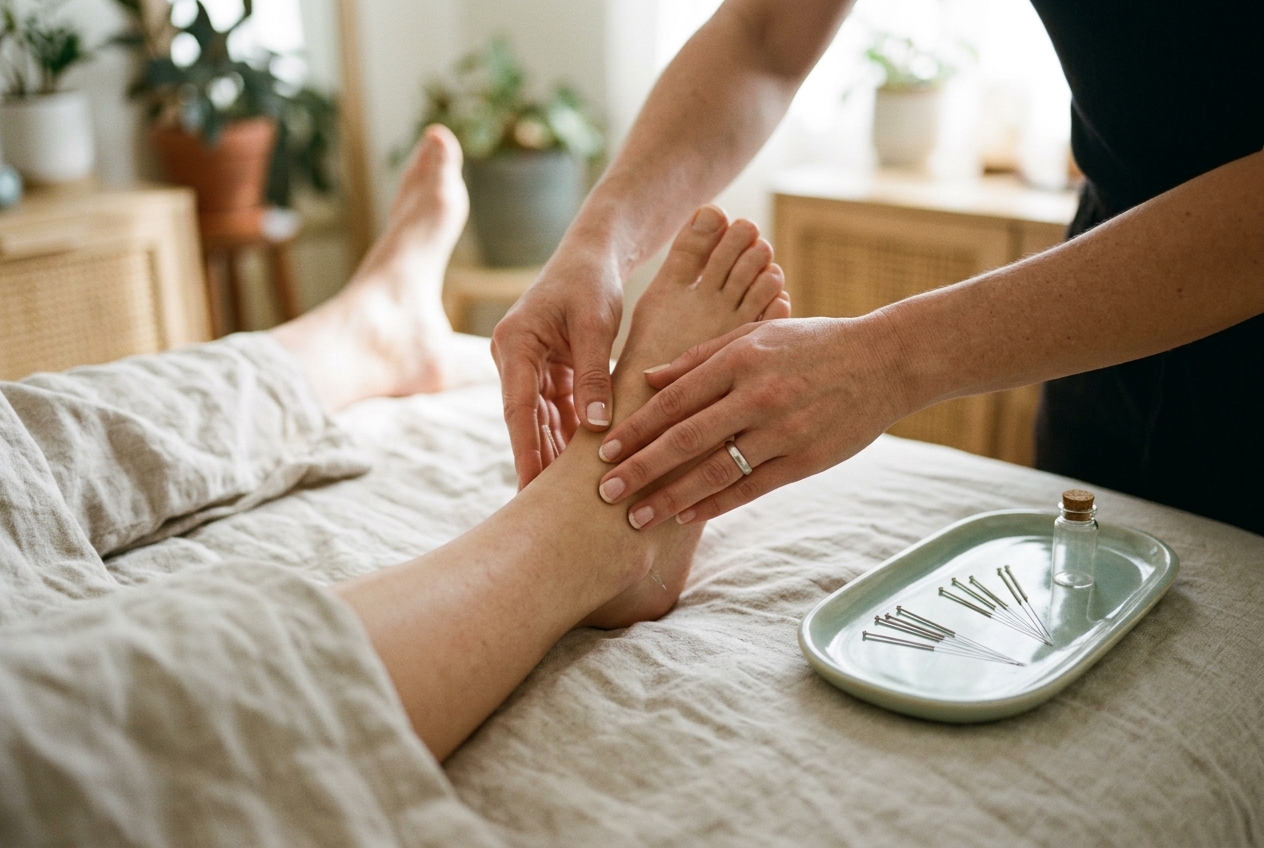
Unlike superficial symptom-relief trigger points, Yuan-Source points function as the primary clinical switchboards of human physiology. They provide direct therapeutic access to the body’s innate, constitutional vitality—known as Yuan Qi (primordial Qi)—allowing practitioners and informed self-care practitioners to assess organ health, correct deep visceral deficiencies, and dissolve stubborn systemic blockages. By understanding the anatomical architecture, diagnostic palpation, and non-invasive stimulation of these twelve bilateral points, one gains a rigorous, practical blueprint for physical equilibrium.
1. The Ontogeny and Physiology of Yuan Qi: From Mingmen to the Twelve Channels
To comprehend the clinical potency of Yuan-Source points, one must first explore the classical theory of primordial energy distribution. According to foundational texts such as the Huangdi Neijing (The Yellow Emperor's Classic of Medicine) and the Nan Jing (Classic of Difficulties), human physiology is sustained by multiple strata of Qi, the most fundamental of which is Yuan Qi (原氣).
+-------------------------------------------------------------+
|               MINGMEN / KIDNEYS (Constitutional Essence)     |
+-------------------------------------------------------------+
                              |
                              v [Yuan Qi / Primordial Energy]
+-------------------------------------------------------------+
|              SAN JIAO (Triple Burner Metabolizer)           |
|      (Upper Burner -> Middle Burner -> Lower Burner)        |
+-------------------------------------------------------------+
                              |
            +-----------------+-----------------+
            |                                   |
            v                                   v
+-----------------------+           +-----------------------+
|  6 YIN MERIDIANS      |           |  6 YANG MERIDIANS     |
|  (Yuan = Shu-Stream)  |           |  (Discrete Yuan Pts)  |
|  LU9, SP3, HT7, KI3,  |           |  LI4, ST42, SI4,      |
|  PC7, LV3             |           |  BL64, SJ4, GB40      |
+-----------------------+           +-----------------------+
Yuan Qi represents the inherited genetic and constitutional vitality endowed at conception, stored within the Kidneys (Shen) and rooted in the physiological nexus known as the Mingmen (Gate of Vitality). While daily metabolic needs are replenished through food (Gu Qi) and atmospheric respiration (Zong Qi), Yuan Qi forms the biological foundation of all functional and metabolic activity.
The dissemination of this primordial vitality across the somatic framework depends entirely upon the San Jiao (Triple Burner), an energetic and fascial metabolic organ system with no singular anatomical equivalent in Western biomedicine. The Nan Jing (Chapter 66) states: "The San Jiao is the envoy of Yuan Qi; it presides over the distribution of the three Qi through the three burners, which then diffuse across the viscera and bowels to manifest at the Yuan-Source points."
As Yuan Qi irrigates the twelve primary meridian pathways, it pools and surfaces at specific anatomical junctures located primarily around the wrists and ankles: the Yuan-Source points. Consequently, these sites do not merely treat local joint pain; they serve as bi-directional conduits reflecting the internal balance of the corresponding Zang (solid, Yin organs) and Fu (hollow, Yang organs).
2. Structural Divergence: Yin Versus Yang Channel Architecture
A central principle of meridian topography lies in the structural divergence between Yin and Yang channels concerning the classification of acupuncture points.
===================================================================================
MERIDIAN CATEGORIZATION & YUAN-SOURCE / FIVE-SHU POINT CONVERGENCE
===================================================================================
Channel Type    Five-Shu Mapping Structure              Yuan-Source Representative
-----------------------------------------------------------------------------------
YIN CHANNELS    Yuan-Source Point = Shu-Stream Point     LU9 (Taiyuan), SP3 (Taibai)
                (Earth element on Yin meridians;         HT7 (Shenmen), KI3 (Taixi)
                Tonifies visceral parenchymal tissue)   PC7 (Daling),  LV3 (Taichong)

YANG CHANNELS   Discrete Yuan-Source Point Situated      LI4 (Hegu),   ST42 (Chongyang)
                Proximal to Shu-Stream Point             SI4 (Wangu),  BL64 (Jinggu)
                (Specialized in venting acute excess)    SJ4 (Yangchi),GB40 (Qiuxu)
===================================================================================
The Yin Meridians: Coincidence of Yuan-Source and Shu-Stream Points
On the six Yin channels—Lung (LU), Spleen (SP), Heart (HT), Kidney (KI), Pericardium (PC), and Liver (LV)—the Yuan-Source points are identical to the Shu-Stream (输穴) points of the classical Five-Shu system.
In Five-Element correspondence, the Shu-Stream points of Yin meridians belong to the Earth element. Earth signifies containment, nourishment, center, and structural stability. Because Yin organs generate, transform, and store pure essence (Jing), blood, and physiological fluids, their corresponding Yuan-Source points have a primary therapeutic action of tonification and replenishment. Applying sustained pressure to a Yin Yuan-Source point directly nourishes the internal tissue and metabolic substrate of its parent organ: * Lung 9 (Taiyuan): Moistens Lung Yin and augments respiratory Qi. * Spleen 3 (Taibai): Strengthens digestive transport and resolves systemic dampness. * Heart 7 (Shenmen): Calms the spirit (Shen) and nourishes Heart Blood. * Kidney 3 (Taixi): Enriches fundamental Kidney Yin and Kidney Yang. * Pericardium 7 (Daling): Clears pericardial heat and stabilizes cardiac rhythm. * Liver 3 (Taichong): Regulates smooth Qi flow and nourishes Liver Blood.
The Yang Meridians: Discrete Yuan-Source Points
Conversely, on the six Yang channels—Large Intestine (LI), Stomach (ST), Small Intestine (SI), Bladder (BL), San Jiao (SJ), and Gallbladder (GB)—the Yuan-Source points exist as distinct, independent anatomical loci positioned proximally to the Shu-Stream points (which represent the Wood element on Yang channels).
Yang organs are dynamic conduits responsible for digestion, transit, fluid separation, and the excretion of waste. Because Yang channels interface directly with the exterior environment and are susceptible to rapid invasions of pathogenic factors (such as Wind, Cold, Dampness, and Heat), their Yuan-Source points possess unique actions suited for dispersion, draining pathogenic heat, and venting acute excesses: * Large Intestine 4 (Hegu): Disperses Wind-Heat and relieves acute head and neck pain. * Stomach 42 (Chongyang): Clears stomach heat, facial swelling, and motor impairment. * Small Intestine 4 (Wangu): Clears damp-heat and relieves lateral costal tension. * Bladder 64 (Jinggu): Pacifies internal wind and clears cranial excess. * San Jiao 4 (Yangchi): Relaxes tendons, invigorates the Triple Burner, and clears channel heat. * Gallbladder 40 (Qiuxu): Promotes smooth biliary flow and resolves stagnation in the lateral sinews.
3. Diagnostic Significance: Palpating Acute Excess Versus Chronic Deficiency
In clinical diagnostics, Yuan-Source points act as dynamic barometers of internal pathology. Because Yuan Qi continuously circulates through these sites, structural, tactile, and thermal alterations in the overlying cutaneous and subcutaneous tissues reflect the functional state of the internal Zang-Fu organs.
+-------------------------------------------------------------------------------+
|                      PALPATORY DIAGNOSTIC CRITERIA                            |
+------------------------------------+------------------------------------------+
| ACUTE EXCESS (SHI / 实)             | CHRONIC DEFICIENCY (XU / 虚)             |
+------------------------------------+------------------------------------------+
| - Hypertonic, rope-like induration | - Flaccid, hollowed tissue texture       |
| - Sharp, reactive Ashi tenderness  | - Dull ache relieved by deep compression |
| - Elevated localized temperature   | - Sub-dermal coolness and sluggish color |
| - Skin resistant to compression    | - Spongy, atonic subcutaneous tissue     |
| - Clinical action: Disperse/Drain  | - Clinical action: Tonify/Sustain        |
+------------------------------------+------------------------------------------+
Palpatory Assessment Methodology
To evaluate a Yuan-Source point diagnostically, the clinician or self-practitioner utilizes the pad of the thumb or index finger, applying slow, perpendicular pressure to explore four distinct tissue dimensions:
-
Tissue Elasticity and Tone: * Excess (Shi): The subcutaneous tissue feels taut, fibrous, nodular, or unyielding, presenting an active counter-resistance to the pressing finger. * Deficiency (Xu): The tissue feels hollow, spongy, or atonic, as if the finger is sinking into empty space without structural pushback.
-
Sensation on Palpation (Ashi Phenomenon): * Excess: Light to moderate pressure produces sharp, localized pain, defensive flinching, or radiating discomfort along the channel pathway. * Deficiency: The subject experiences a dull, deep ache that feels soothing; they often describe a desire for sustained, heavier pressure.
-
Thermal and Micro-Circulatory Variations: * Excess: The skin overlying the point may exhibit localized erythema, elevated surface temperature, or slight diaphoresis (sweating). * Deficiency: The region feels cool to the touch, appears pale, and exhibits sluggish capillary refill upon release of compression.
By systematically palpating bilateral Yuan-Source points—such as comparing Kidney 3 (Taixi) on the medial ankle with Liver 3 (Taichong) on the dorsum of the foot—one can assess whether a patient's fatigue arises from true metabolic depletion (pale, cold, atonic Kidney 3) or from emotional and physical tension constraining healthy Qi flow (taut, hyper-tender, warm Liver 3).
4. The Classical 'Host-Guest' (Zhu-Ke, 主客) Pairing Protocol
One of the most elegant clinical applications in traditional channel theory is the Host-Guest (Zhu-Ke, 主客) Pairing Protocol. This strategy couples the Yuan-Source point of the primarily affected meridian (the "Host") with the Luo-Connecting (络穴) point of its internally-externally paired meridian (the "Guest").
  PRIMARY (AFFECTED) MERIDIAN               INTERNALLY-EXTERNALLY PAIRED MERIDIAN
+------------------------------+          +--------------------------------------+
| HOST: Yuan-Source Point      |          | GUEST: Luo-Connecting Point          |
| (Acts on deep visceral root) | <======> | (Acts on superficial collateral network)
| Example: LU9 (Lung Yuan)     |          | Example: LI6 (Large Intestine Luo)   |
+------------------------------+          +--------------------------------------+
               ^                                      ^
               |                                      |
               +------------------+-------------------+
                                  |
                                  v
            SYNERGISTIC EQUILIBRIUM & PATHWAY UNBLOCKING
The physiological premise is grounded in the collateral vessel (Luo Mai) architecture. While the primary channels run deeply to govern the major viscera, the Luo-connecting branches run transversely, bridging the exterior-interior pairs (e.g., Lung and Large Intestine; Spleen and Stomach; Liver and Gallbladder).
When a primary meridian experiences pathology, its Qi stagnates or becomes depleted. Stimulating its Yuan-Source point (the Host) treats the deep visceral root of the disharmony. Concurrently stimulating the paired channel's Luo-Connecting point (the Guest) opens the collateral sluice-gates, drawing supportive vitality from the partner meridian to resolve stagnation and balance fluid dynamics.
Essential Clinical Host-Guest Configurations:
- Lung-Large Intestine Imbalance: Host LU9 (Taiyuan) combined with Guest LI6 (Pianli). Used for persistent respiratory weakness with systemic fluid retention, edema, or difficulty clearing phlegm.
- Liver-Gallbladder Imbalance: Host LV3 (Taichong) combined with Guest GB37 (Guangming). Indicated for systemic stress, migraine headaches, visual strain, and emotional irritability stemming from constrained Liver Qi.
- Spleen-Stomach Imbalance: Host SP3 (Taibai) combined with Guest ST40 (Fenglong). Indicated for chronic fatigue accompanied by digestive heaviness, abdominal bloating, and brain fog caused by internal dampness.
- Kidney-Bladder Imbalance: Host KI3 (Taixi) combined with Guest BL58 (Feiyang). Indicated for lower back weakness, adrenal exhaustion, and chronic neck stiffness.
5. Landmark Yuan-Source Points: Surface Topography and Acupressure Protocols
The following four landmark Yuan-Source points represent the foundational pillars of therapeutic acupressure. Each profile provides everyday anatomical landmarks, exact sensory indicators, and clinical applications validated across centuries of practice and contemporary research into acupoint neurophysiology.
===================================================================================
LANDMARK YUAN-SOURCE ACUPRESSURE REFERENCE MATRIX
===================================================================================
Point Code  Traditional Name  Anatomical Surface Landmark        Primary Indication
-----------------------------------------------------------------------------------
LI4         Hegu (Joining     Web space between 1st & 2nd        Headaches, facial tension,
            Valley)           metacarpals on dorsal hand         acute stress, sinus congestion
LV3         Taichong (Great   Depression between 1st & 2nd       Emotional frustration,
            Surge)            metatarsals on dorsal foot         hypertension, muscle spasm
KI3         Taixi (Great      Depression between medial malleolus Adrenal burnout, lower back
            Ravine)           and the Achilles tendon            ache, insomnia, chronic exhaustion
LU9         Taiyuan (Great    Radial end of wrist crease,        Shallow breathing, chronic
            Abyss)            lateral to radial artery pulse     cough, vascular fatigue
===================================================================================
Large Intestine 4 (LI4, Hegu / 合谷 — "Joining Valley")
                 [ DORSAL VIEW OF HAND ]

                      Index Finger
                        \     /
                         \   /
                          \ /  <-- (Highest point of muscle bulge
                           *        when thumb & finger are pressed together)
                          / \       LI4 (HEGU)
                         /   \
                        /     \
                      Thumb
- Surface Anatomy: Look at the back of your hand. Bring your thumb and index finger together flush; a distinct muscular mound will rise between their bones. LI4 lies at the highest apex of this muscle. Alternatively, relax your hand and slide your opposite thumb into the webbing between your index finger and thumb, angling toward the bone of the index finger.
- Sensory Feedback: When accurate, you will elicit the De Qi phenomenon—a pronounced, dull ache, deep muscle distension, or a mild tingling sensation radiating into the palm or forearm.
- Manual Protocol: Use your opposite thumb to grasp the web space, supporting the palm underneath with your index finger. Apply firm, perpendicular micro-rotational pressure directed slightly toward the index finger bone. Maintain for 90 to 180 seconds per hand, synchronizing each cycle with deep diaphragmatic respiration.
- Daily Applications: Tension headaches, facial pain, sinus congestion, and systemic stress release.
Liver 3 (LV3, Taichong / 太冲 — "Great Surge")
                 [ DORSAL VIEW OF FOOT ]

Big Toe   2nd Toe
                        \     /
                         \   /
                          \ /
                           |
                           *  <-- LV3 (TAICHONG)
                           |      (Valley between metatarsal bones)
                          / \
                         /   \
- Surface Anatomy: On the top of your foot, trace your finger upward from the web space between your big toe and second toe. Slide your finger backward toward your ankle along the groove between the two long bones (the first and second metatarsals) until your finger settles into the depression just before the bones converge.
- Sensory Feedback: Highly sensitive to the touch. You will feel a sharp, spreading ache or a deep, pleasant throbbing sensation that releases muscular bracing in the hips and neck.
- Manual Protocol: Place the tip of your thumb perpendicularly into this depression. Apply steady, deep, rhythmic circular friction, gradually increasing the depth as the surrounding fascia relaxes. Continue for 120 to 180 seconds on each foot.
- Daily Applications: Relieving irritability, dissolving tension headaches, lowering somatic reactivity, and smoothing menstrual cramping.
Kidney 3 (KI3, Taixi / 太溪 — "Great Ravine")
                 [ MEDIAL VIEW OF ANKLE ]

Tibia
                            |
                     (Inner Ankle Bone)
                      [Medial Malleolus]
                             \
                              * <-- KI3 (TAIXI)
                             /      (Soft depression in front of tendon)
                     [Achilles Tendon]
                            |
                          Heel
- Surface Anatomy: Locate the prominent bony bump on the inside of your ankle (the medial malleolus). Move your finger backward toward the thick Achilles tendon at the rear of the heel. KI3 sits in the soft hollow directly midway between the tip of the inner ankle bone and the edge of the Achilles tendon.
- Sensory Feedback: A distinctive, deep, spreading sensation that feels calming, grounding, and slightly warm, occasionally sending a mild current upward along the inner calf.
- Manual Protocol: Grasp the back of your ankle using your thumb on the inside (KI3) and your index finger on the outside (BL60). Press steadily and deeply into the inner hollow with your thumb pad. Hold firm, motionless pressure for 120 seconds, engaging in slow abdominal exhalations to facilitate systemic down-regulation.
- Daily Applications: Restoring energy during deep burnout, easing lower back soreness, soothing evening anxiety, and improving sleep quality.
Lung 9 (LU9, Taiyuan / 太渊 — "Great Abyss")
                 [ PALMAR VIEW OF WRIST ]

Base of Thumb
                        \
                         * <-- LU9 (TAIYUAN)
                        ---    (Radial end of wrist crease,
                         |      just lateral to radial pulse)
                       Radius
- Surface Anatomy: Turn your hand palm-up. Look at the primary crease running across your wrist joint. On the outer edge of this crease (the side aligned with the base of your thumb), locate the depression situated just on the outer side of the visible radial artery pulse.
- Sensory Feedback: A subtle, tender ache accompanied by an expansive sensation across the chest and forearms.
- Manual Protocol: Rest the forearm on a flat surface. Using the pad of the opposite thumb, apply gentle to moderate downward pressure into the depression, taking care not to occlude arterial circulation directly. Maintain light, micro-rotational compression for 90 to 120 seconds while taking deep, conscious breaths into the lower ribcage.
- Daily Applications: Enhancing shallow, stress-induced breathing patterns, alleviating morning lethargy, and soothing persistent dry throat tickles.
6. Clinical Combination: The "Four Gates & Renal Grounding" Protocol
When modern life creates a state of chronic sympathetic overdrive—characterized by racing thoughts, physical irritability, tension in the jaw and neck, and systemic exhaustion—a single point is often insufficient. In clinical practice, one utilizes the classical synergy known as The Four Gates (Si Guan, 四关) combined with renal grounding.
===================================================================================
STEP-BY-STEP RECOVERY PROTOCOL: THE FOUR GATES & RENAL GROUNDING
===================================================================================
Phase   Point Pair                  Duration        Technique & Respiration
-----------------------------------------------------------------------------------
1       LI4 (Bilateral Hands)       2 min / hand    Firm micro-rotations to descend
                                                    cranial tension and open channels.
2       LV3 (Bilateral Feet)        2 min / foot    Deep perpendicular pressure to
                                                    smooth Liver Qi and calm irritation.
3       KI3 (Bilateral Ankles)      2 min / ankle   Sustained, motionless compression
                                                    to ground vitality and anchor Yuan Qi.
===================================================================================
           [ PHASE 1 ]                           [ PHASE 2 ]                          [ PHASE 3 ]
       LI4: DRAIN CRANIAL HEAT               LV3: SMOOTH VISCERAL QI              KI3: ANCHOR YUAN QI
     +-------------------------+           +-------------------------+          +-------------------------+
     | Bilateral Hands         |  ======>  | Bilateral Feet          |  =====>  | Bilateral Medial Ankles |
     | Descends Qi from head   |           | Dissolves stagnation    |          | Nourishes deep reserves |
     | Softens jaw & shoulders |           | Relaxes somatic holding |          | Stabilizes heart & mind |
     +-------------------------+           +-------------------------+          +-------------------------+
Execution Instructions:
- Preparation: Sit comfortably in an upright chair or lie supine in a quiet environment with your feet flat on the floor. Loosen restrictive clothing. Close your eyes and establish a 4-second inhalation and 6-second exhalation rhythm.
- Phase 1 (Drain Cranial Excess): Apply firm, circular pressure to LI4 on your right hand for 2 minutes, then transition to your left hand for 2 minutes. Feel the tension draining downward from your neck and jaw.
- Phase 2 (Smooth Somatic Stagnation): Transition to LV3 on your right foot for 2 minutes, followed by your left foot for 2 minutes. As you press, visualize the release of somatic holding patterns in your diaphragm, hips, and solar plexus.
- Phase 3 (Anchor and Replenish): Conclude by anchoring the system at KI3 on your medial ankles (2 minutes per side). Maintain still, continuous pressure, allowing your body temperature to stabilize and your heart rate to settle.
Clinical studies investigating the neurobiological effects of the Four Gates combination demonstrate that simultaneous stimulation of LI4 and LV3 modulates limbic system activity, dampening amygdala hyper-reactivity and facilitating parasympathetic nervous system dominance.
7. Clinical Safety, Neurovascular Prudence, and Contraindications
While non-invasive acupressure carries an exceptional safety profile, rigorous clinical guidelines must be respected to prevent adverse events:
Critical Pregnancy Contraindications
Large Intestine 4 (LI4, Hegu) is strictly contraindicated during all trimesters of pregnancy. In traditional obstetrics, LI4 possesses a potent downward-draining action that stimulates uterine contractility and induces labor. Never apply deep, sustained pressure to LI4 on a pregnant individual unless specifically guided by a licensed obstetric acupuncturist for labor induction.
+-------------------------------------------------------------------------------+
|                       CLINICAL PRUDENCE & SAFETY LIMITS                       |
+------------------------------------+------------------------------------------+
| ISSUE                              | CLINICAL MANDATE                         |
+------------------------------------+------------------------------------------+
| Local Pathology                    | Never press over open wounds, burns,     |
|                                    | localized dermatitis, or active varicose |
|                                    | veins (e.g., saphenous vein near KI3).   |
+------------------------------------+------------------------------------------+
| Vascular Caution                   | Avoid occluding the radial artery pulse  |
|                                    | when locating and stimulating LU9.       |
+------------------------------------+------------------------------------------+
| Pressure Calibration               | Pressure must be firm and dull, not      |
|                                    | bruising or excruciatingly sharp.        |
+------------------------------------+------------------------------------------+
| Biomedical Triage Limits           | Acupressure is an integrative support    |
|                                    | tool, not a substitute for emergency     |
|                                    | medicine (e.g., sudden chest pain,       |
|                                    | acute neurological deficits, infections).|
+------------------------------------+------------------------------------------+
- Pressure Dynamics: More is not always better. Acupressure should feel like a deep, satisfying ache (De Qi). If you experience sharp, electric, or nerve-pinching pain, you are likely compressing a superficial nerve directly against bone; immediately adjust your angle by 2 to 3 millimeters.
- Biomedical Integration: For definitive point location standards, consult the authoritative World Health Organization Standard Acupuncture Point Locations. Always consult a licensed medical provider or accredited acupuncturist for chronic, severe, or undiagnosed health conditions.
8. Today's Takeaway: The 2-Minute Bilateral Hegu Reset
You do not need an entire clinic session to begin reclaiming constitutional equilibrium. Right now, wherever you are sitting, you can execute a two-minute reset to clear mental fatigue and release cervical tension:
+-------------------------------------------------------------------------------+
|                      2-MINUTE BILATERAL HEGU PRACTICE                         |
+-------------------------------------------------------------------------------+
| 1. Locate LI4: Find the muscular apex in the web between your left thumb and  |
|    index finger.                                                              |
| 2. Apply Micro-Rotational Force: Press your right thumb pad deeply toward the |
|    index finger bone until a clear, dull ache emerges.                        |
| 3. Synchronize Breathing: Inhale slowly for 4 counts; exhale for 6 counts,    |
|    letting your shoulders sink away from your ears.                           |
| 4. Maintain & Switch: Circle gently for 60 seconds. Switch hands and repeat   |
|    on your right hand for 60 seconds.                                         |
+-------------------------------------------------------------------------------+
By tapping into your Yuan-Source points, you are not simply massaging sore muscle tissue; you are engaging an ancient, mathematically precise anatomical roadmap designed to harmonize the deepest engines of human vitality.