Sinew Meridians: Navigating Myofascial Kinetic Chains, Musculoskeletal Articulation, and Ah-Shi Acupressure Protocols
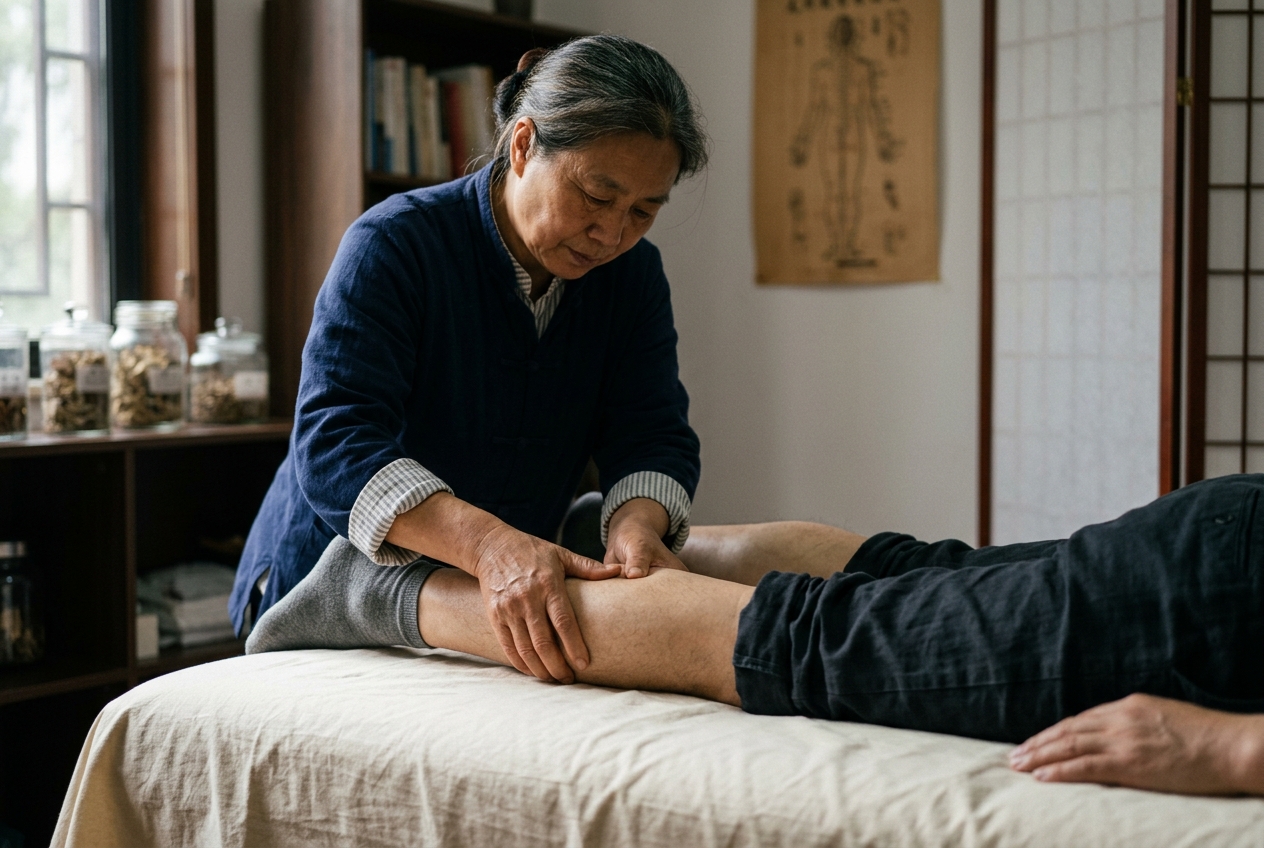
Long before modern biomechanics developed high-resolution ultrasound elastography or articulated models of whole-body fascial continuity, East Asian somatic medicine had already mapped these exact functional pathways. Known in classical Traditional Chinese Medicine (TCM) as the Twelve Sinew Meridians (Jingjin / 经筋), this physiological framework represents one of antiquity’s most sophisticated systems of kinetic anatomy. Unlike the internal primary channels (Jingmai) that interface directly with visceral metabolic systems, the Jingjin constitute an exclusively somatic, peripheral matrix dedicated to structural alignment, joint articulation, force transmission, and mechanical resistance.
When integrated with contemporary extracellular matrix biology, the myofascial meridian theory of Anatomy Trains, and the neurophysiology of myofascial trigger points, the Jingjin provide an indispensable, evidence-informed roadmap for resolving musculoskeletal dysfunction. The following treatise examines the classical roots, biomechanical architecture, neuromuscular convergence, and empirical manual release protocols governing these twelve continuous tracks of human movement.
1. Theoretical Foundation & Classical Roots: The Lingshu Chapter 13 Paradigm
The foundational codification of the Sinew Channels appears in Chapter 13 of the Huangdi Neijing Lingshu (黄帝内经·灵枢, The Spiritual Pivot, compiled circa 1st century BCE), titled "Jingjin" (经筋, The Conduit Tendons/Sinews). In this classical text, the ancient medical anatomists differentiated the sinew channels from the primary conduits (Jingmai), collateral networks (Luomai), and divergent channels (Jingbie).
The anatomical and functional architecture of the Jingjin is characterized by five distinct classical parameters:
Centripetal Directionality
Unlike the primary channels, which circulate bidirectional or alternating energetic currents through visceral-cutaneous circuits, all twelve Sinew Meridians exhibit a strictly centripetal trajectory. They originate at the distal extremities—specifically the extremities of the digits, near the ungual borders (the Jing-Well point areas)—and travel proximally toward the trunk, torso, neck, and cranium.
Tendinous "Knotting" (Jie / 结) and Expansions (Ju / 聚)
As the Jingjin ascend the limbs, they systematically consolidate at major articulations and bony prominences. The Lingshu describes this phenomenon using the character Jie (结), which translates as "knotting," "binding," or "anchoring." These nodes correspond precisely to dense anatomical insertion zones: retinacula, collateral ligaments, condyles, epicondyles, and tendinous entheses. Between these joints, the channels broaden into muscular sheets, described as Ju (聚, "gathering" or "clustering"), covering the anatomical bellies of functional muscle groups.
Non-Penetration of the Internal Organs (Zang-Fu)
A cardinal axiom of sinew channel theory is that the Jingjin do not penetrate the internal visceral organs (Zang-Fu / 脏腑). While they take the names of their associated organ systems (e.g., the Hand Taiyang Small Intestine Sinew Channel), these designations denote their trajectory along the corresponding limb axes rather than a direct visceral conduit. The Jingjin wrap around the thoracic cage, spread over the diaphragm, anchor to the spine, and converge upon the cranial sutures, remaining firmly anchored within the somatic musculoskeletal envelope.
Broad Topographical Footprints
Primary acupuncture channels are classically depicted as discrete linear pathways. In contrast, the Jingjin represent broad, three-dimensional geometric sheets, bands, and functional volume conduits. They encompass deep, intermediate, and superficial myofascial compartments, aponeuroses, and intermuscular septa.
Somatosensory Protective Circulation (Wei Qi / 卫气)
The physiological substrate energizing the Sinew Channels is predominantly Wei Qi (Defensive Qi)—the fast-acting, warm, dynamic bio-electrical and immunobiological agent that circulates within the interstitial spaces (Couli / 腠理) of the skin, muscles, and fascial envelopes.
2. Biomechanical Dynamics: Wei Qi, Tensegrity, and Kinetic Chains
To comprehend the function of the Jingjin in modern clinical practice, one must translate classical energetic constructs into contemporary biomechanical paradigms. Within Chinese medical physiology, Wei Qi governs the thermal maintenance of the periphery, the opening and closing of cutaneous pores, and the instantaneous reactivity of the neuromuscular apparatus to external physical and environmental challenges.
From an architectural standpoint, the human body operates as a biotensegrity system—a term coined by orthopedic surgeon Dr. Stephen Levin and corroborated by cellular biomechanicist Dr. Donald Ingber. In a biotensegrity structure, compression-resistant components (bones) do not rest directly on one another like a stack of bricks; rather, they float within a continuous, pre-stressed, elastic tension network (the fascial matrix and its embedded muscle fibers).
The Twelve Sinew Meridians represent the primary longitudinal and helical tension lines of this biotensegrity system:
- Skeletal Stabilization: By distributing resting tone (tonus) along multi-joint pathways, the Jingjin maintain joint spacing and prevent articular compression during dynamic movement.
- Kinetic Force Transmission: Locomotion relies on the elastic recoil of fascial continuities. Kinetic energy generated at the foot strike is transmitted centripetally through the lower extremity sinew channels into the pelvis, thoracolumbar junction, and contralateral shoulder girdle.
- Mechanotransduction and Piezoelectricity: Fluid shear stress and mechanical strain along the Jingjin matrix deform interstitial fibroblasts. As demonstrated in fascia research published across PubMed / NCBI, this mechanical deformation induces intracellular signaling cascades, remodeling the extracellular matrix and generating subtle piezoelectric potentials that regulate local tissue repair and microcirculation.
When Wei Qi becomes stagnant—due to postural immobilization, microtrauma, or exposure to external pathogens (Wind, Cold, Dampness)—the extracellular matrix transitions from a fluid, lubricating sol-state into a viscous, cross-linked gel-state. This pathomechanical transition leads to chronic contracture, fascial densification, and the formation of painful nodular obstructions.
3. Neuromuscular & Fascial Convergence: Anatomy Trains and Ah-Shi Nodes
The empirical observations recorded over two millennia ago in the Lingshu exhibit a striking congruence with modern macroscopic anatomy and fascia research. In particular, the anatomical trajectories of the Jingjin mirror the myofascial continuities documented in modern structural integration.
The Langevin Paradigm of Connective Tissue
Pioneering research led by Dr. Helene Langevin at Harvard Medical School and the University of Vermont has established that acupuncture meridians correspond significantly to connective tissue cleavage planes. Langevin's landmark histological investigations demonstrated that mechanical rotation or manual manipulation of needles and pressure points causes mechanical coupling with subcutaneous collagen fibers. This "mechanical hook" deforms fibroblasts, initiating actin polymerization, downstream cellular signaling, and a global down-regulation of myofascial tone.
The Anatomy Trains Convergence
The spatial overlap between the classical Jingjin and Thomas Myers' Anatomy Trains myofascial lines is an extraordinary anatomical parallel: - Leg Taiyang Sinew Channel vs. Superficial Back Line: Both originate at the plantar aspect of the toes, encompass the plantar aponeurosis, fuse into the calcaneal tendon, ascend the gastrocnemius, cross the popliteal fossa, traverse the biceps femoris and sacrotuberous ligament, ascend the erector spinae sheath, scale the galea aponeurotica, and terminate at the frontal-orbital ridge. - Leg Yangming Sinew Channel vs. Superficial Front Line: Both begin at the dorsal digits of the foot, ascend the anterior tibialis and extensor retinacula, knot at the patellar tendon and tibial tuberosity, ascend the rectus femoris and anterior quadriceps, merge into the rectus abdominis, scale the sternal fascia, and ascend the sternocleidomastoid to anchor upon the mandible and zygomatic arch. - The Three Leg Yin Sinew Channels vs. The Deep Front Line: Both arise at the inferior aspect of the foot, ascend the deep posterior compartment of the lower leg (tibialis posterior, flexor digitorum longus), knot at the medial condyle of the tibia, traverse the adductor magnus/longus group, pass through the pelvic floor and obturator internus, anchor into the psoas major and iliacus, traverse the anterior longitudinal ligament of the spine, integrate into the respiratory diaphragm, and scale the scalenes to the base of the cranium.
Classical Ah-Shi Nodes vs. Myofascial Trigger Points
In Chapter 13 of the Lingshu, the definitive clinical directive for treating sinew disorders is stated with stark simplicity:
"Treat with needle or heat; where there is pain, that is the point." (以痛为输, Yi Tong Wei Shu).
These tender diagnostic and therapeutic foci are known in Chinese medicine as Ah-Shi (阿是) points. When systematically palpated, an Ah-Shi node presents as a taut intramuscular band harboring an exquisitely tender, hyperirritable nodule.
Modern neuromuscular medicine classifies these identical phenomena as Myofascial Trigger Points (MTrPs), systematically documented by Dr. Janet Travell and Dr. David Simons. At the ultrastructural level, an MTrP / Ah-Shi node is characterized by: 1. The Energy Crisis Hypothesis: Sustained microtrauma or chronic postural loading induces excessive acetylcholine (ACh) leakage at the neuromuscular junction. 2. Ischemic Hypoxia: Uncontrolled actin-myosin cross-bridging compresses local capillary beds, drastically reducing oxygen and adenosine triphosphate (ATP) delivery. 3. Sensitization Cascade: In the absence of ATP, the sarcoplasmic reticulum cannot reuptake calcium ions ($Ca^{2+}$), locking the sarcomeres into contracture. The local tissue becomes acidic, triggering the release of inflammatory neuropeptides (Substance P, Calcitonin Gene-Related Peptide, bradykinin), which sensitize unmyelinated C-fiber nociceptors.
4. Clinical Taxonomy: Channel Groupings & Bi (Obstruction) Syndromes
When tension, repetitive strain, or environmental influences compromise the Sinew Channels, the result in classical pathology is termed a Bi Syndrome (痹证, Obstruction / Impairment Syndrome). Manifestations range from acute sprains (Tendon Bi) to chronic contractures, adhesions, and nerve entrapments. The twelve channels are organized into four distinct triadic functional networks:
1. The Three Leg Yang Sinew Group (Taiyang, Yangming, Shaoyang)
- Anatomical Territory: The posterior kinetic chain (Bladder), anterior kinetic chain (Stomach), and lateral-spiral stabilization chain (Gallbladder).
- Primary Articular Knots (Jie): Lateral/medial malleoli, calcaneus, patellar tendon, fibular head, greater trochanter, sacroiliac joint, and temporomandibular joint (TMJ).
- Clinical Pathology:
- Leg Taiyang Bi: Acute lumbar spasm, sciatica, hamstrings tightness, chronic Achilles tendinitis, plantar fasciitis, and occipital tension headaches.
- Leg Yangming Bi: Anterior compartment syndrome, patellofemoral pain, hip flexor shortening, abdominal wall cramping, and temporomandibular joint dysfunction.
- Leg Shaoyang Bi: Iliotibial band (ITB) friction syndrome, lateral knee pain, trochanteric bursitis, intercostal neuralgia, and lateral suboccipital stiffness.
2. The Three Leg Yin Sinew Group (Taiyin, Shaoyin, Jueyin)
- Anatomical Territory: The medial lower limb, adductor canal, pelvic floor, deep iliopsoas axis, and thoracic diaphragm.
- Primary Articular Knots (Jie): Inferior aspect of medial malleolus, medial tibial plateau, pubic symphysis, and sacrococcygeal junction.
- Clinical Pathology:
- Leg Taiyin (Spleen) Bi: Medial knee strain (pes anserinus bursitis), adductor strain, pelvic floor descent, and deep anterior groin contracture.
- Leg Shaoyin (Kidney) Bi: Chronic plantar fascia degeneration, medial heel pain, deep lumbar instability, and anterior sacral tilt contracture.
- Leg Jueyin (Liver) Bi: Inguinal ligament pain, genital contracture/paresthesia, adductor magnus hypertonicity, and functional leg-length discrepancies.
3. The Three Arm Yang Sinew Group (Taiyang, Yangming, Shaoyang)
- Anatomical Territory: The posterolateral aspect of the upper extremities, scapular envelope, cervical spine, and lateral facial musculature.
- Primary Articular Knots (Jie): Dorsal wrist retinacula, olecranon process, lateral humeral epicondyle, acromioclavicular joint, mastoid process, and zygomatic arch.
- Clinical Pathology:
- Arm Yangming (Large Intestine) Bi: Lateral epicondylitis ("tennis elbow"), anterior deltoid impingement, and elevator scapulae strain.
- Arm Taiyang (Small Intestine) Bi: Medial epicondylitis ("golfer's elbow"), infraspinatus/supraspinatus chronic trigger points, and scapular dyskinesis.
- Arm Shaoyang (San Jiao) Bi: Dorsal wrist impingement, triceps brachii contracture, posterior shoulder impingement, and chronic torticollis.
4. The Three Arm Yin Sinew Group (Taiyin, Shaoyin, Jueyin)
- Anatomical Territory: The anteromedial aspect of the arms, bicipital groove, pectoralis major and minor envelopes, and thoracic inlet.
- Primary Articular Knots (Jie): Volar carpal ligament (flexor retinaculum), bicipital aponeurosis, coracoid process, and costochondral junctions.
- Clinical Pathology:
- Arm Taiyin (Lung) Bi: Carpal tunnel syndrome, flexor tendonitis, bicipital tendinitis, and pectoralis minor shortness (thoracic outlet syndrome).
- Arm Jueyin (Pericardium) Bi: Pronator teres syndrome, palmar fascial contracture (early Dupuytren-like tension), and deep chest constriction.
- Arm Shaoyin (Heart) Bi: Medial elbow contracture (epitrochlear nodal strain) and axillary fascial tethering.
5. Empirical Acupressure & Manual Release Protocols
Resolving Jingjin dysfunction requires a systematic manual approach that pairs focal pressure on hyperirritable Ah-Shi nodes with the neuro-reflexive mobilization of primary channel command points.
The Three-Phase Palpation Methodology
- Pincer and Flat Palpation: Roll fingers perpendicular to the orientation of the muscle fibers to identify the taut band. Once found, slide along the fiber to locate the focal, hard nodule of the Ah-Shi point.
- Sustained Ischemic Compression: Apply steady, perpendicular pressure directly into the core of the nodule using the thumb, distal phalanx, or an elbow apex. Maintain this pressure for 60 to 90 seconds. - Biophysical Mechanism: Sustained mechanical compression forces stagnant interstitial fluid out of the contracted zone. Upon release, a surge of oxygenated blood (reactive hyperemia) floods the capillary beds, flushing out accumulated acidic metabolites, Substance P, and bradykinin, while providing the ATP necessary to uncouple actin-myosin cross-bridges.
- Longitudinal Stripping: Following ischemic release, execute deep, slow, linear gliding strokes along the entire muscle belly toward its proximal tendinous knot (Jie), smoothing fascial cross-links.
Primary Systemic Confluence Points for Sinew Mobilization
To amplify the systemic effects of local Ah-Shi release, modern clinicians utilize authoritative acupoints designated by the World Health Organization as structural master switches:
1. Gallbladder 34 (Yanglingquan / 阳陵泉) — The Influential Point of the Sinews
- Physical Landmark: Located on the outer side of the lower leg, in the tender depression situated approximately one finger-width anterior and inferior to the prominence of the fibular head (the small bony knob on the outside of the knee).
- Sensory Feedback: A distinctive, spreading ache that radiates down the lateral compartment of the calf into the ankle.
- Biomechanical Mechanism: GB34 is codified as the Hui-Meeting Point of all Sinews (Hui Jin / 会筋). Mechanosensory input here modulates alpha-motor neuron excitability via the common peroneal nerve branch, inducing a systemic down-regulation of hypertonicity across all twelve Jingjin tracks.
- Application: Apply firm, rotating thumb pressure for 2 minutes while slowly mobilizing the ipsilateral ankle in dorsiflexion and plantarflexion.
2. Bladder 40 (Weizhong / 委中) and Bladder 57 (Chengshan / 承山) — Posterior Chain Decompressors
- Physical Landmarks:
- BL40: Exact midpoint of the transverse popliteal crease on the back of the knee, positioned between the biceps femoris and semitendinosus tendons.
- BL57: Midway down the back of the calf, at the apex of the V-shaped muscular valley formed where the two bellies of the gastrocnemius separate.
- Sensory Feedback: A deep, electric, desensitizing ache radiating into the foot and lumbar spine.
- Biomechanical Mechanism: These points serve as the primary functional gates for the Leg Taiyang Sinew Channel / Superficial Back Line. Releasing BL40 and BL57 rapidly reduces resting tension throughout the thoracolumbar fascia and the hamstring complex.
- Application: With the patient prone or seated with an extended knee, apply direct vertical thumb pressure for 90 seconds.
3. Large Intestine 11 (Quchi / 曲池) and Large Intestine 4 (Hegu / 合谷) — Upper Quadrant Regulators
- Physical Landmarks:
- LI11: With the elbow fully flexed, located in the depression at the lateral end of the transverse cubital crease, midway between the biceps tendon and the lateral epicondyle of the humerus.
- LI4: On the dorsum of the hand, in the muscular webbing between the first and second metacarpal bones, level with the midpoint of the second metacarpal.
- Sensory Feedback: Pronounced dull ache (De Qi sensation) radiating through the forearm, thumb, and ascending into the neck.
- Biomechanical Mechanism: Regulates the Arm Yangming Sinew Channel, decompressing the extensor digitorum communis, supinator, and the deep cervical fascia.
- Application: Grasp LI4 using a pincer grip between thumb and index finger; apply steady, upward-directed force against the second metacarpal shaft for 1 to 2 minutes.
6. Targeted Clinical Protocol: Postural Restoration for Cervicogenic & Shoulder Strain
For individuals presenting with Upper Crossed Syndrome—characterized by anterior head carriage, hypertonic suboccipital musculature, pectoralis minor contracture, and levator scapulae spasm from prolonged screen use—the following sequenced protocol restores kinetic balance across the Arm Yang and Arm Yin Sinew lines.
Execution Directives
-
Step 1: Anterior Thoracic Opening (Arm Taiyin & Jueyin) - Position: Patient seated upright or supine with relaxed arms. - Action: Palpate inferior and medial to the coracoid process on the chest wall to identify the taut fibers of the pectoralis minor. Apply steady, posterior-directed ischemic compression for 60 seconds per side. Instruct the patient to take slow, diaphragmatic breaths, expanding the ribcage into the manual pressure.
-
Step 2: Suboccipital Decompression (Leg Taiyang & Shaoyang) - Position: Patient seated with head tilted slightly downward. - Action: Place both thumbs into the bilateral hollows at the base of the skull, immediately beneath the occipital bone and lateral to the trapezius muscle margin (Gallbladder 20 / Fengchi). Angle the pressure upward and inward toward the center of the skull. Maintain for 90 seconds while encouraging slow, gentle cervical rotations of no more than 5 degrees.
-
Step 3: Scapular Envelope Mobilization (Arm Taiyang) - Position: Patient seated with the target hand placed on the contralateral shoulder (retracting the scapula). - Action: Using fingers or a firm massage tool, explore the supraspinous and infraspinous fossae of the scapula to find exquisitely tender Ah-Shi trigger nodes. Apply deep, localized circular friction for 60 seconds per nodule.
-
Step 4: Distal Kinetic Modulation (The Hui Sinew Reset) - Position: Seated with legs uncrossed. - Action: Apply firm, rhythmic thumbs-down pressure on bilateral GB34 (Yanglingquan) for 2 minutes to induce systemic neuromuscular relaxation and stabilize the newly established resting length of the upper quadrant fascial matrix.
7. Clinical Safety, Contraindications & Practice Directives
While manual acupressure and sinew release protocols are non-invasive, practitioners and individuals must observe strict safety guidelines:
1. Absolute Obstetric Contraindications
Points such as LI4 (Hegu), SP6 (Sanyinjiao), BL60 (Kunlun), and GB21 (Jianjing) possess potent descending and oxytocic-modulating neuro-reflexes. They are strictly contraindicated for deep manual pressure or dry needling during all stages of pregnancy, except when deliberately applied under obstetric supervision for labor induction.
2. Vascular and Entrapment Caution Zones
- Carotid Triangle: Never apply deep pressure along the anterior border of the sternocleidomastoid (Stomach 9 area) due to the carotid sinus baroreceptor reflex, which can trigger acute bradycardia and syncope.
- Deep Vein Thrombosis (DVT): Extreme tenderness, warmth, and unilateral edema in the calf compartment contraindicates deep manual stripping along the Leg Taiyang (gastrocnemius/soleus) or Leg Yin channels. Deep compression could dislodge an occult thrombus, risking a pulmonary embolism.
3. Calibrating Manual Force
Manual therapy should never produce destructive, sharp, radiating, or bruising pain. The sensation sought during ischemic compression is classically termed De Qi (得气)—a deep, dull, spreading, and therapeutic ache often described as "comfortable pain" or "a relieving release." Excessive force causes reflex muscle guarding, counteracting therapeutic goals and causing secondary microtrauma.
4. Direct Clinical Referrals
Self-treatment and non-invasive manual protocols should cease immediately, and a formal medical evaluation must be sought, if any of the following are present: - Progressive neurological deficits (foot drop, loss of deep tendon reflexes, saddle anesthesia, bladder/bowel dysfunction). - Severe nocturnal pain unmitigated by postural adjustment. - Palpable pulsating masses. - Sudden joint effusions with elevated local temperature and systemic fever.
8. Summary & 2-Minute Daily Decompression Practice
The Twelve Sinew Meridians (Jingjin) provide an elegant, time-tested anatomical map that anticipated contemporary myofascial science by two millennia. Rather than viewing musculoskeletal discomfort as isolated, localized pathologies, the Jingjin invite us to look at the continuous kinetic chains that stabilize our skeleton and distribute force throughout our daily lives.
By systematically identifying Ah-Shi nodules, applying targeted ischemic compression along the continuous Jingjin tracks, and balancing key confluence points like GB34, BL40, and LI4, modern clinicians and individuals can unravel complex compensation patterns and restore structural fluidity to the entire kinetic system.
Authoritative Clinical & Research References
- World Health Organization: WHO Standard Acupuncture Point Locations in the Western Pacific Region
- National Center for Biotechnology Information (NCBI): The Fascial System and Acupuncture Channels
- PubMed: Langevin HM et al. — Relationship of Acupuncture Points and Meridians to Connective Tissue Planes
- PubMed: Evidence-Based Complementary and Alternative Medicine — Myofascial Chains and Meridians
- Wikipedia: Myofascial Trigger Points in Musculoskeletal Medicine
- Wikipedia: Acupuncture Points & Classical Channel Classifications