Lower He-Sea Points: Navigating Enteric Fu Viscera, Distal Lower-Limb Channels, and Gastrointestinal Acupressure Protocols
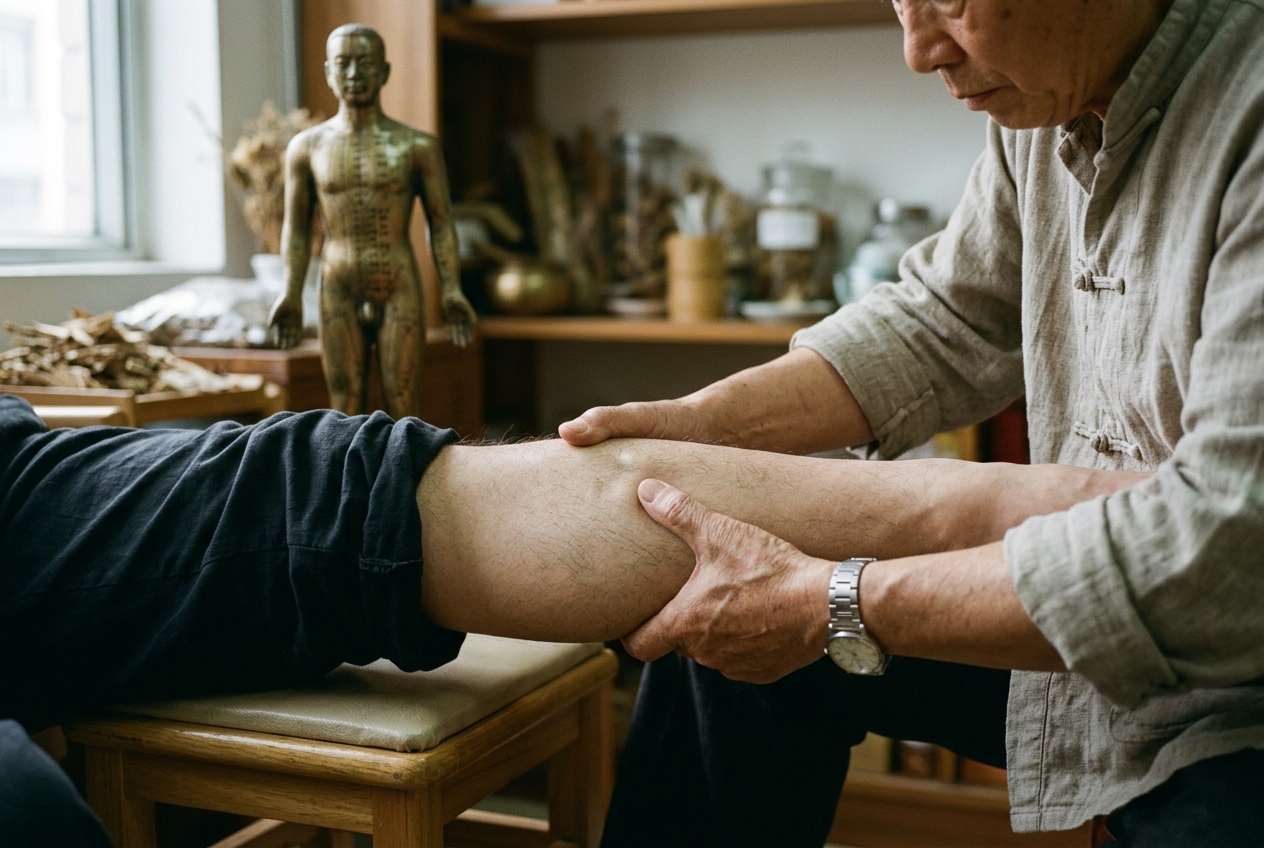
If you have ever experienced that pervasive, leaden heaviness in the epigastrium after an evening meal, accompanied by erratic bowel motility, a midday mental fog, or a persistent undercurrent of visceral anxiety, you are intimately acquainted with the functional breakdown of the Fu (hollow digestive) organs. In the fast-paced modern landscape, chronic sympathetic arousal shunts circulation away from the splanchnic bed, arresting digestive peristalsis, inflaming the mucosal lining, and generating functional gastrointestinal disorders that resist simplistic pharmacological interventions.
Classical Chinese medicine offers a sophisticated, topologically organized paradigm for resolving these recalcitrant visceral crises. Encapsulated within the canonical medical literature is an elite category of therapeutic loci known as the Six Lower He-Sea Points (Xia He Xue 下合穴). Located predominantly below the knees, these points act as profound somatic control switches. They possess the unique physiological capacity to regulate the hollow internal viscera by down-regulating pathological autonomic arousal, driving hyperactive, rebellious internal energies downward, and restoring homeostatic equilibrium to the digestive tract.
1. Classical Theoretical Foundation: The Mechanics of Fu Organ Down-Regulation
The foundational mandate governing the treatment of internal hollow viscera is codified in Chapter 4 of the Ling Shu (The Spiritual Pivot), a foundational text within the seminal Huangdi Neijing (Yellow Emperor’s Inner Classic):
"For disorders of the Zang [solid, Yin organs], select the Back-Shu and Yuan-Source points; for disorders of the Fu [hollow, Yang organs], select the Lower He-Sea points (合治六腑)."
To understand the clinical necessity of this doctrine, one must examine the distinct physiological natures of the Zang and Fu systems. The five Zang organs (Heart, Liver, Spleen, Lung, Kidney) are structural, continuous reservoirs designed to store pure essence (Jing), vital Qi, and Blood without discharging them abruptly. In contrast, the six Fu organs (Stomach, Large Intestine, Small Intestine, Gallbladder, Urinary Bladder, and the Triple Burner or Sanjiao) are dynamic, hollow conduits. Their primary mandate is the continuous transformation, transport, separation, and evacuation of food, fluids, and metabolic waste.
As the classical axiom dictates, "The Fu organs are filled but not full; they thrive on smooth transmission and downward movement." When a Fu organ suffers from dysfunction, its pathological manifestation almost invariably involves stagnation, heat accumulation, or counter-flow ("rebellious Qi")—surging upward to manifest as nausea, acid regurgitation, abdominal distension, biliary colic, or dysentery.
Why Direct Fu Pathology Down to the Lower Limbs?
A fundamental architectural question arises: Why are all six Lower He-Sea points situated on the three Yang channels of the lower extremities (Foot Yangming, Foot Shaoyang, and Foot Taiyang), completely bypassing the Yang channels of the upper limbs for definitive Fu organ pathology?
- Gravitational and Energetic Descending Mechanics: The lower limbs possess the greatest muscle mass, highest vascular capacitance, and the most potent concentration of Yang energy anchored into the physical earth. Pathologies of the Fu organs are intrinsically characterized by upward displacement and blockage. Stimulating distal points on the legs exerts a powerful bioelectrical and biomechanical "siphon" effect, drawing pathogenic heat, turbidity, and rebellious visceral tension downward.
- The Hand-to-Foot Yang Channel Reflex Projections: While the Stomach (ST36), Gallbladder (GB34), and Bladder (BL40) naturally align with their respective leg channels, the three Yang organs of the arm—the Large Intestine, Small Intestine, and Triple Burner—project their definitive Lower He-Sea hubs onto the lower extremities: - Large Intestine projects to Shangjuxu (ST37) on the Foot Yangming Stomach meridian. - Small Intestine projects to Xiajuxu (ST39) on the Foot Yangming Stomach meridian. - Triple Burner (Sanjiao) projects to Weiyang (BL39) on the Foot Taiyang Bladder meridian.
Because the Stomach (Yangming) rules the entire gastrointestinal architecture ("the Sea of Nourishment"), it naturally subsumes the functional clearing houses for both the Large and Small Intestines. Similarly, because the Bladder (Taiyang) oversees fluid transformation and system-wide water metabolism, it houses the Lower He-Sea locus for the Triple Burner (Sanjiao), the metabolic irrigation network of the body.
2. The Meridian Pathways: A Somatotopic Journey Through the Lower Limbs
Accessing these powerful control hubs requires an embodied understanding of the three primary highways of Yang energy descending down the legs.
The Anterior Highway: The Foot Yangming (Stomach) Pathway
The Yangming pathway courses down the front of your leg. After traversing the outer edge of the kneecap, it plunges into the thick, protective muscular valley running parallel to the sharp crest of the shinbone (tibia). This is the most energetically dense and nutrient-rich meridian channel in the body. Running your fingers down this outer muscular ridge reveals three consecutive, highly sensitive nodal points: ST36, ST37, and ST39, spaced down the shin like steps on a ladder, sequentially governing the Stomach, Large Intestine, and Small Intestine.
The Lateral Highway: The Foot Shaoyang (Gallbladder) Pathway
The Shaoyang pathway runs along the structural seams on the outside of the leg. As it descends past the lateral knee joint, it navigates the bony architecture of the small knob at the top of the outer leg bone (head of the fibula). Nestled right in the depression just below and forward of this bony landmark lies GB34, the command center for the biliary system and the master regulator of the entire muscular-fascial matrix of the human frame.
The Posterior Highway: The Foot Taiyang (Bladder) Pathway
The Taiyang pathway descends down the muscular contours of the hamstrings and plunges into the crease directly behind the knee (popliteal fossa). This junction houses rich neurovascular structures. Dead center in the soft horizontal crease of the knee lies BL40, governing systemic filtration and the urinary bladder. Shifting just slightly toward the outer lateral tendon of the knee crease uncovers BL39, the hydraulic governor of fluid distribution and the Triple Burner.
3. Anatomical Topography & Point Directory: The Six Master Portals
To apply clinical acupressure or understand needle depth, one must bridge ancient topological nomenclature with exact modern anatomical structures, as documented in the World Health Organization (WHO) Standard Acupuncture Point Locations.
1. Zusanli (ST36, 足三里) – "Leg Three Miles"
- Host Fu Organ: Stomach
- Meridian Alignment: Foot Yangming (Stomach)
- Precise Anatomical Landmark: Situated on the anterior aspect of the lower leg, four finger-widths (3 cun) inferior to the lower border of the patella, one finger-breadth (approx. 1 cun) lateral to the anterior crest of the tibia, directly embedded in the belly of the tibialis anterior muscle.
- Neurovascular Anatomy: Branches of the anterior tibial artery and vein; innervated superficial and deep by the deep peroneal nerve and the lateral sural cutaneous nerve.
- Energetic Mechanism: Harmonizes gastric acid secretion, fortifies systemic Qi and Blood, descends counterflow belching and nausea, and alleviates exhaustion.
2. Shangjuxu (ST37, 上巨虚) – "Upper Great Void"
- Host Fu Organ: Large Intestine
- Meridian Alignment: Foot Yangming (Stomach Channel housing Hand Yangming Lower He-Sea)
- Precise Anatomical Landmark: Located on the anterior aspect of the lower leg, approximately three finger-widths (3 cun) directly inferior to Zusanli (ST36), one finger-breadth lateral to the anterior tibial crest, within the tibialis anterior and extensor digitorum longus musculature.
- Neurovascular Anatomy: Anterior tibial artery and vein branches; deep motor branches of the deep peroneal nerve.
- Energetic Mechanism: Clears systemic intestinal heat, resolves chronic dysentery, evacuates impacted stagnation, regulates colonic peristalsis, and relieves abdominal pain.
3. Xiajuxu (ST39, 下巨虚) – "Lower Great Void"
- Host Fu Organ: Small Intestine
- Meridian Alignment: Foot Yangming (Stomach Channel housing Hand Taiyang Lower He-Sea)
- Precise Anatomical Landmark: Situated three finger-widths (3 cun) directly inferior to Shangjuxu (ST37), roughly midway between the knee crease and the lateral malleolus, in the fleshy groove between the tibialis anterior and the extensor digitorum longus.
- Neurovascular Anatomy: Deep branch of the anterior tibial artery; sensory and motor branches of the deep peroneal nerve.
- Energetic Mechanism: Separates the clear from the turbid fluids in the small bowel, treats lower abdominal twisting pain, resolves small intestine Qi stagnation, and mitigates occult urinary-digestive cross-syndromes.
4. Yanglingquan (GB34, 阳陵泉) – "Yang Mound Spring"
- Host Fu Organ: Gallbladder
- Meridian Alignment: Foot Shaoyang (Gallbladder); also the Hui-Meeting Point of Sinews.
- Precise Anatomical Landmark: Located on the lateral aspect of the lower leg, in the pronounced soft depression situated anterior and inferior to the prominence of the head of the fibula, between the peroneus longus and extensor digitorum longus muscles.
- Neurovascular Anatomy: Inferior lateral genicular artery; precisely at the bifurcation of the common peroneal nerve into the superficial and deep peroneal branches.
- Energetic Mechanism: Drains damp-heat from the Liver and Gallbladder, resolves biliary stasis, relieves hypochondriac pain, harmonizes bitter taste in the mouth, and relaxes spastic tendons throughout the musculoskeletal frame.
5. Weizhong (BL40, 委中) – "Middle of the Crease"
- Host Fu Organ: Urinary Bladder
- Meridian Alignment: Foot Taiyang (Bladder)
- Precise Anatomical Landmark: Located directly at the center of the posterior knee joint, within the transverse crease of the popliteal fossa, precisely between the tendons of the biceps femoris and semitendinosus.
- Neurovascular Anatomy: Popliteal artery and vein, terminal division of the tibial nerve, and the posterior femoral cutaneous nerve.
- Energetic Mechanism: Clears pathogenic summer-heat from the Blood, relieves acute urinary retention, dissipates lumbar spine stasis, and calms systemic urogenital inflammation.
6. Weiyang (BL39, 委阳) – "Outside the Crease"
- Host Fu Organ: Triple Burner (Sanjiao)
- Meridian Alignment: Foot Taiyang (Bladder Channel housing Hand Shaoyang Lower He-Sea)
- Precise Anatomical Landmark: On the lateral border of the popliteal fossa, located directly on the transverse popliteal crease, immediately on the medial border of the tendon of the biceps femoris.
- Neurovascular Anatomy: Superior lateral genicular artery branches; lateral aspect of the tibial nerve and branches of the common peroneal nerve.
- Energetic Mechanism: Opens the systemic water pathways of the lower abdomen, activates the bladder's functional fluid transformation, drains ascites, and resolves localized lumbar-pelvic stiffness.
4. Modern Neurobiology: Somato-Visceral Reflex Arcs & The Enteric Nexus
Modern physiological investigations have validated the clinical efficacy of the Six Lower He-Sea points. Rather than mystical conduits, these loci represent points of high neurovascular density, fascial convergence, and potent somato-visceral connectivity. Distal mechanical or electrical stimulation at these specific neuro-anatomical zones initiates distinct autonomic cascades, extensively reviewed across the National Center for Biotechnology Information (NCBI) PubMed literature on acupoint neurobiology.
Somato-Visceral Neural Circuits
When mechanical pressure is applied to points like Zusanli (ST36) or Shangjuxu (ST37), it depolarizes mechanoreceptors and small-diameter sensory nerve fibers (A-delta and unmyelinated C-fibers) embedded within the deep muscular fascia. These afferent signals ascend via the dorsal horn of the spinal cord to the brainstem, terminating in the Nucleus of the Solitary Tract (NTS).
The NTS acts as the master sensory clearinghouse for autonomic regulation. Upon receiving somatic afferent inputs from the lower limbs, the NTS communicates directly with the Dorsal Motor Nucleus of the Vagus (DMV), triggering increased efferent parasympathetic outflow through the Vagus Nerve (Cranial Nerve X), as detailed in research exploring the vagal-adrenal anti-inflammatory axis.
Enteric Nervous System (ENS) Modulation & Motility Synchronization
Through this somato-parasympathetic reflex arc, efferent vagal signals reach the postganglionic neurons within the enteric nervous system—specifically the myenteric (Auerbach’s) plexus located between the longitudinal and circular muscle layers of the intestinal wall: * In States of Gastrointestinal Hypomotility (Constipation, Atony): Vagal stimulation triggers the release of acetylcholine (ACh) and substance P, stimulating smooth muscle contractility and restoring rhythmic propulsive peristalsis, a mechanism validated in clinical trials on gut motility modulation via acupuncture. * In States of Hyperactive Spasm (IBS, Diarrhea, Colic): The identical point stimulation stimulates enteric inhibitory motor neurons, prompting the localized release of nitric oxide (NO) and vasoactive intestinal peptide (VIP). This down-regulates hyperactive contraction, relieving visceral spasm and establishing homeostatic balance.
The Cholinergic Anti-Inflammatory Pathway
Mechanical stimulation of the Lower He-Sea loci induces systemic immunomodulatory effects. Efferent vagal signals stimulate splenic sympathetic nerves to release norepinephrine, which binds to beta-2 adrenergic receptors on specialized choline acetyltransferase-positive T-cells. These T-cells release acetylcholine, which binds to alpha-7 nicotinic acetylcholine receptors ($\alpha7\text{nAChR}$) on resident gut macrophages. This signaling suppresses the synthesis of pro-inflammatory cytokines (such as TNF-$\alpha$, IL-1$\beta$, and IL-6), explaining why points like Shangjuxu (ST37) rapidly attenuate mucosal inflammation in ulcerative colitis and acute bacterial enteritis.
5. Master Directory: The Comparative Clinical Matrix
The clinical deployment of the Six Lower He-Sea points requires an exact understanding of their therapeutic properties, organ affinities, and classical synergistic combinations.
| Point Code | Pinyin & Name | Channel of Origin | Host Fu Organ | Anatomical Landmark | Primary Clinical Indications | Classical Synergistic Combinations |
|---|---|---|---|---|---|---|
| ST36 | Zusanli (足三里) | Foot Yangming (Stomach) | Stomach | 4 finger-widths below knee, 1 thumb-width lateral to shin crest. | Gastritis, acid reflux, epigastric distension, postprandial fatigue, emaciation. | + RN12 (Zhongwan): Master Front-Mu synergy for all gastric disorders. + PC6 (Neiguan): Rebellious Qi, nausea, hiatal hernia. |
| ST37 | Shangjuxu (上巨虚) | Foot Yangming (Stomach) | Large Intestine | 3 finger-widths directly below ST36, in muscular belly of tibialis anterior. | Spastic constipation, diarrhea, acute appendicitis, ulcerative colitis, colonic pain. | + ST25 (Tianshu): Front-Mu combo for immediate regulation of Large Intestine. + LI4 (Hegu): Clears systemic intestinal heat toxins. |
| ST39 | Xiajuxu (下巨虚) | Foot Yangming (Stomach) | Small Intestine | 3 finger-widths directly below ST37, anterior compartment of the shin. | Small bowel cramping, nutrient malabsorption, borborygmi, radiating testicular/groin pain. | + RN4 (Guanyuan): Front-Mu combination to warm and regulate the Small Intestine. + ST37 (Shangjuxu): Comprehensive lower abdominal clearing. |
| GB34 | Yanglingquan (阳陵泉) | Foot Shaoyang (Gallbladder) | Gallbladder | Depression anterior and inferior to the head of the fibula. | Biliary colic, cholecystitis, bitter taste, rib-side distension, full-body tendon tightness. | + GB24 (Riyue): Front-Mu combination for acute gallbladder damp-heat. + LR3 (Taichong): Liver-Gallbladder Qi stagnation and emotional frustration. |
| BL40 | Weizhong (委中) | Foot Taiyang (Bladder) | Urinary Bladder | Center of the transverse popliteal crease, behind the knee joint. | Acute urinary retention, painful dysuria, lumbar spine spasm, skin eruptions from heat. | + BL28 (Pangguanshu): Back-Shu pairing for bladder clearance. + BL60 (Kunlun): Clears entire Taiyang channel of pain and inflammation. |
| BL39 | Weiyang (委阳) | Foot Taiyang (Bladder) | Triple Burner (Sanjiao) | Lateral popliteal crease, immediately medial to biceps femoris tendon. | Lower abdominal fullness, anuria, generalized systemic edema, pelvic floor fluid retention. | + RN5 (Shimen): Front-Mu combination to adjust the lower metabolic burner. + SP9 (Yinlingquan): Rapid resolution of stubborn lower-extremity dampness. |
6. Three Primary Points You Can Palpate Right Now
To bridge academic theory with direct clinical utility, focus on the three most versatile Lower He-Sea points that you can locate and stimulate immediately on your own body.
Point 1: Zusanli (ST36) – The Universal Tonic and Digestive Anchor
- How to Find It: Sit comfortably with your knees bent at a 90-degree angle. Place the palm of your right hand over your right kneecap with your fingers pointing downward. Your index finger rests on the shinbone; where the tip of your ring finger falls, slide just slightly to the outside of the bone. You will drop into a thick, fleshy muscle (tibialis anterior).
- The Diagnostic Sensation (Deqi 得气): When you compress this point perpendicularly with your thumb, you should not feel a surface pinch. Instead, you should elicit a profound, dull, spreading ache that radiates down the shin toward the second and third toes, occasionally sending a warm, relaxing wave into the epigastrium.
- How to Apply Pressure: Apply sustained, deep perpendicular pressure using the tip of your thumb or a rounded knuckle. Maintain firm, steady compression for 2 to 3 minutes per side while taking long, slow diaphragmatic breaths.
- Primary Everyday Uses: Relieves post-meal bloating and food stagnation, combats midday mental exhaustion, settles nervous stomach tension, and restores baseline metabolic energy.
Point 2: Shangjuxu (ST37) – The Colonic Regulator and Inflammatory Filter
- How to Find It: Starting from Zusanli (ST36), slide your thumb directly down the leg a distance of three finger-widths (roughly 2 inches). Remain in that same muscular trough one thumb-width lateral to the edge of the shinbone.
- The Diagnostic Sensation: This point is often markedly more tender than ST36, particularly in individuals suffering from intestinal dysbiosis or chronic emotional stress. You will feel a distinct, focused, slightly sharp ache that can radiate downward into the ankle joint.
- How to Apply Pressure: Use a focused circular kneading technique. Press firmly into the center of the muscle belly and make small, concentrated circles at a rate of roughly one rotation per second for 2 minutes on each leg.
- Primary Everyday Uses: Resolves lower abdominal cramping, eases chronic constipation or loose stools, alleviates painful colonic spasms, and calms systemic abdominal inflammation.
Point 3: Yanglingquan (GB34) – The Stress-Biliary Harmonizer and Muscle Relaxer
- How to Find It: Run your fingers up the outer edge of your lower leg toward the side of your knee. You will encounter a prominent, hard, round bone just below the joint line—the head of the fibula. Slide your finger slightly forward and down into the soft, tender hollow situated just beneath this bony bump.
- The Diagnostic Sensation: When properly engaged, you will trigger a characteristic spreading tingling sensation that travels down the outer seam of the leg, coupled with a deep, releases-like soreness within the lateral fascial band.
- How to Apply Pressure: Apply direct, angled compression—pressing inward and slightly upward toward the head of the fibula. Hold with sustained, medium-deep pressure for 90 to 120 seconds while mindfully softening the jaw and relaxing the shoulders.
- Primary Everyday Uses: Relieves tension headaches stemming from stress, alleviates rib-cage and upper back stiffness, resolves a bitter taste in the mouth or morning nausea, and drains hepatic-biliary congestion.
7. Advanced Clinical Protocol: Non-Invasive Palpation Dynamics
The physiological impact of acupressure depends not only on finding the correct point, but on the precise physical technique used to stimulate it. In classical medicine, this is governed by the principles of Tonification (Bu 补) and Sedation (Xie 泻).
================================================================================
                    TONIFICATION VS. SEDATION PRESSURE MECHANICS
================================================================================

[TONIFICATION (Bu) PROTOCOL: For Chronic Deficiency, Atony, Fatigue]
  Pressure Dynamics: Gentle, sustained, deep compression.
  Clockwise Direction: Clockwise circular kneading (following channel flow).
  Rhythm: Slow, steady, meditative. (Hold 10-15s, release slightly, repeat).
  Breath Entrainment: Inhale deeply, compress gradually; hold during full exhale.
  Duration: 3 to 5 minutes per point.

[SEDATION (Xie) PROTOCOL: For Acute Heat, Spasms, Severe Stagnation]
  Pressure Dynamics: Sharp, firm, oscillating, deep penetrating pressure.
  Counter-Clockwise Direction: Rapid counter-clockwise rotation (against flow).
  Rhythm: Dynamic, rhythmic pumping (1-2 compressions per second).
  Breath Entrainment: Compress sharply during forceful, complete exhalations.
  Duration: 60 to 90 seconds of high-intensity stimulation per point.
================================================================================
The Biomechanics of Breath Synchronization
During Lower He-Sea stimulation, the autonomic nervous system is exceptionally responsive to respiratory sinus arrhythmia. Instruct the patient (or yourself) to engage in diaphragmatic box breathing (4-second inhale, 4-second hold, 4-second exhale, 4-second hold).
Apply the deepest point compression during the exhalation phase, during which natural vagal parasympathetic outflow peaks and visceral smooth muscle tone relaxes, allowing the mechanical force to penetrate deeply into the neurofascial bed without encountering somatic resistance.
8. "Do This Tonight": The Postprandial Dyspepsia and Colonic Reset Protocol
This clinical sequence resolves evening digestive distress—characterized by gastric heaviness, lower abdominal distension, and sympathetic mental agitation following a heavy dinner or a stress-filled workday.
Expected Physiological Response
Within 5 to 10 minutes of completing this protocol, you should observe tangible autonomic markers of parasympathetic rebound: spontaneous stomach gurgling (borborygmi signaling the resumption of peristalsis), a softening of the abdominal wall, a deepening of spontaneous respiration, salivation in the oral cavity, and an easing of visceral tension.
9. Safety, Contraindications, and Clinical Boundaries
While acupressure on the lower extremities is intrinsically non-invasive and safe, physiological boundaries must be maintained:
+------------------------------------------------------------------------------+
|                          CLINICAL SAFETY MANDATES                            |
+------------------------------------------------------------------------------+
| 1. PREGNANCY CAUTION: Deep, heavy down-bearing stimulation on distal leg     |
|    points—particularly Shangjuxu (ST37) and Xiajuxu (ST39)—should be avoided |
|    during the first trimester due to strong downward reflex dynamics.        |
|                                                                              |
| 2. POPLITEAL VASCULAR INTEGRITY: When stimulating Weizhong (BL40) or Weiyang |
|    (BL39) in the back of the knee, NEVER apply forceful point compression on |
|    prominent varicose veins or popliteal aneurysms. Use broad, gentle strokes|
|    instead to avoid vascular injury or dislodging a thrombus.                |
|                                                                              |
| 3. SENSATION BOUNDARIES: The therapeutic target is a dull, spreading ache    |
|    (Deqi). If you elicit an electric, shooting, burning shock, you are       |
|    compressing a superficial nerve trunk (e.g., common peroneal). Adjust     |
|    your angle slightly into the adjacent muscle bed.                         |
|                                                                              |
| 4. RED-FLAG CLINICAL SYMPTOMS: Acupressure is an adjunct therapy for         |
|    functional dysregulation. Seek immediate emergency medical care for acute |
|    surgical abdomen, rigid involuntary guarding, rebound tenderness, high    |
|    fever with vomiting, bloody stools (melena), or sudden severe colicky     |
|    pain resisting all intervention.                                          |
+------------------------------------------------------------------------------+
10. Today's Takeaway: The Two-Minute Executive Reset
Before stepping away from this guide, engage in this 2-minute restorative somatic reset right at your desk:
By consciously directing hyperactive, upward-surging cerebral tension downward into the robust Yang channels of the lower limbs, you tap into an ancient, neurologically sound circuit of visceral regulation—transforming digestive stagnation into renewed vitality and restoring harmony to the organs within.