Four Command Points: Navigating Regional Somatic Topography, Gao Wu's Distal Axes, and Targeted Acupressure Protocols
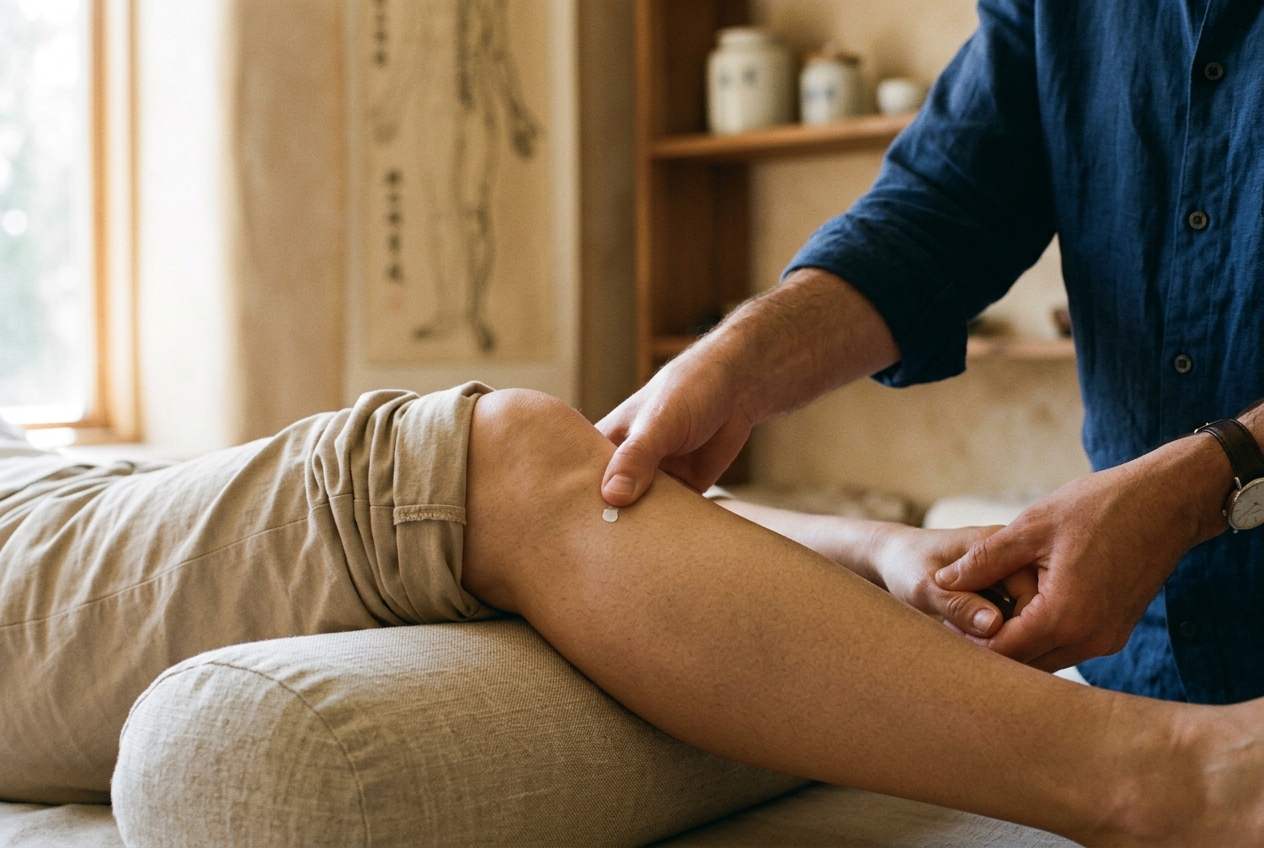
If you spend your daylight hours anchored to an ergonomic chair, navigating the twin burdens of digital overstimulation and physical stillness, your body likely communicates in a predictable dialect of distress. By mid-afternoon, a dull constriction wraps around the base of the skull, radiating across the upper trapezius; the lumbar spine feels compressed, stiffening into an unyielding arch; and the epigastrium harbors a subtle, postprandial stagnation—a slow, distended bloat accompanied by low-grade systemic fatigue.
The immediate, intuitive response to localized pain is local intervention: rubbing the temples, pounding the lower back, or massaging the abdomen. Yet classical medical traditions and contemporary neurophysiology converge on a counterintuitive principle: the most potent therapeutic leverage over axial and visceral pathology is often exerted from the distal extremities.
In Traditional Chinese Medicine (TCM), this clinical reality was codified during the Ming dynasty into one of the most enduring diagnostic and therapeutic frameworks in Eastern medicine: the Four Command Points (Si Zong Xue, 四總穴). First articulated systematically by master Gao Wu in his seminal 1529 CE compendium, the Zhen Jiu Ju Ying (Exemplar of Acupuncture and Moxibustion), this doctrine posits that the entire human topography can be partitioned into primary anatomical territories, each governed by a specific distal acupoint situated below the elbows or knees:
- The Abdomen and Gastrointestinal Viscera, governed by Zusanli (ST36);
- The Lumbar Spine and Posterior Axial Kinetic Chain, governed by Weizhong (BL40);
- The Head, Occiput, and Posterior Cervical Spine, governed by Lieque (LU7);
- The Face, Sensory Orifices, and Oral Cavity, governed by Hegu (LI4).
Modern lineages later incorporated two indispensable auxiliary command centers: Neiguan (PC6) for the chest, epigastrium, and cardiac axis, and Sanyinjiao (SP6) for the lower abdomen, pelvic basin, and urogenital sphere.
Far from being mystical relics, these distal command points represent sophisticated maps of neuromuscular convergence, dermatomal cross-talk, and myofascial continuity. Today, high-resolution imaging, neuroelectrophysiology, and connective tissue histology demonstrate that mechanical deformation of these precise loci triggers localized mechanotransduction, spinal gate inhibition, and central autonomic resets. The following analysis explores the anatomical highways, neurobiological mechanisms, and exact manual protocols required to harness these command points for evidence-based self-care.
1. The Meridian Topography: A Journey Through Fascia, Dermatomes, and Neural Pathways
To understand why pressing a point near the knee alleviates gastric spasm, or why stimulating the hand relieves a throbbing temporomandibular joint, one must look past the superficial separation of anatomical structures and examine the continuous networks of the human soma.
In classical literature, the twelve primary channels are described as conduits for Qi and blood, circulating through longitudinal tracks. When translated into modern structural and neuromuscular biology, these tracks correlate with two validated anatomical systems: intermuscular myofascial meridians and segmental spinal nerve distributions.
The Anterior Track: Deep Front and Functional Kinetic Chains
The Stomach (ST) and Spleen (SP) pathways run along the anterior and medial aspects of the lower extremity, ascending across the abdominal wall to the thorax and cranium. Structurally, this corresponds to the deep front myofascial line and the anterior visceral fascial track. The lower extremity points along this highway—specifically ST36 on the lateral shin and SP6 on the medial leg—lie directly along the course of the deep peroneal and tibial nerves.
Sensory inputs originating from these somatic structures travel to the L4–S1 spinal segments, where they communicate with interneurons regulating the sympathetic and parasympathetic outflow to the gastrointestinal tract via the celiac and mesenteric plexuses.
The Posterior Track: The Superficial Back Line
The Bladder (BL) channel represents the longest meridian in the body, cascading from the inner eye, over the cranium, down the entire erector spinae group, traversing the gluteal region, posterior thigh, calf, and terminating at the lateral foot. Mechanically, this mirrors what manual therapists define as the Superficial Back Line—a continuous sheet of dense connective tissue running from the plantar fascia through the Achilles tendon, gastrocnemius, hamstrings, sacrotuberous ligament, thoracolumbar fascia, spinal erectors, and epicranial aponeurosis.
The command point BL40, positioned at the midpoint of the popliteal crease behind the knee, sits at the biomechanical fulcrum of this posterior kinetic chain. Compressing this point transmits mechanical tension and neural feedback through the posterior tibial and sciatic nerve bundles directly into the lumbosacral plexus (L4–S3).
The Upper Limb Tracks: Brachial-Cephalic Communication
The Lung (LU) and Large Intestine (LI) channels form a coupled yin-yang circuit traversing the anterolateral and posterolateral aspects of the upper limb, respectively. LI4, situated in the first dorsal interosseous muscle of the hand, and LU7, located proximal to the radial styloid process, tap directly into the superficial radial and lateral antebrachial cutaneous nerves.
These peripheral pathways enter the spinal cord at cervical levels C5–T1. Crucially, these cervical segments exhibit dense synaptic convergence with the trigeminocervical complex in the brainstem—the central switching station for all sensory and nociceptive processing from the face, jaw, teeth, and cranial vault. Stimulating the peripheral branches of the hand and wrist modulates central pain-gating mechanisms, sending descending inhibitory signals to cranial pain pathways.
2. The Primary Command Centers: Landmarking, Neurobiology, and Manual Stimulation Protocols
Applying acupressure effectively requires three elements: rigorous anatomical landmarking, an understanding of the physiological mechanism, and a precise manual protocol that generates the characteristic sensation known as Deqi (得氣)—a distinctive, dull, propagating ache, heaviness, or subtle electric warmth indicating proper mechanoreceptor recruitment.
+===================================================================================================+
|                                  THE FOUR CLASSICAL COMMAND POINTS                                |
+===================================================================================================+
| POINT CODE | CHINESE NAME | ANATOMICAL REGION GOVERNED       | PERIPHERAL NERVE / TARGET TISSUE   |
+------------+--------------+----------------------------------+------------------------------------+
| ST36       | Zusanli      | Abdomen, Epigastrium, Digestion  | Deep Peroneal / Tibialis Anterior  |
| BL40       | Weizhong     | Lumbar Spine, Sacrum, Back       | Tibial Nerve / Popliteal Fossa     |
| LU7        | Lieque       | Head, Occiput, Posterior Neck    | Superficial Radial / Brachiorad    |
| LI4        | Hegu         | Face, Jaw, Oral Cavity, Senses   | Deep Radial Motor / 1st Dors. Int. |
+===================================================================================================+
|                                    MODERN COMMAND EXTENSIONS                                      |
+===================================================================================================+
| PC6        | Neiguan      | Chest, Epigastrium, Cardiac Axis | Median Nerve / Flexor Retinaculum  |
| SP6        | Sanyinjiao   | Lower Pelvis, Urogenital Sphere  | Posterior Tibial / Tibial Fascia   |
+===================================================================================================+
Point 1: Zusanli (ST36) — "Leg Three Miles"
The Visceral Engine and Gastrointestinal Command Point
Physical Landmarking
Sit with your knees flexed at a ninety-degree angle. Locate the bony protrusion just below the kneecap (the tibial tuberosity). Move your finger approximately four finger-breadths (the width of your four fingers held flat together, roughly three inches) down the outer side of the shinbone. Place your finger in the soft muscular groove approximately one finger-breadth lateral to the sharp anterior crest of the tibia, within the belly of the tibialis anterior muscle. When you dorsiflex your foot (pulling your toes upward toward your shin), you will feel this muscle contract firmly beneath your fingertip.
Neurophysiological Mechanism
ST36 is one of the most thoroughly investigated neuroanatomical loci in modern medicine. Mechanical stimulation of the deep fascial beds of ST36 activates A-beta and A-delta sensory fibers within the deep peroneal nerve. Recent neuroimaging and optogenetic studies indexed in the NCBI PubMed Database demonstrate that mechanical or electrical activation of this region stimulates the vagal-adrenal anti-inflammatory axis.
Signal transduction ascends to the solitary tract nucleus (NTS) in the brainstem, driving efferent vagal nerve activity that increases gastric peristalsis, upregulates mucosal blood flow, normalizes gastric acid secretion, and suppresses systemic pro-inflammatory cytokines (such as TNF-alpha and IL-6) via the splenic sympathetic nerve pathway.
What You Will Feel
A distinct, heavy, spreading ache that radiates down the lateral shin toward the dorsum of the foot, sometimes accompanied by audible borborygmi (stomach gurgling) or an immediate sensation of diaphragmatic relaxation.
Manual Stimulation Technique
- Vector: Perpendicular to the surface of the tibialis anterior muscle, angling slightly toward the lateral border of the tibia.
- Pressure Gradient: Moderate-to-firm progressive loading (2.0 to 3.5 kg/cm²), using the pad of the thumb or a reinforced knuckle.
- Movement: Slow, circular friction-oscillations at a frequency of 1 to 2 Hz.
- Duration: 2 to 3 minutes continuously per limb.
Everyday Indications
Functional dyspepsia, postprandial bloating, chronic lethargy, acid reflux, and generalized mental fatigue.
Point 2: Weizhong (BL40) — "Middle of the Crease"
The Axial Decompressor and Lumbo-Sacral Command Point
Physical Landmarking
Lie prone or sit on the edge of a chair with the knee semi-flexed. Locate the horizontal crease on the back of the knee joint (the popliteal crease). BL40 sits precisely at the midpoint of this transverse crease, situated directly in the center of the popliteal diamond between the prominent tendons of the biceps femoris (lateral) and the semitendinosus/semimembranosus (medial).
Neurophysiological Mechanism
BL40 overlies the tibial nerve and the popliteal artery and vein, embedded in deep adipose tissue over the popliteus muscle. Stimulation of this area triggers mechanoreceptors that send afferent impulses through the sciatic nerve trunk into the L4, L5, S1, and S2 spinal segments.
According to the Gate Control Theory of Pain, high-threshold somatic inputs from peripheral nerve stimulation stimulate inhibitory substantia gelatinosa interneurons within the dorsal horn. This suppresses the transmission of chronic nociceptive signals ascending from strained lumbar paraspinal muscles, facet joints, and sacroiliac ligaments. Concurrently, it releases hypertonic tension across the posterior myofascial kinetic chain, reducing mechanical load on the lumbar vertebrae.
What You Will Feel
A deep, sweet, radiating sensation of heaviness behind the knee that often travels down the calf toward the Achilles tendon or ascends into the lower lumbar spine, accompanied by a release of tension across the lower back.
Manual Stimulation Technique
- Vector: Direct perpendicular pressure into the popliteal fossa.
- Pressure Gradient: Gentle to moderate (1.5 to 2.5 kg/cm²). Avoid aggressive, sharp pressure to protect the popliteal vascular structures.
- Movement: Sustained, rhythmic compressions—hold for 10 seconds, release slightly for 2 seconds, and repeat across a 2- to 3-minute window.
- Duration: 2 to 3 minutes per side.
Everyday Indications
Acute or chronic lower back stiffness, sciatica, lumbar fatigue from prolonged sitting, hamstring tension, and knee stiffness.
Point 3: Lieque (LU7) — "Broken Sequence"
The Cranio-Cervical Conductor and Occipital Command Point
Physical Landmarking
Interlock the webs of your thumbs and index fingers of both hands in a handshake configuration. Extend your top index finger straight along the lateral side of the opposite wrist. The tip of your index finger will land in a distinct, V-shaped bony cleft just proximal to the prominent bump of the wrist bone (the styloid process of the radius).
Alternatively, locate the styloid process on the thumb side of the wrist; slide your finger approximately 1.5 inches (two finger-breadths) up the forearm toward the elbow. You will feel a groove between the tendons of the brachioradialis and abductor pollicis longus muscles.
Neurophysiological Mechanism
LU7 lies adjacent to the superficial branch of the radial nerve and the cephalic vein. Peripheral sensory neurons from this zone enter the spinal cord at C5–C6. These cervical afferents project directly into the trigeminocervical complex located in the upper cervical spinal cord and lower medulla.
By modulating synaptic excitability within this shared neural substrate, manual stimulation of LU7 downregulates cervical paraspinal hypertonicity, dampens trigeminal vascular activation, and alleviates neurovascular tension across the suboccipital triangle and posterior scalp.
What You Will Feel
A sharp, tender, radiating electrical or tingling sensation that tracks upward into the thumb and index finger, or ascends along the lateral forearm into the shoulder and neck.
Manual Stimulation Technique
- Vector: Oblique angle (approximately 45 degrees), directing pressure proximally toward the elbow joint rather than pressing flat against the bone.
- Pressure Gradient: Moderate (1.5 to 2.0 kg/cm²) using the tip of the thumb.
- Movement: Micro-rotational kneading combined with steady static holds.
- Duration: 2 minutes per forearm.
Everyday Indications
Tension headaches, occipital neuralgia, stiff neck from poor ergonomics, forward-head posture strain, early upper respiratory congestion, and acute sneezing/rhinitis.
Point 4: Hegu (LI4) — "Joining Valley"
The Oromandibular Modulator and Facial Command Point
Physical Landmarking
Look at the back of your hand. Bring your thumb and index finger close together; a prominent muscular mound will rise on the dorsal web between them. Now relax the hand. Place the thumb of your opposite hand directly over the highest point of that muscular bulge.
Roll your thumb slightly inward toward the bone of the index finger (the second metacarpal). The point sits at the approximate midpoint of the second metacarpal bone, nestled deeply within the belly of the first dorsal interosseous muscle.
Neurophysiological Mechanism
LI4 is one of the most potent somatosensory sites in the human body due to the disproportionate representation of the hand in the primary somatosensory cortex (the Penfield homunculus). Stimulation of the deep branches of the radial and ulnar nerves within the first dorsal interosseous recruits dense networks of low- and high-threshold mechanoreceptors.
Extensive neuroimaging studies from institutions cataloged by the World Health Organization (WHO) Guidelines on Acupuncture demonstrate that manual stimulation of LI4 induces robust functional connectivity changes in the thalamus, periaqueductal gray (PAG), and limbic network. This triggers the release of endogenous beta-endorphins, dynorphins, and enkephalins into the cerebrospinal fluid, elevating the systemic pain threshold while modulating trigeminal nerve signaling to the face, gums, teeth, and frontal sinus cavities.
What You Will Feel
An unmistakable, heavy, dull, and spreading ache—often described as a deep, radiating pressure that can travel up the wrist and forearm, occasionally reaching the jaw and face.
Manual Stimulation Technique
- Vector: Directed obliquely toward the radial shaft of the second metacarpal bone (pinching the muscular web between your thumb on top and index finger on the palm side).
- Pressure Gradient: Firm, deep, and penetrating (2.5 to 4.0 kg/cm²).
- Movement: Sustained static compression combined with gentle, high-frequency rotational friction.
- Duration: 2 to 3 minutes per hand.
Everyday Indications
Frontal headaches, temporomandibular joint (TMJ) dysfunction, jaw clenching, dental discomfort, sinus congestion, acute stress, and generalized somatic pain.
3. The Modern Extensions: The Ancillary Command Centers
As clinical acupuncture evolved over the past century, master clinicians recognized that two additional anatomical territories required dedicated distal command loci: the thoracic-cardiac zone and the pelvic-urogenital basin.
Neiguan (PC6) — "Inner Gate"
Command Center for the Chest, Cardiac Axis, and Epigastrium
- Location: On the palmar aspect of the forearm, two inches (three finger-widths) proximal to the distal wrist crease, lying directly between the two prominent tendons of the flexor carpi radialis and palmaris longus.
- Neurobiology: Overlies the main trunk of the median nerve. Stimulation modulates the nucleus tractus solitarii, reducing cardiac sympathetic tone, stabilizing heart rate variability (HRV), and exerting a potent anti-emetic effect by downregulating chemoreceptor trigger zone excitability in the brainstem, as documented by NCBI PMC Research on Vagal Modulation.
- Clinical Targets: Emotional anxiety, palpitations, motion sickness, nausea, insomnia, and thoracic tightness.
Sanyinjiao (SP6) — "Three Yin Intersection"
Command Center for the Lower Abdomen, Pelvic Floor, and Urogenital Sphere
- Location: On the medial aspect of the lower leg, three inches (four finger-widths) directly superior to the tip of the medial malleolus (inner ankle bone), in the soft depression just posterior to the medial border of the tibia.
- Neurobiology: Represents the anatomical intersection of the Spleen, Liver, and Kidney channels. Neurologically, it overlies the posterior tibial nerve. Stimulating this locus projects afferent inputs into the S2–S4 sacral spinal segments, modulating parasympathetic innervation to the bladder, uterus, rectum, and pelvic floor musculature via the pelvic splanchnic nerves.
- Clinical Targets: Dysmenorrhea, menstrual cramping, pelvic floor hypertonicity, insomnia, and functional lower urinary tract symptoms.
4. Clinical Synergy: A Somatosensory Protocol for Desk-Bound Cranio-Spinal & Visceral Fatigue
Rather than stimulating isolated points in an uncoordinated fashion, clinical efficacy improves when points are combined into a systematic, sequential protocol that leverages synergistic neurological pathways.
The following 20-Minute Autonomic & Somatic Reset is designed to reverse the primary physical sequelae of sustained seated desk work: tension headaches, forward-head cervical strain, lumbar spinal compression, and postprandial gastrointestinal stagnation.
The Step-by-Step Evening Protocol
Step 1: Decompress the Cranio-Cervical Axis (Minutes 0:00 to 4:00)
- Target: Bilateral Lieque (LU7).
- Position: Lie supine on a firm surface or yoga mat with a low cervical support pillow under your neck.
- Execution: Interlock the thumbs to locate LU7 on the right arm. Apply firm, proximal-angled pressure at a 45-degree angle toward your elbow using your left thumb. Breathe deeply into the lower abdomen, using a 4-second inhalation and 6-second exhalation cadence. Maintain rhythmic, micro-circular kneading for 2 minutes. Switch hands and repeat on the left arm for 2 minutes.
- Physiological Goal: Downregulate hypertonic suboccipital and upper trapezius firing via the trigeminocervical complex.
Step 2: Clear Oromandibular and Frontal Tension (Minutes 4:00 to 8:00)
- Target: Bilateral Hegu (LI4).
- Position: Remain supine. Rest your forearms comfortably across your lower ribcage.
- Execution: Grasp your left hand with your right thumb and index finger in a pincer grip. Press the pad of your right thumb deeply into the muscular web of the left first dorsal interosseous, angling directly against the second metacarpal bone. Apply sustained, deep pressure until a robust Deqi ache radiates toward the wrist. Hold steady for 30 seconds, perform 10 small rotations, and re-engage static pressure. Complete 2 minutes on the left hand, then mirror the technique on the right hand for 2 minutes.
- Physiological Goal: Trigger central periaqueductal gray endorphin release and relieve jaw clenching, eye strain, and frontal headaches.
Step 3: Stimulate Vagal-Digestive Motility (Minutes 8:00 to 14:00)
- Target: Bilateral Zusanli (ST36).
- Position: Transition to a comfortable seated position on the floor or in a firm chair with knees bent at 90 degrees.
- Execution: Place your thumbs or the knuckles of your index fingers over ST36 on both legs simultaneously. Lean your upper body forward slightly to transfer upper-body mass into the points. Apply firm, downward, and slightly inward pressure into the belly of the tibialis anterior. Maintain a slow, circular friction movement (1 rotation per second). Every 60 seconds, pause and hold deep static pressure for 15 seconds while taking three full diaphragmatic breaths. Continue for 3 minutes per leg (6 minutes total).
- Physiological Goal: Activate parasympathetic efferent pathways to reduce visceral inflammation, stimulate gastric motility, and relieve abdominal distension.
Step 4: Decompress the Lumbo-Sacral Kinetic Chain (Minutes 14:00 to 20:00)
- Target: Bilateral Weizhong (BL40).
- Position: Sit on the edge of a chair with your feet flat on the floor and knees bent at approximately 80 degrees, or lie prone with a small pillow under your ankles.
- Execution: Reach behind both knees simultaneously using the index, middle, and ring fingers of both hands. Place the pads of your middle fingers directly into the center of the popliteal creases. Hook your fingers gently into the soft tissue, pulling upward and outward with moderate force. Perform slow, rhythmic pumping compressions: press firmly for 5 seconds, slowly release half the pressure for 2 seconds, and repeat across a 3-minute cycle.
- Physiological Goal: Inhibit chronic nociceptive firing at the L4–S1 dorsal horns, lengthen the posterior myofascial kinetic chain, and decompress the lumbar spine.
5. Safety, Biomechanical Limits, and Neurological Red Flags
While manual acupressure is an exceptionally safe modality, it is a potent neurobiological intervention. Precise clinical boundaries must be observed to prevent adverse events.
Critical Contraindications During Pregnancy
Two points within this command framework carry an absolute contraindication during pregnancy: Hegu (LI4) and Sanyinjiao (SP6).
Both points are historically classified and clinically validated as oxytocic and labor-inducing agents. In contemporary obstetrical and neurological research, strong mechanical stimulation of LI4 and SP6 has been shown to evoke reflex uterine contractions by modulating spinal segmental pathways (S2–S4) and upregulating central oxytocin release. Consequently, LI4 and SP6 must never be stimulated during pregnancy, except under the direct supervision of a licensed obstetrician or certified acupuncturist during active, post-term labor induction.
Vascular and Tissue Integrity
- Popliteal Fossa Caution (BL40): The popliteal space houses the popliteal artery, popliteal vein, and tibial nerve. Avoid sharp, localized pressure with the fingernails or excessive force. Individuals with diagnosed deep vein thrombosis (DVT), severe varicose veins in the popliteal fossa, or peripheral vascular disease must avoid direct deep pressure on BL40.
- Tissue Pressure Limits: Acupressure must never cross into destructive tissue damage. The target sensation is Deqi—a therapeutic, diffuse, dull ache—never sharp, lancinating, or burning pain. If a patient or practitioner observes petechiae, bruising, or lingering soreness lasting more than 24 hours, the applied force exceeds therapeutic thresholds and must be reduced.
When to Seek Immediate Medical Evaluation
Self-administered acupressure is indicated for functional somatic complaints, musculoskeletal tension, and stress modulation. It is not an alternative to emergency medical care. Immediate medical evaluation is required if you experience: * Sudden, severe "thunderclap" headaches or headaches accompanied by neurological deficits, visual disturbances, or neck stiffness with fever. * Radiating back pain accompanied by saddle anesthesia (numbness in the groin/perineum), progressive lower extremity motor weakness (e.g., foot drop), or acute loss of bowel or bladder control (classic signs of Cauda Equina Syndrome). * Acute, rigid, or rebound abdominal tenderness accompanied by fever, vomiting, or gastrointestinal bleeding.
6. Today's Takeaway: The Two-Minute Reset
You do not need an entire clinical suite or an hour of uninterrupted silence to experience the benefits of somatosensory neuromodulation. If you have two minutes right now before closing this page, perform this simple reset for acute focus and craniofacial decompression:
- Drop your non-dominant hand into your lap, allowing your fingers to rest naturally.
- Position your dominant thumb onto the muscular mound of Hegu (LI4) between the thumb and index finger, placing your index finger on the palm side to create a firm pincer clamp.
- Apply deep, continuous pressure inward toward the index finger's long bone until you feel a clear, dull ache spreading through the web of the hand.
- Close your eyes. Inhale slowly through your nose for a count of four; exhale smoothly through relaxed lips for a count of six.
- Hold this steady pressure for 60 seconds. Release smoothly over three seconds, switch hands, and repeat on the opposite side.
By engaging these neural pathways, you systematically tap into centuries of clinical practice, supported by modern neuroscience, bringing autonomic balance and physical relief to your everyday life.
Authoritative References & Further Reading
- World Health Organization: Standard Acupuncture Nomenclature
- WHO Guidelines on Basic Training and Safety in Acupuncture
- National Center for Biotechnology Information (NCBI): Neurobiological Mechanisms of Acupuncture
- NCBI PMC: The Gate Control Theory of Pain Modulation
- NCBI PMC: Neuroanatomical Correlates of Distal Acupoint Stimulation and Vagal Efferents
- Wikipedia: Detailed Overview of Classical Acupuncture Points