Five Shu-Transport Points (Wu Shu Xue) Meridian Dynamics: Governing Distal Qi Flow, Five Phase Resonance, and Visceral Modulation in Traditional Chinese Medicine
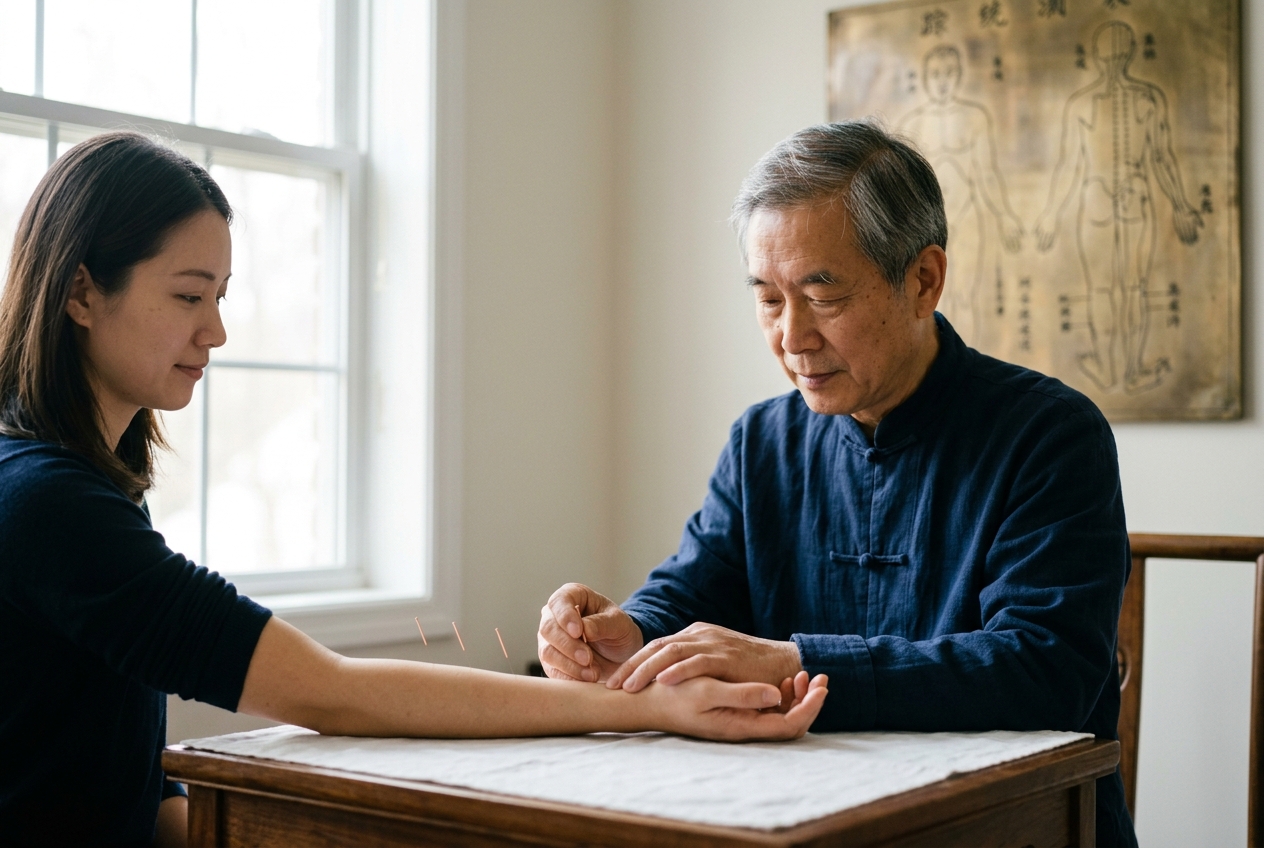
Every human being has experienced the sudden, shocking clarity that follows a sharp pinch or stubbed nail bed at the extreme periphery of the body. You catch your thumb in a car door, graze the edge of your small toe against hard oak, or prick a fingertip against a sewing needle. Within milliseconds, long before your conscious mind has articulated the mechanics of the accident, an electric jolt surges from the very edge of your limb, travels the length of the extremity, constricts the diaphragm, clears mental fog in a blinding rush of adrenaline, and commands the immediate attention of your entire central nervous system.
In contemporary neurology, this phenomenon is understood through the dense concentration of high-threshold mechanoreceptors, nociceptors, and terminal capillary networks situated at our digital extremities. Yet more than two millennia ago, the foundational texts of classical East Asian medicine—most notably the Huangdi Neijing (Inner Canon of the Yellow Emperor) and the Nan Jing (Classic of Difficult Issues)—formalised this exact somatic reality into an intricate, elegant hydraulic model of vital circulation known as the Five Shu-Transport Points (Wu Shu Xue, 五輸穴).
Rather than viewing the human meridian system as static vascular conduits, ancient physicians conceptualised the movement of Qi (vital bio-energetic and functional force) along the twelve primary channels as a dynamic watershed. Like alpine precipitation gathering in narrow mountain fissures before broadening into sweeping continental rivers and finally plunging into deep oceanic trenches, Qi emerges at the tips of the fingers and toes, accelerates along the metacarpal and metatarsal bones, courses up the forearms and shins, and submerges deeply into the visceral organs (Zang-Fu) at the elbows and knees.
Today, this ancient hydrological architecture is experiencing a profound scientific renaissance. Intersecting research across Wikipedia’s overview of the meridian system, modern connective tissue histology, and the WHO Traditional Medicine Strategy reveals that these specific distal loci correspond to zones of exceptional neuro-fascial signaling and high bio-electric conductivity. By examining the Five Shu Points through both classical Five Phase (Wu Xing) mechanics and contemporary mechanobiology, we unlock a sophisticated manual for systemic autoregulation.
1. Opening Scene — A Moment You'll Recognise
Consider a universal modern scenario: you are seated at your desk at three in the afternoon under fluorescent lighting. The air is stagnant, your thoughts have turned to leaden sludge, your shoulders are hunched toward your ears, and an insidious tension headache is beginning to throb behind your temples. Instinctively, without a single lesson in manual therapy, your hands move to the margins of your body. You squeeze the fleshy webbing between your thumb and index finger; you press the base of your fingernails into your palms; you kick off your shoes and vigorously rub the balls of your feet against the carpet.
Within minutes, your breathing deepens, your vision sharpens, and the oppressive intracranial pressure begins to dissipate.
In Traditional Chinese Medicine (TCM), this instinctual reflex reflects an innate physiological truth: to clear stagnation in the deep core, one must stimulate the dynamic hydrological gateways at the periphery. You have just engaged the distal-to-proximal energetic gradient. When internal stress, digestive fatigue, or emotional constraint locks your system into a state of hyper-sympathetic fixation, the biological current pools and stagnates in the head and torso. The terminal endpoints of the limbs act as hydrodynamic release valves—resetting systemic circulation from the outside in.
2. What This System Does: The Hydrological Architecture of the Five Shu Points
To understand how the Five Shu-Transport Points operate, one must discard the Western mechanical conception of the body as a collection of isolated parts and instead adopt the ancient view of the organism as an open thermodynamic ecosystem.
Each of the twelve primary meridians—the bilateral energetic pathways that regulate our internal organ networks—possesses five specific acupuncture points located between the fingertips and elbows, or the toes and knees. These points represent progressive functional stages of Qi dynamic expression.
The Five Stages of Meridian Flow
- Jing-Well (Jǐng, 井 — The Well): Situated at the extreme ungual angles of the digits where the polarity of the meridian shifts from Yin to Yang (or vice versa). Here, Qi bubbles up from the deep interior like water rising from a pristine underground aquifer. The energetic volume is minute, but the velocity and dynamic potential are immense. Because the Qi is shallow and unstable, Jing-Well points exert an immediate, shock-like clearing effect on the mental faculties and the physical center.
- Ying-Spring (Yíng, 滎 — The Spring): Located distal to the metacarpophalangeal or metatarsophalangeal joints. Here, the emerging trickle gathers into a distinct, bubbling brook. The flow remains rapid and superficial, making these points uniquely sensitive to energetic friction, which classical medicine describes as pathogenic Heat (inflammation and febrile agitation).
- Shu-Stream (Shū, 輸 — The Stream): Found at the wrists and ankles. The current has now deepened and gained sufficient mass to transport (Shu) defensive energy (Wei Qi) into the interior. At this junction, the meridian becomes susceptible to environmental stagnation—particularly Dampness (fluid retention and heavy, sluggish metabolic waste).
- Jing-River (Jīng, 經 — The River): Located along the broader expanses of the forearms and lower legs. The channel flow has expanded into a wide, powerful, predictable river. Pathogens traveling through this zone resonate with the voice, respiratory tract, sinews, and bones, making Jing-River points potent regulators of cough, chills, and vocal changes.
- He-Sea (Hé, 合 — The Sea): Positioned at the profound anatomical bends of the elbows and knees. Here, the vast river slows down, broadens, and plunges directly into the visceral depths (Zang-Fu organs) to unite (He) with systemic metabolism. These points govern rebellious counterflow—conditions where digestive or metabolic functions travel in the wrong physiological direction (e.g., acid reflux, vomiting, chronic diarrhea).
The Five Phase (Wu Xing) Elemental Matrix and the Mother-Child Law
The Five Shu Points do not operate solely on hydraulic mechanics; they are intimately woven into the Five Phase (Wu Xing) system of Wood, Fire, Earth, Metal, and Water. The elemental assignment differs systematically between Yin and Yang channels, reflecting their cosmological and physiological polarity:
| Shu Category | Hydraulic Metaphor | Yin Channel Element | Yang Channel Element | Primary Clinical Indication |
|---|---|---|---|---|
| Jing-Well | Emergence / Well | Wood (木) | Metal (金) | Acute resuscitation, loss of consciousness, fullness below the heart |
| Ying-Spring | Trickle / Spring | Fire (火) | Water (水) | Febrile pathology, clearing visceral heat, complexion changes |
| Shu-Stream | Pouring / Stream | Earth (土) | Wood (木) | Heaviness of the body, joint pain, rheumatic Bi-syndrome |
| Jing-River | Coursing / River | Metal (金) | Fire (火) | Cough, dyspnea, chills and fever, vocal cord pathology |
| He-Sea | Convergence / Sea | Water (水) | Earth (土) | Rebellious Qi, gastrointestinal counterflow, chronic diarrhea |
In Chapter 69 of the classical medical canon Nan Jing, physicians established the therapeutic golden rule of Five Phase intervention: "In deficiency, tonify the Mother; in excess, sedate the Child" (虛則補其母, 實則瀉其子).
Because the elements generate one another in a continuous circular sequence (Wood feeds Fire, Fire creates Earth/ash, Earth bears Metal, Metal enriches Water, Water nourishes Wood), an organ can be regulated by stimulating its corresponding generational relative along its own meridian:
- Example of Tonification (Lung Channel): The Lung belongs to the Metal element. Its "Mother" is Earth (as Earth generates Metal). The Earth point on the Lung channel is Taiyuan (LU-9), which is its Shu-Stream point. Stimulating LU-9 tonifies constitutional Lung deficiency, chronic shortness of breath, and weak vocal resonance.
- Example of Sedation (Lung Channel): When the Lung suffers from acute "Excess"—such as violent, barking bronchitis with thick yellow phlegm—the physician sedates its "Child," Water (as Metal generates Water). The Water point on the Lung channel is Chize (LU-5), its He-Sea point. Stimulating LU-5 drains pulmonary excess heat and calms spasmodic coughing.
Recent explorations in biomedical engineering and connective tissue research published in PubMed on the neurobiological mechanisms of acupuncture suggest that this classical energetic hierarchy reflects distinct densities of interstitial fibroblasts, collagen bundling, and peripheral neurovascular bundles along the fascial planes of the limbs.
3. How You Can Feel It — Signs of Balance and Imbalance
Because the Five Shu Points govern the gradient between the surface of the body and its internal core, disturbances in this hydraulic progression manifest in unmistakable physical and psychological patterns. When the peripheral conduits are open and responsive, your physical transitions are effortless: you wake without morning joint stiffness, adapt quickly to temperature fluctuations, digest food without gastric distension, and maintain mental clarity under cognitive load.
When this peripheral-visceral continuum is compromised, specific symptomatology emerges depending on which hydraulic stage is congested:
The Five Shu Self-Assessment Matrix
- Jing-Well Congestion (Emergence Failure): Sudden emotional claustrophobia, acute anxiety panic spikes, a sensation of suffocating tightness directly beneath the sternum ("fullness below the heart"), clenched jaw, or an inability to gather your mental presence.
- Ying-Spring Derangement (Frictional Heat): Flushed cheeks in the late afternoon, burning sensations in the palms and soles, chronic low-grade throat irritation, restless sleep punctuated by vivid dreams, or sudden outbursts of irritability.
- Shu-Stream Stagnation (Viscous Accumulation): A pervasive feeling of physical heaviness as if wearing a sodden woolen coat, morning stiffness in the small joints of the hands and feet that improves only after movement, brain fog after meals, and generalized weather-sensitive joint ache.
- Jing-River Obstruction (Flow Impairment): Chronic intermittent dry throat, sudden hoarseness or loss of vocal timbre under mild fatigue, spasmodic dry coughing when stepping into cold air, and muscular aching along the long sinews of the limbs.
- He-Sea Derangement (Visceral Counterflow): Postprandial bloating, gastroesophageal acid reflux, sudden bouts of loose stools following emotional stress, nausea, or a sense of profound physical exhaustion immediately following digestive effort.
4. Qigong & Movement Practice: "Tracing the Five Tides" (Wu Shu Dao Yin)
To harmonize the Five Shu-Transport gateways without needles, we employ a classical Dao Yin (therapeutic movement and breathwork) sequence that mobilizes the distal-to-proximal fascial lines from the fingertips to the torso. This practice opens the interstitial channels, engages piezoelectric fascial signaling, and grounds ascending autonomic arousal.
Step-by-Step Practice Guide
- Initial Stance and Grounding (Wuji): Stand with feet parallel, shoulder-width apart. Unlock your knees slightly, suspend the crown of your head as if suspended by a silk cord, and release your tailbone downward. Allow your arms to hang naturally at your sides. Breathe gently through your nose into the lower abdomen (Dan Tian) for three full cycles.
- Phase 1 — The Jing-Well Awakening (Fingertip Extension): Inhale slowly for a count of four. As you breathe in, bring both hands up in front of your chest, palms facing downward. At the peak of the inhale, gently splay and extend all ten fingers outward with focused intention, feeling the stretch across the very tips and ungual margins of your nails. Sensation: A fine, prickling warmth or electrical buzzing at the tips of the fingers.
- Phase 2 — The Shu-Stream Flexion (Wrist Articulation): Hold the breath comfortably for two counts. Flex your wrists upward to a ninety-degree angle, pushing the heels of the palms gently outward while keeping the fingers soft. This draws tension through the flexor and extensor retinacula of the wrists. Sensation: A deep mechanical pulling along the wrist creases where the Shu-Stream points reside.
- Phase 3 — The Jing-River Wave (Forearm Spiraling): Begin a slow, measured exhalation for a count of six. As you exhale, rotate your forearms outward so the palms face upward, drawing the forearms inward toward your centerline in a smooth, spiral trajectory. Sensation: A smooth, gliding warmth flowing along the radial and ulnar muscular corridors.
- Phase 4 — The He-Sea Deep Plunge (Elbow Sink and Visceral Descent): Complete the exhalation by folding your elbows deeply, drawing the palms inward toward your lower ribs, and then pressing the hands slowly down toward the earth at the level of the lower abdomen. Allow the elbows to drop heavily by your sides. Sensation: A settling, dropping sensation in the gut, accompanied by an involuntary sigh of parasympathetic relief or spontaneous digestive gurgling (borborygmus).
- Repetitions and Duration: Perform this sequence for 9 continuous, fluid cycles (approximately 5 to 7 minutes).
- Integration: Conclude by placing both palms over your navel, closing your eyes, and allowing your breath to return to an unhurried, natural rhythm for one minute.
5. Acupressure Points You Can Try Today
To directly interface with the hydraulic mechanisms of the Five Shu Points, apply focused manual pressure to these three clinically renowned points, each drawn from a distinct structural tier of the channel matrix.
Point 1: Taiyuan (LU-9 — "Supreme Abyss")
- Classification: Lung Channel Shu-Stream Point (Earth Element — Mother / Tonification Point).
- Anatomical Location: Located on the radial end of the transverse crease of the wrist, in the palpable depression between the radial artery and the tendon of the abductor pollicis longus muscle. (Feel for the pulse at the base of your thumb on the wrist crease; the point lies just lateral to the pulsating artery).
- Technique: Use the tip of your opposite thumb to apply gentle, perpendicular pressure. Do not occlude the artery violently; rather, sink into the soft connective tissue valley with sustained, steady pressure for 2 minutes per side. Breathe deeply and evenly.
- Daily Application: Ideal for chronic shallow breathing, vocal fatigue from excessive speaking, generalized postural lethargy, and grief-induced chest constriction. As the Earth-Mother point of the Metal channel, it builds systemic respiratory and defensive stamina.
Point 2: Xingjian (LR-2 — "Moving Between")
- Classification: Liver Channel Ying-Spring Point (Fire Element — Child / Sedation Point).
- Anatomical Location: Situated on the dorsal aspect of the foot, proximal to the margin of the web between the first and second toes, in the depression just distal to the first metatarsophalangeal junction.
- Technique: Apply firm, directed pressure angled slightly backward toward the ankle using the knuckle of your index finger or the tip of your thumb. Maintain firm, circular friction for 90 seconds to 2 minutes. You will likely encounter a distinct, tender sensation.
- Daily Application: The ultimate physiological release valve for acute frustration, screen-induced tension headaches, burning red eyes, late-night insomnia caused by a racing mind, and hypertensive stress spikes. As the Fire-Child point of the Wood channel, it rapidly vents excess heat and tension downward away from the brain.
Point 3: Zusanli (ST-36 — "Leg Three Miles")
- Classification: Stomach Channel He-Sea Point (Earth Element — Ben / Seasonal Alignment Point).
- Anatomical Location: Located on the anterior aspect of the lower leg, four finger-widths below the inferior border of the patella (kneecap), and one finger-breadth lateral to the anterior crest of the tibia (shin bone). When you locate the correct spot, pressing it will produce a dull, radiating ache along the anterior tibialis muscle.
- Technique: Use the pad of your thumb or a smooth, rounded massage tool to apply robust, deep pressure with rhythmic pulsing (3 seconds press, 1 second release) for 3 minutes per leg.
- Daily Application: Regarded throughout East Asia as the preeminent longevity point. It resolves acute indigestion, postprandial fatigue, gastrointestinal bloating, and systemic exhaustion. As a He-Sea point, it re-anchors rebellious, ascending digestive energy back down into the lower abdomen, stimulating vagal nerve tone and enhancing peristalsis.
6. Food & Lifestyle — Small Changes for Today
The hydraulic flow of the Five Shu Points is exquisitely sensitive to ambient temperature, hydration levels, and dietary habits. Because these dynamic points reside at the fragile margins of the physical body, modern lifestyle habits can inadvertently constrict or flood these vital gateways.
1. Protect the Distal Gates from Thermal Constriction
The Jing-Well and Ying-Spring points at the toes are exceptionally susceptible to environmental cold. Walking barefoot on cold stone or hardwood floors causes instantaneous microvascular and fascial constriction, preventing the smooth emergence of Qi and generating visceral stagnation in the Kidney and Bladder channels. * The Fix: Adopt the nightly ritual of a warm foot soak (Wen Pa Jiao). Submerge your feet in hot water (around 40°C / 104°F) for 15 minutes before bed. This dilates the peripheral micro-capillary bed, activates the terminal Jing-Well points, and draws hyper-aroused neurological tension downward to promote restorative sleep.
2. Nourish the Internal Streams with Thermal Warmth
To support the fluid dynamics governed by the He-Sea points, your digestive system requires thermal and metabolic warmth. Consuming iced beverages and refrigerated raw meals forces the Stomach and Spleen to expend vital metabolic energy simply to heat the ingested mass to body temperature, generating pathological Dampness that congeals in the Shu-Stream joint corridors. * The Fix: Transition toward lightly cooked, warm meals seasoned with gentle digestive aromatics: fresh ginger slices, crushed cardamom pods, fennel seeds, and simmering vegetable broths. These act as natural metabolic catalysts, keeping the internal rivers moving smoothly without sludging.
7. Today's Takeaway
Authoritative Scientific & Clinical References
- World Health Organization. (2013). WHO Traditional Medicine Strategy: 2014–2023. Geneva: World Health Organization. Access via WHO Traditional Medicine Strategy.
- Langevin, H. M., & Yandow, J. A. (2002). Relationship of acupuncture points and meridians to connective tissue planes. The Anatomical Record, 269(6), 257–265. Accessible on PubMed Central Research.
- Deadman, P., Al-Khafaji, M., & Baker, K. (2007). A Manual of Acupuncture. Journal of Chinese Medicine Publications. Overview at Wikipedia: Acupuncture Points.
- Goldman, N., et al. (2010). Adenosine A1 receptors mediate local anti-nociceptive effects of acupuncture. Nature Neuroscience, 13(7), 883–888. Cited via NCBI PubMed Mechanisms.
- Unschuld, P. U. (1986). Nan-Ching: The Classic of Difficult Issues. University of California Press. Comprehensive reference on classical meridian theory at Wikipedia: Meridian System.