Twelve Divergent Channels (Jing Bie) Meridian Pathways: Governing Deep Visceral Integration, Interior-Exterior Yin-Yang Confluence, and Heart Axis Communication in Traditional Chinese Medicine
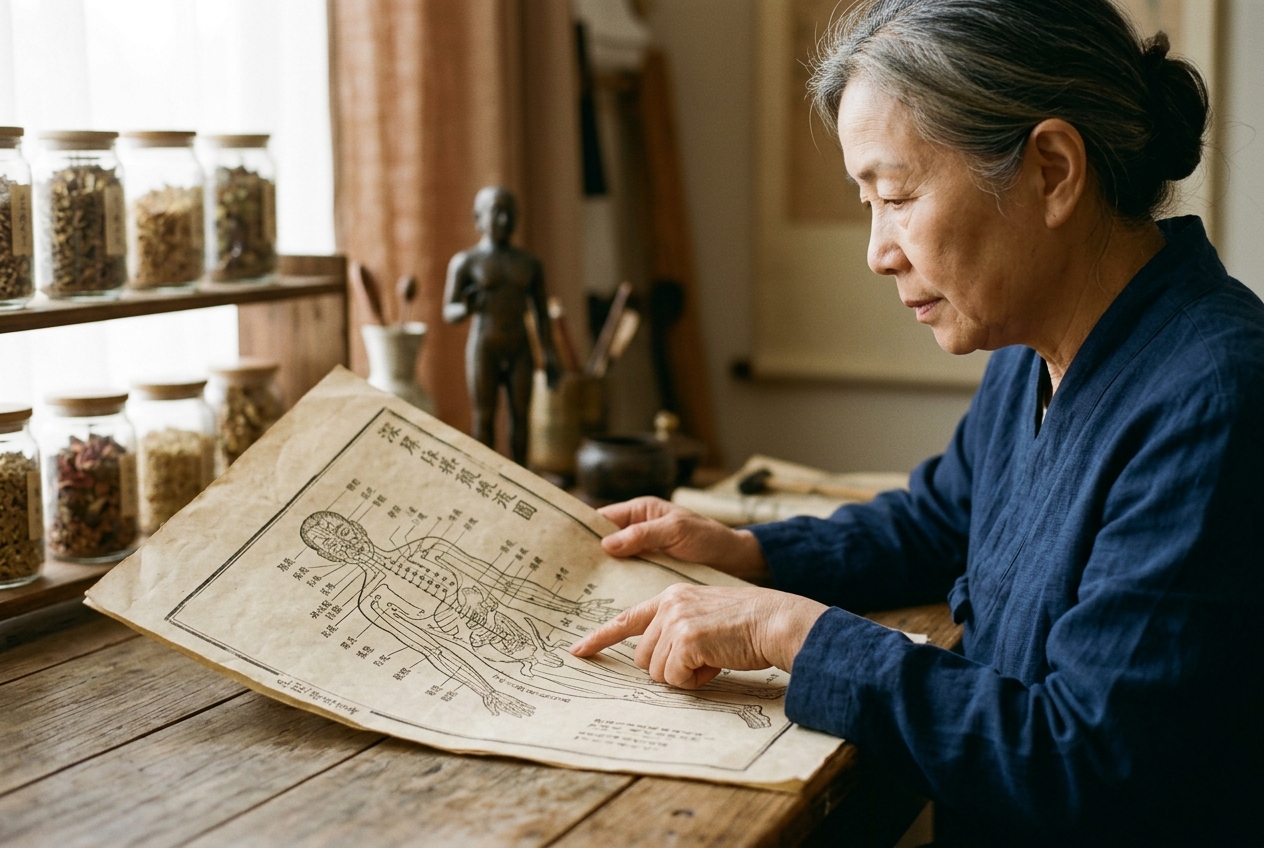
Consider a curious, debilitating phenomenon that modern clinical diagnostics frequently struggle to categorize: a subtle, deep-seated joint ache or visceral fatigue that mysteriously flares every few months, precisely following periods of prolonged emotional exhaustion or unexpressed psychological distress. You visit your primary care physician, undergo extensive panels of immunological and radiographic testing, only to be informed that while your inflammatory markers remain subclinical, your somatic complaints are undeniably real. The persistent tension gripping the deep tissues of your neck, the intermittent thoracic tightness that mirrors periods of unresolved grief, or the recurrent pelvic heaviness that defies conventional structural explanation feel less like localized injuries and more like an internalized, systemic dialogue between your mind, your posture, and your deepest visceral organs.
In the classical paradigms of Traditional Chinese Medicine (TCM), this clinical reality is neither mysterious nor idiopathic. It is the signature presentation of the Twelve Divergent Channels, known historically as the Jing Bie (經別). While mainstream acupuncture discourse frequently emphasizes the twelve primary meridians that course along the superficial musculature, classical texts such as the Huangdi Neijing Lingshu (The Yellow Emperor's Classic of Internal Medicine: Spiritual Pivot) document an intricate, secondary vascular and energetic architecture specifically designed to negotiate the boundary between our outer defenses and our deepest interior organs. When external pathogens or internal emotional crises overwhelm our superficial coping mechanisms, the body does not simply surrender; it diverts, quarantines, and internalizes these pathogenic factors into deep physiological reservoirs. Understanding the Jing Bie provides a profound, clinically validated framework for demystifying chronic fatigue, autoimmune flare patterns, somatized emotional trauma, and the continuous communication between the body’s physical core and the conscious mind.
What This Organ System Does
The Twelve Divergent Channels (Jing Bie) constitute a distinct functional tier within the broader channel network (Jing Luo). Unlike the superficial primary meridians that govern daily kinetic movement and sensory-motor responses, the Divergent Channels operate as an elite physiological sluice and immunological quarantine network. To comprehend their architecture, classical Chinese medicine organizes their pathways according to a rigorous four-stage trajectory—Separate (Li 離), Enter (Ru 入), Emerge (Chu 出), and Join (He 合)—arranged into the Six Confluences (Liu He 六合) that systematically unite paired Yin and Yang Zang-Fu organ networks.
1. The Four-Stage Trajectory: Li, Ru, Chu, He
Every Divergent Channel follows an invariant, bio-architectural sequence:
- Separate (Li 離): The divergent pathway branches off from its parent primary meridian, almost invariably in the vicinity of the large articulating joints of the body—the knees, coxofemoral (hip) joints, shoulders, and pelvic girdle. In modern myofascial and neuroanatomical terms, these sites represent major connective tissue intersections and dense neurovascular entanglements, as elucidated in contemporary fascial research published in the National Center for Biotechnology Information (NCBI).
- Enter (Ru 入): Leaving the superficial somatic layers, the channel plunges deeply into the interior cavities (the pelvic bowl, peritoneal cavity, and mediastinum). Here, it directly traverses its anatomically corresponding Zang (solid Yin organ, such as the Kidneys or Liver) or Fu (hollow Yang organ, such as the Bladder or Gallbladder). Crucially, almost all divergent pathways route internally to connect with the sovereign Heart (Xin 心), the seat of consciousness and affective integration.
- Emerge (Chu 出): After interfacing with the deep viscera, the pathway ascends and resurfaces at the base of the skull, the supraclavicular fossa, the lateral neck, or the sub-occipital cervical region—zones intimately aligned with the classical Window of Heaven (Tian Chuang 天窗) acupoints.
- Join (He 合): Upon emerging, the Yin divergent channel does not return to its original Yin primary meridian. Instead, it systematically merges into its anatomically paired Yang divergent counterpart, which then integrates fully into the cranial trajectory of the Yang primary meridian.
2. The Six Confluences (Liu He 六合)
The twelve pathways are organized into Six Confluences, pairing Yin and Yang organ systems along specific biological axes:
| Confluence | Organ Pairing | Anatomical Separation (Li) | Visceral & Cranial Integration (Ru / Chu / He) |
|---|---|---|---|
| First Confluence | Bladder (Taiyang) & Kidney (Shaoyin) | Popliteal fossa (Weizhong, BL-40) & perineal/coxal junction | Enters the pelvic floor, communicates with Kidneys, spine, and sovereign Heart; emerges at occiput to join the Bladder meridian at Tianzhu (BL-10). |
| Second Confluence | Gallbladder (Shaoyang) & Liver (Jueyin) | Greater trochanter / hip crest (Huantiao, GB-30) & dorsum of foot | Traverses pubic region, liver, gallbladder, pericardium, and heart; ascends through throat and emerges at the eye/canthus to merge into the Gallbladder channel. |
| Third Confluence | Stomach (Yangming) & Spleen (Taiyin) | Anterior thigh/groin (Bi Guan, ST-31) & inguinal canal | Penetrates stomach, spleen, diaphragm, and heart; ascends through esophagus, emerges at mouth/eye, and joins the primary Stomach channel. |
| Fourth Confluence | Small Intestine (Taiyang) & Heart (Shaoyin) | Axillary fold (Jianzhen, SI-9) & axilla | Penetrates the thoracic cavity, traverses the physical myocardium, lungs, and small intestine; emerges at throat/mandible and merges into the inner canthus (Jingming, BL-1). |
| Fifth Confluence | Triple Burner / San Jiao (Shaoyang) & Pericardium (Jueyin) | Vertex/mastoid region & axillary borders | Enters the three visceral burning cavities (San Jiao), connects to myocardium and deep pericardial fascia; emerges behind the mastoid to join the San Jiao channel at Tianyou (TB-16). |
| Sixth Confluence | Large Intestine (Yangming) & Lung (Taiyin) | Acromioclavicular margin (Jianyu, LI-15) & clavicular fossa | Penetrates lungs, large intestine, ascends along trachea; emerges at supraclavicular fossa (Quepen, ST-12) to join the Large Intestine meridian at Futu (LI-18). |
3. Vital Physiological Functions: Defense, Cranial Communication, and Latent Pathogen Sluicing
The Jing Bie perform three indispensable systemic operations that are otherwise unachievable via primary channels:
- Internalization of Defensive Qi (Wei Qi 衛氣): While standard models teach that Wei Qi—the body’s dynamic, immune-modulating energy—circulates exclusively on the exterior musculature during waking hours, the Divergent Channels act as deep conduits that ferry Wei Qi into the interior viscera. This ensures that the solid organs (Zang) maintain active immunological surveillance against internalized pathogens.
- Cranial and Cardiac Communication for Yin Channels: Under standard meridian anatomy, three major Yin channels—the Spleen (Taiyin), Kidney (Shaoyin), and Liver (Jueyin)—terminate in the thorax, throat, or inner ocular regions without broad cephalic coverage. The Divergent Channels resolve this anatomical deficit. By having their Yin branches merge directly into cephalic Yang channels during the He (Join) phase, they grant the deep constitutional Yin resources of the body direct access to the brain, the higher sensory orifices (eyes, ears, tongue, nose), and the sovereign Heart (Xin). This physiological pathway underpins the neurobiological integration studied in modern Acupuncture and Brain Connectivity Research (NCBI).
- The Physiological Sluice for Latent Pathogens (Fu Xie 伏邪): When an acute exterior pathogen (such as an environmental virus, severe bacterial infection, or sudden unresolved emotional shock) strikes an individual whose superficial Wei Qi or constitutional Yuan Qi (Original Essence) is compromised, the body cannot mount an immediate, curative resolution. To preserve immediate life, the organism engages a biological compromise: it diverts the active pathogen out of the primary circulation and sequesters it within the deeper, relatively static divergent pathways and associated joint capsules. As explored in studies on Latent Pathogenic Mechanisms in Chronic Autoimmunity (PubMed Central), this process isolates the toxicity at the expense of creating an entrenched, dormant reservoir (Fu Xie) that smolders silently in the deep fascia, bones, and visceral linings.
How You Can Feel It — Signs of Balance and Imbalance
When the Divergent Channels are harmonious and unimpeded, the human organism exhibits extraordinary psychophysical resilience. Pathogenic challenges are repelled effortlessly at the surface; physical movement across the hips, spine, and shoulders is supple and painless; emotional experiences are processed through the Heart and released without leaving chronic somatic imprints; and mental clarity remains anchored and lucid.
Conversely, when the Jing Bie are overburdened or congested by dormant pathogens (Fu Xie) and unintegrated emotional conflicts, distinct clinical patterns emerge. Because divergent pathologies oscillate between latency and activation, their symptoms rarely conform to linear, daily ailments. Instead, they present as cyclical, deep-seated, and refractory to superficial therapies.
Self-Assessment: Evaluating Your Divergent Axis
Take a moment to review the following clinical markers. If you identify with three or more, your Divergent Channel network may be actively quarantining latent stressors or experiencing structural-energetic stagnation:
- The Phenomenon of Deep, Unlocatable Joint Pain: You suffer from persistent aching in the deep coxofemoral (hip), sacroiliac, knee, or glenohumeral (shoulder) articulations that worsens during periods of systemic fatigue or emotional distress, yet displays no acute mechanical or structural damage on conventional imaging.
- Episodic, Relapsing Immune Cycles: You experience intermittent low-grade feverish sensations, swollen submandibular or cervical lymph nodes, nocturnal warmth, or transient joint stiffness that recurs in distinct monthly or seasonal waves—indicative of a latent pathogen (Fu Xie) periodically attempting to break out of its divergent quarantine.
- Somatized Emotional Constriction in the Thorax and Solar Plexus: When faced with interpersonal conflict or historical trauma, you instantly develop deep visceral sensations—such as an inescapable clutching around the physical heart, profound epigastric numbness, or a feeling of a lump lodged in the throat (Mei He Qi) that resists swallowing.
- Intractable Sub-Occipital and Cervical Rigidity: You carry chronic, rock-like hardness at the base of the skull (the Window of Heaven zone, near Tianzhu, BL-10, and Tianliao, TB-15) that does not permanently yield to standard muscular massage, representing a blockage at the Chu (Emerge) and He (Join) junctions.
- Left-Right Somatic Asymmetries: You observe a marked, chronic discrepancy between the left and right sides of your body—such as unilateral pelvic tilting, chronic one-sided migraine patterns, or sensory dullness affecting only one ear or eye—reflecting divergent compensation along a singular Yin-Yang confluence.
Qigong & Movement Practice: The Divergent Confluence Wave (Kai He Jing Bie Gong)
To mobilize the deep fascia, unbind the six articulating junctions where the divergent channels separate (Li), and encourage the release of deep somatic latency toward the superficial clearing pathways, perform the Divergent Confluence Wave. This practice integrates gentle spinal undulation, directional intention (Yi), and rhythmic diaphragmatic respiration.
Setup and Initial Alignment
- Stance: Stand barefoot on a level surface with your feet parallel, set precisely shoulder-width apart.
- Knee Unlock: Soften your knees slightly; do not hyperextend. Feel your tailbone gently sink toward the earth, allowing the lumbar spine to flatten and decompress the Sacroiliac region (the entry zone of the First and Second Confluences).
- Cephalic Suspension: Imagine a silk thread lifting the vertex of your head (Baihui, GV-20) toward the sky, gently drawing the chin slightly inward to open the sub-occipital Window of Heaven region (Tian Chuang).
- Hand Placement: Rest the palms over the lower abdomen (Dan Tian), breathing naturally through the nose.
Movement Sequencing with Breath Timing
- Stage 1 — Mobilizing the Lower Separation (Li Phase): * Inhale (4 seconds, nasal): Slowly shift your weight into your heels while gently spreading your toes. Feel a gentle suction from the sole of the foot (Yongquan, KD-1) traveling up the medial calves, through the popliteal fossa of the knees (BL-40), and into the hip joints (GB-30). * As you inhale, draw the hands upward along the midline of the abdomen to the level of the solar plexus, palms facing inward toward the chest.
- Stage 2 — Entering the Visceral Core (Ru Phase): * Hold Breath Gently (2 seconds): At the peak of inhalation, expand the thoracic cage in three dimensions. Direct your mental focus into the physical center of your chest—the sovereign Heart space (Xin). Acknowledge any latent emotional constriction or heavy somatic sensations held within the viscera without judgment.
- Stage 3 — Ascending and Emerging at the Neck (Chu Phase): * Exhale (6 seconds, slow, through slightly parted lips): Press gently down through the heels and extend the knees to a soft standing position. Simultaneously, push your hands gently upward and outward at a 45-degree angle in front of your throat, rotating the wrists so the palms face outward. * As the hands pass the throat and chin, gently lift the occiput and stretch the lateral neck, consciously visualizing the clearing of the sub-occipital and supraclavicular junctions (Tianzhu and Quepen).
- Stage 4 — Harmonious Confluence and Re-integration (He Phase): * Inhale (4 seconds, nasal): Sweep the arms laterally in a wide, graceful arc, opening the chest and shoulder girdles (LI-15 / SI-9 junctions). * Exhale (6 seconds, nasal): Gather the arms inward, descending the palms slowly back down along the midline of the body to settle at the lower Dan Tian. Visualize any liberated, stagnant energy being smoothly cleared through the superficial Yang meridians and discharged through the extremities.
Duration, Sensations, and Interpretation
- Repetitions: Complete 9 to 12 continuous cycles, which requires approximately 6 to 8 minutes.
- Sensory Feedback: You should anticipate feeling a distinct warm, tingling sensation along the deep spinal erectors, an involuntary sigh or yawning reflex (a sign of diaphragmatic release and autonomic shifting from sympathetic freeze to parasympathetic ventral vagal regulation), and a palpable lightening of tension across the base of the skull. This indicates the successful mobilization of Wei Qi through the divergent sluices.
Acupressure Points You Can Try Today
To directly access and balance the Divergent Channel network without acupuncture needles, we utilize specific master junction points from the First, Second, and Sixth Confluences, alongside a primary Window of Heaven aperture. These points correspond to the authoritative anatomical definitions specified in the World Health Organization (WHO) Standard Acupuncture Point Locations.
1. Tianzhu (天柱, Celestial Pillar) — Bladder 10 (BL-10)
- Anatomical Location: Located on the posterior neck, in the prominent depression on the lateral border of the trapezius muscle, approximately 1.3 cun (roughly one and a half finger-widths) lateral to the posterior midline, immediately below the base of the occipital bone.
- How to Palpate and Press: Interlace your fingers behind your head and rest your thumbs directly into these bilateral depressions beneath the skull base. Apply firm, upward-angled pressure toward the center of your forehead. Maintain this pressure while performing slow, minute head nods (10 degrees forward and back).
- Dosage and Duration: Maintain steady, continuous pressure for 2 to 3 minutes, breathing deeply into the upper thorax.
- Clinical Utility: As the primary He (Join) point for the First Confluence (Bladder/Kidney), Tianzhu acts as a crucial Window of Heaven gate. It clears cephalic stagnation, relieves deep occipital tension, alleviates mental exhaustion, and releases latent stress trapped along the central nervous axis.
2. Huantiao (環跳, Jumping Round) — Gallbladder 30 (GB-30)
- Anatomical Location: Situated on the lateral-posterior aspect of the hip/buttock. To locate, find the highest prominence of the greater trochanter (the bony bump on your outer upper thigh) and the sacral hiatus (the lower end of the sacrum above the tailbone). Draw an imaginary line connecting these two landmarks; Huantiao lies at the junction of the lateral one-third and medial two-thirds of this line.
- How to Palpate and Press: Lie on your unaffected side with your knees bent, or sit firmly on a solid wooden chair. Use the heel of your hand, a firm fist, or place a tennis/lacrosse ball directly beneath this point. Apply firm, penetrating pressure directed toward the center of the pelvic bowl. You should elicit a deep, dull ache radiating across the gluteal region.
- Dosage and Duration: Apply circular compression for 90 seconds to 2 minutes per side.
- Clinical Utility: The master point for the Li (Separation) phase of the Second Confluence (Gallbladder/Liver). It unbinds deep pelvic holding patterns, dispels latent wind-cold in the hip capsules, relieves chronic sciatica, and helps release suppressed anger and physiological fight-or-flight tension stored in the deep fascial sheaths of the lower body.
3. Neiguan (內關, Inner Gate) — Pericardium 6 (PC-6)
- Anatomical Location: On the anterior surface of the forearm, exactly 2 cun (the combined width of your three middle fingers) proximal to the distal wrist crease, positioned directly between the two prominent, palpable tendons: palmaris longus and flexor carpi radialis.
- How to Palpate and Press: Place the thumb of your opposite hand vertically between the two tendons. Press firmly straight down toward the interosseous membrane until you perceive a distinctive, spreading distension. While maintaining compression, gently flex and extend the wrist.
- Dosage and Duration: Press continuously with moderate-to-firm intensity for 2 minutes on each arm.
- Clinical Utility: Serving as the key regulatory conduit for the Fifth Confluence (Pericardium/San Jiao), Neiguan directly communicates with the physical myocardium and mediastinal fascia. It resolves somatized emotional grief, relieves chest constriction, calms systemic autonomic hyperactivity, and harmonizes nausea or visceral counterflow (Ni Qi).
Food & Lifestyle — Small Changes for Today
Supporting the Divergent Channels requires a nutritional and behavioral strategy that honors their deep, constitutional nature. Because the Jing Bie rely on the interaction between deep Essence (Jing), Original Vitality (Yuan Qi), and superficial Defensive Energy (Wei Qi), therapeutic interventions must simultaneously nourish the body's internal resources while preventing cold, dampness, and emotional suppression from congealing into latent pathogens (Fu Xie).
1. Dietary Therapeutics: Warming the Core, Venting the Interior
- Prioritize Thermal Warmth and Bioavailability: Divergent channels internalize cold pathogens when the digestive fire (Pi-Wei Yang) is deficient. Replace all cold salads, iced drinks, and raw foods with gently stewed, warm meals. Slow-cooked vegetable or bone broths simmered with root vegetables provide easily absorbable minerals that support the marrow and deep Jing.
- Incorporate Gentle Venting Aromatics: To assist the body in gradually venting latent pathogens outward from the Ru (Enter) layer toward the Chu (Emerge) layer, integrate culinary spices that possess a mild, outward-dispersing nature:
- Fresh Ginger Root (Sheng Jiang): Simmer two to three fresh slices in hot water. Its pungent warmth disperses exterior pathogens and gently frees the lung/large intestine axis (Sixth Confluence).
- Cardamom, Fennel Seed, and Star Anise: Add lightly to roasted vegetables or warm grain dishes. These aromatic herbs transform interior dampness and open the digestive sluices of the Third Confluence (Stomach/Spleen).
- Nourish Constitutional Fluid Integrity: Ensure steady consumption of dark, mineral-rich foods that fortify Kidney Yin and Jing, providing the physiological substrate to safely buffer latent toxicity: black sesame seeds, walnuts, dark leafy greens, adzuki beans, and steamed shiitake mushrooms.
- Eliminate Stagnating Substances: Dramatically reduce refined sugars, deep-fried lipids, and excessive dairy products. These foods generate internal Damp-Heat and phlegm, creating a dense physiological substrate that cements dormant pathogens within the deep joints and divergent conduits.
2. Strategic Lifestyle Adaptations
- Thermal Armor for Vulnerable Divergent Gateways: The anatomical sites where divergent pathways separate (Li) and emerge (Chu) are exceptionally vulnerable to sudden environmental invasion. Always protect the sub-occipital neck and supraclavicular fossa (Window of Heaven points) with a light scarf during windy or temperature-dropping conditions. Similarly, avoid sitting directly on cold concrete or stone surfaces, which drives pathogenic cold straight through the Huantiao (GB-30) and popliteal (BL-40) gateways.
- Honor the Acute Immune Response: One of the most prevalent causes of latent pathogen creation (Fu Xie) is the premature, aggressive suppression of acute, mild viral or febrile symptoms via excessive antipyretics or returning to high-intensity athletic exertion while still recovering. Allow your body the necessary bed rest and hydration to fully express and resolve acute illnesses on the superficial Wei Qi level, preventing the system from being forced to divert the pathogen into a lifelong divergent quarantine.
- Somatic Emotional Hygiene: Because all Divergent Channels communicate with the sovereign Heart (Xin), repressed emotional material—such as unexpressed grief, chronic relational resentment, or deep fear—inevitably somatizes into visceral holding patterns. Cultivate intentional daily somatic outlets: structured journaling, honest verbal communication, somatic therapy, or restorative movement that allows emotional energy to be felt, recognized, and physically released rather than internalized.
Today’s Takeaway
If you do nothing else today, take just four minutes to physically liberate the critical Window of Heaven gateway at the base of your skull: sit upright with your spine long, place your thumbs firmly into the bilateral hollows of Tianzhu (BL-10) beneath the occipital crest, close your eyes, and take ten slow, unhurried diaphragmatic breaths, visualizing the deep tension in your chest and lower back ascending gracefully up your neck and evaporating into the open air.