Back-Shu Points: Navigating Dorsal Reflex Zones, Autonomic Visceral Regulation, and Paravertebral Acupressure Protocols
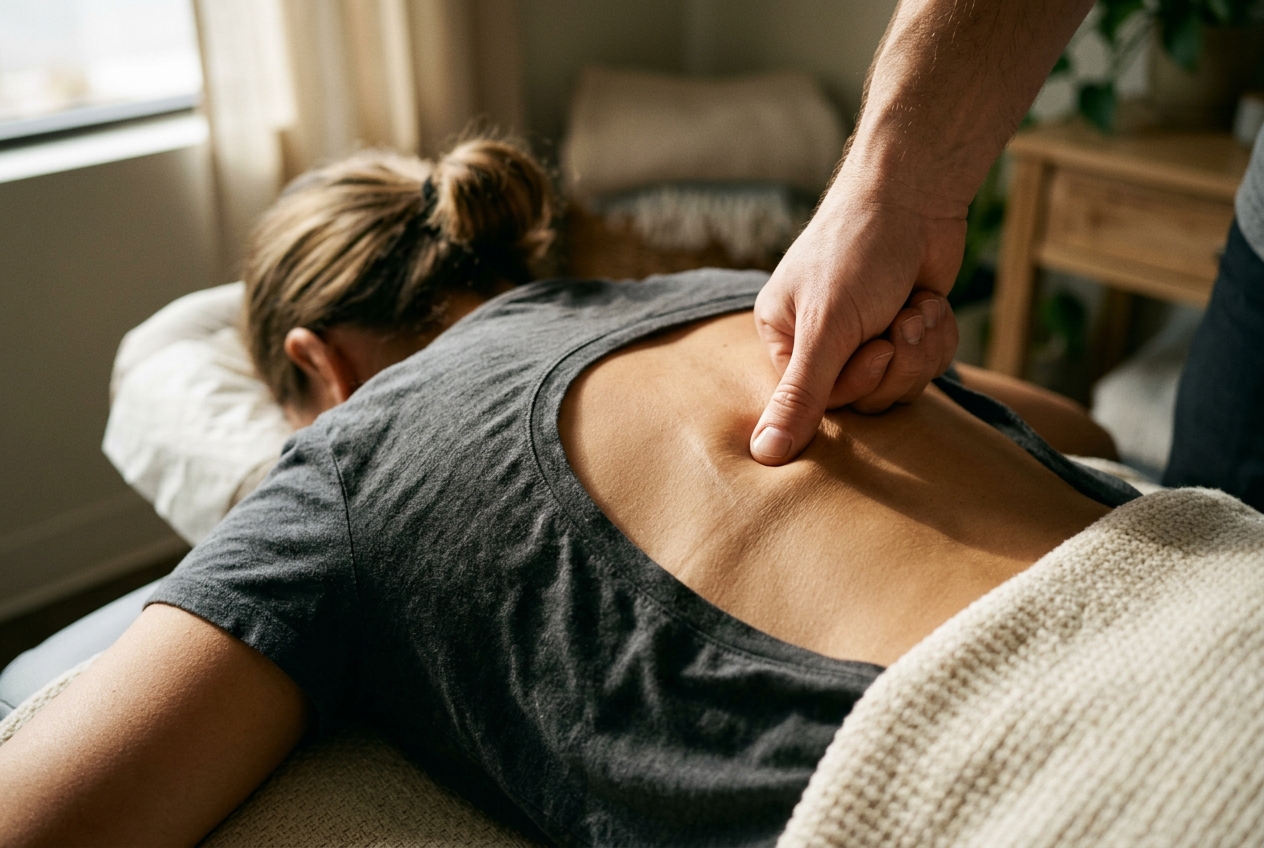
In the classical corpus of Traditional Chinese Medicine (TCM), the posterior aspect of the torso houses a specialized category of therapeutic portals known as Back-Shu points (Bei Shu Xue, 背輸穴). Far from being simple local relief triggers, these points represent the physiological meeting ground where the structural spine intersects with systemic metabolic and emotional regulation. Modern neurobiology increasingly validates what classical texts like the Huangdi Neijing documented millennia ago: the paraspinal corridor corresponds with exquisite precision to the sympathetic paravertebral chain ganglia, the dorsal rami of spinal nerves, and somatovisceral reflex arcs capable of modulating internal organ function. Understanding this anatomical matrix gives us a remarkably practical map for resolving chronic physical exhaustion, autonomic dysregulation, and visceral imbalance.
The Meridian Path: A Journey Through the Paraspinal Corridor
To understand the mechanics of the Back-Shu points, one must trace the journey of the Foot Taiyang Bladder Meridian (Pangguang Jing), the longest and most comprehensive energetic channel in the body. As detailed in standard anatomical cartographies such as the World Health Organization Standard Acupuncture Point Locations, the Bladder meridian begins at the inner corner of the eye (Jingming, BL1), ascends over the crown of the head, dives into the occipital region of the brain, and emerges at the nape of the neck.
From the base of the skull, the channel divides into two parallel bilateral tracks running down the back: 1. The Medial Paraspinal Line: Located roughly two finger-breadths (anatomically designated as 1.5 cun) lateral to the posterior midline (the Du Mai or Governing Vessel), descending along the trough between the spinous processes of the vertebrae and the thick medial belly of the erector spinae muscles (longissimus thoracis and iliocostalis). 2. The Lateral Paraspinal Line: Positioned approximately four finger-breadths (3 cun) lateral to the spine, running over the muscular crest of the back and housing points associated with the psycho-emotional aspects of each organ system.
The medial line is the exclusive domain of the Back-Shu points. The term Shu (輸) translates literally as "to transport," "to convey," or "to infuse." Each of the twelve primary internal organs (Zang-Fu) possesses a dedicated Shu point on this medial line, situated at a specific vertebral level that corresponds to the segment where that organ’s autonomic nerve supply exits the spinal column.
The Neuroanatomical Substrate: Somatovisceral Reflexes
Modern scientific inquiry documented in the National Center for Biotechnology Information (NCBI) PubMed Database confirms that the placement of Back-Shu points is not arbitrary. When an acupressure practitioner palpates the medial Bladder meridian, the mechanical stimulus directly targets: - The posterior primary rami (dorsal rami) of the thoracic and lumbar spinal nerves. - The radicular arteries and posterior intercostal vessels, enhancing local and deep spinal microcirculation. - The sympathetic paravertebral ganglia, which form an uninterrupted chain immediately anterior to the costovertebral joints.
Through the well-established neurobiological mechanism of the somatovisceral reflex, mechanical deformation of the superficial fascia, muscle spindles, and mechanoreceptors over a Back-Shu point sends afferent signals via sensory nerve fibers into the dorsal horn of the spinal cord. These signals synapse with interneurons that modulate efferent pre-ganglionic sympathetic neurons residing in the intermediolateral cell column. Consequently, sustained, non-invasive digital pressure applied to a Back-Shu point can directly alter vascular tone, smooth muscle contraction, and glandular secretion in the corresponding embryologically linked visceral organ. The National Center for Complementary and Integrative Health (NCCIH) recognizes these somatic signaling pathways as foundational to the physiological action of meridian stimulation.
Essential Back-Shu Points: Landmarks, Palpation, and Neurovisceral Impact
Below is a detailed examination of the six most clinically vital Back-Shu points along the medial Foot Taiyang Bladder meridian. Each point acts as both a sensitive diagnostic window and an effective therapeutic lever.
===================================================================================
POINT & PINYIN     VERTEBRAL LEVEL     NEUROLOGICAL LEVEL     PRIMARY CLINICAL FOCUS
===================================================================================
BL13 Feishu        Inf. T3 Spinous     T3 Dorsal Ramus        Respiratory Volume &
(Lung Shu)         Process (1.5 cun)   Pulmonary Plexus       Protective Immunity
-----------------------------------------------------------------------------------
BL15 Xinshu        Inf. T5 Spinous     T5 Dorsal Ramus        Cardiac Rhythm &
(Heart Shu)        Process (1.5 cun)   Cardiac Plexus         Mental Agitation
-----------------------------------------------------------------------------------
BL18 Ganshu        Inf. T9 Spinous     T9 Dorsal Ramus        Hepatic Circulation &
(Liver Shu)        Process (1.5 cun)   Greater Splanchnic N.  Neuromuscular Stress
-----------------------------------------------------------------------------------
BL20 Pishu         Inf. T11 Spinous    T11 Dorsal Ramus       Celiac Ganglion &
(Spleen Shu)       Process (1.5 cun)   Splanchnic Plexus      Metabolic Fatigue
-----------------------------------------------------------------------------------
BL23 Shenshu       Inf. L2 Spinous     L2 Dorsal Ramus        Renal / HPA Axis &
(Kidney Shu)       Process (1.5 cun)   Lumbar Splanchnic N.   Endocrine Vitality
-----------------------------------------------------------------------------------
BL25 Dachangshu    Inf. L4 Spinous     L4 Dorsal Ramus        Inf. Mesenteric Plexus &
(Large Intestine)  Process (1.5 cun)   Pelvic Autonomics      Bowel Motility
===================================================================================
1. BL13 — Feishu (Lung Shu / 肺輸)
- Topographical Location: Located 1.5 cun (two finger-breadths) lateral to the lower border of the spinous process of the third thoracic vertebra (T3). A reliable visual landmark is the medial end of the scapular spine, which generally aligns with the T3 vertebra when the shoulders are relaxed.
- Tissue Assessment: Palpation often reveals dry, tight cutaneous layers or taut myofascial bands in the trapezius and rhomboid major. In cases of systemic respiratory or immune depletion, the tissue feels soft, hollow, and cool to the touch.
- Neurovisceral Impact: Connects with the T3 spinal segment and sympathetic cardiac-pulmonary branches. Acupressure here downregulates bronchoconstriction, expands functional tidal volume, and alleviates upper thoracic tightness linked to shallow, stress-induced breathing patterns.
2. BL15 — Xinshu (Heart Shu / 心輸)
- Topographical Location: Situated 1.5 cun lateral to the lower border of the spinous process of the fifth thoracic vertebra (T5), roughly level with the mid-scapular border.
- Tissue Assessment: Frequently presents with distinct, hyperalgesic subcutaneous nodules (myogeloses) or sharp tender spots in individuals experiencing acute psycho-emotional strain, insomnia, or elevated resting heart rate.
- Neurovisceral Impact: Directly interfaces with the cardiac sympathetic plexus originating from T1–T5. Sustained calming pressure stimulates sensory mechanoreceptors, inducing a parasympathetic shift that eases physical heart palpitations, lowers heart rate variability stress scores, and quiets a racing mind before sleep.
3. BL18 — Ganshu (Liver Shu / 肝輸)
- Topographical Location: Positioned 1.5 cun lateral to the lower border of the spinous process of the ninth thoracic vertebra (T9), approximately two finger-widths below the inferior angle of the scapula (which aligns with T7).
- Tissue Assessment: Characterized by dense, fibrotic muscular roping and distinct tenderness upon moderate pressure. This hypertonicity reflects chronic physical holding patterns, ocular strain from digital displays, and irritability.
- Neurovisceral Impact: Modulates the greater splanchnic nerve pathway supplying the liver, gall bladder, and upper gastrointestinal vasculature. Stimulating BL18 relieves subcostal tension, supports hepatic blood turnover, and smooths the systemic flow of Qi (mitigating somatic manifestations of frustration and stress).
4. BL20 — Pishu (Spleen Shu / 脾輸)
- Topographical Location: Found 1.5 cun lateral to the lower border of the spinous process of the eleventh thoracic vertebra (T11), near the bottom of the ribcage.
- Tissue Assessment: In individuals suffering from chronic digestive sluggishness, postprandial somnolence (food comas), or cognitive brain fog, this region often exhibits tissue flaccidity, pitting edema, or a spongy, non-resilient structural feel.
- Neurovisceral Impact: Correlates with the celiac and upper mesenteric autonomic ganglia governing enzymatic secretion and gastrointestinal motility. Activating BL20 optimizes digestive efficiency, enhances systemic energy extraction from food, and counteracts chronic muscular weakness in the limbs.
5. BL23 — Shenshu (Kidney Shu / 腎輸)
- Topographical Location: Located 1.5 cun lateral to the lower border of the spinous process of the second lumbar vertebra (L2), precisely level with the narrowest point of the waist and directly posterior to the navel.
- Tissue Assessment: A classic indicator of adrenal exhaustion, chronic postural collapse, or cold accumulation; the tissue often feels sunken, deep, cold, and chronically achey, craving sustained deep warmth and firm compression.
- Neurovisceral Impact: Interfaces with the renal sympathetic nerve plexuses and the hypothalamic-pituitary-adrenal (HPA) axis. Working this point relieves chronic lower back stiffness, stabilizes cortisol rhythms, supports fluid homeostasis, and restores foundational vitality.
6. BL25 — Dachangshu (Large Intestine Shu / 大腸輸)
- Topographical Location: Located 1.5 cun lateral to the lower border of the spinous process of the fourth lumbar vertebra (L4), level with the highest prominence of the iliac crest (the hip bone).
- Tissue Assessment: Often presents with deep, rope-like fascial adhesions in the quadratus lumborum and iliocostalis lumborum, accompanied by dull, radiating tenderness in individuals with sluggish bowel transit or pelvic congestion.
- Neurovisceral Impact: Directly communicates with the inferior mesenteric plexus and the sacral parasympathetic outflow regulating colonic motility. Applying rhythmic compression to BL25 normalizes peristaltic rhythm, relieving both constipation and chronic pelvic-lumbar stagnation.
Diagnostic Polarity: Back-Shu vs. Front-Mu Points
In the architecture of clinical acupuncture theory, Back-Shu points do not operate in isolation. They form an elegant functional dyad with the Front-Mu (Alarm) points (Mu Xue, 募穴). Understanding the interplay between these two sets of points is crucial for effective self-care and clinical assessment.
When pathology enters the body, it registers on both the ventral and dorsal surfaces, but with distinct signatures: - Front-Mu Points as Ventral Sentinels: Points like Zhongwan (CV12, Mu of the Stomach) or Tianshu (ST25, Mu of the Large Intestine) become exquisitely tender and reactive during acute flare-ups, dietary toxicity, or inflammatory conditions. They act as dynamic alarm bells for acute Yang excess. - Back-Shu Points as Dorsal Reservoirs: Back-Shu points reflect the long-term, chronic energetic state of the organ. When an organ is depleted (Yin or Qi deficiency), its corresponding Back-Shu point demonstrates structural changes: fascial dehydration, sunken muscular depressions, and a dull, deep ache that improves when firm, warming pressure is applied.
The Classical Mu-Shu Combination Protocol (Yu-Mu Pei Xue)
By pairing the Front-Mu point of an organ with its corresponding Back-Shu point in a single treatment, you create a balanced bioelectrical and autonomic circuit that addresses both acute symptoms and underlying constitutional root causes. Clinical studies exploring Myofascial Trigger Points and Meridian Points suggest this dual-surface stimulation creates a comprehensive neuromuscular loop that accelerates tissue recovery and visceral regulation.
Therapeutic Protocol: The Evening Autonomic Reset
This structured evening routine is designed to downregulate a hyperactive sympathetic nervous system ("fight-or-flight") and restore healthy parasympathetic ("rest-and-digest") tone using Back-Shu acupressure.
Equipment & Posture
- Tools: Two firm rubber balls (such as tennis or lacrosse balls) placed side-by-side inside a sock, or your own knuckles/thumbs.
- Position: Lie supine on a firm yoga mat with your knees bent and feet flat on the floor. This relaxes the paraspinal musculature and allows your body weight to provide controlled, predictable pressure.
Step-by-Step Execution
STEP 1: Upper Thoracic Calming (BL13 Feishu & BL15 Xinshu)
-----------------------------------------------------------------------------------
Action    : Place the paired balls under your upper back between your shoulder blades,
            level with the spine of the scapula (T3–T5), 1.5 inches lateral to midline.
Duration  : 2 Minutes.
Breathing : Inhale deeply into the upper chest for 4 seconds; exhale slowly for 6 seconds.
Sensation : A broad, dull ache that gradually softens into a sensation of warmth.

STEP 2: Middle Thoracic Digestion & De-Stressing (BL18 Ganshu & BL20 Pishu)
-----------------------------------------------------------------------------------
Action    : Roll the balls down to the mid-back, between the bottom of your shoulder
            blades and the bottom edge of your ribcage (T9–T11).
Duration  : 2 Minutes.
Breathing : Direct your diaphragmatic breath laterally into the lower ribcage.
Sensation : Deep release of muscular holding patterns; audible digestive gurgling
            often signals the onset of parasympathetic rebound.

STEP 3: Lumbar Adrenal Nourishment (BL23 Shenshu & BL25 Dachangshu)
-----------------------------------------------------------------------------------
Action    : Position the balls in the small of your lower back, directly behind the
            navel (L2), and then slightly lower at the beltline (L4).
Duration  : 2 Minutes.
Breathing : Gentle, rhythmic belly breathing without muscular forcing.
Sensation : A grounding, soothing release of deep lumbosacral tension and lower-body fatigue.
Safety, Pressure Mechanics, and Clinical Boundaries
While acupressure on the Back-Shu points is a safe, non-invasive home therapy, proper biomechanics and clinical awareness are essential to prevent adverse responses:
- Pressure Intensity and Mechanics: Acupressure should follow the principle of De Qi (the arrival of therapeutic sensation). This feels like a distinct, satisfying dull ache, localized tenderness, or pleasant warmth. It should never manifest as sharp, burning, shooting, or electric pain. If your teeth clench or your muscles guard against the pressure, you are applying too much force.
- Avoid Direct Skeletal Pressure: Never press directly onto the bony spinous processes along the midline of the spine. Pressure must remain anchored in the muscular groove of the erector spinae, 1.5 cun lateral to the center line.
- Contraindications: Do not apply acupressure over areas of acute spinal trauma, suspected vertebral fractures, severe osteoporosis, active shingles (herpes zoster) outbreaks, or localized cutaneous infections.
- When to Seek Professional Guidance: If back pain is accompanied by unexplained weight loss, fevers, radiating neurological numbness or weakness in the legs, or changes in bowel or bladder control, consult a physician or licensed medical professional immediately.
Today's Takeaway: The Two-Minute Desk Reset
You do not need an elaborate setup to benefit from the neurological switchboard along your spine. If you are sitting at a desk right now feeling drained, try this simple two-minute practice:
Within two minutes, this targeted stimulation of BL23 (Shenshu) sends calming afferent signals through your lumbar dorsal rami into the autonomic nervous system. It reduces renal vasoconstriction, calms sympathetic overdrive, and brings a subtle, grounding wave of mental clarity to carry you through the rest of your day.